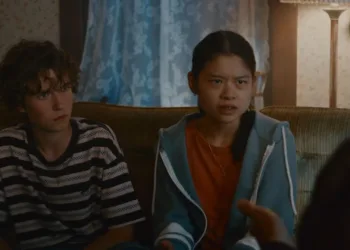



























Juan knows how to stand up to the village bullies. She swims, flies kites, and moves through her rural surroundings with the unstudied confidence of a child who has things to do, places to go, people to resist. In Zou Jing’s A Girl Unknown, cinematographer Liang Zhongqiang often keeps the camera at her height, allowing the countryside to meet her on familiar ground. Cao Ruofan gives these early passages a welcome stubbornness. There is pleasure in watching Juan occupy her life so fully, before she has learned to measure how much of it she is permitted to keep.
The father who has raised her dies. Her mother remarries, becomes pregnant, and takes Juan to a couple in the city, where she leaves the girl behind. Zou locates the cruelty in the quietness of that departure: the adult arrangement has been settled while the child is still waiting to be collected. Waiting becomes a form of attachment, something Juan can continue doing after the person she needs has gone. The film stretches from childhood into late adolescence, yet this early separation establishes an emotional time that does not move as readily as the years.
Son preference and the pressures of China’s one-child-policy era inform the story, though the abandonment it depicts belongs to an older patriarchal history. Zou makes that history felt through the altered value of a child when a new pregnancy changes a household’s expectations. Juan’s removal follows adult needs with a terrible practicality. Her bewilderment receives no equivalent accommodation. The distance between those two experiences gives the film its persistent unease, even when the new home is comfortable and the people offering it can be tender.
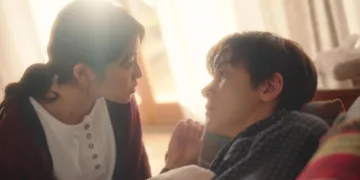
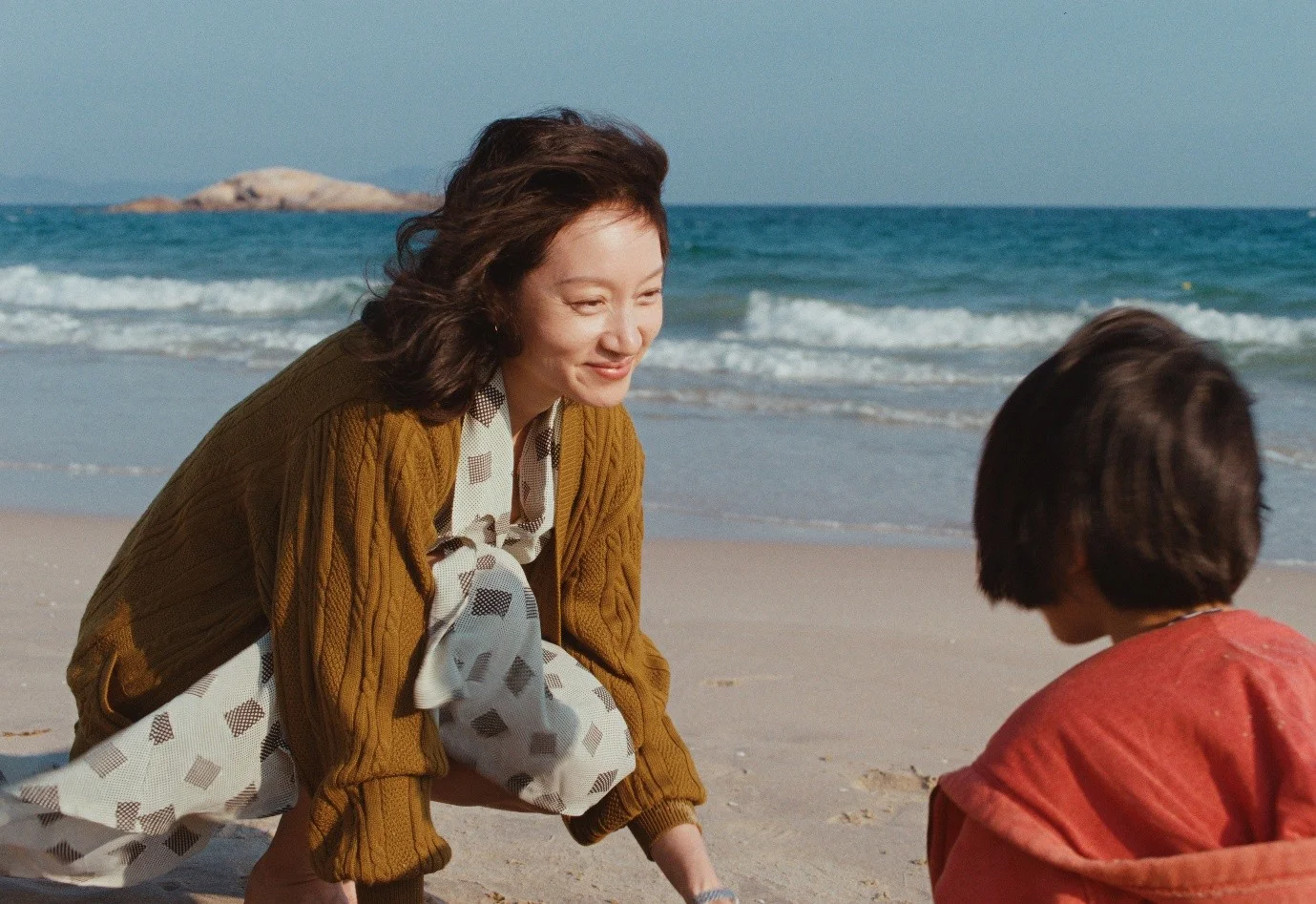
Ding Meishuang, played by Shen Jiani, enrolls Juan in dance classes and takes her to the beach. These gestures have warmth, and Zou allows their warmth to remain visible. The seaside light does not dim to match the girl’s distress; beauty continues around her, indifferent to the question of where she belongs. Gradually, the death of Meishuang’s daughter gives her attentiveness a troubled shape. Juan has entered a household where affection is entangled with an earlier absence, and where being wanted may carry the burden of answering a grief she did not cause.
Shen makes Meishuang’s attempts at connection difficult to dismiss, while Zu Feng’s withdrawn Weiqiang acquires a painful intelligibility as the couple’s loss and marital strain emerge. Their care is compromised without becoming wholly false. That ambiguity is among Zou’s finest achievements.
A child can receive dance lessons, outings, and genuine concern while sensing that the place prepared for her was first imagined for somebody else. Juan’s presence unsettles the couple’s grief, but the grief also determines how they receive her, leaving affection to pass through expectations she cannot fully understand.
The names accumulate: Lin Juan, Wang Juan, Wu Lian. Each household supplies a different answer to who she is, with the authority of people who can decide where she sleeps. When her biological family reclaims her, the restoration of an original name offers little protection from another estrangement. Her position at the edge of a family photograph makes this discomfort visible without demanding an explanation from her. She can be identified, placed among relatives, and included in the image while remaining uncertain of her place beside them.
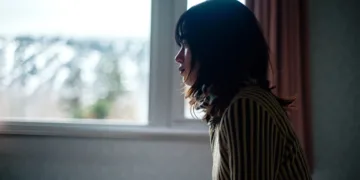
Li Gengxi’s adolescent Juan carries forward Cao’s mixture of resistance and disorientation. An early silent scream feels continuous with the younger girl’s bewilderment, though the expression has grown inward and desperate. The change of actress does not divide Juan into separate emotional lives.
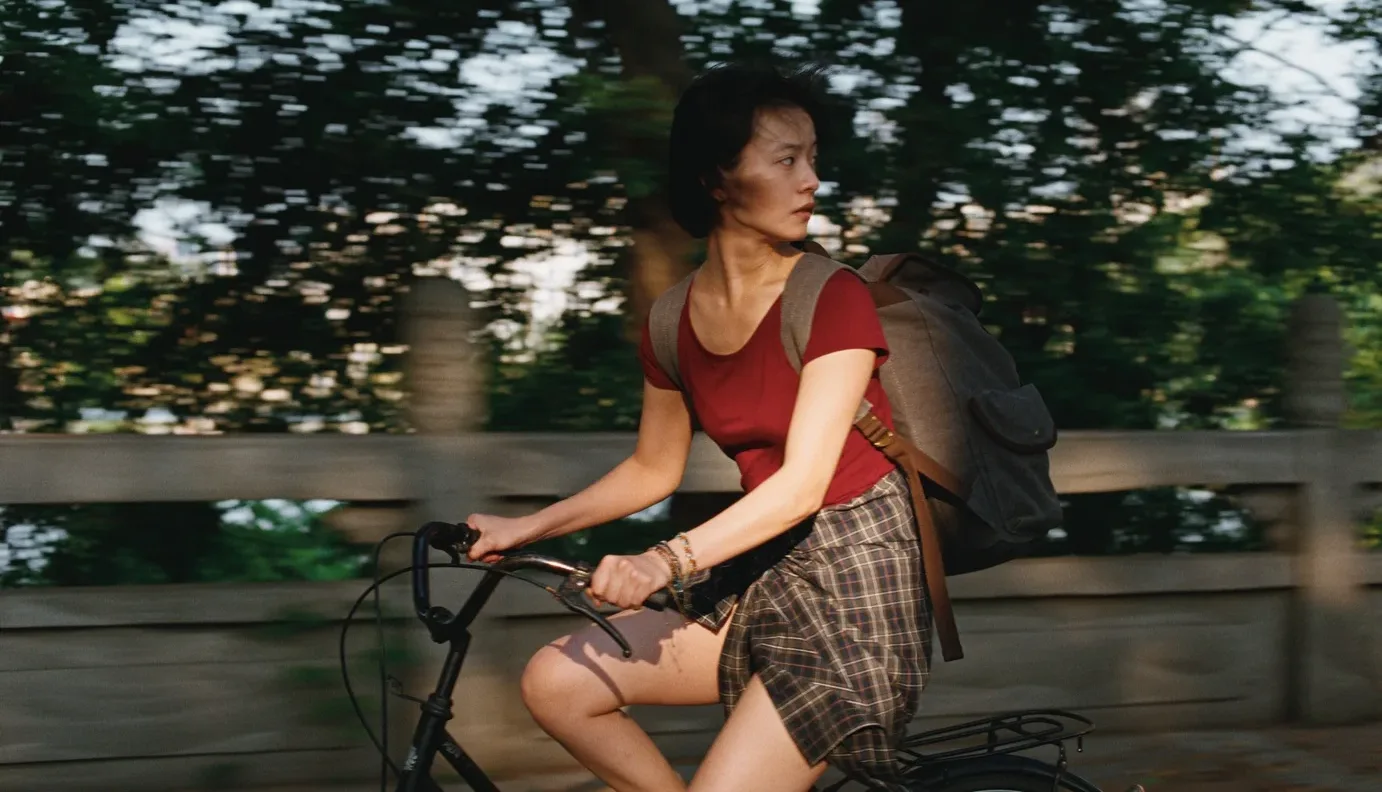
Dance, friends, and pop music give adolescence its own activity, its own tastes; the Trainspotting poster on her bedroom wall belongs to a young person acquiring preferences between upheavals. These details matter because Juan is alive in the intervals. She has interests that cannot be explained by abandonment.
After sexual assault, those interests become harder to sustain. She misses a dance recital, skips classes, and lashes out at Meishuang. Zou withholds the assault itself and follows the disturbance it leaves in ordinary behavior, allowing absence from familiar activities to register the damage.
Yet the film’s restraint becomes less secure as further disruptions follow. Across its roughly twelve-year span, elliptical transitions can convey the frightening speed with which Juan’s circumstances are changed. The succession of assault, another family claim, and departure for factory work also compresses the life between crises. At these points, her singular experience risks becoming an itinerary of injuries.
The garment factory gives her decision to leave a harsh material weight. Mechanical work, low wages, money passing through workers’ hands, and crowded dormitory accommodation make independence something that must be paid for daily.
Juan has chosen this place, but the choice does not release her from vulnerability. The factory passages are especially strong because they give her effort a visible task and her freedom a measurable cost. Companionship with coworkers permits another kind of attachment, formed through shared conditions rather than a family’s claim upon her.
Zou is less persuasive when she turns this distress into explicit philosophy. Juan’s wish that the world might be an illusion, making its unfairness easier to bear, is understandable as speech from someone exhausted by living on other people’s terms. The film’s movement toward such declarations nevertheless narrows feelings it has previously allowed to remain difficult and unsettled. Late underwater imagery similarly offers a familiar suggestion of renewal. Earlier swimming and seaside scenes had water’s physical immediacy, its pleasure and indifference. Here the image arrives with an interpretation too readily attached.
The hopeful turn is easier to accept through Juan’s continuing capacity for pleasure and connection: dance practiced in an uncertain home, music chosen for herself, companionship found amid exhausting labor. These experiences have existed alongside her suffering throughout the film.
They do not establish that she has become secure. They do leave her with reasons to remain open to other people, which carries its own danger for a girl repeatedly displaced by those she depended upon. Choosing a life will still involve choosing whom to trust, with no recovered name or newly earned wage able to settle that decision for her.
A Girl Unknown premiered at the Cannes Film Festival in May 2026, with upcoming theatrical rollouts managed by distributors like Greenwich Entertainment. The Franco-Chinese drama follows an abandoned girl growing up across multiple foster families in China through the 1980s and 1990s as she searches for her true identity.
Full Credits
Title: A Girl Unknown
Distributor: Pyramide International, Greenwich Entertainment
Release date: May 2026 (Cannes Film Festival), January 27, 2027 (France)
Running time: 2 hours 5 minutes (125 minutes)
Director: Zou Jing
Writers: Zou Jing
Producers and Executive Producers: Didar Domehri, Xi Cao, Yang Wang
Cast: Li Gengxi, Shen Jiani, Zu Feng, Cao Ruofan
Director of Photography (Cinematographer): Liang Zhongqiang
Editors: Zou Jing, Tina Baz
Composer: Valentin Hadjadj
The Review
A Girl Unknown
A Girl Unknown finds the pain of abandonment in ordinary acts of care: dance lessons, seaside outings, a place in a family photograph that still feels uncertain. Cao Ruofan and Li Gengxi preserve Juan’s stubborn life across the years, while the factory passages give her independence a punishing cost. Repeated crises sometimes compress that life, and late philosophical explanations diminish its ambiguity. Yet Zou’s tenderness leaves room for pleasure without pretending that trust has become safe.
PROS
- Emotionally continuous performances from Cao Ruofan and Li Gengxi.
- Child-height photography grounds Juan’s early experience.
- Adoptive-family relationships preserve tenderness and troubling expectations.
- Factory scenes make independence materially concrete.
CONS
- Successive crises compress the life between upheavals.
- Explicit philosophical dialogue narrows emotional ambiguity.
- Underwater renewal imagery feels overly familiar.