






























Lisa’s vocal coach wants her to sing a larger portion of her set. Lisa points out that singing while executing demanding choreography requires breath she cannot simply conjure on command. It is a reasonable objection, and Sue Kim lets it remain one. The rehearsal contains a physical problem before it contains a philosophical problem: a performer has a body, and that body has several jobs competing for the same lungs.
Then Lisa recalls wanting to become a singer and being assigned the rapper’s role in BLACKPINK. The earlier exchange acquires a different pressure. How much of her hesitation belongs to the difficulty of the task, and how much belongs to the job she has learned to call hers? The film cannot diagnose that division precisely. It can show a remarkably accomplished performer struggling to grant herself permission to attempt something her professional identity has largely kept elsewhere.
Always Lalisa follows the Thai star through a year of solo activity during BLACKPINK’s hiatus: making Alter Ego, appearing in The White Lotus Season 3, and preparing for Coachella without her bandmates beside her. Kim finds the strongest drama in the preparation. Lisa’s account of trainee evaluations, with elimination hanging over repeated performances, establishes an education in satisfying other people’s criteria. Solo work changes who gets to set those criteria. It leaves the habit of anticipating judgment intact.
Alter Ego’s five personas initially made me suspicious. Here was a film presenting artistic independence through an album that divides its artist into several recognizable identities. The marketing department could probably live with this revolution. Recording and rehearsal footage gives the concept practical substance, but the conceptual neatness still invites a question: how much freedom is available inside a set of identities designed to be presented, understood, and sold?
My suspicion assumes that construction contaminates sincerity, though. That is a shaky assumption for any performer. Lisa has spent years working within a role selected for her; choosing several expressions of herself constitutes a change in authority, even if each expression arrives with professional styling. The difference lies in her ability to participate in defining the image. The film gives that distinction material weight through LLOUD, the operation supporting her solo ambitions.
Manager Alice Kang’s presence is especially valuable here. Her logistical responsibilities, stress, and conversations with Lisa interrupt the fantasy that independence means doing everything alone. Lisa’s ability to make choices requires other people to organize the conditions in which those choices can happen. Kang’s move from YG to LLOUD makes continuity visible inside the apparent break. The album leak supplies the opposite lesson: control over making a work provides no guarantee of control over its release.
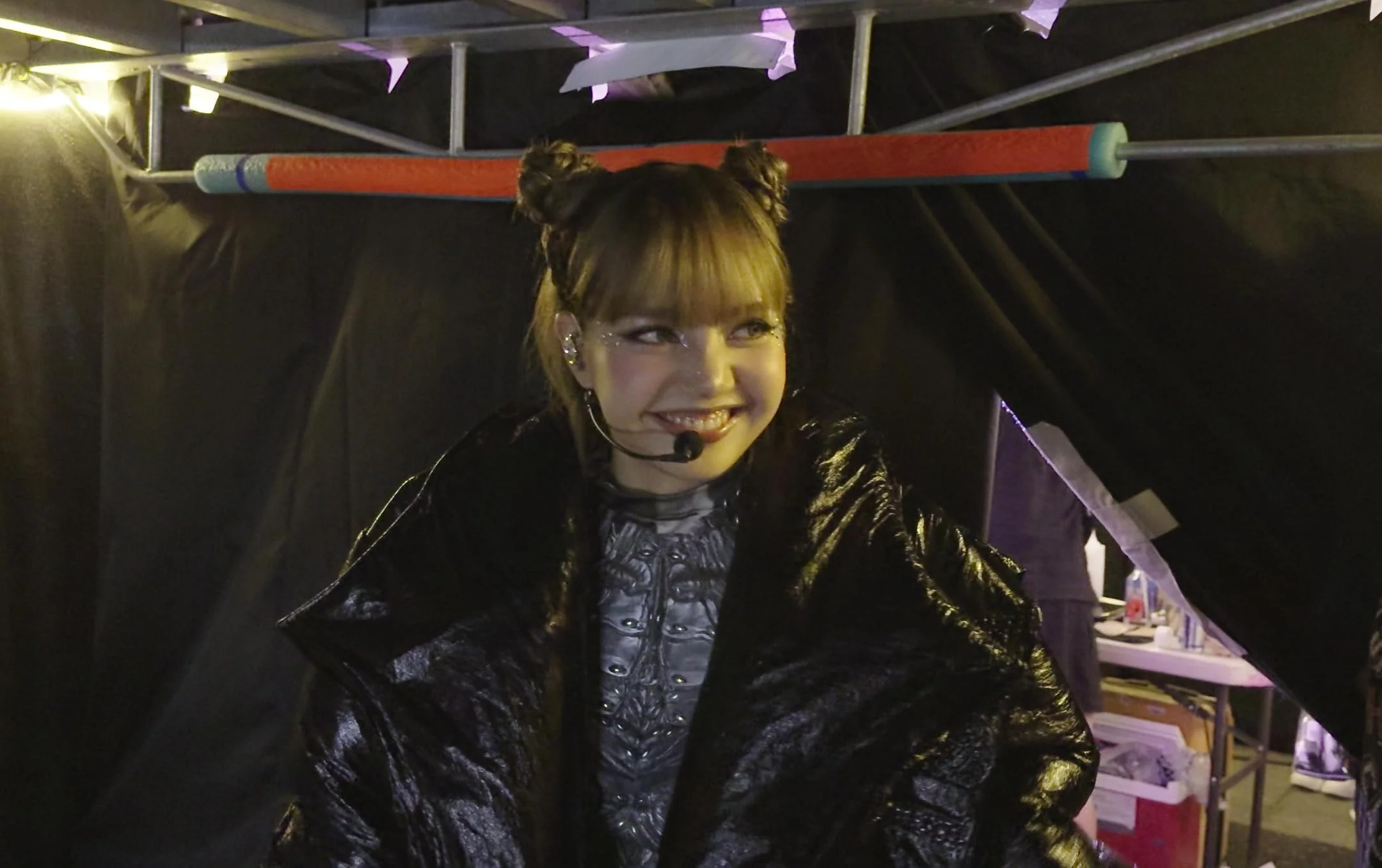
Still, I was ready to regard the personal footage as an extension of this carefully organized presentation. Lisa’s recollection of her childhood dance teacher unsettled that reading. She becomes emotional discussing the mentor who helped establish her abilities and later died of cancer.
A tribute can certainly serve a celebrity portrait. Yet the relationship also introduces a debt that current success cannot discharge. The person who helped make the performer possible is absent from the achievement he helped prepare. My suspicion had started explaining everything, which made it increasingly bad at noticing anything.
Scenes with Lisa’s mother, stepfather, and childhood friends further complicate the album’s promise of self-discovery. At brunch with old friends, she inhabits relationships that existed before the solo project needed a concept. These passages give Kim’s portrait emotional credibility because they allow continuity to matter. Becoming independent need not require declaring every previous identity false. The daughter, friend, and grateful former pupil can persist alongside the artist experimenting with several public selves.
The mother’s account of changing her daughter’s name from Pranpriya to Lalisa after consulting a fortune teller offers a tempting story of destiny. Lisa herself feels the name fits. Kim places that belief alongside the work of becoming a performer, from childhood competition footage to training and rehearsal. The retrospective story makes success feel foretold; the footage keeps revealing people making decisions and doing the labor. Destiny has a considerable support staff.
Selection still matters. LLOUD’s participation in the production helps explain the film’s closeness to Lisa’s professional world, but participation alone cannot establish dishonesty. The limitation becomes visible in how little resistance some of its claims encounter. Supportive interviewees, including Mike White and Tyla, reinforce the account of her dedication. Their affection has value. Their testimony offers little challenge to the portrait’s preferred interpretation of her growth.
The treatment of leaked trainee footage involving Lisa’s use of a racial slur exposes that limitation sharply. The film acknowledges the incident and includes a brief apology, then gives the harm and response little sustained attention. A difficult subject has entered the portrait without substantially disturbing its direction.
Stalking, harassment, and threats deserve attention too, but they cannot explain away criticism of public conduct. A film examining the pressures of visibility needs to distinguish the people demanding accountability from those making visibility dangerous. Her romantic life is a different matter. Privacy requires no apology, and a documentary’s access does not entitle its audience to every relationship.
Coachella provides the release Kim has carefully prepared. Rehearsal time makes Lisa’s uncertainty legible before editor Ezra Paek’s energetic performance sequence lets the set gather force. Singing now carries the history of that earlier disagreement, while performing alone gives her doubts about carrying a stage a concrete test. The achievement feels earned through repeated effort. Kim understands that a successful performance becomes emotionally interesting when we have watched the performer struggle to imagine herself delivering it.
The concert also reveals the pressure inside the film’s idea of freedom. Lisa gains room to decide what she wants to attempt, then the documentary brings that attempt to completion through public approval. Applause can affirm her confidence. It can also leave the old trainee’s question waiting for the next performance: what happens to the right to experiment on an evening when the audience does not approve?
Always Lalisa world-premiered at the Toronto International Film Festival on September 11, 2026, before its limited theatrical engagement beginning October 12, 2026, ahead of streaming on YouTube Premium. The feature-length documentary captures a transformative year in the life of global superstar Lisa as she steps away from Blackpink to launch her independent solo career and pursue acting.
Where to Watch Always Lalisa (2026) Online
Full Credits
Title: Always Lalisa
Distributor: Sony Music Vision, Trafalgar Releasing
Release date: September 11, 2026 (TIFF), October 12, 2026 (Theaters)
Rating: 15 (BBFC)
Running time: 1 hour 38 minutes (98 minutes)
Director: Sue Kim
Producers and Executive Producers: Sue Kim, Courtney Crockett
Cast: Lalisa Manobal
Director of Photography (Cinematographer): Emily Topper
Editors: Ezra Paek
Composer: Aska Matsumiya
The Review
Always Lisa
Always Lalisa earns its intimacy through rehearsal, gratitude, and the practical work of becoming independent. Sue Kim makes Lisa’s growing confidence emotionally persuasive without pretending she achieved it alone. The film’s sincerity survives its promotional setting; its scrutiny fares less well. Supportive testimony and a briefly examined racial-slur incident leave difficult questions underdeveloped, while Coachella supplies the reassuring approval its account of freedom still depends on.
PROS
- Rehearsals give the Coachella payoff emotional weight.
- Family and mentor recollections complicate the reinvention narrative.
- Alice Kang’s presence makes collaborative labor visible.
- Lisa’s uncertainty gives artistic independence concrete stakes.
CONS
- Limited examination of the racial-slur incident and apology.
- Supportive interviews offer little critical challenge.
- The liberation narrative leans on public approval.