



























Jack Woodrow has identified a problem with Citizen Kane: nobody is present to hear the dying man say “Rosebud.” His proposed remake will attend to this oversight. Played by Gregg Henry, the producer in Jeffrey Scott Collins’s Above the Line approaches a canonical film with the confidence of someone correcting an invoice. The joke allows him a plausible observation before exposing the entitlement attached to it. He can imagine cinema’s past awaiting his improvements because other people’s work already looks, to him, like something he has the right to rearrange.
His response to an Easter Bunny arriving at his home belongs to the same peculiar cultural logic. He assumes George Clooney must be inside the costume. An absurd visitor becomes legible once assigned a celebrity identity. Henry makes Woodrow’s self-importance expansive enough to accommodate both encounters: a celebrated film needs his supervision, and a costumed stranger presumably belongs to his social universe. Hollywood’s familiar names provide him with explanations before he has bothered to look closely. That habit will find its counterpart among the people trying to rob him.
Collins, who wrote the screenplay with Jono Matt, assembles six struggling industry figures during Christmas. Each receives $1,000, an invitation, and a codename. Their eventual assignment is to steal Woodrow’s film awards in exchange for a substantial payment. Princess, Ghost, Dame, Cowboy, Spaceman, and Hero have all suffered through dealings with the producer. The arrangement converts professional grievance into a criminal job, with the additional indignity that these people must once again accept someone else’s instructions to obtain the money they need.
Stealing awards gives their retaliation a particular American show-business flavor. They are targeting the public certification of achievement, displayed privately by a man whose success has depended on denying others credit and opportunity. The trophies cannot return a stolen project or restore a damaged career.
Their theft nevertheless promises a reversal in visibility: the people Woodrow has sidelined can interfere with the objects that make his accomplishments appear settled. The scheme is petty, dangerous, and understandable. Collins allows those qualities to coexist without requiring the participants to become exemplary representatives of creative labor.
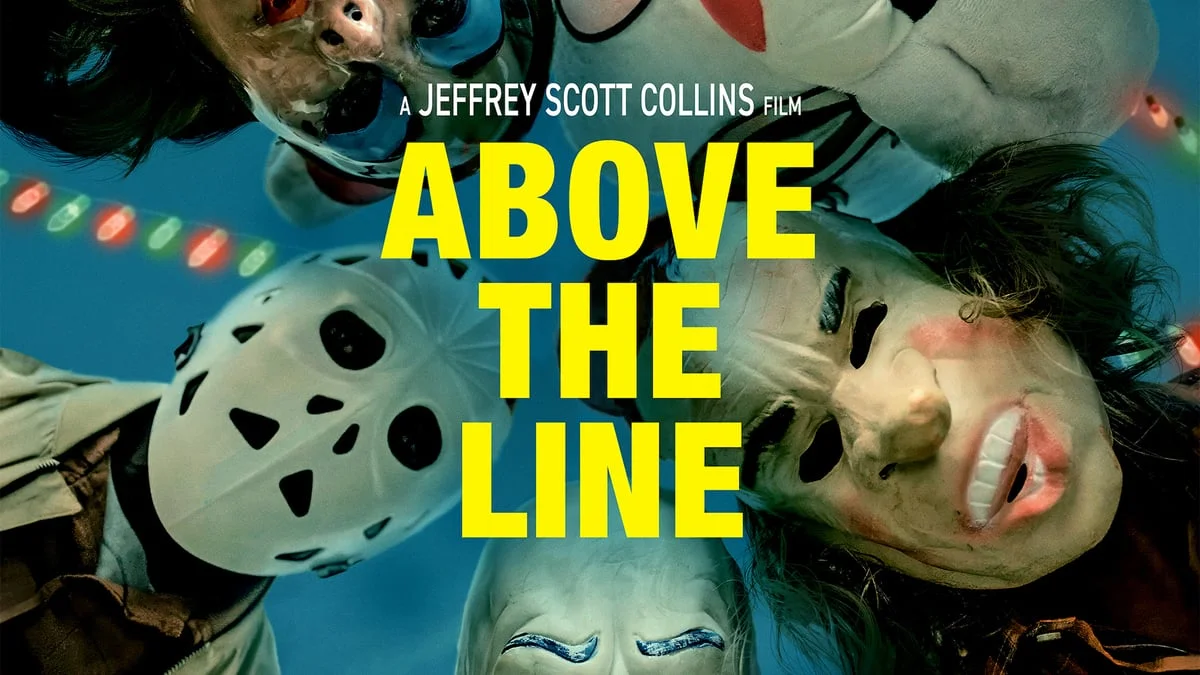
Their disguises make the operation look like an improvised exhibition of Hollywood exports. Ghost’s hockey mask recalls Friday the 13th; Cowboy’s Nixon mask invokes Point Break. Such images can communicate menace beyond the local professional culture that gives these characters their grievances. Recognizing the costume requires no knowledge of development deals or screenwriting credits.
Yet cinematic familiarity offers poor preparation for burglary. The group can borrow the appearance of dangerous people while remaining conspicuously unqualified for the task. Their cultural fluency has practical limits, and the film gets useful comedy from the distance between the two.
The codenames work similarly. “Hero” provides John Way’s character with an identity that his rapid departure from the enterprise makes difficult to sustain. He arrives short of professional prospects and leaves before the assigned role can demand much courage.
Calling him Hero cannot supply the behavior the name advertises. The anonymity recalls Reservoir Dogs, but here it has an additional vocational sting. People already struggling to establish themselves must enter another arrangement under identities they did not choose. The names simplify the group for whoever has recruited them, while their incompatible reactions keep frustrating that simplification.
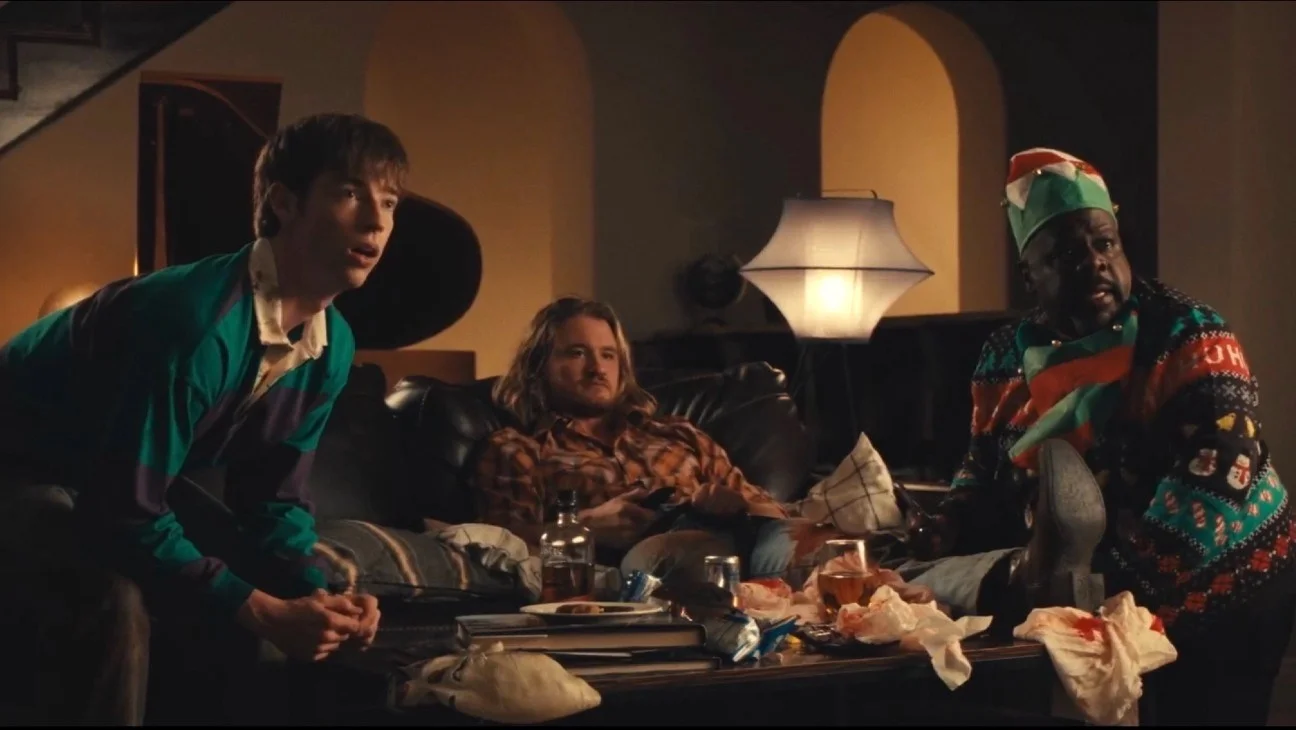
Collins is most entertaining when the robbery produces problems that require fresh improvisation. A shooting brings Cedric the Entertainer’s podiatrist into service as an emergency bullet remover. The gag extends the film’s concern with misplaced qualifications: possessing some relevant expertise makes someone available for a job far outside its ordinary application.
It also gives the criminal operation a consequence that cannot be solved by another movie reference. Beneath the costumes and aliases, somebody needs medical attention. The Christmas music supplies an incongruously cheerful accompaniment, though the seasonal setting contributes little beyond that tonal friction and decorative familiarity.
The flashbacks have a harder assignment. Accounts of appropriated projects, humiliation, and obstructed careers establish that the group’s hostility has substance. Without these interruptions, Woodrow would be a convenient monster and the thieves a collection of comic mannerisms. Returning to their earlier encounters makes the robbery an extension of unfinished professional business. It also complicates the pleasure of watching them fail. Their poor criminal judgment does not make the injuries behind their participation imaginary.
That explanatory work competes with the deadline built into the job. The timed safe gives the present action a simple pressure, but the movement into earlier betrayals repeatedly suspends it. Once the common source of their resentment is clear, further explanation yields less urgency than another complication in the robbery.
The film remains amusing, yet its two organizing impulses sometimes pull apart: the industry satire wants time to establish the damage, while the caper wants decisions to accumulate consequences. Uncertainty about the organizer creates suspicion; postponing the operation to supply another grievance does not always intensify it.
Henry helps hold those impulses together. Woodrow’s proposed Kane remake and his Clooney assumption give his arrogance specific comic forms, even when his villainy remains broad. The limitation is that concentrating so much misconduct in one producer makes the surrounding professional culture easier to leave indistinct.
The recruitment scheme provides a sharper discomfort. An unseen benefactor offers the injured creatives a chance to change their circumstances, pays enough upfront to command attention, and dictates the conditions under which the larger reward becomes available. They can recognize Woodrow’s exploitation and still find this new offer difficult to refuse. Before the safe has yielded anything, they have accepted another person’s terms for what their next opportunity will require.
Above the Line was released on Amazon Prime Video. The action comedy follows six struggling Hollywood hopefuls who team up to burglarize a crooked producer who ruined their careers and steal his major awards.
Where to Watch Above the Line (2026) Online










Full Credits
Title: Above the Line
Distributor: Amazon Prime Video
Release date: 2025
Rating: TV-MA / 16+
Running time: 1 hour 31 minutes (91 minutes)
Director: Jeffrey Scott Collins
- Cast: Gregg Henry, Adhir Kalyan, Jackson Pace, Cedric The Entertainer, Dylan Playfair, Sophia Ali, Reno Wilson
The Review
Above the Line
Above the Line finds pointed comedy in Hollywood outsiders borrowing the industry’s screen identities to reclaim recognition it has denied them. Gregg Henry’s possessive producer and the thieves’ improvised responses give the satire personality. The flashbacks weaken the robbery’s urgency, and concentrating exploitation in one villain limits the institutional portrait. The sharper discomfort lies in the revenge scheme itself: another opportunity arrives with conditions imposed by somebody else.
PROS
- Gregg Henry’s sharply defined comic arrogance.
- Movie disguises that expose the thieves’ incompetence.
- Revenge complicated by renewed dependence on unseen authority.
CONS
- Flashbacks interrupt the heist’s momentum.
- One dominant villain narrows the industry critique.
- Christmas setting has limited dramatic purpose.