
























The CIA has a use for James Reece again, which improves his legal prospects considerably. In The Terminal List Season 2, a presidential pardon becomes available alongside treatment for the tumor left by the experimental drug program that destroyed his platoon. The price is another assignment. Freddy Strain, an old friend now working with the agency, brings the offer. It is an efficient arrangement for everyone except the part of Reece that might need to stop taking assignments.
His target complicates the transaction. Mohammad “Mo” Farooq, a former ally, appears to have become involved with Al-Qaeda. After a terrorist attack in London, Reece’s personal history makes him useful to the people conducting the hunt. The government wants access to a relationship. Having survived Ben Edwards’s betrayal, Reece must now investigate another man he once trusted, under the direction of an organization whose authority friendship is helping to rehabilitate. The mission asks him to rely on precisely the attachments that have become dangerous to him.
That danger is present before anyone recruits him. The first episode leaves Chris Pratt’s fugitive at sea aboard Ben’s boat, talking to a man who is no longer there. Mozambique follows in Episode 2, with refuge at the Hastings family’s game reserve. Geography changes; the conversation with betrayal continues. Pratt’s subdued performance works best here because Reece has lost the external structure that made his previous brutality intelligible to him. His wife, daughter, and men are gone. So are the names that gave him something to do about it.
I initially found this prolonged separation from the developing conspiracy frustrating. The CIA does not approach him until Episode 3, a substantial delay in an eight-episode season. But calling those early episodes wasted would let the series off too easily. They establish something its later momentum needs to answer: completing the revenge campaign has left Reece alive without making life manageable. His return to service brings direction and companionship. Those are credible attractions. They also make it difficult to distinguish his wish to protect people from his need to have a mission. He can accept the assignment before resolving that distinction.
Adapting Jack Carr’s True Believer, the season repeatedly places personal loyalty between Reece and institutional suspicion. Gabriel Luna’s Freddy is especially useful to this arrangement. His reassurance that fighting evil can require entering morally compromised territory gives Reece a language for continuing. Coming from a friend, the argument carries an intimacy an official briefing could never supply. Yet it also keeps the hardest question comfortably elsewhere. Reece can doubt the agency while trusting the man beside him, and the agency still gets its operative.
The action makes that bargain pleasurable. An urban shootout, a sniper battle, and a helicopter assault give the season different forms of combat, while shorter engagements distributed through episodes sustain its forward movement. The encounter with poachers in Africa also lets Reece act as a protector before his formal return to government work. These sequences supply opportunities to see his capabilities as useful, even necessary. The season’s excitement helps rebuild our confidence in the same skills whose consequences trouble him.
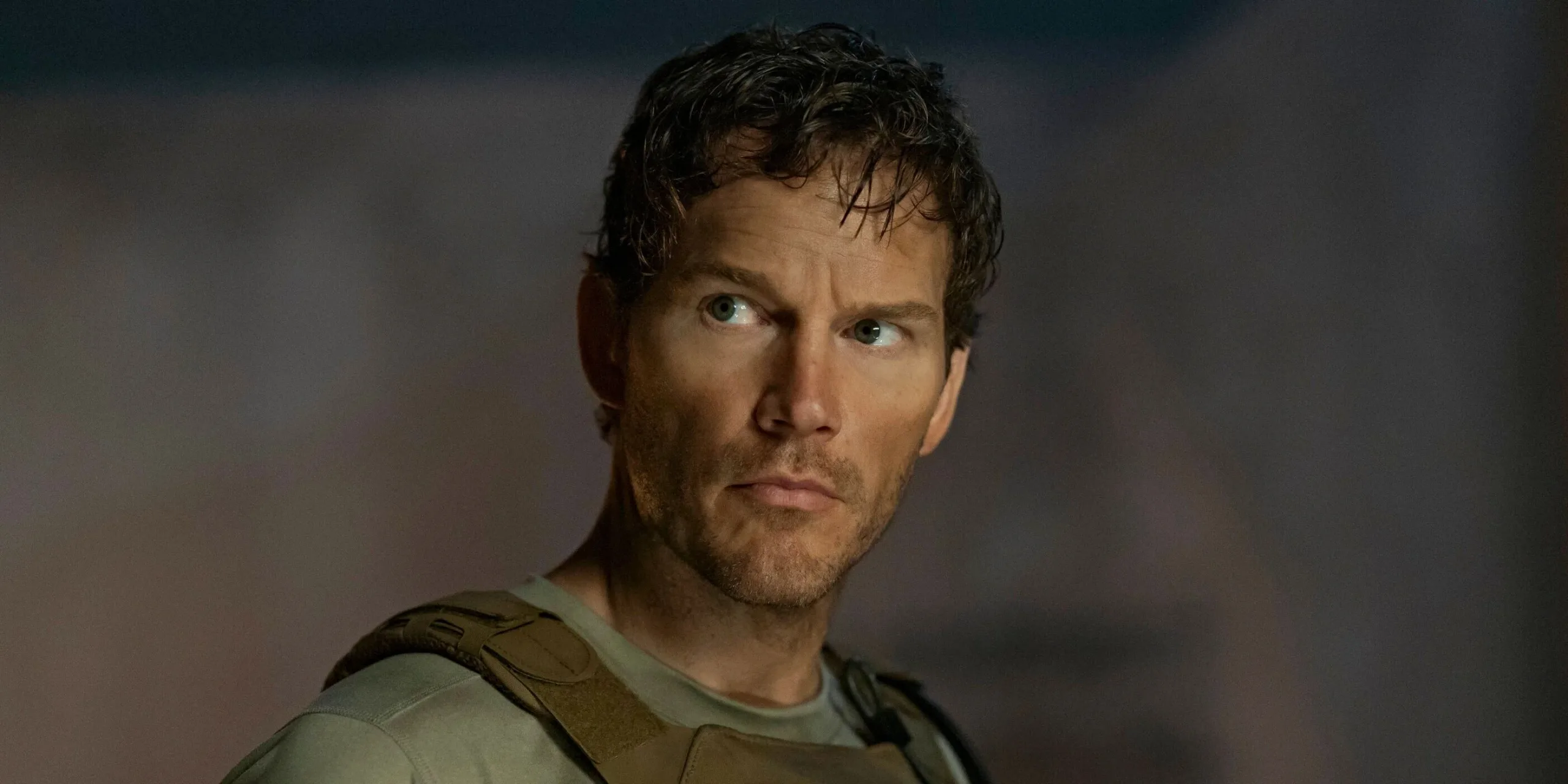
There is nothing inherently dishonest about that pleasure. A military thriller should be able to make military action exciting. The difficulty comes when professional competence begins to answer questions it cannot settle. Reece’s ability to function under threat makes him persuasive as an operative; it gives no independent guarantee that his assignment is sound. Mo’s apparent change of allegiance keeps some uncertainty alive because the mission cannot entirely separate the designated enemy from the person Reece remembers. The show is most interesting while that recognition interferes with the clean usefulness of a target.
Elsewhere, weapons have a less personal history. Raife Hastings discovers discrepancies involving shipments from his company, and journalist Katie Buranek joins him in tracing how those weapons reach terrorists. Tom Hopper’s expanded role gives the season another source of physical assurance, but Raife’s position in the supply chain matters just as much. He has something to investigate within the business of arming people. Constance Wu’s Katie, still publicly defending Reece after exposing the drug program, gives that investigation a purpose beyond finding someone to shoot.
This parallel story usefully changes the scale of responsibility. Reece is asked to locate a man; Katie and Raife follow the movement of material that makes men dangerous. Their inquiry gives the conspiracy a life outside the protagonist’s damaged perceptions. It also prevents the supporting cast from existing solely as people who explain the next stage of his assignment. For stretches, the weapons investigation has the stronger dramatic pull because each discrepancy offers a concrete reason to keep looking.
The problem is how long these inquiries remain apart. The early space granted to Reece earns its place through grief and disorientation, but the continued separation limits the pressure the two stories can exert on each other. Significant connections arrive late, with substantial developments concentrated in the final two episodes. Individual episodes can move briskly while the season’s larger construction feels delayed. The eventual acceleration has energy, but it leaves less room for the discoveries to alter relationships before the next demand arrives.
The Russia–Ukraine war extends the conspiracy’s political reach. Ukrainian businessman Vasili Andrenov’s pursuit of a peace agreement, alongside his patriotic associate Yana Tomenko, brings competing national interests into a story already occupied by American intelligence and Al-Qaeda. This creates consequential stakes without automatically producing a searching political argument. The season remains much clearer about its faith in particular operators than about the legitimacy of the arrangements directing them. Freddy’s reassurance stays emotionally accessible while the international explanations accumulate.
Some of that accumulated weight comes from The Terminal List: Dark Wolf. Raife, Mo, and Jules Landry enter with relationships established in the prequel, giving returning viewers reasons to invest before Season 2 has done much new work with them. The benefit is tangible: an old ally’s apparent betrayal means something different when that earlier allegiance has been dramatized.
The cost falls on viewers who can follow the present assignment but have less access to the history that makes it painful. With Mo, that gap affects the mission’s central pressure. Knowing why the CIA needs Reece is straightforward. Feeling what it costs him to help depends partly on time spent with these men in another series.
The Terminal List Season 2 premiered globally on Amazon Prime Video on October 21, 2026. Adapted from Jack Carr’s bestselling novel True Believer, the high-stakes action thriller follows former Navy SEAL James Reece as he navigates a dangerous globe-spanning conspiracy.
Where to Watch The Terminal List Season 2 Online




Full Credits
Title: The Terminal List Season 2
Distributor: Amazon Prime Video
Release date: October 21, 2026
Rating: TV-MA
Running time: 46–67 minutes per episode
Director: Paul Cameron, Carl Seaton, Tucker Cates, Ray Mendoza, Ben Wheatley, Marcos Siega, Kate Dennis
Writers: David DiGilio, Jack Carr, Max Adams, Allison Miller, John Lopez, Kenny Sheard, Hennah Sekander, Jared Shaw, Joshua Jacobs
Producers and Executive Producers: Chris Pratt, David DiGilio, Antoine Fuqua, Jack Carr, Jon Schumacher, Daniel Shattuck, David Auge, Kat Samick, Max Adams, Jared Shaw, Ronald Cosmo Vecchiarelli
Cast: Chris Pratt, Tom Hopper, Constance Wu, Taylor Kitsch, Riley Keough, Gabriel Luna, Dar Salim, Luke Hemsworth
Director of Photography (Cinematographer): Armando Salas, Evans Brown
Composer: Ruth Barrett
The Review
The Terminal List Season 2
Reece’s return to service makes for a forceful thriller and a questionable recovery plan. Pratt’s subdued grief, varied combat, and the weapons investigation give Season 2 substance beyond its expanding conspiracy. I’m less convinced by the political inquiry, while the delayed convergence squeezes developments into the closing episodes. Its dependence on Dark Wolf also leaves some emotional weight outside this season. The strongest material keeps renewed purpose uncomfortably close to renewed usefulness.
PROS
- Pratt’s restrained portrayal of grief.
- Varied, energetic action.
- Weapons investigation broadens the question of responsibility.
- Personal loyalties complicate Reece’s assignment.
CONS
- Storylines converge late, crowding the final episodes.
- Important relationships depend partly on Dark Wolf.
- Political scope exceeds the depth of its inquiry.