



























Matt Hagen gets his face back and heads for the red carpet. After experimental treatment repairs the damage that ended his acting career, he appears at the premiere of a film he was supposed to star in. There is something faintly humiliating about the destination. He has survived mutilation, endured failed surgery, and submitted to an untested medical procedure; his reward is readmission to an industry that found him dispensable once his face was damaged.
I initially took this return as evidence that Matt had learned nothing. Celebrity has narrowed his imagination so thoroughly that recovery means becoming photographable again. But that reading lets his employers off rather easily. Matt loses work when he loses his looks. His representatives abandon or exploit him, and his friend Corey acquires opportunities that might have been his. Wanting his old face back has a financial logic alongside the narcissism. Asking him to discover inner beauty while everyone else keeps collecting their salaries would be a peculiar moral demand.
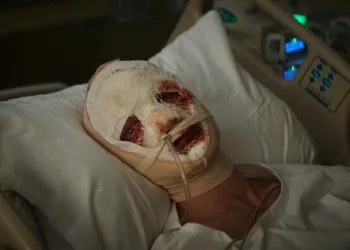
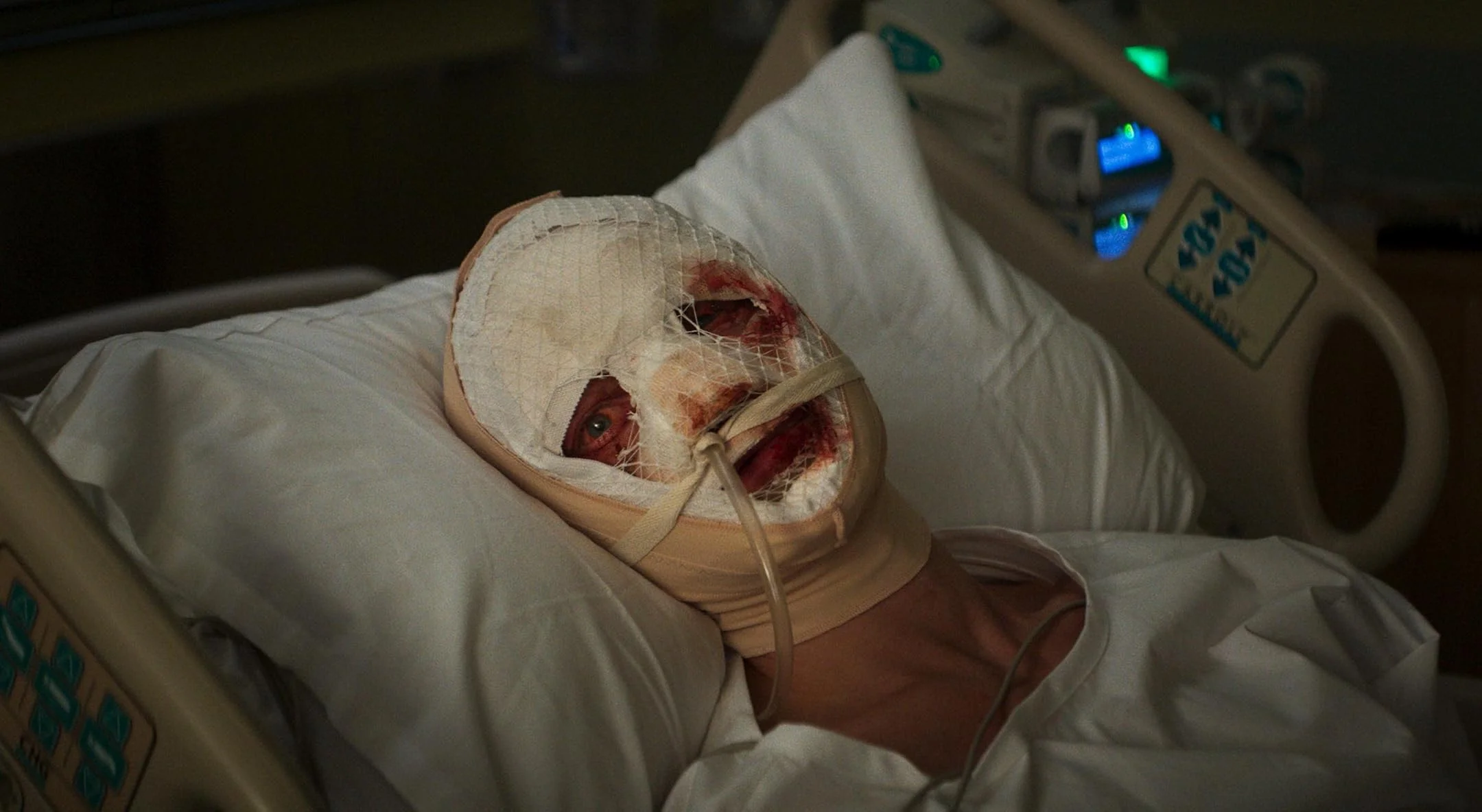
James Watkins’ Clayface, written by Mike Flanagan and Hossein Amini, gives this predicament an exceptionally vicious beginning. Matt, played by Tom Rhys Harries, has recently earned an Oscar nomination when a visit to his native Gotham ends with him sleeping with crime boss Markos Szabo’s girlfriend. Szabo carves up his face. The punishment targets the feature through which Matt escaped poverty, while the subsequent collapse of his career demonstrates how many apparently respectable people agree that his appearance determines his usefulness. The gangster uses a blade. The industry has paperwork.
That distinction gives the film a sharper subject than its intermittently stated observations about Hollywood superficiality. Matt’s disfigurement does not spontaneously destroy his talent, yet it makes him professionally untenable. Corey’s refusal to testify for him extends the injury into friendship, while Gotham’s corruption denies him legal redress. These betrayals make his desperation understandable. They also create a difficult obligation for the screenplay: once Matt starts killing people, it needs to establish what has changed within him, beyond his acquisition of the means.
Before that difficulty takes over, Naomi Ackie’s Dr. Caitlyn Corr brings a useful complication to the prospect of rescue. Her tissue-repair research has been appropriated by financial backers, and treating Matt offers a chance to demonstrate its value. She knows the procedure is unready for human trials. Her resistance matters because proceeding means acting against her own professional judgment, with an emotionally desperate patient offering enthusiastic consent. There is considerable ethical discomfort here before anyone’s skin starts moving.
Caitlyn’s attraction to Matt grows within that unequal arrangement. She sees someone worth attending to after his associates have withdrawn, while he offers recognition to a scientist whose work others have taken. Ackie gives the relationship a human warmth that makes Caitlyn’s involvement understandable without removing its troubling circumstances. Her care has become entangled with her need for vindication. Matt needs her to restore his body; she needs the restoration to prove something about herself. Neither has much incentive to stop when the first treatment appears successful.

Her engagement to John, the detective played by Max Minghella, places that intimacy inside the subsequent murder investigation. It is an efficient dramatic knot, perhaps too efficient: the scientist’s partner becomes the policeman following the deaths surrounding her patient. The arrangement keeps the principal characters connected, but the investigation increasingly channels the film toward pursuit just as Caitlyn’s involvement raises questions that deserve time.
Watkins is much firmer when those consequences become physical. During an airplane flight, skin grows across Matt’s eyes, forcing him to cut it away with scissors in the lavatory while turbulence makes precision impossible. The scene assembles its cruelty from comprehensible obstacles. He cannot see properly, cannot hold steady, and cannot wait. The instrument that might preserve his sight can damage it. Nothing abstract is required to make this appalling.
Here the film’s idea of healing becomes particularly nasty. Tissue repair proceeds without consulting the person supposedly benefiting from it. Matt’s body becomes industrious in ways that threaten his ability to inhabit it, and the close attention to wounds, needles, and surgical intervention makes restoration feel invasive long before it becomes impossible. The airplane sequence also puts his desire for bodily control on a different footing from the red-carpet appearance. He is trying to perform the elementary act of seeing. Vanity is an inadequate explanation for what he suffers.
His later violence needs an explanation of its own. Matt’s excessive self-administered dose establishes a reckless decision, and his pursuit of those who betrayed him establishes purpose. Yet the progression from involuntary bodily collapse to controlled impersonation and murder lacks a sufficiently clear relationship between desire and ability. Anger, unstable tissue, and vengeance arrive in close succession without always developing into a persuasive account of one another. Harries can make Matt’s desperation accessible, but the screenplay asks that desperation to carry him across some large moral distances.
The expanding powers contribute to the problem. A face that collapses under emotional pressure makes vulnerability visible. A body that can assume identities and function as a weapon offers increasingly convenient solutions to practical difficulties. Some uncertainty suits a man losing confidence in his own form. The suspense becomes less secure when the film has trouble establishing what can obstruct him. Each fresh capacity risks bypassing a decision through which we might have understood him.
The nightclub climax exploits those capacities with considerable ingenuity. Matt changes appearances among the crowd while pursuing Szabo, turning other bodies into concealment and familiar supporting faces into temporary accomplices. His profession acquires a lethal application: impersonation lets him approach, evade, and misdirect. The sequence also reverses his earlier dependence on recognition. At the premiere, being identified grants him access. On the dance floor, other people’s inability to identify him grants him power.
Those transformations make the pursuit lively, but they change the work the viewer is doing. Attention shifts toward locating Matt within a succession of bodies, away from following the person choosing the violence. His occasional reappearance as himself briefly restores that connection.
There he is, using the very face he endured so much to recover, voluntarily exposing it before taking shelter in somebody else’s. The gesture suggests a lingering appetite to be witnessed, even while every borrowed appearance helps him evade the consequences of being seen.
Clayface premiered in theaters across North America and internationally on October 23, 2026, via Warner Bros. Pictures and DC Studios. Directed by James Watkins and written by Mike Flanagan alongside Hossein Amini, the body-horror thriller follows rising star Matt Hagen as a horrific accident and toxic chemical exposure stripping away his identity cause him to undergo a terrifying monstrous transformation.
Where to Watch Clayface (2026) Online
Full Credits
Title: Clayface
Distributor: Warner Bros. Pictures, DC Studios
Release date: October 23, 2026
Rating: R / 16
Running time: 1 hour 49 minutes (109 minutes)
Director: James Watkins
Writers: Mike Flanagan, Hossein Amini
Producers and Executive Producers: James Gunn, Peter Safran, Mike Flanagan, Trevor Macy
Cast: Tom Rhys Harries, Naomi Ackie, Max Minghella, Eddie Marsan, Ruby Sear
Director of Photography (Cinematographer): Tim Ives
Editors: Jon Harris
Composer: The Newton Brothers
The Review
Clayface
Clayface makes a persuasive case that Matt’s desperation belongs partly to the people who discard him. Its bodily horror gives that argument painful substance, and Naomi Ackie lends warmth to a medical relationship full of compromised intentions. I believe Matt wants his life back. His transformation into a killer is harder to follow, especially as new abilities keep making revenge easier. The nightclub delivers inventive carnage, but the tragedy needs firmer decisions beneath the changing faces.
PROS
- Visceral, precisely constructed airplane horror
- Thoughtful connection between appearance and employment
- Ackie’s warmth complicates Caitlyn’s involvement
- Inventive nightclub impersonations
CONS
- Uneven development of Matt’s murderous choices
- Unclear limitations on his expanding powers
- Caitlyn’s ethical conflict receives insufficient development