






















Thai director Thiti “Tongte” Srinuan opened a panel in Taipei by showing a photo of himself defecating on camera, and then used the moment to explain how a low-budget regional studio built a blockbuster. Srinuan, who wrote and directed the horror comedy “The Undertaker” and its sequel for Taibaan Studio, spoke as the sole panelist at the Taiwan Creative Content Fest.
His session examined how online content is becoming a route to theatrical features. The photo came from his early years as a supporting actor in Taibaan’s films, when he played a character described as mad, who relieves himself wherever he pleases. The production refused to use a prop, so Srinuan did it for real, with dozens of crew members watching. He said the scene showed him how far the studio goes for realism, and that this commitment gives its universe room to stretch.
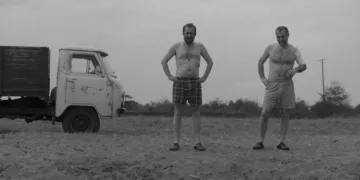
Those early films played almost entirely to audiences in Thailand’s Isan region. Revenue from online music videos bankrolled much of the studio’s output. Srinuan said he shot music videos in the months between productions, since a Thai film can take a year to assemble.
The strategy paid off with “The Undertaker.” The film cost a budgeted THB10 million ($297,000), though Srinuan said the team spent only THB8 million ($238,000). It then grossed over THB700 million ($20.8 million) in Thailand. Srinuan argued that the result proves ideas count for more than budgets. He studied Charlie Chaplin and leaned on visual storytelling over dialogue, and he said he watches audience comments more closely than likes or shares.
Success has changed his job. Having handled writing, directing, acting, editing and sound himself, Srinuan took marketing classes after the first film. He also noted that the hit has pulled a wave of Thai YouTubers toward features. That wave carries risk. A large online following does not guarantee ticket sales, a point Srinuan raised while discussing creators who assume their audience will follow them to theaters. He closed with a question aimed at the Taiwanese industry. “Does Taiwan still want blood-splattered Thai films?” he asked the room.