















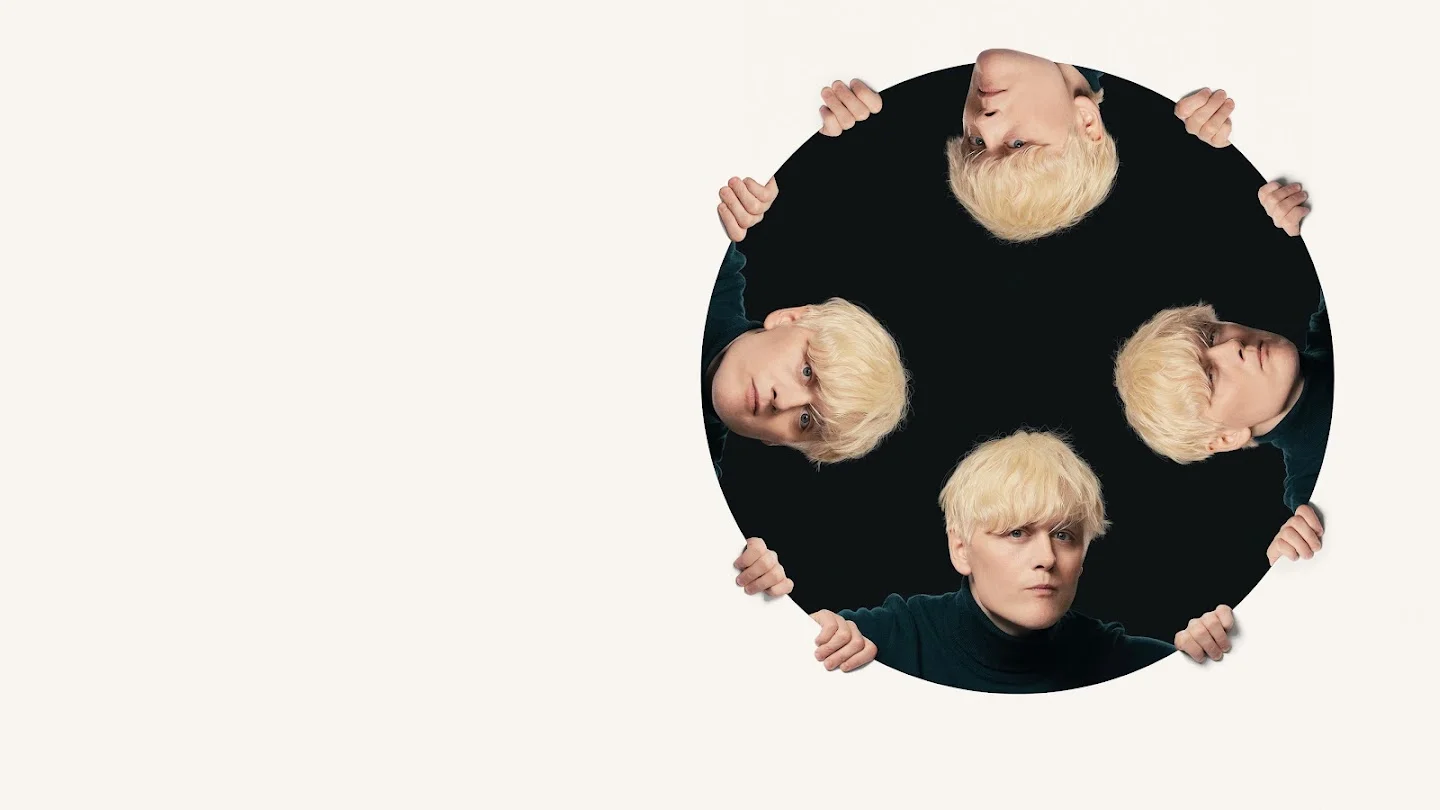

A conventional investigative documentary catches someone selling a lie and works backward to show us how it happened. Watching Oobah Butler, I enjoyed the stranger arrangement: he builds the lie himself, then invites us to see how readily the world accepts it.
That reversal gives HBO’s five-part Oobah: Scams for a Better Tomorrow its energy and sense of discovery. This is funny, inventive television, and I would recommend it to anyone curious about how easily trust can be manufactured. It becomes less convincing when the people who place that trust receive less attention than the tricks used to fool them.
Butler has tested such systems for years. In 2017, he turned a garden shed into London’s top-rated restaurant on Tripadvisor through manufactured ratings, despite having no real restaurant to offer. His new series applies that instinct to wellness, wine, dating apps, popular music, and royalty. Each half-hour follows an absurd goal through the loopholes and collaborators that might make it achievable.
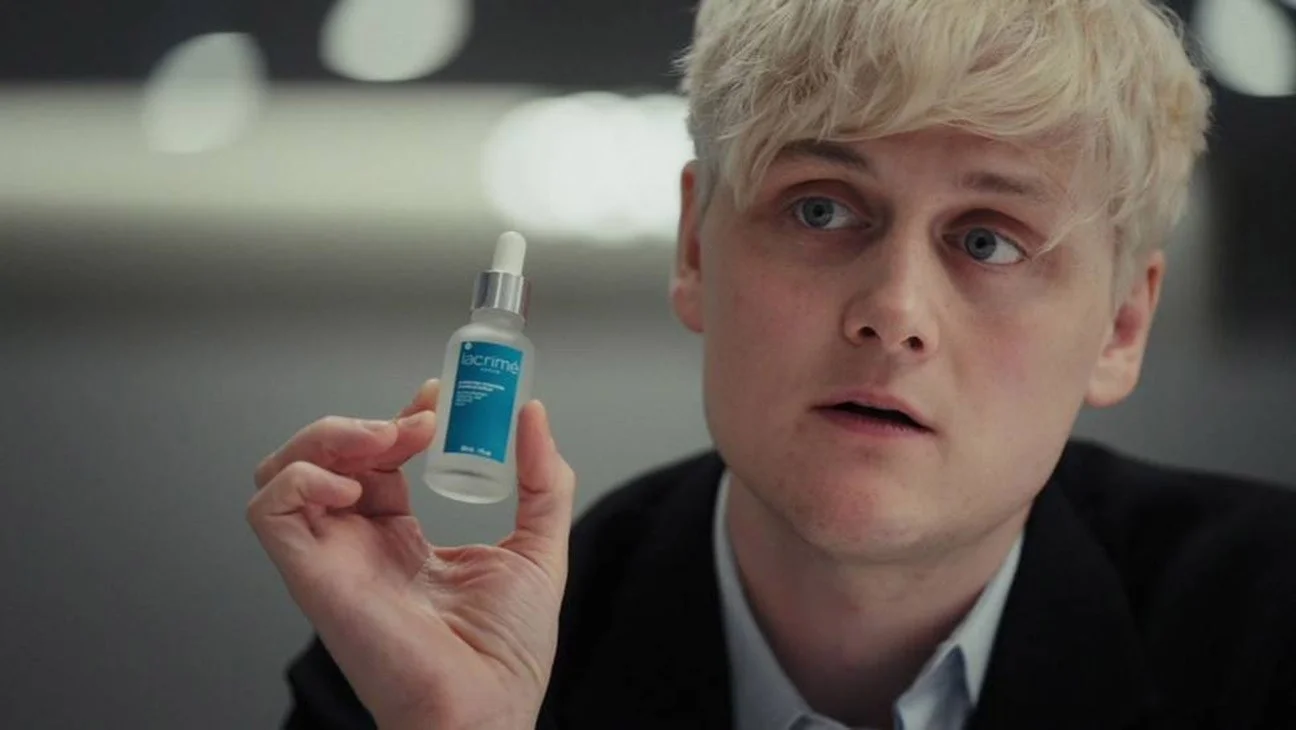
There is a useful craft term for the approach: procedural storytelling. It means the steps involved in doing something become the drama, rather than being concealed until a surprise reveal. Consider “Wellness,” where Butler sets out to market Lacrimé, a skin serum supposedly derived from children’s tears.
We see the outrageous idea, the effort to give it the appearance of a real product, and the promotional machinery that might persuade someone to buy it. A row of children wearing goggles to collect tears is an image you would expect to end the joke. Here, it is one stage of the production plan, with further stages still to come.
The escalating endorsements are where the method pays off. Butler recruits influencers, seeks advice from former Theranos chief creative officer Patrick O’Neill, and secures an endorsement from someone named Cameron Diaz who is not the film star. I found the sequence fascinating because the humor is so closely tied to the lesson. A familiar name and convincing presentation can do the work that actual evidence of a product’s effectiveness should do. His proposed supplement involving lab-grown human meat pushes the experiment into still stranger territory.
“Wine” is a terrific companion piece because its raw material is so plainly unpromising. Butler starts with smoke-damaged Napa Valley grapes and attempts to sell the resulting wine as a luxury product at $500 a bottle. The gap between its origins and its proposed price makes the mechanics of prestige visible.
I was especially amused by his attempt to cheat a sommelier examination using a concealed vibrating device and advice from an outside expert. The stunt is ridiculous, yet it belongs to the same experiment: if the signs of expertise can be copied, how reliably do people distinguish an authority from someone acting like one? Watching the labor involved in constructing that impression is enormously satisfying.
There is something generous about a show that lets us inspect its machinery this closely. A prank can leave an audience feeling clever for knowing something its unsuspecting participants do not. Butler’s better experiments offer the pleasure of recognizing a process that operates around us every day, from a glowing endorsement to an expensive label.
My enjoyment became less straightforward during “Dating Apps.” Butler creates a service whose users believe they are communicating with an advanced AI companion. In reality, they are messaging other people. It is a clever reversal of the promise that artificial intelligence can solve the difficulty of human connection.
The participants are effectively practicing conversation with potential partners, giving the experiment a surprisingly hopeful possibility. Yet those conversations occur under false assumptions. These people are looking for companionship, and the show makes their mistaken understanding part of its entertainment. I wanted to spend longer with their perspective before being asked to admire the ingenuity of the setup.
That concern extends to Butler’s recurring meetings with lawyers. They are entertaining because he devises increasingly extraordinary schemes and still wants reassurance that he has stayed on the right side of the law. But these consultations mainly explain the limits he can operate within. They provide less help in thinking through the emotional stakes for the people involved. A legal opinion can answer a practical question for a production; it cannot tell us how someone feels about being used to demonstrate a point.
The running time compounds the problem. Five episodes of roughly 30 minutes each give the series the snap of a comedy show, and the pace makes complicated schemes easy to follow. Butler moves from an outrageous proposal to recruited collaborators to the final test with hardly a pause. Yet that efficiency becomes a weakness in “Wellness,” where collecting tears, arranging promotions, and introducing a human-meat supplement all compete for room. The editing carries us briskly through a chain of actions but rarely stays with the implications those actions raise.
“Music” makes that trade-off especially visible. Butler manufactures an AI-assisted rapper called Nepo and tries to turn a brief hook into a TikTok success and a charting song. The process explains how attention and purchases can produce the appearance of popularity, but the revelation feels smaller than the setup. Encouraging supporters to buy a song to move it up a chart exposes a vulnerability; it tells us little about the people making or listening to music.
“Royalty” takes the series into grander territory. Butler’s attempt to become a royal through marriage to a Cambodian princess leads toward lavish privileges, official protection, and police scrutiny. I admired the nerve involved in carrying the premise this far. Yet the succession of outlandish developments offers little opportunity to absorb what access to those privileges actually signifies.
Watched close together, the episodes repeat a discovery that feels startling the first time and familiar by the fifth: an appearance of legitimacy can be assembled by someone willing to learn the rules. Weekly viewing might give each experiment room to linger. The dating app particularly needs that breathing space. Its users are having real conversations under false pretenses, and I kept wondering what those exchanges meant to the people typing the messages.
Oobah: Scams for a Better Tomorrow premiered on HBO on November 22, 2026, with streaming available on HBO Max. Created by Oobah Butler and directed by Daniel Lucchesi, the five-part documentary comedy series follows Butler as he launches elaborate hoaxes and fake ventures to infiltrate major industries and institutions, including wellness, wine, dating apps, music, and royalty.
Where to Watch Oobah: Scams for a Better Tomorrow Online


Full Credits
Title: Oobah: Scams for a Better Tomorrow
Distributor: HBO, HBO Max
Release date: November 22, 2026
Rating: TV-14
Running time: ~30 minutes per episode (5 episodes)
Director: Daniel Lucchesi
Writers: Oobah Butler
Producers and Executive Producers: Oobah Butler, Dave Kneebone, Janel Kranking, Eli Bush, Ronald Bronstein, Josh Safdie, Daniel Lucchesi, Tristan Cross, Adam Schwartz, Richie Doyle, Conor Hannon
Cast: Oobah Butler, Patrick O’Neill
The Review
Oobah: Scams for a Better Tomorrow
Oobah: Scams for a Better Tomorrow turns outrageous pranks into wonderfully accessible lessons about how easily trust can be manufactured. Oobah Butler's experiments with wellness products, wine, and dating apps are inventive, often hilarious, and genuinely revealing. I loved watching his elaborate schemes come together, especially when the methods proved stranger than the scams themselves. Yet the frantic half-hour format rarely gives the human consequences enough attention. It's an entertaining, clever series that excels at exposing how deception works but struggles to examine what it costs.
PROS
- Inventive, frequently hilarious experiments
- Clever, accessible documentary storytelling
- Fascinating exposure of marketing manipulation
- Butler's infectious enthusiasm and audacity
CONS
- Episodes rush through important consequences
- Limited attention to deceived participants
- Some experiments offer predictable revelations
- Repetitive themes across five episodes