









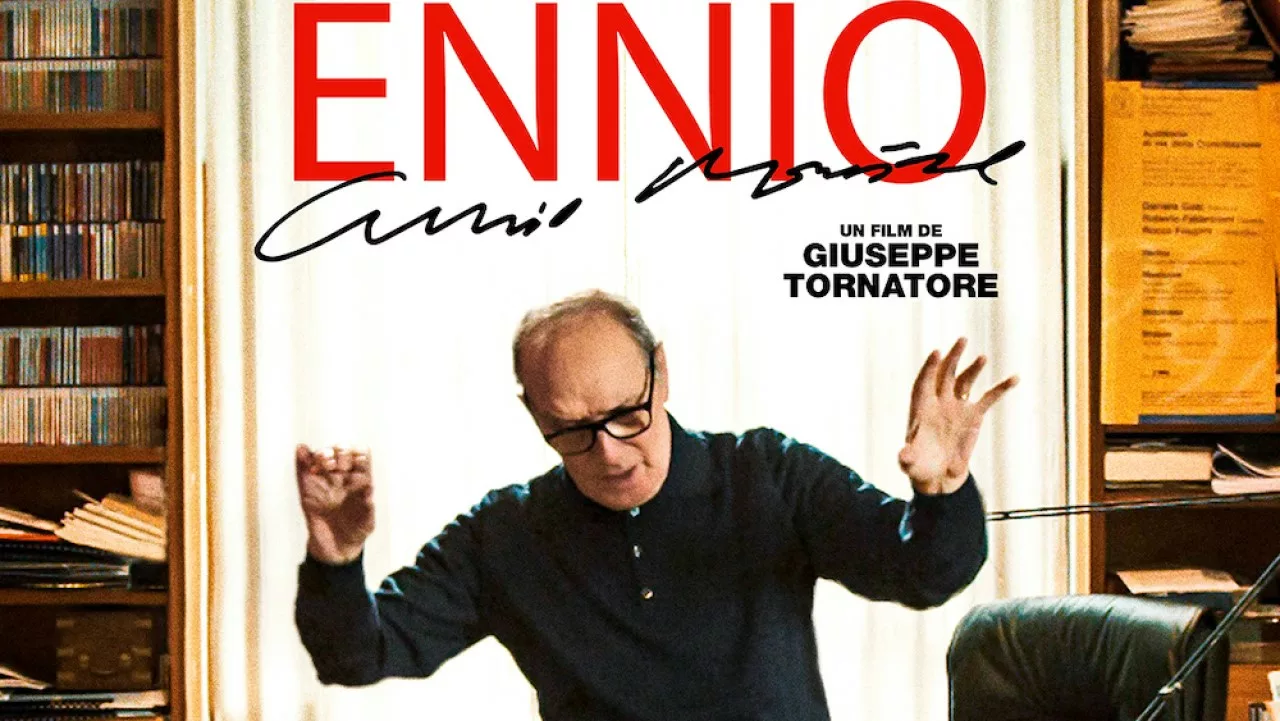

Close your eyes for a minute and picture a gritty gunslinger sauntering into a dusty town, cigarettes dangling from chapped lips, poncho fluttering behind him. Now imagine that scene without the haunting whistle and galloping rhythm that backdrops his cold stride. Pretty hard to do, right? That’s the power of Ennio Morricone’s iconic scores. As one of history’s most influential film composers, he elevated movies into symphonies, blending perfectly with each scene to amplify moods and moments into masterpieces.
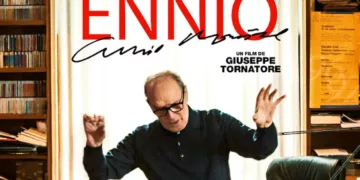
Yet despite creating over 400 of cinema’s most memorable themes, the unassuming Italian maestro never believed his work deserved to stand beside the great classical composers. A new documentary from Giuseppe Tornatore aims to prove him wrong. Titled simply “Ennio,” it’s an intimate look into the quiet genius behind the calling cards of Sergio Leone’s spaghetti westerns, Quentin Tarantino’s revisionist tableaus, and so many more.
Through unseen rehearsal footage and conversations with collaborators like Clint Eastwood and John Williams, Tornatore constructs a rich tribute to his friend and recurring creative partner. More impressively, Morricone himself narrates much of his six decade career in extensive interviews shot in the final years of his life. What emerges isn’t just a collection of famous scenes enlivened by legendary orchestration, but a portrait of an artist wrestling between innovator and imposter, visionary and accompanist, perpetually pushing his own boundaries even when convinced his best melodies had already been written.
From Humble Trumpeter to Avant-Garde Rebel
Long before his music amplified Eastwood’s icy glare or Tarantino’s balletic violence, Ennio Morricone was just a working-class kid enamored with medicine, mathematics, and the mysteries of the body. But his trumpeter father had other plans, shoehorning little Ennio into formal musical training at age 12. What came next was 10 grueling years cramming counterpoint and conservatory rules at Rome’s prestigious Santa Cecilia.
https://www.youtube.com/watch?v=q5WBbULw_0U
Morricone excelled under modernist master Goffredo Petrassi, absorbing avant-garde flourishes from Stravinsky and Cage while outpacing his fellow students. But chained to supporting his family on small gigs and summer resort jobs, he felt looked down upon by bourgeois composers chasing loftier symphonic dreams. Even scoring chart-topping Italian pop hits in secret left Morricone empty, as he longed for the approval of his aloof mentors.
These dueling aspirations collided when childhood classmate Sergio Leone enlisted Morricone for a string of films reinventing the American Western. Horrified at sullying his high-art pedigree on lowbrow genre flicks, he used clever pseudonyms like Dan Savio and Leo Nichols.
But Leone’s visionary style freed something in Morricone. He found himself infusing throwaway commissions with daring vocal ululations, brash electric guitars, even wailing coyotes and cracking whips. Yet even as critics celebrated his pioneering fusion of high and low art, Morricone’s deep-seated need to impress his long-dead professorial idols would haunt him for decades to come.
From Spaghetti Icon to Prolific Chameleon
Morricone’s innovative fusion of high art and pop finally clicked for worldwide audiences with his scores for Sergio Leone’s seminal “Dollars Trilogy.” He took Hollywood by storm, warping John Ford tropes into acid-trip showdowns, backed by ecstatic shouts, cracking whips, and of course – that whistle.
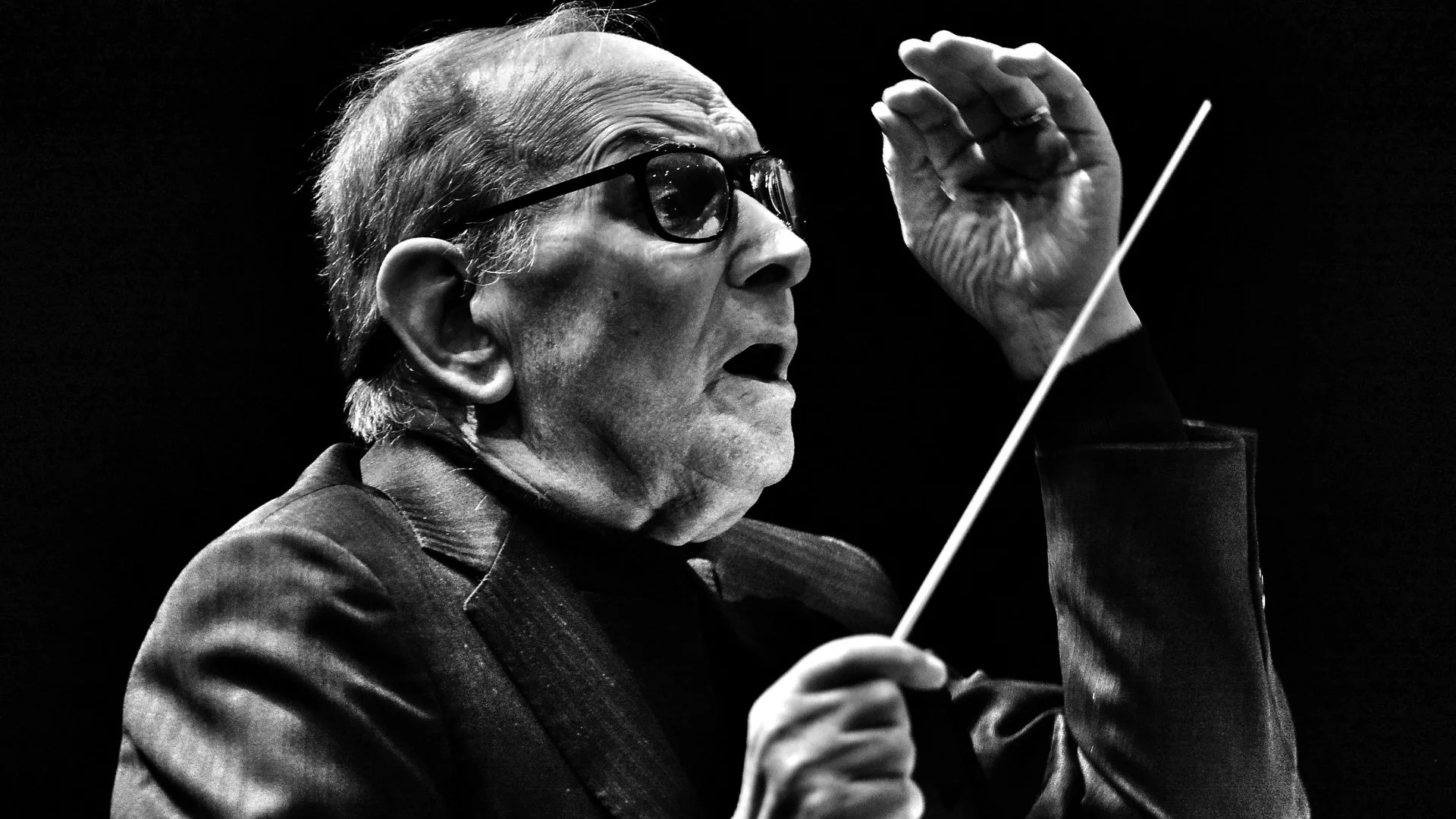
Yet even as critics celebrated his distinct sound, Morricone squirreled himself away, determined to prove his versatility beyond saddle songs. He spent the late 1960s relentlessly reinventing himself, spanning Giallo horror, Italian crime dramas, even political potboilers like The Battle of Algiers. During his early 70s apex, the maestro composed an astounding 21 soundtracks per year, experimenting with muscular funk backbeats, lush romantic preludes, even musique concrète clutter and typewriter clacks.
But Morricone’s most iconic work remained his spaghetti landmarks. He famously reused one of his own cowboy tunes in Once Upon A Time in The West, enriching his Eh-eh-eh-eh motif with homoerotic solemnity to score Charles Bronson’s haunting harmonica solos. And his reinvention of Degüello in The Good, The Bad and The Ugly attained true cinematic symbiosis. As Eli Wallach circles a graveyard shootout, Morricone’s score takes on the footstep rhythms of the scene itself, letting images and instrumentation dance together.
Despite praise for how effortlessly his music molded to each film, Morricone never saw himself as a mere accompanist. He composed fully-formed orchestral movements, often ahead of any production. Roland Joffé recalls the maestro attacking sheet music “like an athlete,” furiously scribbling complete suites before directors shot a single frame. But this method let Morricone infuse initial conversations with emotional complexity, guiding performances to match cues already resonating in his imagination. The results made his partnerships transcendent, even when attached to less transcendent films.
The Alchemist Who Turned Noise Into Music
So what made Morricone’s music so revolutionary? For one, he crammed avant-garde atonality into pop conservatism long before the Beatles got weird. While his peers framed singers with string sections and saxophones, Morricone built whole worlds from everyday cacophony – whistles, bells, creaky chairs. His training let him mold these oddities into elegance.
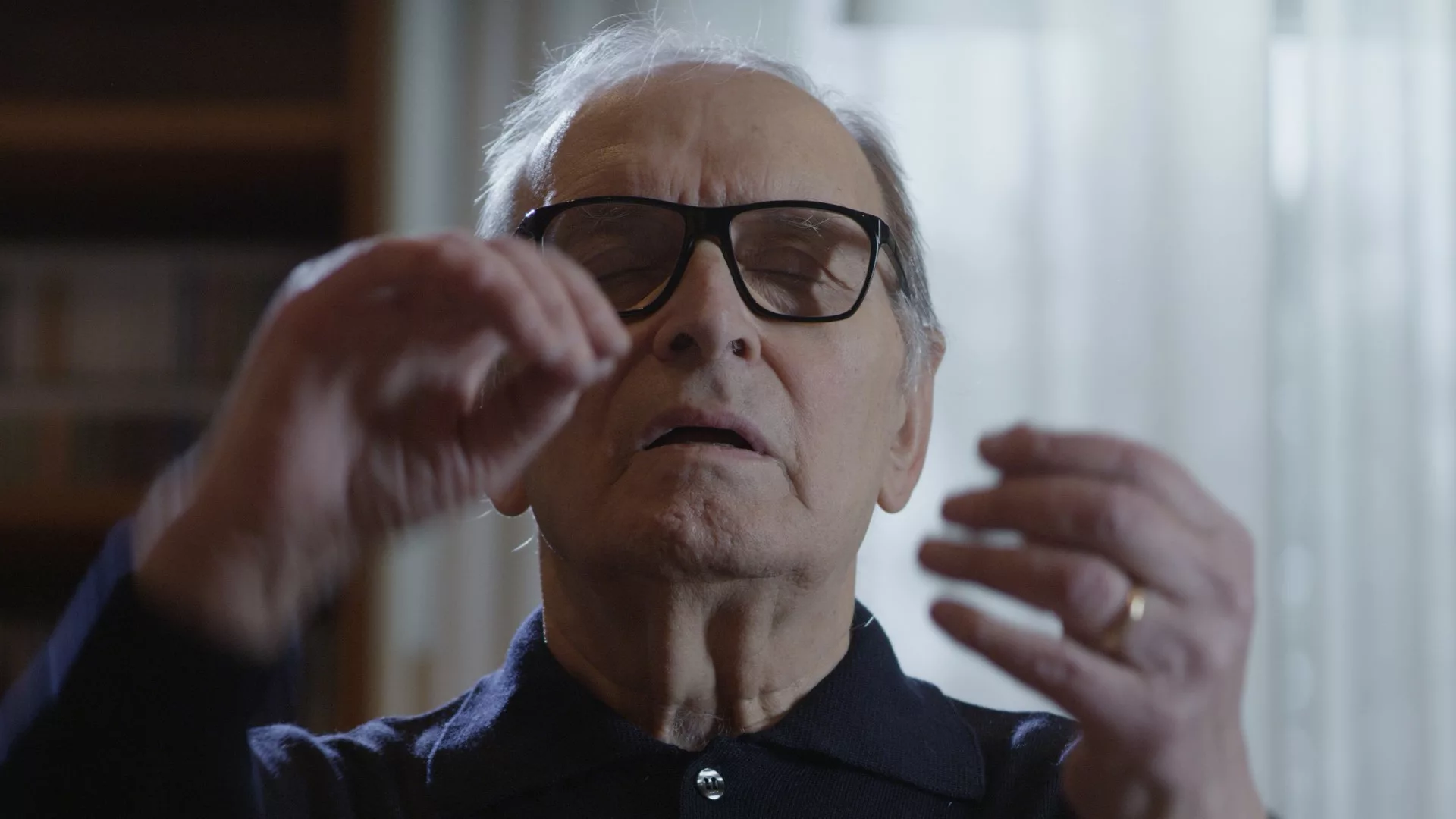
And then there was his gift for contextual alchemy. Morricone wielded sound like a paintbrush, knowing precisely which seemingly banal flourishes would amplify each scene’s subtext. Those infamous coyote howls from The Good, The Bad, and The Ugly; the panicked typewriter clicks underscoring the paranoia of Investigation of a Citizen Above Suspicion; the liturgical chorales breathing solemn purpose into The Mission – all should have clashed against the onscreen action. Instead, they bonded inseparably thanks to Morricone’s preternatural marriage of sight and sound.
The maestro famously created mood-setting suites before cameras rolled, allowing directors to choreograph around his compositions. Nowhere was this more special than with Leone, who played Morricone’s pre-production themes on set to guide performances. This inverted process let music lead emotion rather than echo it. As Once Upon A Time in America opens on Robert De Niro wandering a hazy opium den, it’s Morricone’s heartrending nostalgia that clues us to feel the character’s longing before he expresses it himself.
Perhaps this explains the stunning diversity of directors craving a Morricone collaboration. His 400-plus scores ranged across genre and scope, complementing European art films and Hollywood blockbusters alike. Yet his iconic sound always shone through while perfectly accentuating each project’s unique voice. Right up until his recent passing, Morricone was still sparking new fireworks, proving that whether or not his CANCEL melodies Approach the theoretical peak he always feared, their alchemical power over images remains eternal.
Explore the vast possibilities of robotic civilizations in our Stellaris: The Machine Age review. Dive into the intricacies of leading sentient machines and forging alliances in this latest expansion, adding depth and complexity to the beloved 4X strategy game.
The Maestro Takes His Final Bow
When Ennio Morricone passed in 2020 at the ripe age of 91, he’d long been considered one of cinema’s instrumental virtuosos. Yet the unassuming Italian remained haunted that his film scores paled beside the great classical masters. Giuseppe Tornatore’s loving portrait Ennio aims to convince its subject otherwise, tracing a career where Morricone infused stale genres with boundary-exploding electricity, reinventing the symbiotic language of sight and sound over 60 prolific years.
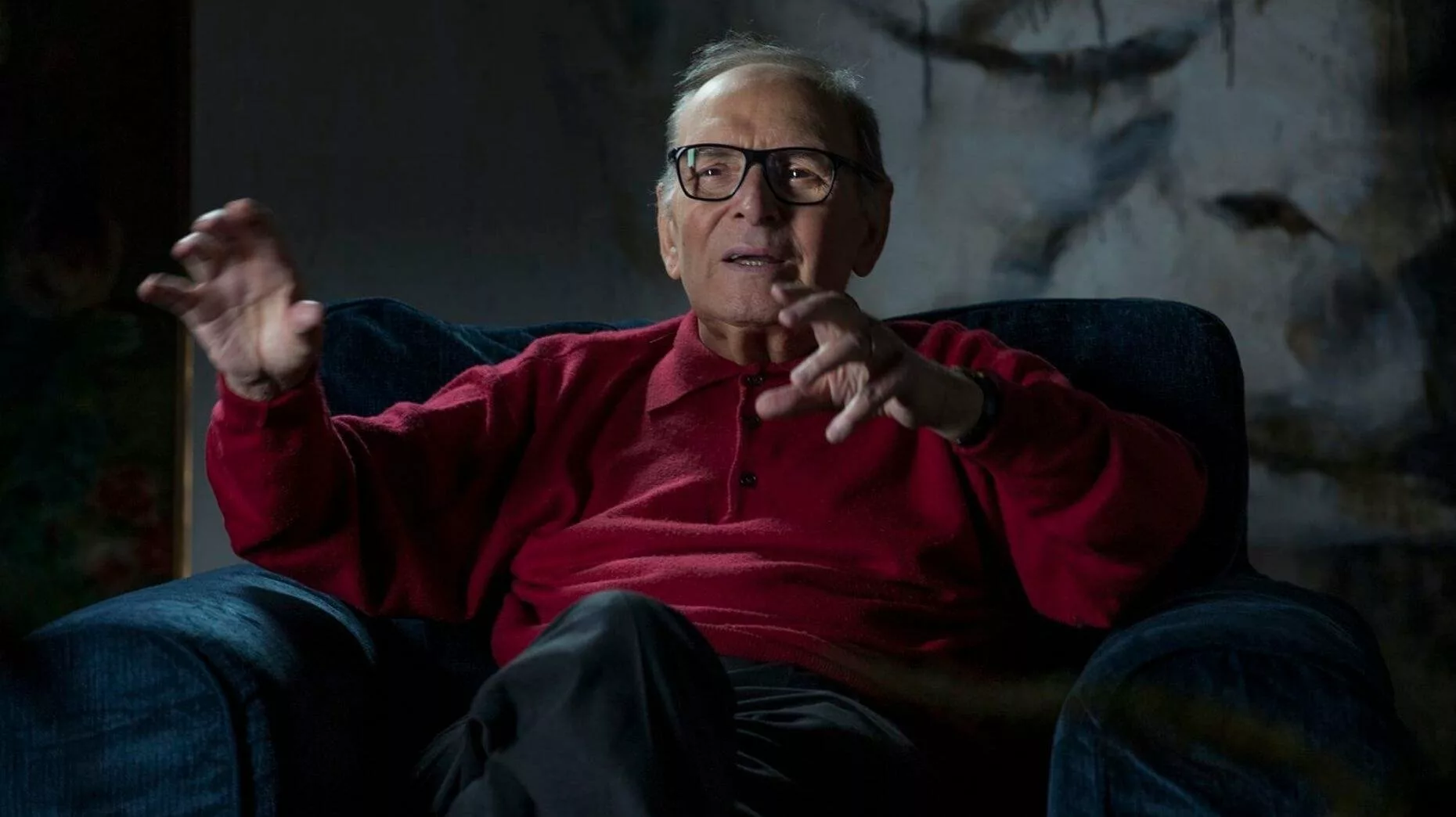
Yes, the documentary indulges in appreciated – if excessive – celebrity testimonials and behind-the-scenes minutiae. But through it all emerges a profound portrait of an ingenious perfectionist, never allowing himself to rest on the iconic partnerships and timeless melodies that made his name. Even when pushing 90, Morricone approached each commission with the anxious energy to prove himself, cramming innovative ideas into inevitable formulas.
No wonder Ennio Morricone’s music echoes through nearly all modern cinema. Those lingering whistles, galloping rhythms, and weeping chorales didn’t just magnify the movies they graced – they expanded our sheer capacity for what film scoring could achieve. So while the humble maestro may have left convinced his work paled to Bach or Beethoven, his immortal soundtracks will forever linger through theaters and living rooms, ensuring Ennio’s place among history’s most seminal sonic visionaries.
The Review
Ennio
Giuseppe Tornatore’s loving documentary is a fitting testament to an innovative icon who forever intertwined cinema with singular orchestral imagination. While Morricone fans may have preferred more moments spotlighting his renowned theatrical tactility, Ennio remains a worthy valentine brimming with humor, humility, and profound reminders why its namesake’s ingenious scores will live forever.
PROS
- Features extensive interviews with Morricone himself
- Includes great behind-the-scenes footage and anecdotes
- Wonderful footage of Morricone's acclaimed concerts
- Tribute from many musicians/directors who admire him
- Spotlights lesser known facets of his career
- Gives insight into his compositional process
- Full of memorable themes from his iconic scores
- Captures Morricone's humor and humility
CONS
- Very long runtime at 156 minutes
- Perhaps too conventionally structured
- Overkill with effusive celebrity praise
- Could have used a little more critical analysis
- Omits a few details of personal life