

























Huang Xi’s second full-length film, “Daughter’s Daughter,” is a deep look at how complicated motherhood can be. It premiered to great reviews at the 2024 Toronto International Film Festival. This deeply introspective film explores the complex emotional landscapes of three generations of women, creating a narrative that goes beyond typical family drama.
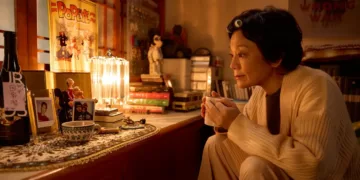
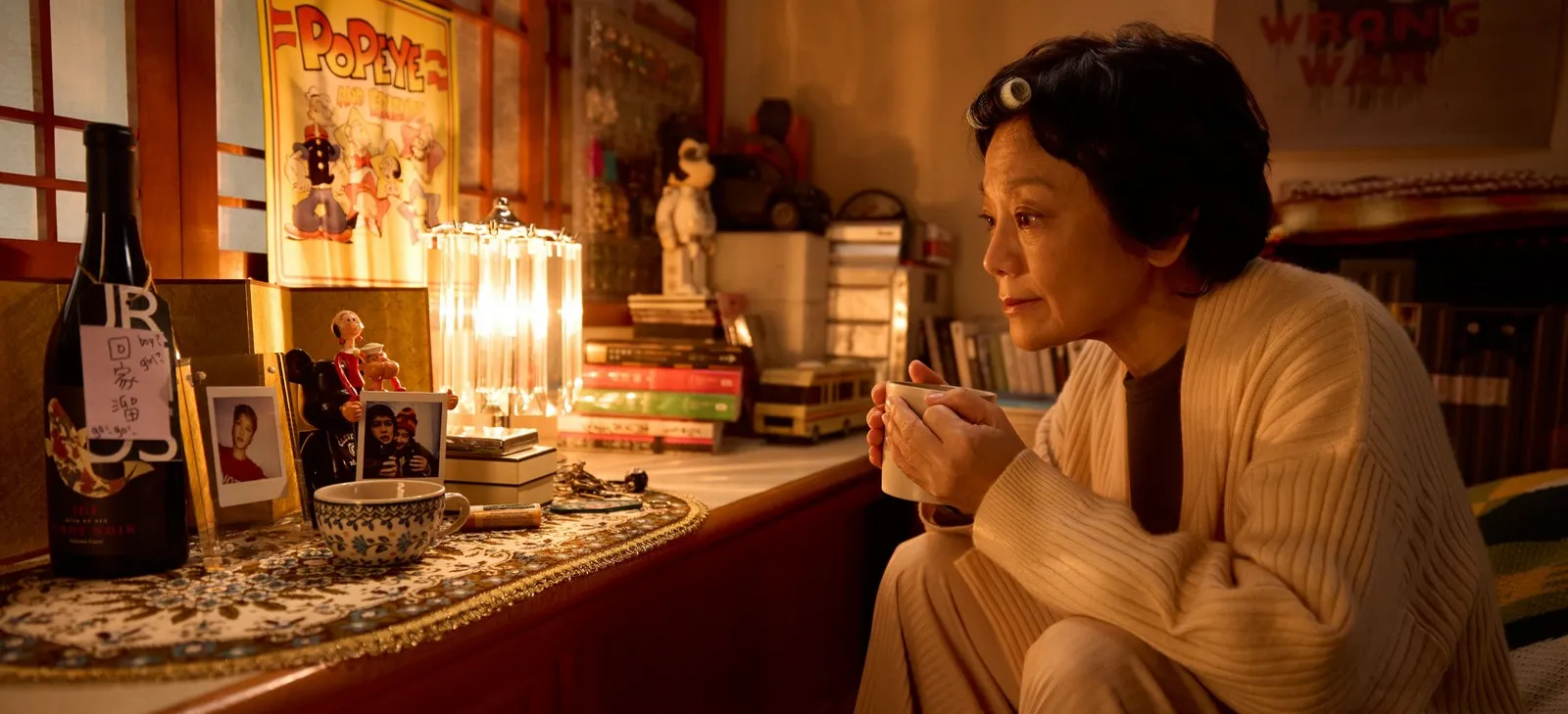
At the story’s center is Jin Aixia, a sixty-four-year-old Taiwanese divorcee played brilliantly by veteran actor Sylvia Chang. Her life turns into a maze of unexpected problems. When Jin lives in Taipei, her world is centered on her dementia-stricken mother and her daughter Fan Zuer, who is trying IVF treatment in New York with her boyfriend Jaiyi.
Sad events happen, and Zuer and Jaiyi die in a car accident. Jin is then put in an unimaginable situation: she is made the formal guardian of Zuer’s frozen embryo. This event turns into a furnace that makes her face her past, especially her troubled relationship with Emma, the daughter she gave up for adoption in New York years ago.
The film does a great job of exploring themes like pain passed down from generation to generation, maternal guilt, and how the idea of family changes over time. Jin has to deal with her complicated feelings, including doubts about Zuer’s life choices, unresolved feelings toward Emma, and the sudden duty of possibly becoming a grandmother through strange circumstances.
In her narrative, Huang Xi shows how family ties can be both weak and strong. The film shows the complex emotional terrain of motherhood through Jin’s journey, including its disappointments, unexpected joys, and deep transformative potential.
Emotional Landscapes: Unraveling Family Dynamics
The narrative of ” Daughter’s Daughter ” defies linear storytelling by focusing on a complicated emotional journey that travels through time and memory. The film starts with an important prologue in Taipei in the winter of 2018. Jin has a broken leg, and her mother’s dementia is already casting long shadows over their lives. This first scene becomes a strong anchor that sets up the complicated connections that are about to happen.
Huang Xi uses memories well, though they don’t always work together. As the years go by, these changes show how deeply divided groups are emotionally. The narrative’s jumps between Taipei and New York create a visual and emotional contrast that reflects Jin’s internal struggle. As the story goes on, the color palette itself tells the story. It changes from the soft, muted tones of Taiwanese life to the bright, saturated colors of New York, representing the emotional turmoil below the surface.
Jin’s terrible losses of her daughters Zuer and Jaiyi, along with the moral and emotional problems that arise because of the frozen baby, are at the heart of the story. This is not just a loss story; it’s also a nuanced look at the rough terrain of being a mother. The embryo is like a metaphorical fork in the road, where sad memories of the past meet a possible future.
The main narrative is woven with intricate subplots. Jin’s bond with her abandoned daughter Emma adds to the story’s complexity. It shows how unresolved motherly guilt can be passed down from generation to generation. Zuer’s story, with her lesbian relationship, failed IVF efforts, and tragic death, is the opposite of Jin’s more traditional life path.
Resolution isn’t about easy answers; it’s about accepting things. Jin’s journey changes her as she learns more about herself, her children, and the many sides of love and family. It’s a narrative that doesn’t offer easy answers; instead, it looks at human connection in all its horror.
Mothers, Daughters, and the Spaces Between
It’s truly amazing how well Sylvia Chang plays JinAixia; her performance captures the complex emotional world of a woman navigating the many facets of motherhood. She plays Jin with an amazing combination of toughness and vulnerability, transforming what could have been a simple narrative into a deep character study. With extraordinary nuance, Chang navigates Jin’s inner turmoil, showing a woman stuck between her age expectations and her personal growth.
Jin’s character arc is an excellent look at motherhood’s complexity. At first, she seems like a distant mother who doesn’t trust her daughter Zuer’s decisions, but as the story goes on, she shows that she is full of love and pain. Jin’s emotional struggle with her past, her abandoned daughter Emma, and her understanding of motherhood are all sparked by the tragedy of losing Zuer. Chang’s performance makes Jin’s journey feel achingly real, showing how grief can break down emotional walls that have been up for a long time.
A lively, rebellious energy is added to the film by Eugenie Liu’s Zuer. Even though she doesn’t have much screen time, she becomes a strong example of how different generations are. Jin and her relationship is beautifully difficult. There is tension, love, and understanding that they don’t say out loud. When Zuer calls her mom in tears to tell her how much she misses her, it shows how deeply connected they are emotionally, even though they seem at odds with each other.
Emma, played by Karena Lam, is a study in controlled pain. She has many repressed feelings because she was given up for adoption as a child. In her encounters with Jin, she is cold and direct, which hides deeper weaknesses. Lam captures the complicated feelings of a child who has grown up without a mother, who is both angry and longing for connection.
The supporting characters give the narrative a surprising amount of depth. Alannah Ong’s performance as Jin’s mother with memory sets a creepy tone for how the family’s generations interact with each other. Even though Tracy Chou’s Jaiyi is only seen briefly, she represents how family and love are changing.
These acts are truly amazing because they show that family is not about being perfect but about connection—a connection that is messy, hard, and strong in the end. Each character is like a thread in a larger tapestry of human feeling. Together, they make a story that is both deeply personal and relevant to everyone.
Unraveling Life’s Intricate Emotional Tapestry
From an abstract idea, “Daughter’s Daughter” turns sadness into a real, breathing experience. The film shows Jin’s journey through grief as a complicated landscape—not a straight line, but a web of feelings that destroy and rebuild one’s sense of self at the same time.
The film’s beating heart is motherhood, which is handled with amazing depth and complexity. The narrative bravely shows how maternal love goes beyond conventional limits by exposing its messy, flawed nature. Jin’s interactions with her girls show different stages of understanding. For example, her complicated relationship with Zuer shows the tension between generations. In contrast, her relationship with Emma shows how early separation can affect a person for a long time.
The embryo is a deep metaphor for promise and a literal representation of responsibility. Jin’s moral problem isn’t just about making a biological choice; it’s also about facing her past, how she sees family, and the complicated meanings of continuity. Without providing easy answers, this narrative thread does a fantastic job of challenging difficult moral dilemmas.
LGBTQIA+ representation in the film feels pleasantly organic. Zuer’s relationship with a woman is not a political statement; it’s just a part of who she is. The film shows how love can coexist with initial misunderstanding by exploring familial acceptance through nuanced exchanges. Jin’s journey from doubt to final understanding is a powerful example of how family relationships change.
The film’s emotional landscape contains many unspoken tensions and tender moments. It shows how family relationships can be both strong and weak simultaneously, depending on the person, their age, and their level of human understanding.
“Daughter’s Daughter” isn’t just about motherhood or loss. It’s about how humans can find connection in the most unexpected times of weakness while navigating challenging emotional terrain.
Crafting Emotional Landscapes: Narrative Architecture
In “Daughter’s Daughter,” Huang Xi’s direction offers a nuanced look at human depth. Storytelling turns into a personal conversation with the audience’s feelings, and his approach rejects conventional narrative conventions, resulting in a movie experience that feels more like a deeply personal discussion.
The script navigates difficult emotional terrain with extraordinary delicacy. With the help of three generations of women, Huang is able to capture the hidden tensions in family relationships in a very powerful way. The dialogue feels real and honest; the characters don’t just talk; they show complex layers of their inner battles.
Huang transforms non-linear story telling into an effective narrative tool. Not just ways to explain things, flashbacks are emotional echoes that show why characters do what they do and what happened to them in the past. To create a rich, multidimensional narrative landscape, these temporal changes reflect how fragmented memory and grief are.
The film’s slow start reflects Jin’s emotional reluctance. The first act rambles, capturing the protagonist’s disconnected feeling. But what seems like an uneven beginning is a planned way to tell the story. The narrative picks up steam naturally as it progresses, and the third act has a particularly strong emotional impact.
The intimate story telling of directors like Celine Song is especially evident in Huang’s direction, which is influenced by modern Asian film. Using visual landscapes to highlight emotional terrains, he captures New York and Taipei with a painter’s eye.
A film is not the only result of this. It is a carefully made emotional journey that shows viewers how complicated and often messy human connections can be. Huang Xi shows that real storytelling isn’t about perfection but about capturing the beautiful, flawed moments that make up our lives.
Visual Poetry: Mapping Emotional Landscapes
“Daughter’s Daughter” changes the language of film into an emotional subtext. Through carefully planned visual compositions, the visual narrative transforms into a profound conversation between spaces, capturing the complex psychological landscapes of its characters.
Taipei turns into a muted canvas, with soft blues and grays that show Jin’s restrained emotional world. On the other hand, New York is filled with bright, saturated colors that represent the wild energy of promise and change. These visual contrasts aren’t just choices for their own sake; they’re also deep psychological maps that show how characters struggle inside by telling a story through their surroundings.
The cinematographer does a great job of showing emotional space through framing. During important talks between Jin and Emma, tight, intimate close-ups create a feeling of emotional claustrophobia. In New York, on the other hand, wider shots show how the characters can grow and heal.
Lighting becomes a character. In scenes set in Taipei, the soft, hazy light represents the gradual loss of memory, especially in scenes with Jin’s mother, who has dementia. In the New York scenes, the lighting is more dynamic, with deep shadows and strong contrasts that show how unstable the characters are on the inside.
There are many symbolic visual metaphors. Windows, mirrors, and glass that reflect light are common themes that show separation and self-reflection. The photography makes it seem like identity is like these surfaces: it has many sides and is always changing.
The visual style goes beyond conventional storytelling, transforming “Daughter’s Daughter” into a lyrical investigation of family relationships. Each frame becomes a fine brushstroke in a complex emotional environment, beckoning viewers to look deeper and find the deep stories hidden there.
Echoes of Humanity: Beyond the Screen
It turns out that “Daughter’s Daughter” is a deeply moving movie experience that goes beyond simple storytelling. Huang Xi has created art that challenges traditional narratives about family, loss, and personal growth by inviting viewers into a personal emotional landscape rather than just telling a story.
The film’s best quality is how complicated it is without trying to be simple. Sylvia Chang’s performance holds together the narrative, transforming what might otherwise be a straightforward family drama into a complex study of maternal love, generational trauma, and human fortitude. The script doesn’t fall into melodramatic traps when dealing with tough topics like surrogacy, adoption, and loss; instead, it gives a real, caring look at human connection.
The film ultimately packs a potent emotional punch, despite occasionally having trouble with flow in its first act. Some viewers might find it hard to follow the story’s non-linear flow. Still, those willing will have a truly rewarding experience.
“Daughter’s Daughter” is a must-see for moviegoers who want to see how real and beautiful human relationships can be. It teaches that family isn’t about being perfect; it’s about understanding, forgiving, and the amazing power of love to go beyond normal limits.
It’s more than just a film; it’s a mirror that shows our weakest, most human sides.
The Review
Daughter's Daughter
A complex and deeply moving look at motherhood, "Daughter's Daughter" goes against traditional family narratives. In Huang Xi's film, Sylvia Chang gives an amazing performance that holds the whole thing together. The film's deep emotional intelligence, creative story telling, and amazing ability to capture the complex dynamics of intergenerational relationships make it a success even though its narrative structure isn't always perfect. Dramatic conventions are broken in this film, which shows loss, identity, and how the meaning of family changes in a raw and caring way over time. Its strength is that it doesn't give easy answers. Instead, it presents a narrative with many layers that respects human feelings' complexity.
PROS
- Exceptional performances, especially by Sylvia Chang
- Nuanced exploration of complex family dynamics
- Innovative non-linear narrative structure
- Sensitive handling of LGBTQIA+ representation
- Profound emotional depth
- Stunning cinematography
CONS
- Occasionally uneven pacing
- Complex narrative might challenge some viewers
- Non-linear storytelling can be initially disorienting
- Some subplots feel underdeveloped