
























![Kingdom Hearts Collection [I-III] Review](https://gazettely.com/wp-content/uploads/2026/10/Kingdom-Hearts-Collection-I-III-1-360x180.webp "Kingdom Hearts Collection [I-III] Review: KHII Holds Steady as Newer Entries Fluctuate 38")


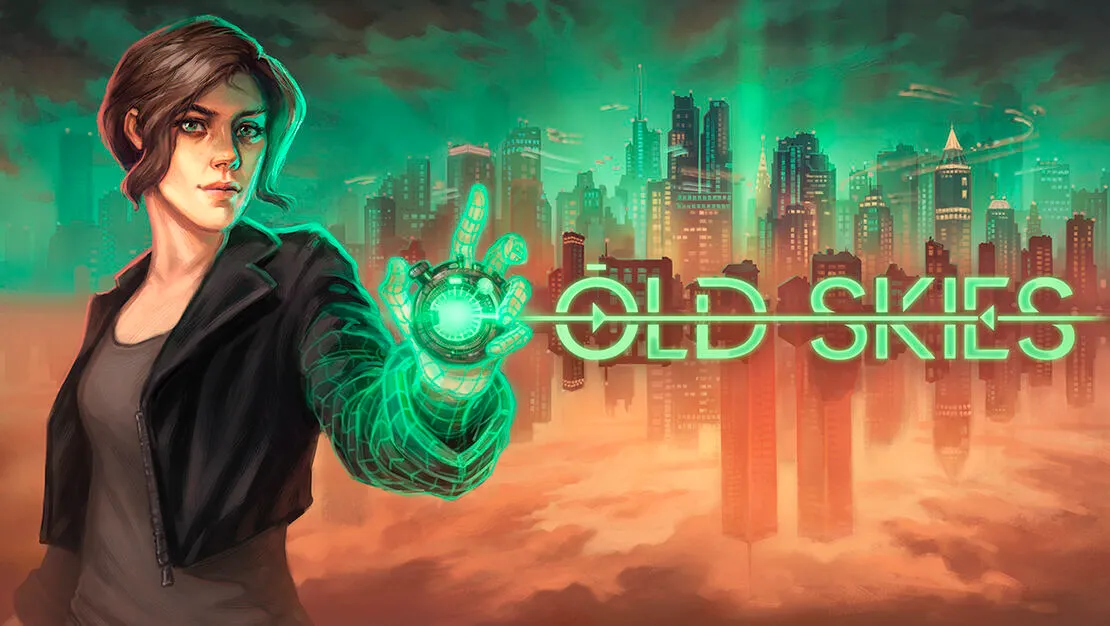

Old Skies unfolds in a near-future New York City where time travel has become a luxury service run by ChronoZen. Players step into the shoes of Fia Quinn, a chronolocked agent whose own timeline remains steady while the city around her ripples and reshapes. Rather than grand cosmic upheavals, the game focuses on intimate missions: clients pay to glimpse or alter moments in their personal histories—recovering lost heirlooms, revisiting a long-gone mentor, or sparing a single life.
Each of the seven chapters transports Fia to a distinct era—from the gaslit streets of the 19th century through jazz-tinged 1920s speakeasies to the neon glow of 2062—framed as standalone adventures that gradually interlock around Fia’s emotional core. Despite its point-and-click roots, Old Skies embraces high-definition art and a jazz-inflected score that evoke each period without heavy exposition, letting visuals and sound guide players through shifting timelines.
While its narrative echoes Western traditions of time-travel tales, the game’s themes—regret, identity under flux, and the cost of small actions—ring universal. By anchoring global motifs of longing and memory in Fia’s personal struggle, Old Skies speaks to players across cultures, inviting them to consider how fleeting moments shape both individual lives and the wider human story.
ChronoZen’s Temporal Web: Rules, Risks and Resonance
ChronoZen’s protocol rests on a paradox: agents and pivotal events remain untouched by timeline edits, while every alley and bystander can vanish or reappear on a whim. This chronolock mechanic mirrors narrative safeguards in global sci-fi—like Japan’s Steins;Gate, where only a few “readers” perceive world-shifting changes—yet Old Skies presses the theme through a human lens.
The Historical Archive functions as both puzzle tool and narrative mirror. Players type or select keywords to unearth lives erased by rival time travelers, then follow those threads into living scenes. Across cultures, archives in fiction often symbolize contested memory—compare Taiwan’s “Detention” or Brazil’s “Tropa de Elite”—but here the archive’s clean interface keeps emotional stakes front and center.
Each chapter reads like a short film: an 1870s street mystery, a 1920s jazz-era romance, a near-future corporate intrigue. These vignettes carry genre markers—farce, noir, tragedy—that echo folktale structures from India to Scandinavia. At first, the tone resets with every mission, yet subtle leitmotifs—Fia’s weary narration, a recurring melody—bind them into a larger mosaic. Scenes involving smashing typewriters or planting photographic evidence recall cinematic methods from Hong Kong thrillers, where prop-driven reveals shift a case’s course. As the missions progress, those echoes begin to reflect Fia’s own inner fractures.
The emotional impact of chronoshifts reveals itself slowly. When a client’s treasured mentor evaporates from existence, the game suspends ticking clocks in emblematic silence. This technique recalls Korean cinema’s use of stillness in “Burning,” where absence speaks volumes. Fia’s detachment cracks as she bears witness to losses no other character registers—her isolation grows more global, a commentary on modern workers uprooted by social and economic churn.
Visually, Old Skies opts for impressionistic strokes rather than ethnographic exactitude. A Prohibition-era scene conjures New Orleans’ smoky bars through bold color contrasts and improvisational camera angles, much like Walter Salles’ “On the Road.” The jazzy score underlines each scene’s emotional palette without spelling out historical detail. In these methods—economy of design and sensory storytelling—Old Skies challenges players to fill temporal gaps with their own cultural memories, inviting reflection on how we all archive, edit and preserve our pasts.
Across Time and Tradition: Gameplay’s Cultural Resonance
Old Skies builds on classic point-and-click foundations laid by Western pioneers and Japanese adventure hits, yet refines them for a global palate. Players explore richly detailed scenes, gathering objects and probing dialogue trees while subtle interface touches—roll-over “look at” prompts—streamline interaction in a way that recalls mobile adventures from East Asia, where touch cues guide novice and veteran players alike.
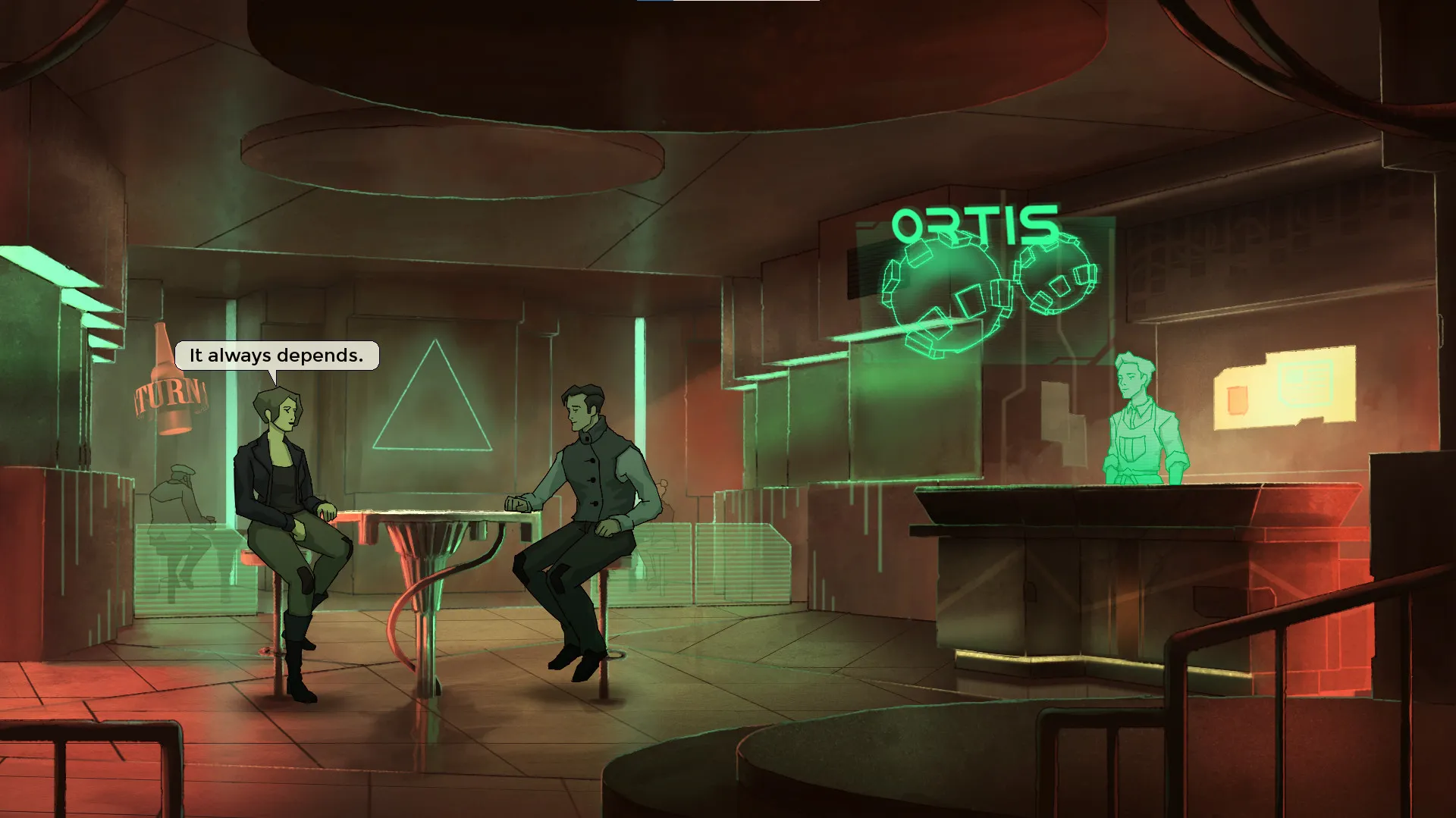
The Historical Archive stands at the heart of Old Skies’ investigatory focus. By collecting keywords during client missions, players unlock database entries that trace lives erased by rival time-hoppers. This mechanic echoes visual-novel evidence systems such as Ace Attorney’s cross-examination, yet it feels closer to European noir’s archival obsessions—think Denmark’s The Killing—where digging through records drives narrative tension. Emails and documents surface as connective tissue between past and present, much as Korean thrillers layer digital clues into physical investigations.
Time-travel integration brings paradox puzzles into play. Switching between past and future versions of the same locale recalls The Silent Age, but with an extra narrative twist: each shift reframes the story’s emotional stakes. Loop sequences—where Fia’s demise rewinds events—mirror global time-loop films like China’s Reset, yet here they underscore a mechanic-driven empathy. Observing a fatal outcome becomes a clue rather than mere spectacle.
Challenge remains grounded in logic. Solutions reward attention to dialogue nuance or environmental details instead of chance clicking, reflecting Japanese design sensibilities that prize player deduction. While loops can feel repetitive—a risk in any Groundhog Day-style puzzle—chapter-specific checkpoints temper frustration.
At the same time, Old Skies hints at deeper sandbox potential. A more open archive interface—allowing free-form searches—might echo investigative simulators from Latin America, where research is central. Expanded branching puzzle paths could weave regional storytelling traditions, inviting players to shape history rather than merely observe it. This tension between guided mystery and open discovery raises a question about how far narrative games should trust players to write their own histories.
Brushstrokes and Brass: A Sensory Tapestry Across Time
Old Skies abandons pixel nostalgia for lush, hand-painted HD backdrops that recall the chiaroscuro of European graphic novels and the bold palettes of contemporary Asian illustration. Character portraits adopt a comic-style line weight, their expressive faces bridging Western cartoon traditions and the kinetic energy of manga. By separating portrait art from environmental detail, the game foregrounds emotional beats while letting backgrounds breathe with period atmosphere.
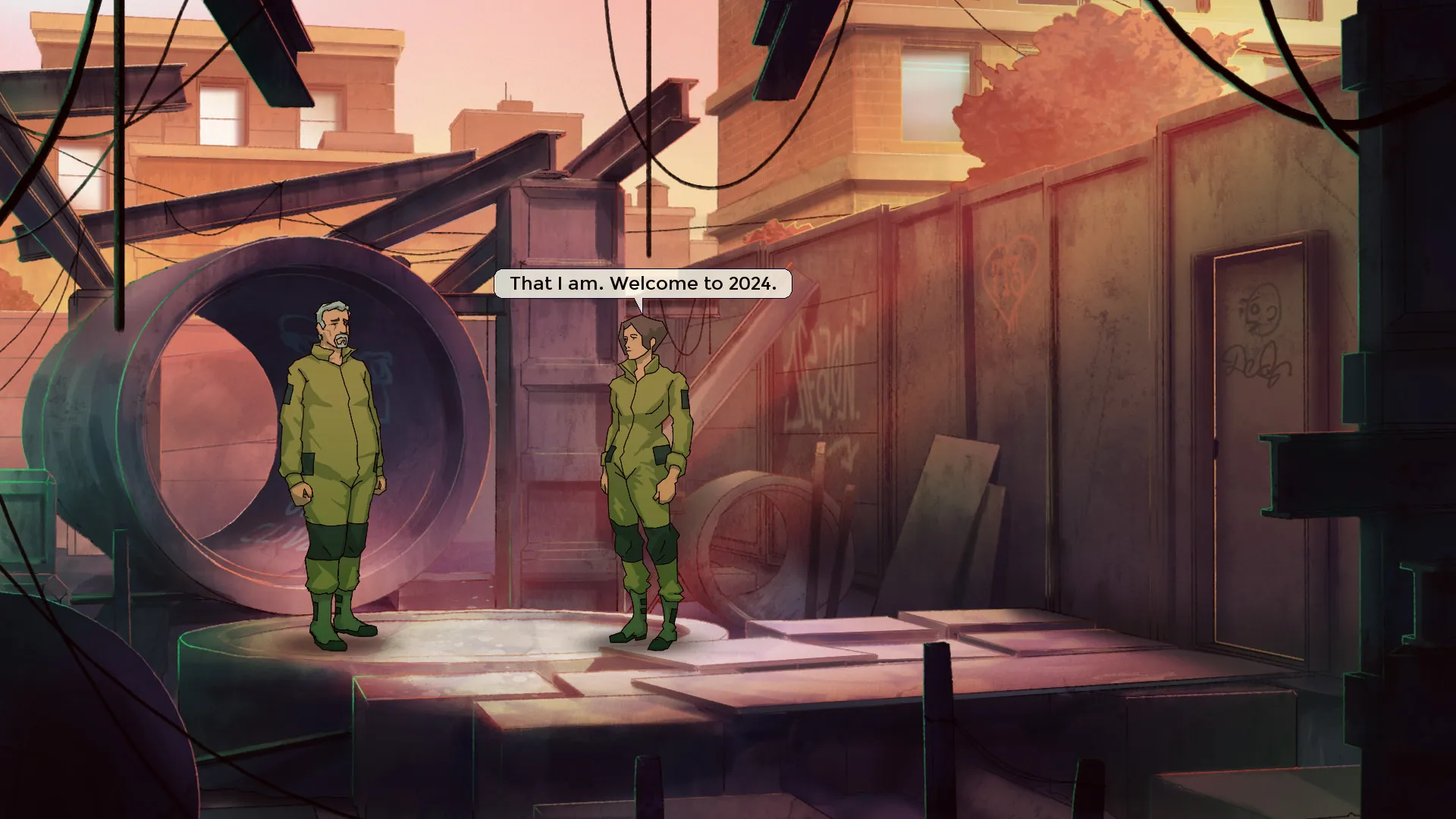
Lighting and color palettes shift dramatically between chapters. In the 1870s, muted sepia tones and drifting fog evoke Impressionist canvases; Prohibition-era levels glow with amber light that could have leapt from a French New Wave film.
Weather effects—rain-slick cobblestones or neon-tinged drizzle in 2062—underline each era’s mood, much as Korean dramas use seasonal shifts to mirror character arcs. Animated billboards, evolving skyline silhouettes and subtle motion in shop windows remind players that time is fluid, a design echo found in Latin American magical-realist cinema where environments themselves seem alive.
Thomas Regin’s jazz-noir score merges smoky sax lines with subtle electronic flourishes, an audio melding of 1920s Harlem clubs and modern Scandinavian noir soundtracks. Recurring motifs—a melancholic trumpet phrase, the echo of distant train wheels—bind chapters into an anthology of sound, suggesting that memory itself carries a distinct timbre regardless of era.
Voice performances ground the sensory spectacle. Sally Beaumont’s Fia delivers lines with an economy and quiet strength reminiscent of Japanese RPG protagonists—reserved yet resilient. Supporting roles range from mournful sages to brash clients, each voice actor layering regional inflections that hint at global diversity within New York’s melting pot. This interplay of art, animation, music and performance invites players to ask: how do our senses archive the past when the past itself refuses to stay still?
Voices Across Time: Character & Performance Dynamics
Fia Quinn begins as a consummate professional, her tone measured in every directive-driven mission. Across seven eras, voice actor Sally Beaumont threads subtle shifts into Fia’s delivery—an inflection of warmth when she defies protocol to comfort a client, or a steely calm when she masks grief after witnessing a loved one erased by a chronoshift. These nuances mirror performance traditions from minimalist Japanese RPG protagonists, where small tonal changes carry emotional weight.
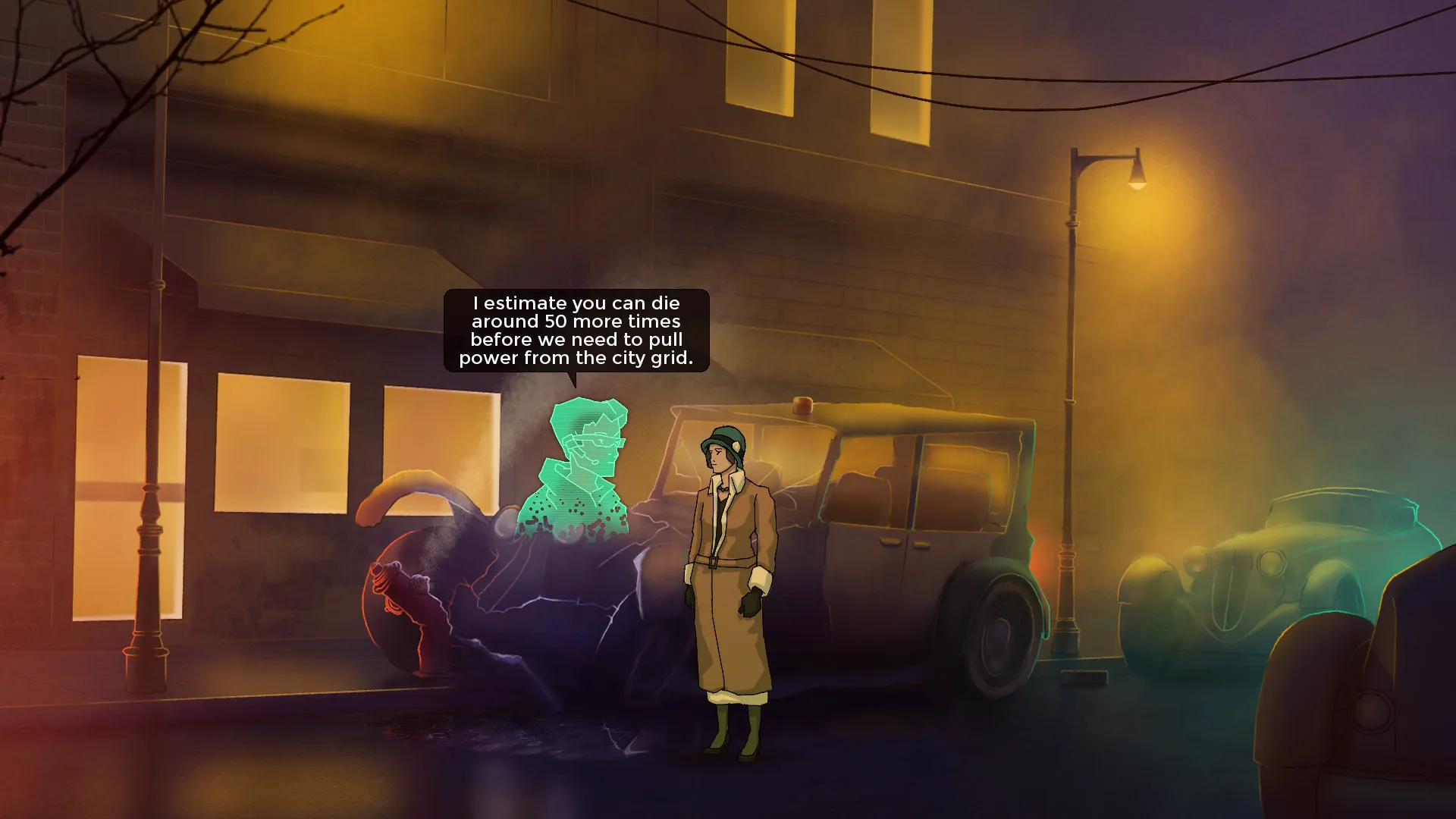
Nozzo’s offscreen presence offers a contrasting energy. His guiding, protective cadence draws on radio-drama archetypes from Europe’s noir radio era, creating a foil that highlights Fia’s isolation. Clients range from brash tycoons to hesitant historians, each actor inflecting cultural particulars—a clipped Brooklyn accent in contemporary chapters, elongated vowel sounds in 19th-century scenes—that remind players of New York’s global tapestry.
Moments in the ChronoZen break room reveal ensemble chemistry. Casual banter over synth-infused background hum echoes workplace camaraderie found in British sci-fi series, lending authenticity to mission briefings. These exchanges inform later undercover encounters, as colleagues surface in archival records or historical simulations.
Standout acting moments require no florid script. When Fia’s composure falters in a rain-soaked 1920s speakeasy, her voice cracks on a single word—an instant that bridges narrative stakes and gameplay loops. Such performances invite reflection on how tone and timing sculpt empathy across cultural lines.
Temporal Rhythm: Pacing, Structure & Replay Value
Each of Old Skies’ seven chapters runs about two to three hours, adding up to roughly eighteen to twenty hours of play. Early missions function as tutorials, gently introducing archive searches and loop mechanics; later chapters layer these tools, asking players to juggle paradox puzzles alongside traditional object-gathering.
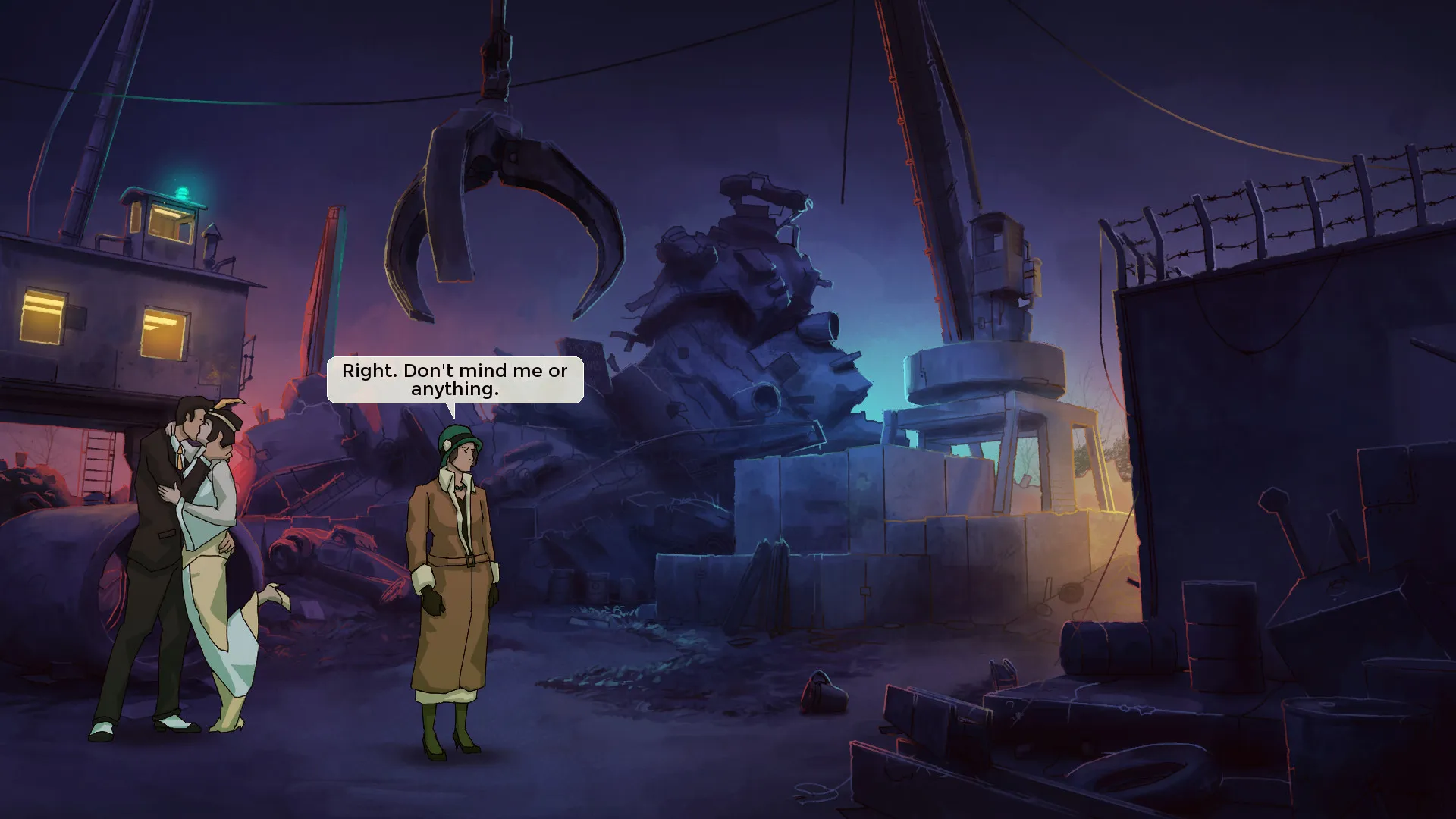
The game’s rhythm blends exploration, dialogue, puzzle loops and occasional cutscenes in a pattern reminiscent of anthology TV dramas like Black Mirror, where each episode resets expectations. Mid-game lulls can emerge—often in chapters heavy on document sifting—but well-timed narrative hooks, such as sudden chronoshifts that erase familiar faces, pull players forward.
Time-loop segments use chapter-specific checkpoints: failure rewinds Fia to just before her undoing, preserving key insights without punishing backtracking. Outside loops, the game allows manual saves mid-mission, granting agency in how much risk players will shoulder. This balance between structured rewind and free-form saving mirrors Japanese visual novels that blend auto-saves with player-controlled slots.
Replay value arises through minor branching choices—selecting different dialogue options can surface hidden archive entries—and a handful of optional puzzles tucked within the Historical Archive. Players seeking fresh perspective might revisit to test alternate solutions or chase subtle timeline tweaks. In this design, the question becomes not just what history you’ll fix, but how many versions of it you’re willing to explore.
Echoes of Loss: Themes and Emotional Currents
Old Skies confronts the human cost of temporal meddling by letting cherished figures blink out of existence—a device that evokes the quiet grief found in Japanese drama Like Father, Like Son, where family ties fracture under unseen forces. Each erased memory carries moral weight: a client’s desperate plea to save a loved one can ripple into unintended harm, mirroring journalistic debates over interventionism in global crises.
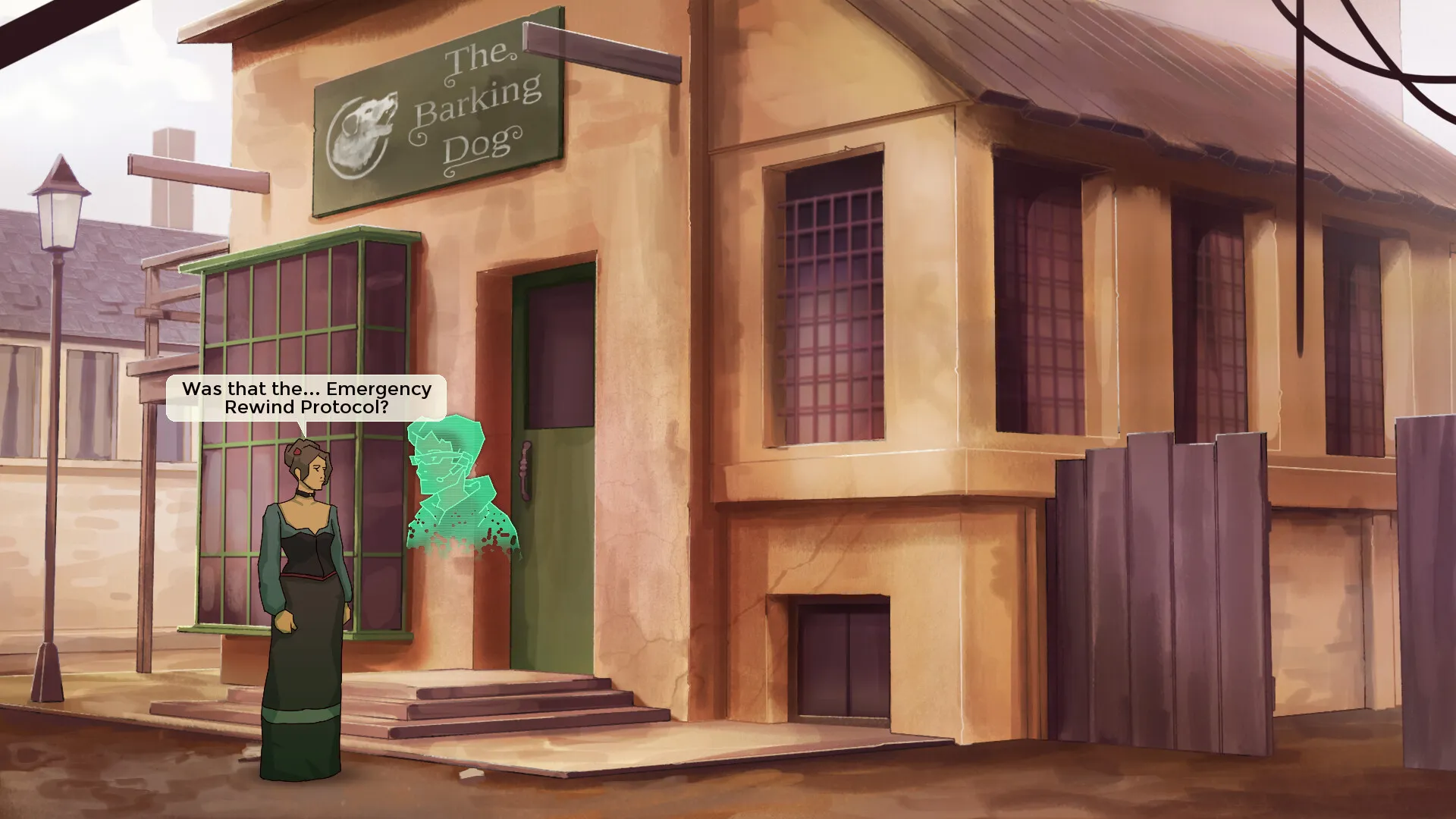
Fia’s repeated mantra, “Focus on the job,” serves as both shield and prison. In moments of calm before a chronoshift, her inner doubt surfaces, recalling the existential questioning at the heart of Amir Naderi’s Iranian cinema, where duty clashes with desire for connection.
Certain chapters linger—a pre-9/11 stroll through a suddenly empty street recalls documentaries on vanished neighborhoods—while the final mission reframes Fia’s transformation from detached agent to flawed guardian of memory. Positioned against Wadjet Eye’s broader catalog, Old Skies feels more intimate than its epic predecessors, asking players to ponder whose stories truly deserve preserving…
The Review
Old Skies
Old Skies merges rich storytelling with time-travel puzzles, its hand-painted art and jazz-inflected score evoking each era while logic-driven challenges reward thoughtful play. Fia Quinn’s evolving emotional journey gives genuine weight to every mission, while loop mechanics underscore themes of loss and memory. Though a few sequences repeat, they deepen player empathy. This focused, polished adventure earns its place among Wadjet Eye’s best.
PROS
- Logical, thought-provoking time-travel puzzles
- Rich, hand-painted HD art that evokes each era
- Jazz-inflected soundtrack heightens atmosphere
- Nuanced voice performances, especially Fia’s
- Well-integrated archive research mechanic
CONS
- Repetitive loops can sap momentum
- Occasional pacing lulls mid-chapter
- Archive searches limited to preset keywords