



























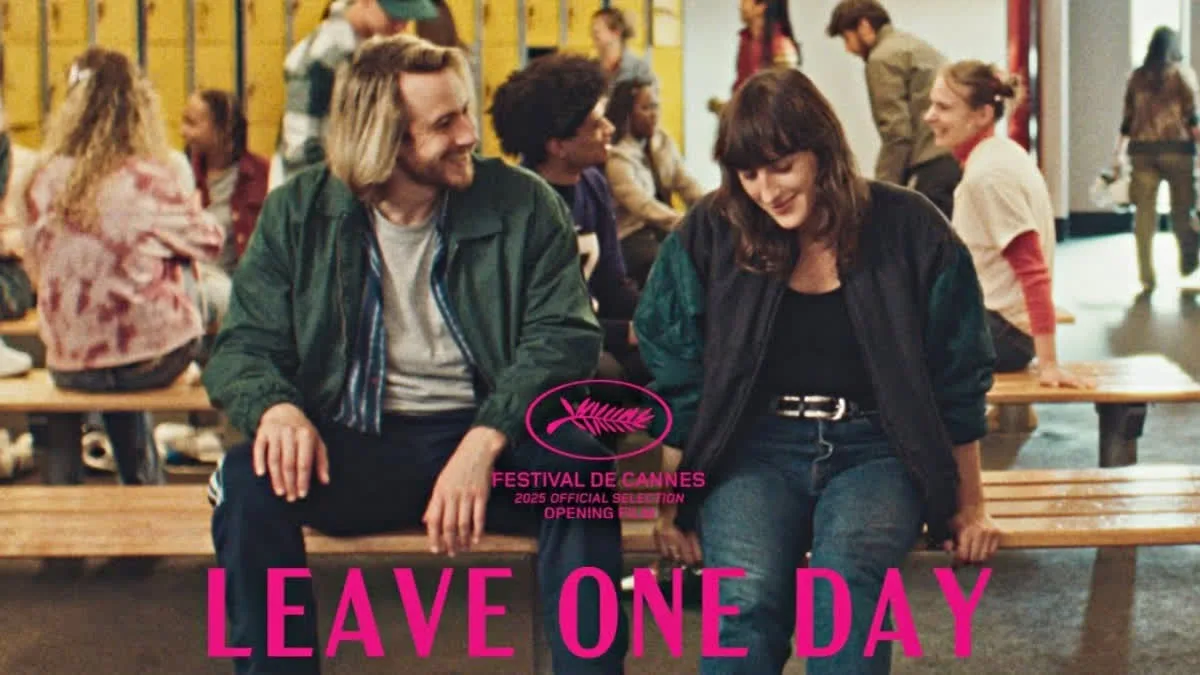

Cécile, a culinary artisan approaching the precarious meridian of her forties, stands poised before the theatre of her latest triumph: a Parisian restaurant, sculpted with her partner Sofiane from ambition and ephemeral tastes. Her ascent, a narrative etched in the public memory of a television cooking contest, seems an immutable script.
Yet, the universe, indifferent to such meticulous architecture, delivers its raw, uninvited ingredients. A nascent life quickens within, an unscheduled guest at the feast of her self-made destiny. Simultaneously, the frail cord of lineage tugs sharply; her father, back in the forgotten landscapes of Grand Est, falters.
Thus begins the reluctant passage backward, not merely to a place, but to the echoing chasms of what was, what might have been. Before her lies no simple homecoming, but an encounter with the spectral ingredients of a life left behind, a dissonant melody played on the heartstrings of identity.
The Gravity of Return
Life, in its raw insistence, breached the ramparts of Cécile’s carefully curated existence. The body, a sovereign territory, announced an unscripted future with the news of a pregnancy, its arrival posing profound questions to a life meticulously architected.
Almost simultaneously, a summons from the failing flesh of her father, Gérard – his third heart attack a stark memento mori – compelled her retreat. Paris, with its intricate choreography of ambition and her partner Sofiane, receded, exchanged for the dense, familiar air of her provincial origin, a duty to mother Fanfan and the fading patriarch.
Re-entry is a submersion. The family’s truck-stop café, “The Pitstop” – a name that speaks less of rest, more of an abrupt halt to grand trajectories – stands as a monument to a life she renounced. Here, initial encounters with her parents are layered with the sediment of unspoken histories, the tension with a stubborn father a palpable force. Then, Raphaël appears, a revenant from the sun-drenched, careless Eden of adolescence. Now a mechanic, the spark between them ignites with the perilous ease of a forgotten ember, its glow complicated by the life he too has lived since.
The present, however, refuses to be silenced. The phantom limb of her Parisian enterprise, the restaurant demanding its signature creation, still ached. Within Cécile, the debate over the nascent life she carries becomes a quiet, persistent interrogation of self.
Her interactions with Raphaël trace a delicate, perhaps hazardous, path across the landscape of memory and nascent desire, his own domestic ties a muted counterpoint. And the filial schism with Gérard, born of her modernist culinary critiques against his cherished traditions, festers, a raw wound in the heart of this homecoming.
The Unquiet Selves
At the vortex stands Cécile, the celebrated chef, her Parisian acclaim a meticulously crafted armor against the formless anxieties of being. This return home, however, frays the brilliantined surface, revealing a woman wary, pensively navigating the crosscurrents of an unwanted pregnancy and the spectral pull of a past love.
Her conflict is elemental: the glittering artifice of her haute cuisine against the unadorned earth of her origins. One questions if this pilgrimage will fracture her defenses or merely underscore an immutable trajectory, a soul’s orbit fixed from Point A back to Point A, the promise of transformation a mirage.
Raphaël materializes as an echo from this forsaken earth, a mechanic whose boyish charm offers a dangerous balm—an escape into a seemingly simpler, unburdened state. His allure is that of the unlived life, a “what if” that shimmers with idealized nostalgia, even as his own tethered existence remains a half-sketched reality. He is the temptation of regression, perhaps, or a fleeting glimpse of a path not taken, its destination unknown.
Gérard, the father, is a titan of that old world, his truck-stop a bastion of stubborn pride and remembered slights—Cécile’s youthful critiques of his “peasant fare” are wounds tended with a bitter loyalty.
Theirs is a dialogue of shadows and sharp edges. Beside him, Fanfan, the mother, offers a quieter presence, her ebullience a counterpoint to the prevailing gravity. And far off, Sofiane remains a silhouette against the Parisian skyline, the custodian of a life Cécile has ostensibly paused, though one wonders if it ever truly belonged to her.
Borrowed Harmonies, Private Desolations
The film’s artery pulses with borrowed music, a jukebox of French pop distilling decades into an intoxicating, perhaps deceptive, elixir of nostalgia. These are the refrains of a collective memory—chansons from the sixties, saccharine confections of nineties boy bands like 2be3 with their eponymous lament “Partir Un Jour,” and the more recent echoes of artists like Stromae—a deliberate summoning of ghosts for a specifically Gallic sensibility, an emotional shorthand that bypasses reason for the immediacy of a shared sigh or a remembered dance.
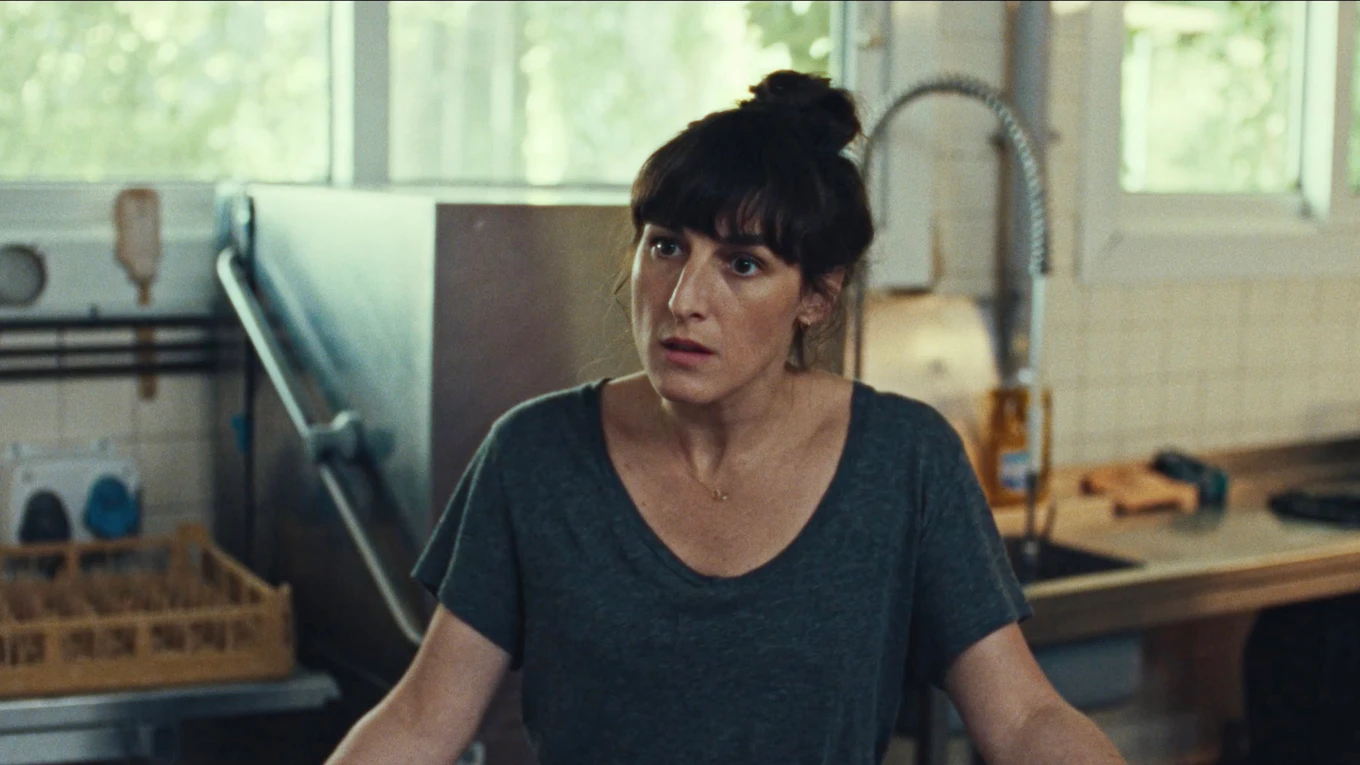
Yet, this is no polished spectacle. The songs erupt with an almost jarring spontaneity, less theatrical pronouncements than the raw, unvarnished overflow of feeling. Characters seize upon melodies as drowning men grasp driftwood, their vocal efforts marked by an unpolished gusto, a naturalism that prioritizes the tremor of authentic emotion over the tyranny of pitch.
In these moments—a kitchen confession that bleeds into song, a roadside serenade thick with unspoken longing—the music becomes a fragile bridge between the articulate and the felt, a karaoke of the soul where imperfection lends a strange, disquieting grace. This casual everydayness of eruption, in a grimy workshop or a desolate car park, speaks to a world where inner turmoil seeks any available language.
Do these sonic visitations truly mend, or merely accentuate the fissures? The melodies aim to weave a continuity between then and now, yet often they seem to highlight the irretrievable nature of the past, each note a bittersweet reminder of distance. A father’s song to his daughter may carry the weight of a lifetime’s unspoken love, or the burden of its failures.
Even a cleverly layered track, with its own sedimented history of covers and reinterpretations, can feel less like a playful bridge across generations and more like an admission of being caught in an endless, echoing loop of cultural memory, a poignant, perhaps desperate, attempt to find fresh meaning in well-worn grooves.
Feasts of Estrangement
Two altars of nourishment stand in stark opposition, two testaments to divergent philosophies of existence. On one side, Cécile’s Parisian dream: the rarefied, Michelin-coveting temples of haute cuisine, where food is an intellectual construct, an artifice of ambition. On the other, her father’s domain, “The Pitstop,” its air thick with the honest steam of “peasant fare”—a world of unpretentious substance, perhaps, or a culinary anchor to a past she sought to escape. This chasm is the film’s central metaphor for the schism within Cécile herself, a battleground between aspiration and origin.
Her homecoming forces a bitter reckoning. Cécile’s past disdain for her family’s cooking—her sharp pronouncements on macédoine salad, her cutting remark about truck stops being for swift departures—are not forgotten. They are etched in her father’s meticulously kept ledger, a painful accounting of filial betrayal.
Now, creatively barren, she searches for a signature dish for her new establishment, a culinary cri de cœur that eludes her. One wonders if this return to the primal source will unlock some buried truth, inspire a genuine creation, or if reconciliation, gastronomic or otherwise, remains a chimera.
Food here is far more than sustenance; it is a language of class, a repository of contested family histories, a measure of loyalty and perceived betrayal. Even the film’s own offering, with its potential “comfort food” appeal mirroring the supposed simplicity of Cécile’s childhood dishes, invites a skeptical palate. Is this a genuine solace it provides, or merely a fleeting, nostalgic confection that masks the more unpalatable truths of identity’s elusive nature and the enduring difficulty of truly finding one’s place at any table?
The Alchemy of Remembered Light
Amélie Bonnin, in this inaugural feature born from a prior short-form study, navigates her material with a sensibility that feels both fluid and assured. Her directorial hand, particularly in orchestrating the film’s visual and musical textures, demonstrates a notable poise, a fledgling vision already conversant with the shadows.
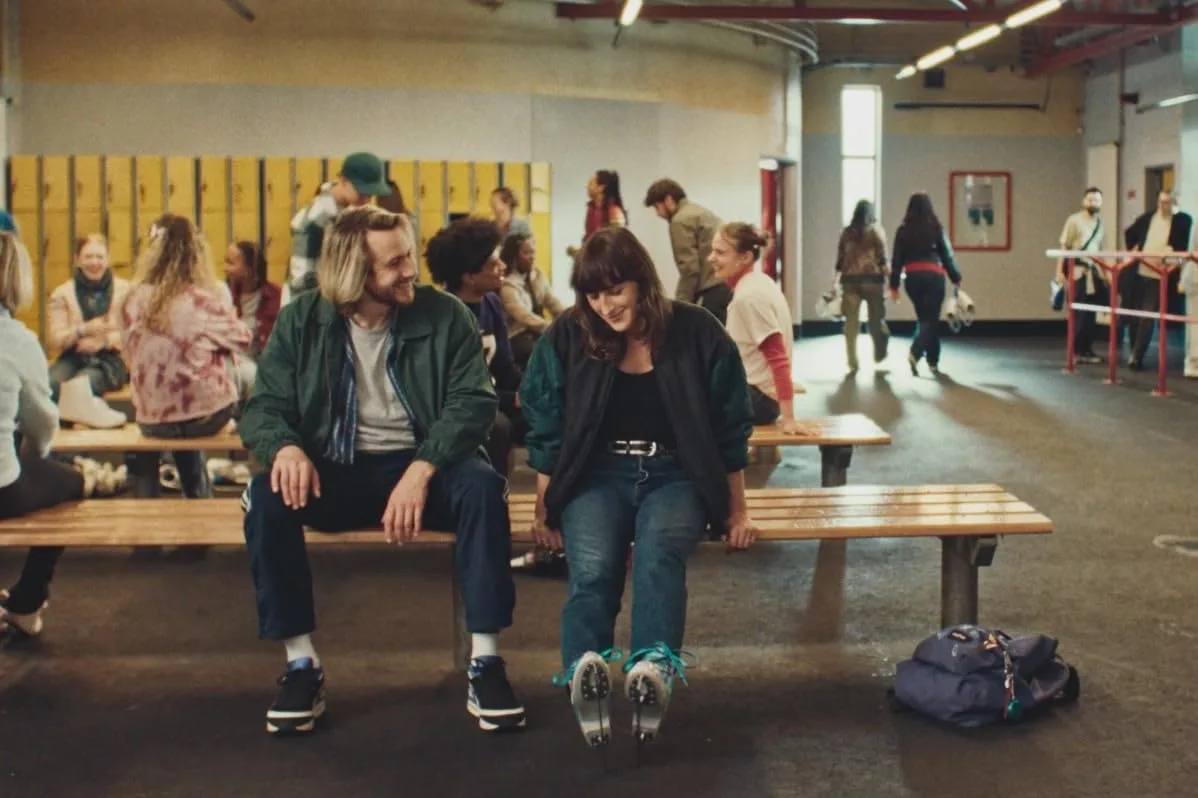
The provincial stage for Cécile’s unravelling is rendered with an unsentimental, almost tactile earthiness. This is no idyllic countryside; Bonnin captures a working-class rurality where the scent of petrol and the echoes of old grievances mingle with a resilient, if sometimes harsh, affection for its own flawed character. “The Pitstop” itself becomes a focal point of this unvarnished authenticity.
Visually, Bonnin conspires with her lens to evoke a potent nostalgia, steeping scenes in a retro glow that recalls the fugitive quality of 1990s film stock. Yet this is not mere sentimentality. Memory is treated as a plastic, almost haunted medium: photographs bleed into the present, past moments are re-enacted by an adult Cécile, creating a disorienting temporal fluidity, a sense of being psychically adrift.
Even the embrace of rural French clichés feels less like a simple celebration and more like a knowing acknowledgment of indelible patterns, a bittersweet recognition of the archetypes that shape, and perhaps trap, us. There’s a curious strength in this, the strength of facing the known, however faded.
Full Credits
Director: Amélie Bonnin
Writers: Amélie Bonnin, Dimitri Lucas
Producers: Bastien Daret, Arthur Goisset, Robin Robles, Sylvie Pialat, Benoît Quainon
Cast: Juliette Armanet (Cécile), Bastien Bouillon (Raphaël), François Rollin (Gérard), Tewfik Jallab (Sofiane), Dominique Blanc (Fanfan), Mhamed Arezki (Heddy), Pierre-Antoine Billon (Richard), Amandine Dewasmes (Nathalie)
Director of Photography (Cinematographer): David Cailley
Editor: Héloïse Pelloquet
Composers: Keren Ann, Chilly Gonzales, Germain Izydorczyk, Theo Kaiser, Thomas Krameyer, Emma Prat, Pauline Rambeau de Baralon
The Review
Leave One Day
"Leave One Day" charts a visually textured descent into the ambiguities of self, where borrowed melodies and the taste of memory offer no easy solace. Amélie Bonnin’s debut is a poignant, unsettling meditation on nostalgia’s deceptive currents and the stark possibility that some homecomings lead only back to the inescapable contours of who we always were. Its characters remain adrift, caught in the unquiet ache of being.
PROS
- Offers a visually rich, poetically rendered exploration of memory and identity.
- Features a directorial debut demonstrating notable poise and an unsentimental gaze.
- Effectively uses music and food as potent metaphors for deeper existential queries.
- Presents a complex, if bleak, portrait of a protagonist confronting an immutable self.
- Sustains an unflinching tone in its examination of nostalgia's deceptive nature.
CONS
- Provides little solace, with characters remaining largely untransformed and adrift.
- Its contemplative pace and unsettling themes may not appeal to all viewers.
- Nostalgic elements are often presented as deceptive or melancholic rather than comforting.
- The narrative leans into ambiguity, potentially leaving some arcs feeling unresolved.