

























• Latest
  • Trending
Heavenly Ever After Season 1 Review

Heavenly Ever After Season 1 Review: An Afterlife of Inconsistent Rules

Not a Stranger Review

Not a Stranger Review: Elçin Sangu Anchors a Familiar Domestic Thriller

Monster The Lizzie Borden Story Review

Monster: The Lizzie Borden Story Review: Lizzie Borden Deserved a Messier Portrait

Woodo Review

Woodo Review: Finding Wonder Beyond the Screen

Tiny Fugitives Review

Tiny Fugitives Review: Johnny Knoxville Chases a Better Movie

South Park Season 29 Review

South Park Season 29 Review: The Boys Are Back and the Adults Are Losing It

De Gaulle: Liberté Review

De Gaulle: Liberté Review: Freedom Comes With Conditions

Tenzing Review

Tenzing Review: Everest Becomes Chomolungma Again

Train Sim World 7 Review

Train Sim World 7 Review: Three Railways, Three Different Rhythms

Run Hide Fight: Infidels Review

Run Hide Fight: Infidels Review: Ideology Crowds Out Suspense

The Doll Review

The Doll Review: Wokulski Can Buy Everything Except Belonging

The Creep Tapes Season 3 Review

The Creep Tapes Season 3 Review: Peachfuzz Still Has Tricks Behind the Camera

Forgotten Island Review

Forgotten Island Review: Filipino Folklore Fuels a Smart Friendship Story

  • Home
  • Privacy Policy
  • Terms and Conditions
  • Gazettely Review Guidelines
Saturday, September 19, 2026
GAZETTELY
  • Home
  • Movie and TV News
    Spider-Man: Brand New Day Review

    ‘Spider-Man: Brand New Day’ Becomes Highest-Grossing Movie in US History

    Resident Evil

    ‘Resident Evil’ Tracking for Franchise-Best $150M Global Opening

    Scream 7

    Matthew Lillard Says He’s ‘Ashamed’ He Stayed Quiet on Melissa Barrera’s Firing

    Slow Horses

    ‘Slow Horses’ Survives Its Biggest Behind-the-Scenes Shake-Up Yet

    Justin Baldoni

    Justin Baldoni Returns to Producing on Gina Rodriguez’s Boxing Film Debut

    Nancy Robertson

    Nancy Robertson Replaces Carol Kane in Hallmark’s ‘An Angel in My Stocking’

    Mariska Hargitay Emmy Awards

    As First Female Emmys Host in 15 Years, Hargitay Goes for Heart and Humor

    Allison Janney Emmy Awards

    “This Was Not What I Planned”: Allison Janney Wins Big

    Alan Cumming Emmy Awards

    Alan Cumming and “The Traitors” Break a Six-Year Emmys Record

  • Movie and TV Reviews
    Not a Stranger Review

    Not a Stranger Review: Elçin Sangu Anchors a Familiar Domestic Thriller

    Monster The Lizzie Borden Story Review

    Monster: The Lizzie Borden Story Review: Lizzie Borden Deserved a Messier Portrait

    Tiny Fugitives Review

    Tiny Fugitives Review: Johnny Knoxville Chases a Better Movie

    South Park Season 29 Review

    South Park Season 29 Review: The Boys Are Back and the Adults Are Losing It

    De Gaulle: Liberté Review

    De Gaulle: Liberté Review: Freedom Comes With Conditions

    Tenzing Review

    Tenzing Review: Everest Becomes Chomolungma Again

    Run Hide Fight: Infidels Review

    Run Hide Fight: Infidels Review: Ideology Crowds Out Suspense

    The Doll Review

    The Doll Review: Wokulski Can Buy Everything Except Belonging

    The Creep Tapes Season 3 Review

    The Creep Tapes Season 3 Review: Peachfuzz Still Has Tricks Behind the Camera

  • Game Reviews
    Woodo Review

    Woodo Review: Finding Wonder Beyond the Screen

    Train Sim World 7 Review

    Train Sim World 7 Review: Three Railways, Three Different Rhythms

    Aniimo Review

    Aniimo Review: Great Creatures Trapped Behind Too Many Menus

    Fire Emblem: Fortune’s Weave Review

    Fire Emblem: Fortune’s Weave Review: Intelligent Systems Thinks Bigger

    Trails in the Sky 2nd Chapter Review

    Trails in the Sky 2nd Chapter Review: Estelle Steps Out on Her Own

    Another Eden Begins Review

    Another Eden Begins Review: A Strong JRPG Still Haunted by Its Mobile Past

    Tiny Eden Review

    Tiny Eden Review: The Garden Thrives Even When the Systems Struggle

    Donutal Review

    Donutal Review: Two Aliens, One Interrogation Room, Plenty of Trouble

    The Alighieri Circle: Dante's Bloodline Review

    The Alighieri Circle: Dante’s Bloodline Review: Hell Is Better Solved Than Explained

  • The Bests
No Result
View All Result
  • Home
  • Movie and TV News
    Spider-Man: Brand New Day Review

    ‘Spider-Man: Brand New Day’ Becomes Highest-Grossing Movie in US History

    Resident Evil

    ‘Resident Evil’ Tracking for Franchise-Best $150M Global Opening

    Scream 7

    Matthew Lillard Says He’s ‘Ashamed’ He Stayed Quiet on Melissa Barrera’s Firing

    Slow Horses

    ‘Slow Horses’ Survives Its Biggest Behind-the-Scenes Shake-Up Yet

    Justin Baldoni

    Justin Baldoni Returns to Producing on Gina Rodriguez’s Boxing Film Debut

    Nancy Robertson

    Nancy Robertson Replaces Carol Kane in Hallmark’s ‘An Angel in My Stocking’

    Mariska Hargitay Emmy Awards

    As First Female Emmys Host in 15 Years, Hargitay Goes for Heart and Humor

    Allison Janney Emmy Awards

    “This Was Not What I Planned”: Allison Janney Wins Big

    Alan Cumming Emmy Awards

    Alan Cumming and “The Traitors” Break a Six-Year Emmys Record

  • Movie and TV Reviews
    Not a Stranger Review

    Not a Stranger Review: Elçin Sangu Anchors a Familiar Domestic Thriller

    Monster The Lizzie Borden Story Review

    Monster: The Lizzie Borden Story Review: Lizzie Borden Deserved a Messier Portrait

    Tiny Fugitives Review

    Tiny Fugitives Review: Johnny Knoxville Chases a Better Movie

    South Park Season 29 Review

    South Park Season 29 Review: The Boys Are Back and the Adults Are Losing It

    De Gaulle: Liberté Review

    De Gaulle: Liberté Review: Freedom Comes With Conditions

    Tenzing Review

    Tenzing Review: Everest Becomes Chomolungma Again

    Run Hide Fight: Infidels Review

    Run Hide Fight: Infidels Review: Ideology Crowds Out Suspense

    The Doll Review

    The Doll Review: Wokulski Can Buy Everything Except Belonging

    The Creep Tapes Season 3 Review

    The Creep Tapes Season 3 Review: Peachfuzz Still Has Tricks Behind the Camera

  • Game Reviews
    Woodo Review

    Woodo Review: Finding Wonder Beyond the Screen

    Train Sim World 7 Review

    Train Sim World 7 Review: Three Railways, Three Different Rhythms

    Aniimo Review

    Aniimo Review: Great Creatures Trapped Behind Too Many Menus

    Fire Emblem: Fortune’s Weave Review

    Fire Emblem: Fortune’s Weave Review: Intelligent Systems Thinks Bigger

    Trails in the Sky 2nd Chapter Review

    Trails in the Sky 2nd Chapter Review: Estelle Steps Out on Her Own

    Another Eden Begins Review

    Another Eden Begins Review: A Strong JRPG Still Haunted by Its Mobile Past

    Tiny Eden Review

    Tiny Eden Review: The Garden Thrives Even When the Systems Struggle

    Donutal Review

    Donutal Review: Two Aliens, One Interrogation Room, Plenty of Trouble

    The Alighieri Circle: Dante's Bloodline Review

    The Alighieri Circle: Dante’s Bloodline Review: Hell Is Better Solved Than Explained

  • The Bests
No Result
View All Result
GAZETTELY
No Result
View All Result
Heavenly Ever After Season 1 Review

Treading Water Review: A Phenomenal Performance in a Fractured Film

Among The Whispers - Provocation Review: More Detective Than Ghost Hunter

Home Entertainment TV Shows

Heavenly Ever After Season 1 Review: An Afterlife of Inconsistent Rules

Ayishah Ayat Toma by Ayishah Ayat Toma
1 year ago
in Entertainment, Reviews, TV Shows
Reading Time: 6 mins read
A A
0
Share on FacebookShare on TwitterShare on PinterestShare on WhatsAppShare on TelegramSummarize with ChatGPTSummarize with Perplexity

In the ever-expanding catalog of streaming-era K-dramas, where high-concept premises are the new currency, comes a story that pushes a tale of enduring love into deeply unfamiliar territory. Heavenly Ever After introduces us to Lee Hae-sook, an 80-year-old woman arriving in the hereafter to reunite with her recently deceased husband, Ko Nak-jun.

Theirs was a love forged through decades of earthly hardship. She, honoring his final compliment that she was most beautiful in her old age, chooses to retain her physical form. The twist arrives with a quiet, stunning absurdity: Nak-jun has opted to revert to his 30-year-old self.

The series thus posits its central thesis: in a reality where identity is a selectable attribute, can a love defined by shared time survive when that time is rendered visually obsolete? The stage is set to explore if a bond that withstood a lifetime on Earth can navigate a five-decade age gap in paradise.

From Earthly Debts to Heavenly Bureaucracy

To earn its fantastical premise, the series first grounds itself in the unglamorous reality of survival. The narrative wisely invests in flashbacks that reveal Lee Hae-sook not as a gentle elder, but as a formidable loan shark, a role she adopted out of necessity following her husband’s tragic accident.

This is a pointed subversion of the typical grandmotherly archetype; Hae-sook is a woman whose public identity was forged by economic desperation and sustained by a hardened will. These earthly scenes, showing her as both a ruthless businesswoman and a tender caretaker for Nak-jun, provide the emotional proof for their profound bond. Their shared history of hardship and humor feels authentic, making their eventual reunion a moment weighted with genuine anticipation.

This gritty backstory then collides with an afterlife that functions with all the spiritual wonder of a municipal government office. The journey to Heaven is a subway ride, followed by an airport-style checkpoint where souls make their most critical choice: the age they will inhabit for eternity.

This gamification of the hereafter is a distinctly modern narrative trend, reframing paradise as another system to be navigated. The choice sets up the series’ foundational conflict when Hae-sook’s earned 80 years meet Nak-jun’s chosen 30. His look of alarm upon seeing her is more than a comedic beat; it is the instant the show’s central emotional and philosophical engine ignites.

Performance as the Narrative’s Soul

A high-concept series lives or dies by the human element that anchors its fantasy. In Heavenly Ever After, the premise is so audacious that it requires performers capable of grounding the absurd in emotional truth, a task the cast undertakes with remarkable success.

Heavenly Ever After Season 1 Review

At the story’s center is Kim Hye-ja’s masterful portrayal of Lee Hae-sook. In a media landscape still fixated on youth, placing a complex 80-year-old woman at the forefront is a significant representational choice. Kim channels a lifetime of grit into Hae-sook, her face a map of resilience and her posture radiating a toughness forged in the unforgiving world of private loans.

When this formidable figure is transplanted to Heaven, Kim subtly shifts her performance to reveal a profound disorientation, her hard-won identity suddenly misaligned with the sterile, ageless environment. Her strength was her currency on Earth; in Heaven, it is an artifact.

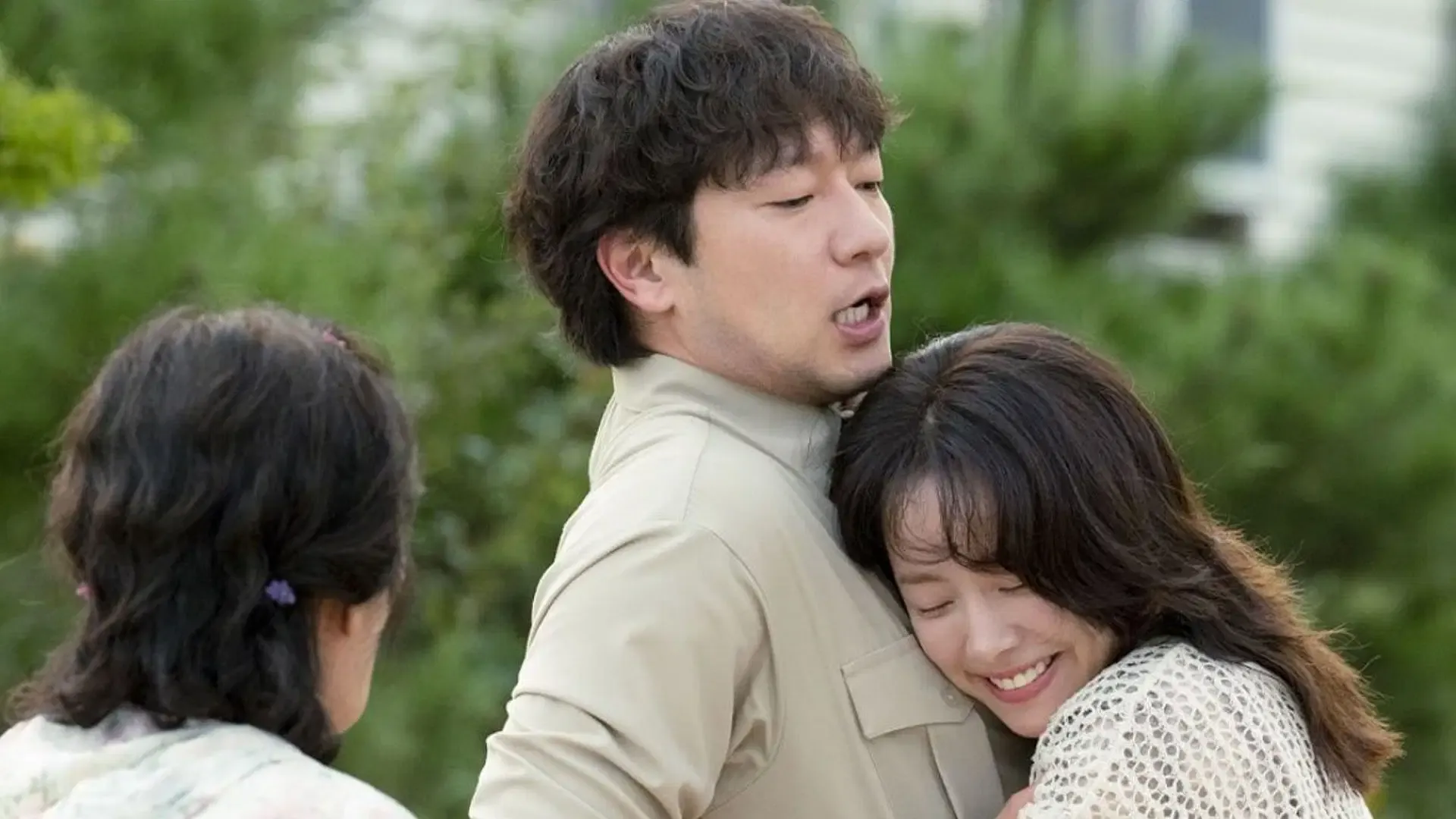
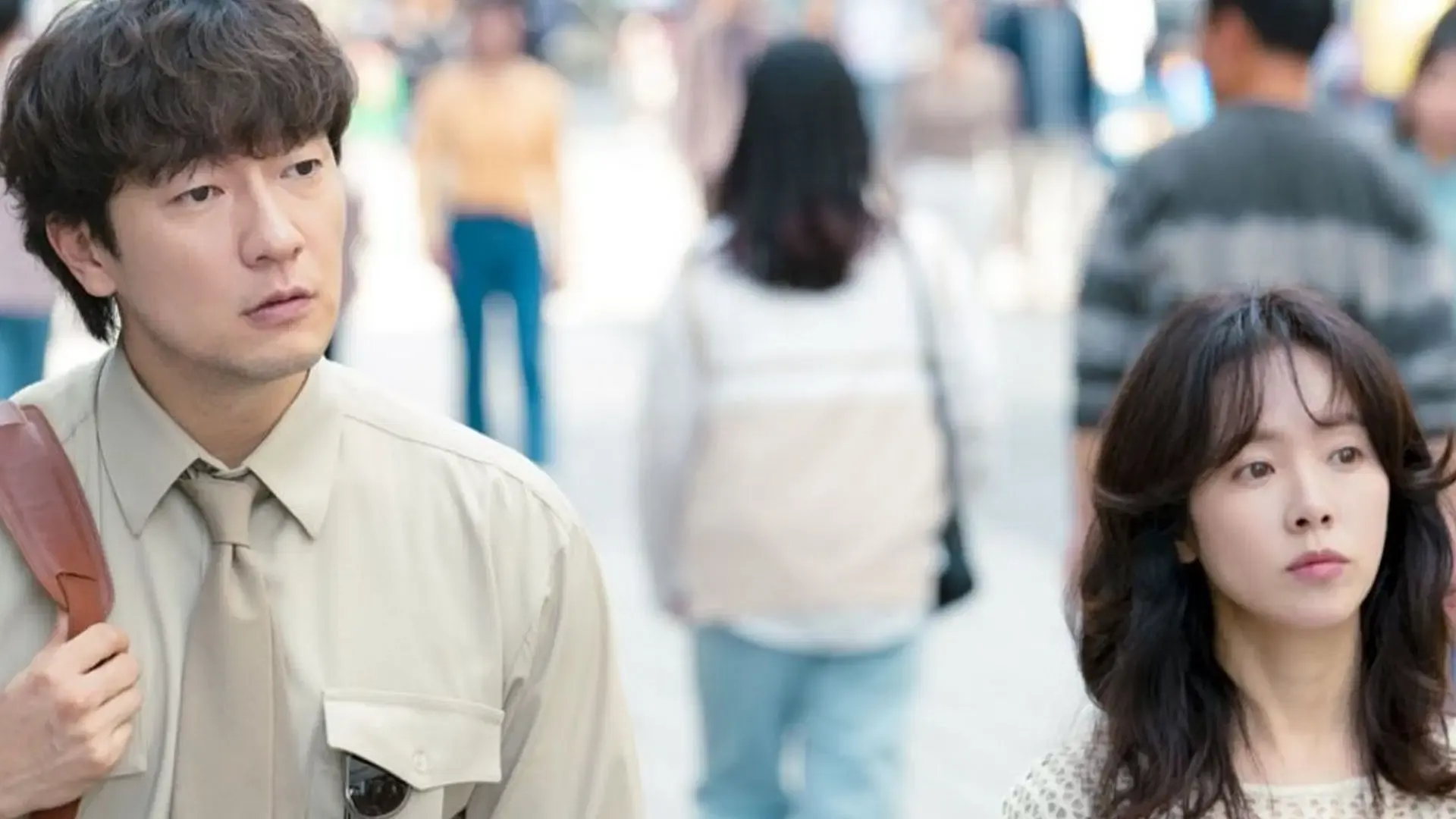
Complementing this is Son Suk-ku’s nuanced work as the younger Ko Nak-jun. The role is a delicate tightrope walk; he is not merely a young man but an old soul inhabiting a youthful form. Son avoids caricature, instead imbuing Nak-jun with a gentle, lived-in warmth that makes his unwavering affection for his elderly wife feel completely authentic.

This performance is crucial, as it transforms their age difference from a potential source of ridicule into a genuine logistical and emotional challenge. Their shared chemistry feels less like a blossoming romance and more like a deeply embedded partnership momentarily thrown into disarray.

The humor and awkwardness of their interactions are potent precisely because their underlying connection is never in doubt. This dynamic is bolstered by key supporting figures like Lee Jung Eun’s Yeong-ae, Hae-sook’s earthly associate, whose loyalty adds texture to the world left behind and enriches our understanding of the woman Hae-sook was.

Cracks in the Celestial Foundation

For all its emotional intelligence, the series begins to falter precisely where many high-concept streaming shows do: in the architectural integrity of its world. The initial rules of the afterlife, presented with bureaucratic charm, prove to be frustratingly malleable.

Heavenly Ever After Season 1 Review

A system that supposedly requires mutual consent for meetings is unceremoniously discarded to force a traumatic reunion between Hae-sook and her abusive mother-in-law, a narrative shortcut that sacrifices world consistency for a convenient dramatic beat. This “make it up as you go” approach extends to the show’s spiritual framework, which feels less like a considered cosmology and more like a theological buffet.

Prominent Christian iconography, like churches and priests, serves as familiar set dressing, yet the plot mechanics are driven by a simplified version of Buddhist reincarnation. The result is a thematically muddled universe that borrows aesthetics from different faiths without ever integrating them into a coherent philosophy.

This structural shakiness allows peculiar narrative detours to sprout, pulling focus from the compelling central relationship. A subplot involving deceased pets who appear in Heaven as adult humans attending therapy to unlearn their “natural” animal behaviors is a particularly baffling and tonally dissonant choice. While perhaps intended to be quirky, it lands as a bizarre distraction.

Similarly, a protracted mystery surrounding an amnesiac woman named Som-I introduces a cascade of plot holes—chiefly, how she bypassed the afterlife’s stringent intake process—that generate more confusion than suspense. These narrative cul-de-sacs contribute to a noticeable sag in the mid-season’s pacing, where the initial clarity of purpose gives way to a story that feels increasingly arbitrary and less confident in its own rules.

Earthly Vices and Heavenly Judgments

When it moves beyond its own convoluted mythology, the series offers a surprisingly sharp lens on contemporary life and timeless human conditions. Its exploration of love, memory, and the social currency of age is its most resonant and culturally significant contribution, offering a rare and thoughtful depiction of a lifelong romance.
Heavenly Ever After Season 1 Review

The narrative is at its most potent when it directly engages with South Korean societal ills, weaving in critiques of phishing scams, dangerous cults, and the personal tragedies that fuel public discourse. This relevance is felt most acutely in its depiction of Hell.

In stark contrast to its ill-defined Heaven, the show’s underworld is a place of visceral, specific consequence where modern sins like cyberbullying and malicious journalism receive punishments drawn from ancient mythology.

However, the show’s ambitious philosophical reach ultimately exceeds its grasp. As it attempts to explain the mechanics of karma and reincarnation in its later episodes, its logic collapses into a deeply troubling oversimplification. The narrative begins to explicitly suggest that earthly suffering is a direct, deserved consequence of sins committed in a past life.

This clumsy theodicy effectively blames victims for their own trauma, a problematic stance that starkly contradicts the empathy the series otherwise works to build. It is a major misstep that muddles the show’s moral clarity and leaves a sour ideological aftertaste.

An Imperfect Paradise

Heavenly Ever After is a series that unabashedly prioritizes heart over logic. Its world-building may be inconsistent and its philosophical explorations flawed, but the profound connection between its leads consistently pulls the story back to its emotional center.
Heavenly Ever After Season 1 Review

The narrative is powered by tremendous performances that sell its audacious premise, culminating in a bittersweet resolution that feels both earned and emotionally satisfying. This is a memorable, if imperfect, fable best suited for the patient viewer—one who believes a story’s emotional truth is far more important than the tidiness of its rules.

It aired on JTBC from April 19 to May 25, 2025, with 12 episodes broadcast on Saturdays and Sundays at 22:30 KST. The show is also streaming on Netflix in selected regions.

Full Credits

Director: Kim Sok-yun

Writers: Lee Nam-kyu, Kim Su-jin

Producers: Studio Phoenix, SLL (JTBC production)

Executive Producers: [not individually listed in sources]

Cast: Kim Hye‑ja, Son Suk‑ku, Han Ji‑min, Lee Jung‑eun, Chun Ho‑jin, Ryu Deok‑hwan

Composer: Kim Tae‑seong

The Review

Heavenly Ever After Season 1

7 Score

Despite a narrative framework that often buckles under the weight of its own ambition, Heavenly Ever After succeeds on the sheer force of its central performances and its heartfelt exploration of enduring love. Its inconsistent world-building and problematic philosophical turns are significant distractions, yet the poignant emotional core remains its saving grace. A worthwhile, if often frustrating, watch for its powerful depiction of a love that transcends age and even logic.

PROS

  • Exceptional lead performances with palpable chemistry.
  • A rare and touching focus on love in old age.
  • A unique and emotionally resonant central premise.
  • Offers sharp commentary on specific societal issues.

CONS

  • Inconsistent world-building with contradictory rules.
  • Muddled philosophical themes that become problematic.
  • Uneven pacing due to distracting and bizarre subplots.
  • Narrative logic is frequently sacrificed for convenience.

Review Breakdown

  • Overall 0
Tags: Chun Ho‑jinComedyDramaFeaturedHan Ji‑minHeavenly Ever AfterHeavenly Ever After Season 1JTBCKim Hye‑jaKim Sok‑yoonLee Jung‑eunNetflixRomantic fantasyRyu Deok‑hwanSon Suk‑ku
Previous Post

Treading Water Review: A Phenomenal Performance in a Fractured Film

Next Post

Among The Whispers – Provocation Review: More Detective Than Ghost Hunter

This Week's Top Reads

  • Is This Seat Taken? Review

    Is This Seat Taken? Review: A Satisfying Mental Workout

    1270 shares
    Share 0 Tweet 0
  • Peter Farrelly’s “I Play Rocky” Scores TIFF Standing Ovation, Eyes Oscar Run

    0 shares
    Share 0 Tweet 0
  • Fauda Season 5 Review: Revenge Crosses the Mediterranean

    1 shares
    Share 0 Tweet 0
  • Agatha Christie’s Tommy & Tuppence Review: Two Great Detectives Need Sharper Mysteries

    0 shares
    Share 0 Tweet 0
  • Tom Pelphrey Wins First Emmy, Dedicates It to Pregnant Kaley Cuoco

    0 shares
    Share 0 Tweet 0
  • The Perfect Lie Review: The Dinner Club Knows How to Keep a Secret

    0 shares
    Share 0 Tweet 0
  • High Value Target: The Hunt for Saddam Review: The Best Scenes Need Nothing Except Two Men Talking

    0 shares
    Share 0 Tweet 0

Must Read Articles

Monster The Lizzie Borden Story Review
TV Shows

Monster: The Lizzie Borden Story Review: Lizzie Borden Deserved a Messier Portrait

17 hours ago
Tiny Fugitives Review
Movies

Tiny Fugitives Review: Johnny Knoxville Chases a Better Movie

2 days ago
South Park Season 29 Review
TV Shows

South Park Season 29 Review: The Boys Are Back and the Adults Are Losing It

2 days ago
Forgotten Island Review
Movies

Forgotten Island Review: Filipino Folklore Fuels a Smart Friendship Story

2 days ago
Outlander: Blood of My Blood Season 2 Review
TV Shows

Outlander: Blood of My Blood Season 2 Review: History Gives the Romance Bigger Problems

2 days ago
Loading poll ...
Coming Soon
Which of Alfred Hitchcock's 1960s thrillers is your all-time favorite?

Gazettely is your go-to destination for all things gaming, movies, and TV. With fresh reviews, trending articles, and editor picks, we help you stay informed and entertained.

© 2021-2026 All Rights Reserved for Gazettely

What’s Inside

  • Movie & TV Reviews
  • Game Reviews
  • Featured Articles
  • Latest News
  • Editorial Picks

Quick Links

  • Home
  • About US
  • Contact Us
  • Advertise with Us
  • Review Guidelines

Follow Us

Facebook X-twitter Youtube Instagram
No Result
View All Result
  • Gazettely | Movie, TV & Game Reviews, News, and Rankings
  • Movies
  • Entertainment News
  • Movie and TV Reviews
  • TV Shows
  • Game News
  • Game Reviews
  • Contact Us

© 2024 All Rights Reserved for Gazettely