

















Grief is a disorienting country with no reliable map. In Atrabilious, we meet Steven Joyner, a man completely lost within its borders after the death of his son. He navigates the motions of therapy, but his sorrow is a persistent fog.
Then, a cryptic invitation from a stranger offers a different path, leading him away from the sterile quiet of a therapist’s office and into the pulsing, neon-lit veins of a New York City underworld. He finds himself at a sinister bar, the film’s namesake, which offers a peculiar service: “cocktail bereavement coordination.”
It’s a place that promises a chemical cure for a spiritual ailment. From the first frame, the film plunges you into its enigmatic atmosphere, blurring the line between what is real and what is a symptom of sorrow, pulling you deep into Steven’s fractured state of mind.
A Story in Fragments
If you are looking for a straightforward mystery, you have come to the wrong place. The film discards the traditional A-to-B plot of an investigation for something that feels more like piecing together a shattered mirror. Watching it is less like following a breadcrumb trail and more like being given a handful of puzzle pieces with no box to look at.
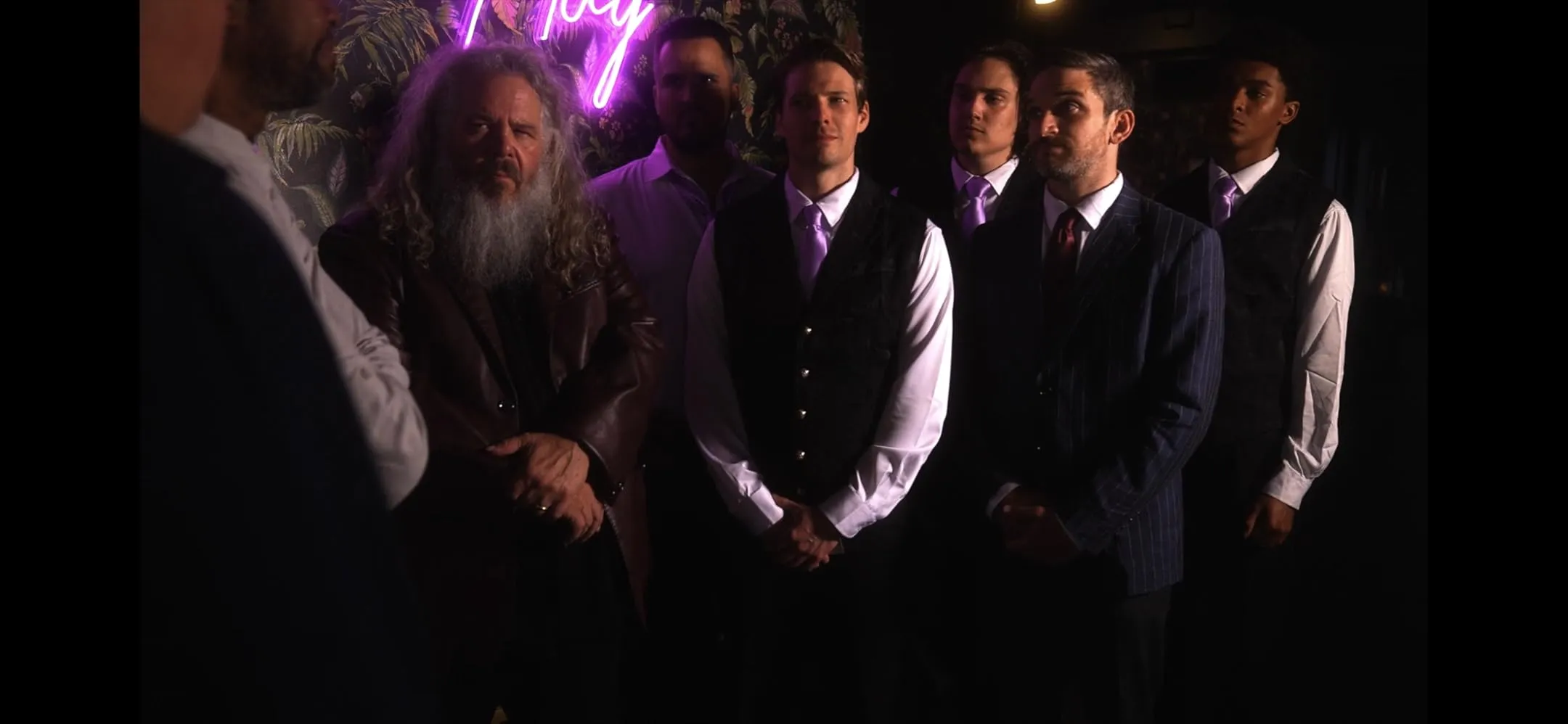
The story progresses through a series of bizarre, loosely tethered episodes, creating a deliberate state of confusion. Steven is guided by the coolly enigmatic Vincent, a man who speaks in riddles and seems to know more than he lets on, and comes under the influence of the bar’s proprietors: the menacing Eduard, a figure who feels like he walked out of a forgotten religious text, and his clinical associate, Dr. Clearwater.
The therapeutic cocktails they serve are the story’s engine of ambiguity. With each sip, the certainty of what happened to Steven’s son dissolves, for him and for us. This disjointed quality is the film’s defining feature. Characters appear with the suddenness of a memory and vanish without a trace, their dialogue often poetic and strange, deepening a sense of confusion that feels intentional.
It perfectly mirrors the protagonist’s internal chaos. The brief appearances by known faces like Whoopi Goldberg and Alec Baldwin add to the surreal texture; seeing them here is like recognizing a famous painting hanging in a stranger’s unsettling basement, another detail that makes you question the reality of the world you’ve entered.
Anarchy in the Close-Up
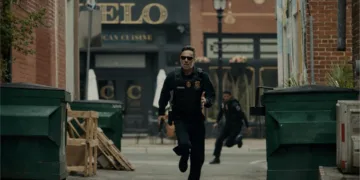
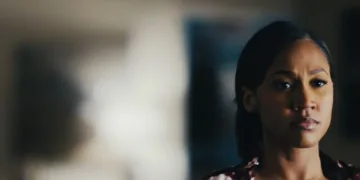
The film’s aesthetic is as raw and confrontational as its narrative. I was reminded of digging through crates of old records and finding a DIY punk 7-inch; the passion is immediate, even if the production is rough. The cinematography is dominated by handheld, extreme close-ups that feel like they are invading the characters’ personal space.
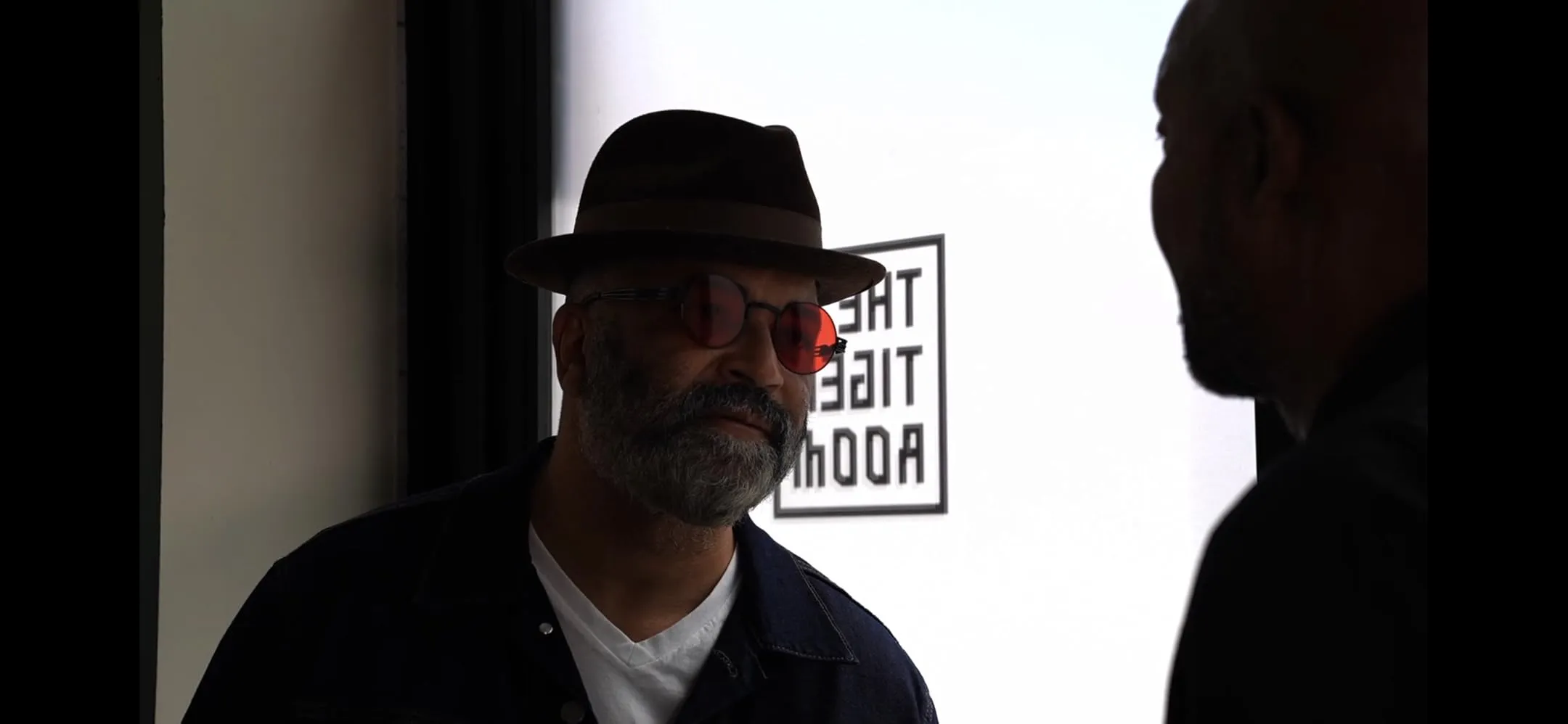
This choice creates a palpable sense of claustrophobia and intimacy, but it comes at a cost. The camera is so tight on the actors that the surrounding world becomes illegible. A conversation between two people often feels like two separate monologues, as we rarely see them in a wide shot that establishes a shared physical reality. This robs their interactions of a conventional grounding, making them feel even more disconnected.
This aesthetic is the clear mark of a director, William Atticus Parker, wearing every hat on set—writer, director, cinematographer, and editor. On one hand, it gives the film a singular, unfiltered vision that is commendably cohesive. On the other, it reveals the absence of a collaborative filter.
A different editor might have smoothed the choppy pacing; another cinematographer might have argued for a shot that lets the scene breathe. Yet within this roughness are moments of genuine artistic flair. A clever focus-pulling trick visually simulates the cocktails taking effect, a simple but brilliant touch.
The stark, primary-color lighting bathes the film in a beautiful, sickly neo-noir glow that perfectly complements its tone. The eclectic music cues, from Kim Wilde to Gerry Rafferty, further enhance the movie’s strange, off-kilter personality, proving a thoughtful artist is at work behind the unpolished execution.
The Promise of a Nascent Vision
Let’s be clear: the abrasive style and narrative opaqueness of Atrabilious will undoubtedly frustrate some viewers. The film demands a great deal of patience and a willingness to be lost. Yet, its ambition is what makes it so exciting and memorable.
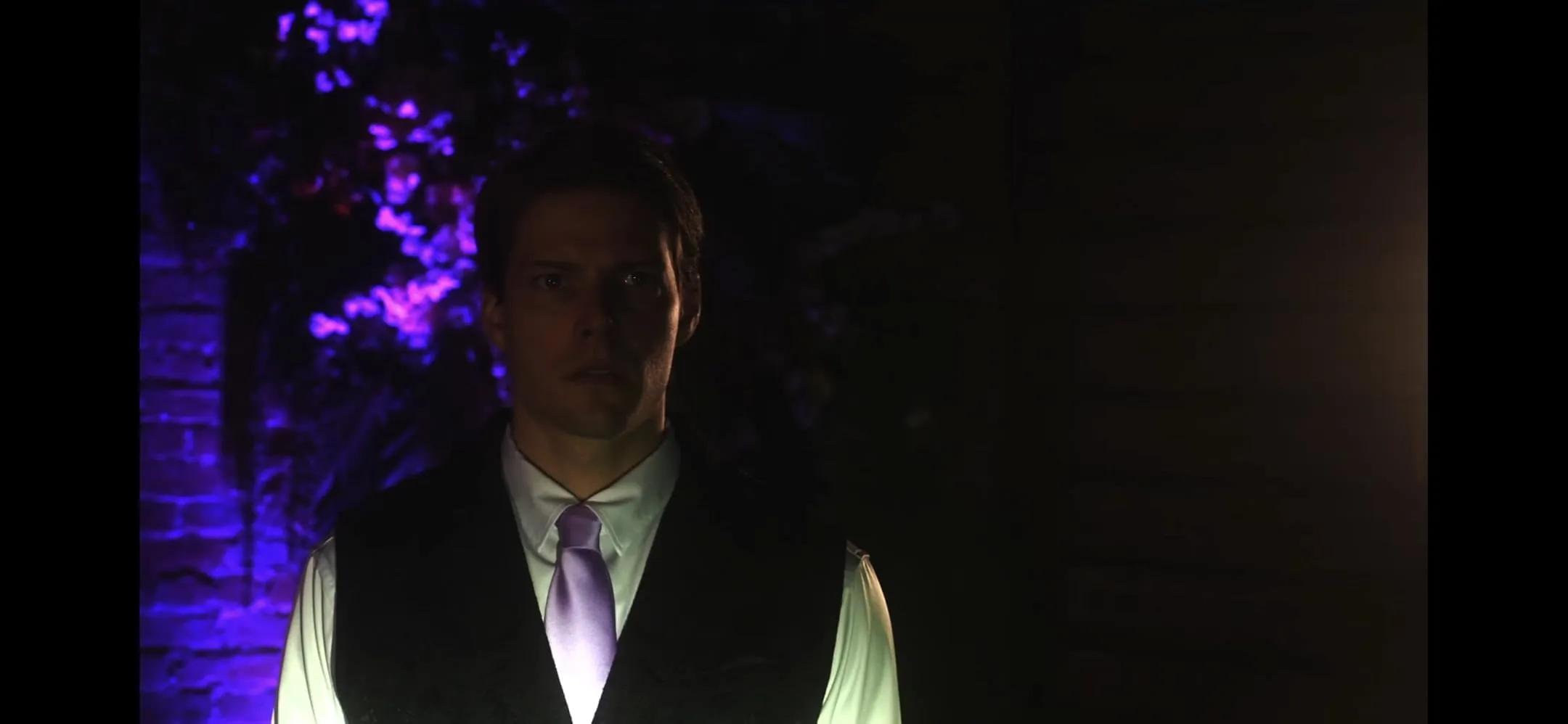
In an age where young filmmakers are often expected to tell stories about their own immediate experiences, here is a director tackling complex themes of grief, faith, and control through the eyes of a middle-aged protagonist. The choice feels mature and artistically daring. It is not just an intellectual exercise; it feels like a genuine attempt to understand a life stage and a type of pain far removed from his own.
This film is a bold statement of intent, a declaration of the kind of stories William Atticus Parker wants to tell. It feels like watching the first off-Broadway production from a brilliant young playwright. The set might be sparse, and some moments may feel uneven, but the power of the core idea is undeniable.
Atrabilious stands as a formative work from a filmmaker clearly still honing his craft, but whose voice is already distinct and loud. Its value is not in its perfection, but in its audacity. The confidence and originality on display signal the arrival of a perspective that could produce vital and challenging cinema for years to come.
Full Credits
Director: William Atticus Parker
Writers: William Atticus Parker
Producers: William Atticus Parker, Sabina Friedman-Seitz
Executive Producers: Matthew Helderman, Luke Taylor, Nikki Stier
Cast: Leon Addison Brown, Whoopi Goldberg, Alec Baldwin, Jeffrey Wright, Mark Boone Junior, Lewis Black, Evan Jonigkeit, Joel de la Fuente, David Pittu
Director of Photography (Cinematographer): William Atticus Parker
Editors: William Atticus Parker
Composer: Iain Condron
The Review
Atrabilious
Atrabilious is a challenging and often disorienting film that trades narrative clarity for a raw, fever-dream aesthetic. Its technical execution is unpolished, and its plot will leave many viewers frustrated. Yet, for those willing to embrace the chaos, the film reveals a work of startling ambition and artistic originality. It is a potent, if flawed, calling card from a filmmaker whose future work is now a must-see. A fascinating experiment that succeeds more in its bold vision than in its final execution.
PROS
- A highly original and ambitious artistic vision.
- Mature themes and an unconventional narrative structure.
- Creates an effective and consistent neo-noir mood.
- Features moments of clever and artistic technical execution.
- Represents a bold, promising work from a very young director.
CONS
- The plot is frequently confusing and disjointed.
- A raw, unpolished aesthetic that can feel amateurish.
- Overuse of extreme close-ups makes scenes spatially incoherent.
- The choppy editing can be jarring for the viewer.
- Its experimental nature will likely alienate a wide audience.