


























The ghosts of cinema do not rest easy. They are summoned from their celluloid graves by a necromancy of nostalgia, their forms reanimated for an age that craves the comfort of the familiar. With each revival, we must ask what purpose it serves: to illuminate a forgotten truth, or merely to parade a beloved corpse? I Know What You Did Last Summer is the latest specter to answer this call, returning to the salt-sprayed air of Southport, a town that memory has rendered both idyllic and cursed.
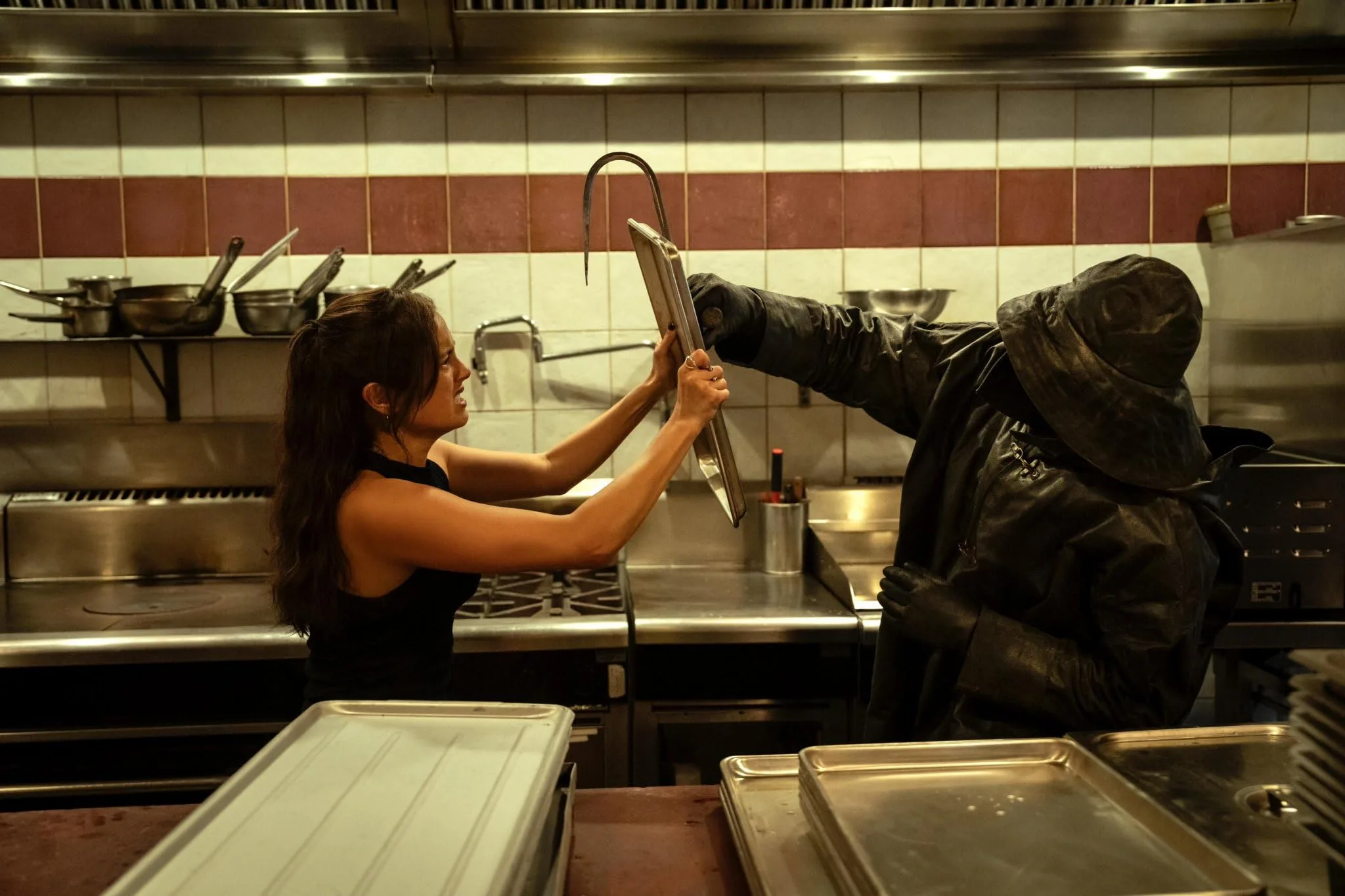
Here, a new coven of post-collegiate souls finds themselves bound by a shared secret, a sin of omission on a dark July 4th that ends in a plunge of steel and glass into the sea. One year later, a shadow from the past, clad in a fisherman’s slicker and armed with a hook, emerges from the fog to mete out a penance.
The original survivors, Julie James and Ray Bronson, are drawn back into the nightmare as scarred oracles for this new generation. Yet, the film itself becomes a specter caught between two worlds, one of hallowed 90s memory and one of a hollow, hyper-modern present, and it struggles to find a reason to exist in either.
Portraits in a Cracked Mirror
The new faces are less characters than they are exquisitely rendered portraits of a distinctly modern condition: the curated self. We see them not as they are, but through the lens of how they perform their lives for one another. At the narrative’s center is Ava, played by Chase Sui Wonders with a quiet, watchful gravity that makes her a repository for a collective, if ultimately shallow, guilt. Her stillness is a welcome anchor in a sea of frantic performance. She is orbited by Danica, a shimmering simulacrum of social media effervescence whose existence seems validated only by external affirmation.
Her fiancé, Teddy, is an avatar of a reckless privilege so profound it borders on a kind of nihilistic boredom; he courts destruction as if it were just another fleeting thrill. Their circle is ostensibly completed by the working-class Stevie, whose presence is meant to inject a note of class-based alienation but who feels more like a sociological footnote, a reminder of a world of consequence that the others have the luxury to ignore. Milo, the handsome ghost of a past romance, drifts through their interactions, a complication that promises depth but delivers little.
Their friendships feel like a fragile construct, a web woven from the threads of shared history and social convenience rather than genuine intimacy. The film gestures toward the intricate, messy webs of adult relationships, but their interactions are scripted in a sterile, digital dialect of therapy-speak and fleeting slang. It is a language of shields, designed to analyze and categorize emotion rather than to feel it, revealing little of the human heart that supposedly beats beneath the polished surface.
Into this emotionally sterile tableau step the true relics, Julie James and Ray Bronson, human monuments to a trauma that feels almost primitive by comparison. Jennifer Love Hewitt’s Julie is now a law professor who lectures on the mechanics of trauma as if it were a textbook diagram, her pain intellectualized and packaged for consumption. It is a very modern form of coping, a way of holding one’s own suffering at an analytical distance. By contrast, it is Freddie Prinze Jr.’s Ray, weathered, silent, and steeped in a quiet resentment, who offers a more authentic vision of survival.
The trauma is not in his words; it is embodied in his posture, in the weary lines etched on his face. He tells a more compelling story of suffering in his silence than the film does in its entirety. Their presence provides a necessary dose of nostalgic gravity, yet they function mostly as narrative crutches, allowing a story with no real weight of its own to lean on a foundation it never bothered to build.
The Ghost in the Machine
This film is haunted, but not by its killer. It is haunted by its own past, a benevolent haunting it curates with the meticulous reverence of a museum tour. The iconic parade float, discovered in a state of impossible preservation, is not just a prop; it is a decrepit throne from a forgotten festival. Photographs of a long-dead pageant queen are treated like religious icons. The very cadence of certain lines is repeated with liturgical precision.
These are not living memories; they are artifacts, displayed in glass cases for our admiration. This is a form of cinematic idolatry that reveres the symbols of a past event rather than its meaning, a process that hollows out history until only the empty signifiers remain. The film doesn’t engage with its past; it exhumes it, polishes it, and puts it on display, a beautiful corpse that no longer breathes.
In violent opposition to this reverence is a desperate, almost frantic, courtship with the now. The script is saturated with a vocabulary that will be dated before the film leaves theaters, a self-aware clumsiness that mistakes topicality for intelligence. This is not the language of people, but of algorithms attempting to simulate them, a public-facing language of performance that lacks the vulnerable intimacy of genuine communication. It creates an impenetrable barrier between the characters and any authentic emotional experience they might have.
The result is a profound and jarring dissonance, a film at war with itself. It is a cacophony of two eras speaking different languages, their words echoing past one another in a shared, empty space. The ghost of the 90s slasher attempts to possess a body that is fundamentally alien to it, a body fluent in a digital dialect it cannot understand. The outcome is a grotesque and unconvincing hybrid, a story that achieves a disquieting emptiness because it has no soul of its own, only the borrowed spirit of one story and the borrowed slang of another.
A Theatre of Bloodless Gestures
For a film born from the promise of violence, there is a strange and pervasive absence of genuine threat. The cinematography carries an aseptic sheen, its polished, brightly-lit frames actively sanitizing the horror, working against the cultivation of shadow and dread where true fear resides. The fisherman, that icon of seaside terror, is reduced to a mere silhouette without substance, his appearances telegraphed with the subtlety of a ringing alarm.
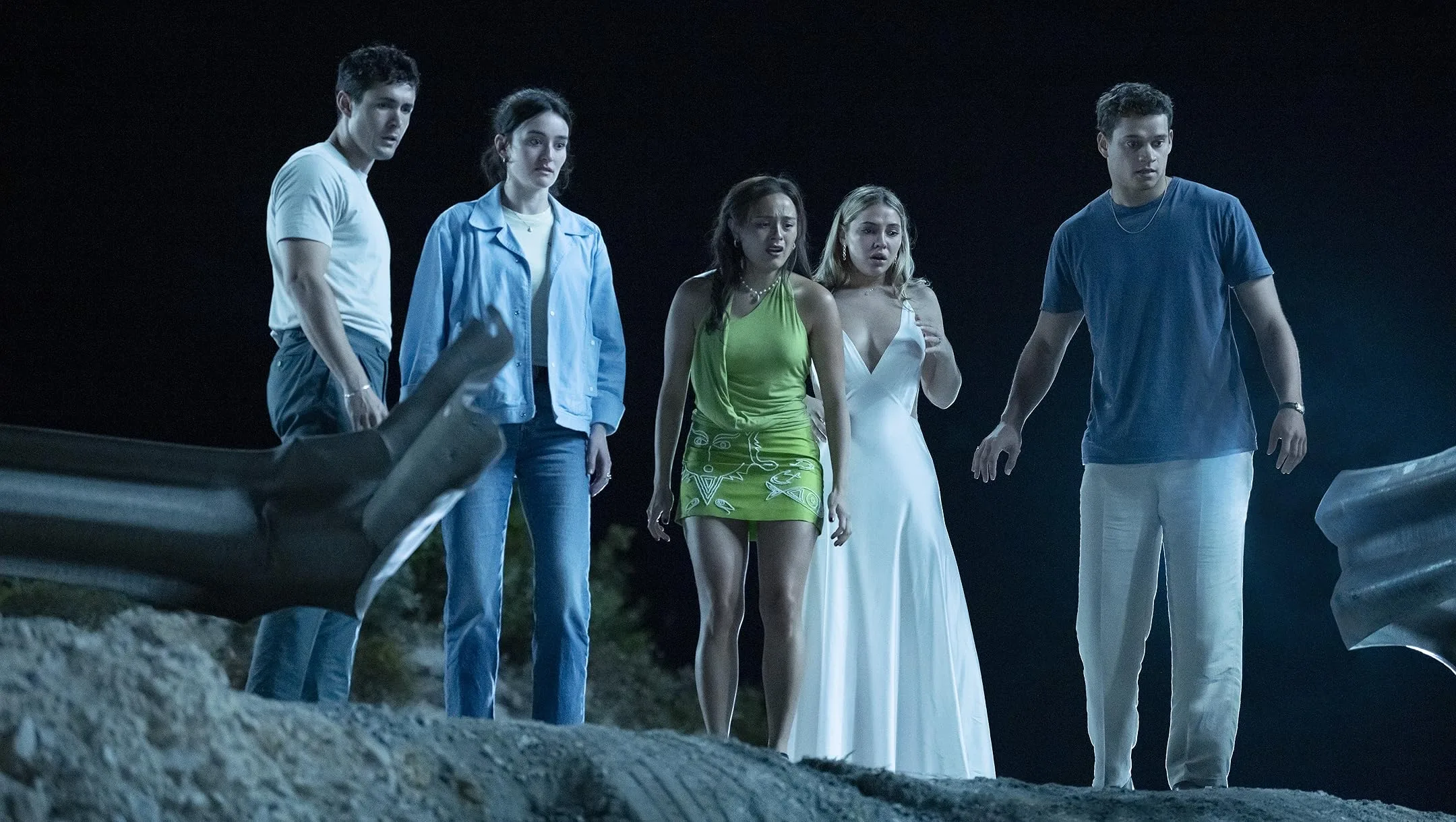
He is a man in a costume, not an elemental force of retribution. The requisite jump scares, therefore, land like cold, technical exercises, startling the nervous system but leaving the psyche entirely untouched. This is not horror; it is the meticulous simulation of horror, a bloodless gesture toward an emotion it never fully commits to invoking.
The film lurches into the absurd, a signal of its profound tonal confusion. It cannot decide whether to be a reverent homage, a winking satire, or a straightforward thriller. One character, while being actively hunted by a methodical killer, retreats to a sauna to relax. The moment is so disconnected from recognizable human logic that it feels like a dispatch from another reality, shattering the film’s contract with the audience. It is a moment of such baffling contempt for character and circumstance that it invites us to laugh at the victim’s stupidity rather than fear for their life, severing the empathetic link necessary for suspense.
This tonal chaos is compounded by the film’s pacing. The cinematic heartbeat is absent, replaced by a slow, off-rhythm drag, like a story told by someone who keeps forgetting the important parts. The bloated runtime makes the experience feel less like a tense ride and more like a long, slow march toward an uninteresting grave, its suspense lost in the many empty spaces between its rote, theatrical motions.
An Unexamined Sin
At the heart of the original tale was a primal, active guilt. A reckless act was committed, a body was hidden, a secret was buried deep in the earth. That sin of commission created a tangible ghost, a direct and bloody consequence. This new iteration, however, offers a lesser, more passive transgression: a sin of omission. The protagonists are merely bystanders to a tragedy they inadvertently caused, their culpability diluted by circumstance.
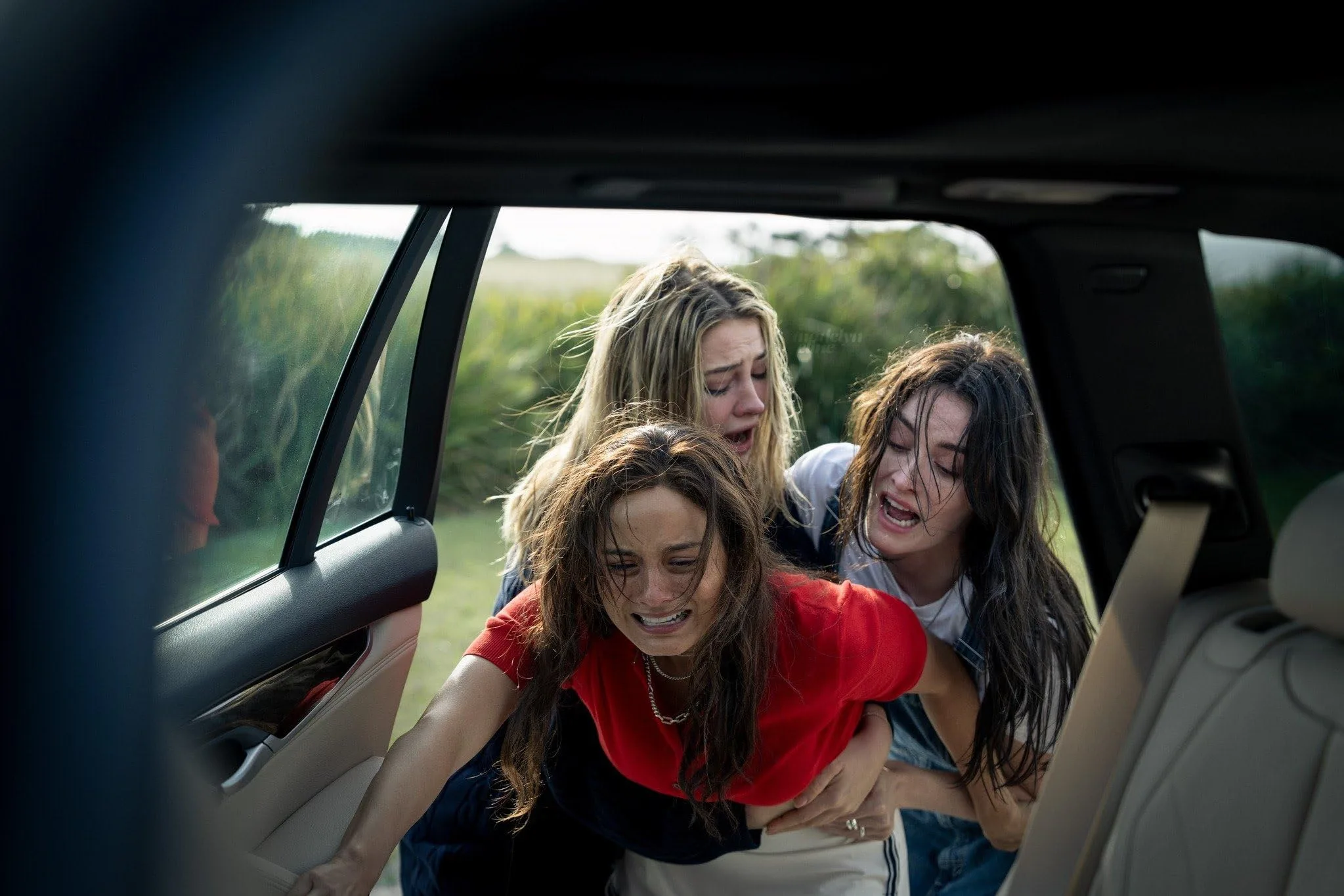
This watering-down of their sin creates a moral vacuum at the story’s center. It is a more modern, more anxious form of guilt, but one that is far harder to personify as a hook-wielding killer. Consequently, the killer’s methodical, year-long campaign of revenge feels unmoored from its cause, a hysterical, disproportionate scream into a moral void. The film is afraid to make its heroes ugly, and in doing so, it robs its villain of a coherent, satisfying motive.
This moral timidity extends to its larger, more ambitious ideas. We are given flickering ghosts of a more intelligent film: whispers of gentrification turning Southport into a pristine playground for the rich, a pretty facade hiding a rotten history. There are hints of a corrupt local power structure burying the town’s bloody past for the sake of tourism. These are potent, unsettling concepts that could have mirrored the protagonists’ own hidden sins, yet they remain just that—whispers. They are decorative scars on the surface of the plot, abandoned before they can draw blood.
The film’s final reveal, its grand explanation for the carnage, does not illuminate this landscape. Instead, it offers a solution so arbitrary and brazenly illogical that it feels like a final surrender to a nihilistic shrug. It denies the audience the catharsis of understanding, suggesting a universe not of moral cause and effect, but of pure, random chaos. In this context, it feels less like a chilling philosophical statement and more like lazy screenwriting, a final act of indifference from the filmmakers themselves.
The Shape of Nothing
What remains when the credits roll is not fear, or catharsis, or even righteous anger, but a profound and lingering sense of irritation. This film is a hollow echo, a twice-told tale signifying nothing. It is a cinematic revenant that fails in its duties to the past it worships and the present it so desperately panders to. It is a husk of a story, a collection of gestures without meaning.
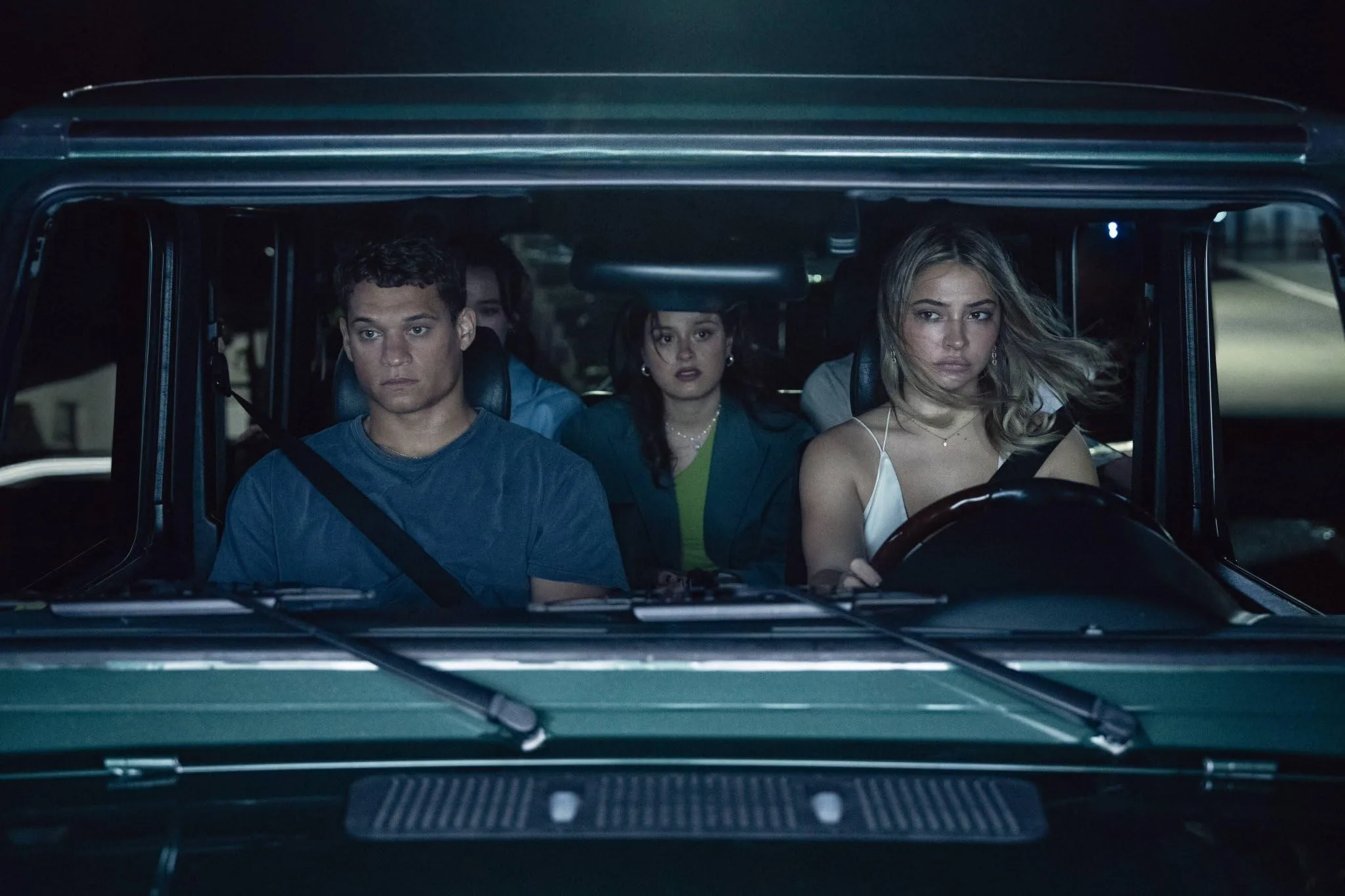
The film wears the face of its predecessor, a mask of 90s horror, but it has forgotten that there is a difference between a mask and a face. It is a film about surfaces that has become nothing but surface itself, a perfect, polished, and empty shell. It is not merely a forgettable failure; it is an actively draining one, a small black hole on the screen that consumes one’s time and attention and offers only a disquieting void in return.
This new I Know What You Did Last Summer is a chilling reminder that sometimes, the most terrifying thing a story can show us is its own absolute emptiness.
Full Credits
Director: Jennifer Kaytin Robinson
Writers: Jennifer Kaytin Robinson, Sam Lansky, Leah McKendrick
Producers: Neal H. Moritz
Executive Producers: Jennifer Kaytin Robinson, Jackie Shenoo, Karina Rahardja
Cast: Jennifer Love Hewitt, Freddie Prinze Jr., Madelyn Cline, Chase Sui Wonders, Jonah Hauer-King, Tyriq Withers, Sarah Pidgeon, Billy Campbell, Gabbriette Bechtel, Austin Nichols, Joshua Orpin
Director of Photography (Cinematographer): Elisha Christian
Editors: Saira Haider
The Review
I Know What You Did Last Summer
I Know What You Did Last Summer is a hollow echo of a story better left in the past. It fails as a horror film, offering a polished simulation of terror without genuine suspense. It fails as a legacy sequel, treating its own history as a collection of lifeless artifacts while pandering to a modern sensibility it doesn't understand. The result is a tonally confused, intellectually vacant, and emotionally inert experience—a cinematic ghost with nothing to say. It is an unnecessary and irritating void, a film whose greatest crime is its own profound emptiness.
PROS
- A compelling, grounded central performance from Chase Sui Wonders.
- Freddie Prinze Jr. brings a welcome gravitas and maturity to his returning role.
- High production values and polished cinematography.
- Introduces potentially interesting themes of class and gentrification, even if they remain unexplored.
CONS
- Complete lack of genuine scares, suspense, or atmospheric dread.
- An illogical plot that culminates in a nonsensical and arbitrary killer reveal.
- Inconsistent and jarring tone that fails to balance horror and satire.
- Weak script filled with pandering dialogue that feels instantly dated.
- Underdeveloped, paper-thin characters who fail to earn audience empathy.
- Shallow and unimaginative use of nostalgia as a narrative crutch.
- A watered-down central premise that weakens the core theme of guilt.