









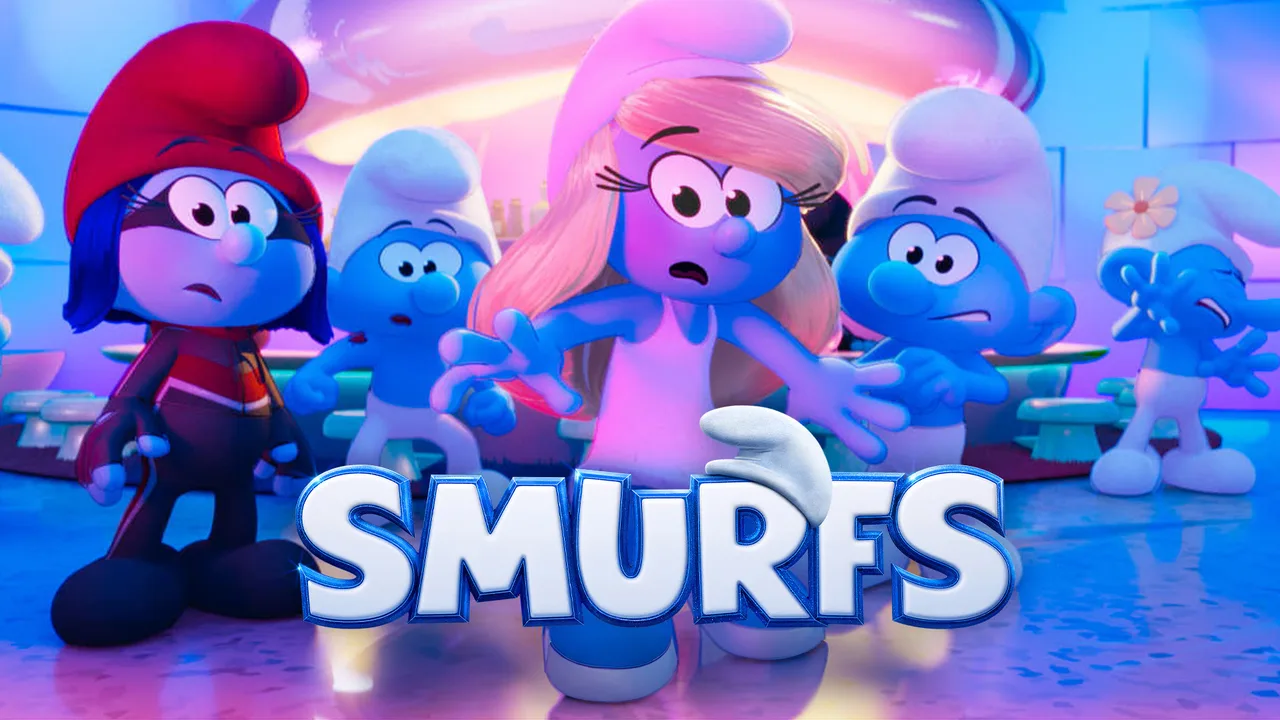

Eight years have passed. A new generation of children has reached cinematic sentience, and so, as is the custom in Hollywood, the Smurfs have returned from their cinematic sabbatical.
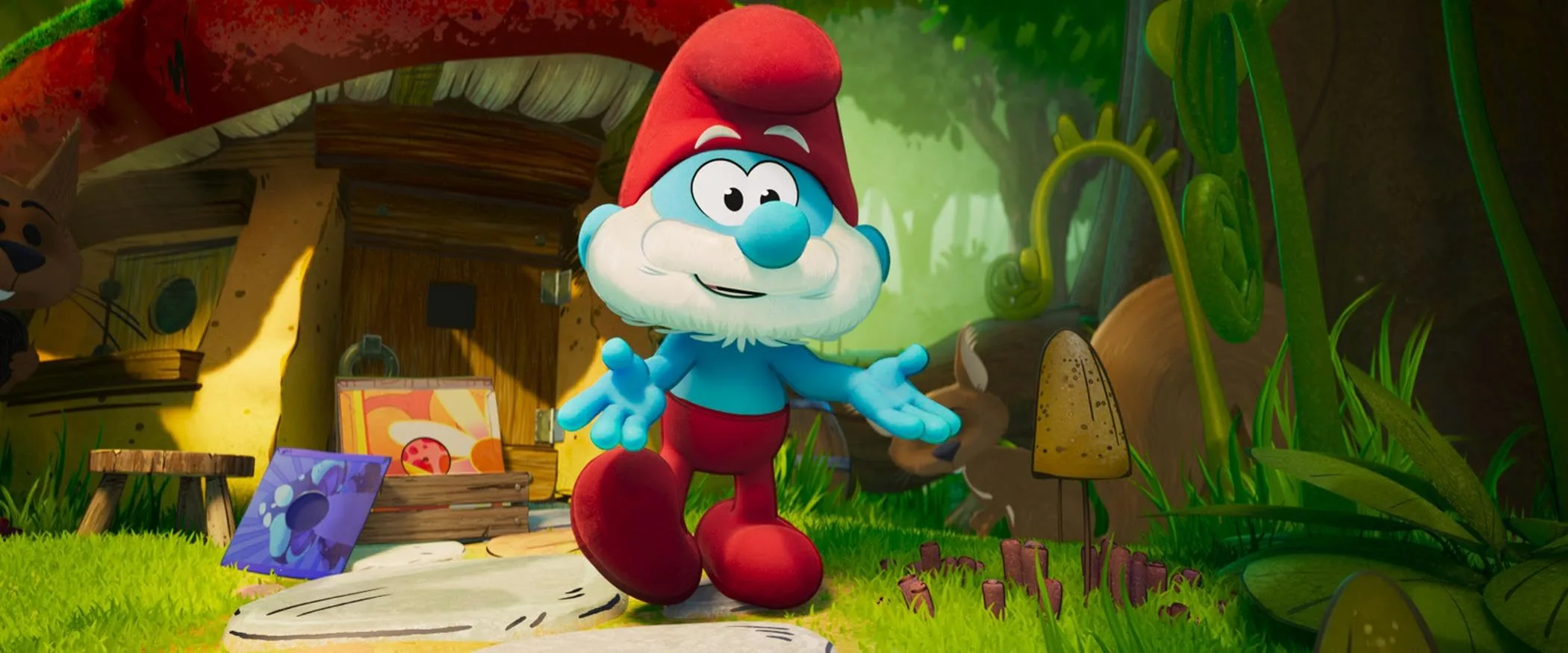
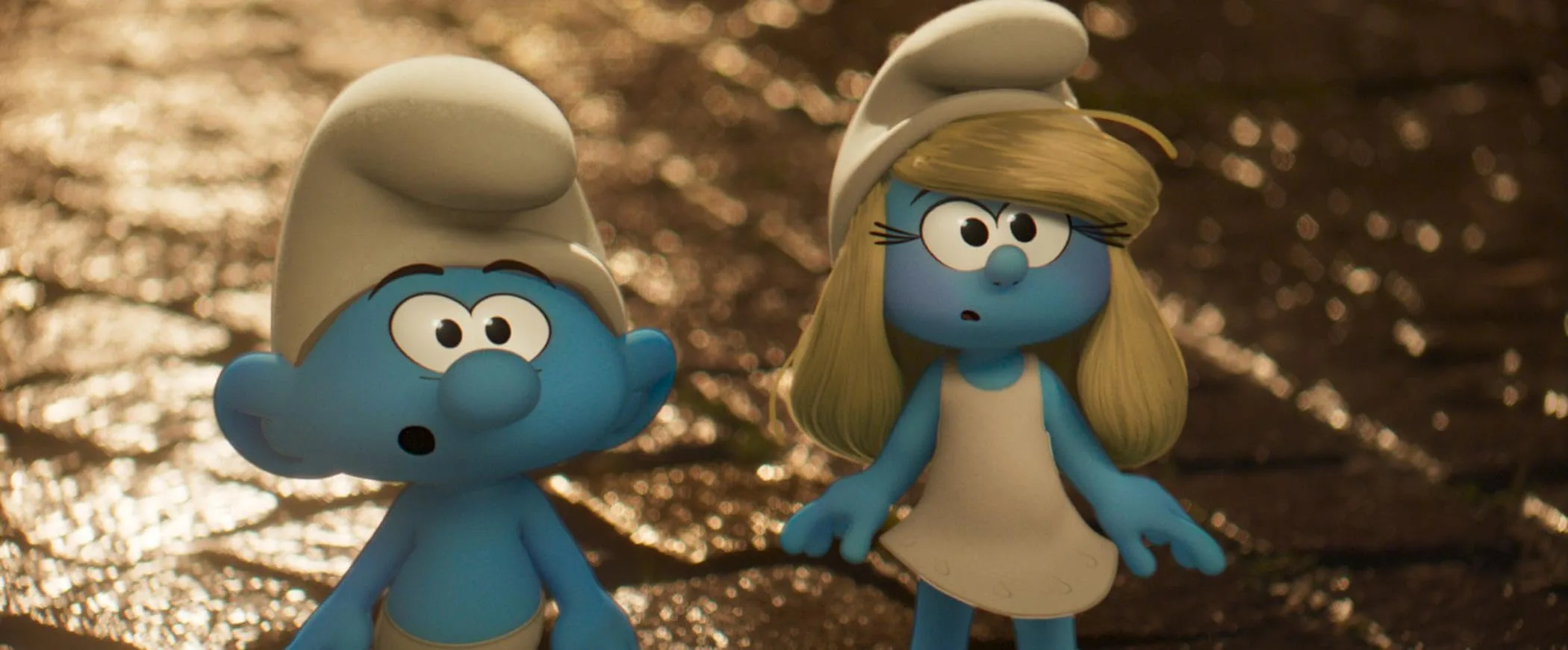
We are returned to Smurf Village, that peculiar mushroom-themed commune where existence is purpose. Each blue citizen is defined entirely by their function (Hefty lifts, Brainy knows, Grouchy complains), a social structure so rigid it would make a beehive blush. Into this system of absolute utility is born an anomaly: No Name, a Smurf afflicted with a uniquely modern condition—ontological vacancy. He has no “thing.” He simply is. Beside him stand the familiar archetypes: the ever-resourceful Smurfette and the benevolent patriarch, Papa Smurf, a figure of comforting authority.
But the clockwork harmony of the village is, as always, fragile. The sinister wizard Gargamel, now accompanied by his even more nefarious brother Razamel, shatters the peace by abducting Papa Smurf. The kidnapping triggers a frantic rescue mission, a quest that propels our little blue cohort out of their ideological bubble and into the wider, messier world to prevent a vaguely defined global catastrophe.
The Unbearable Lightness of Being Blue
The film presents, with surprising initial gravity, a classic existential quandary. In the Smurf’s teleological collective, where identity is a pre-assigned function, No Name is a void. He is a walking question mark in a world of exclamation points. This setup promises a thoughtful exploration of self-creation, a children’s primer on the struggle to define oneself against the crushing weight of societal expectation. It is, for a moment, Sartre’s No Exit with mushrooms.
A very short moment.
This profound crisis lasts for about twelve minutes. The narrative, in a hurry to get to the next chase sequence, performs a spectacular act of thematic abandonment. No Name’s deep-seated anxiety is swiftly cured when he discovers he can, you know, do magic. The difficult, messy work of forging an identity is replaced with the narrative convenience of a superpower.
The film offers a moral about “finding your own thing,” but the lesson it actually teaches is that personal voids are best filled with sudden, marketable skills. The final, tacked-on platitude about the “power of heart” feels like a corporate memo apologizing for the inconvenience of the earlier, more interesting idea.
This hollowness extends to the film’s interpersonal dynamics. The bond between No Name and Smurfette is presented as central, yet it operates with the warmth of a business transaction. She exists not as a character but as a piece of emotional support infrastructure for the male protagonist’s fleeting crisis. Rihanna may lend her voice, a symbol of 21st-century female autonomy, but the character she inhabits is pure 1950s playbook: the girl whose sole function is to tell the boy he can do it. It is a profound waste, a small tragedy within the larger, more colorful one.
Hyper-Kinetic Hand-Me-Downs
With its central thematic engine sputtering out, the film defaults to the most reliable of narrative armatures: the serialized scavenger hunt. The villains require a set of four magical books to achieve total power, a framework so familiar one half-expects a post-credits scene setting up the next acquisition.
(One imagines a whiteboard in the writers’ room with “Like the Infinity Stones, but books?” circled several times.) This narrative liquidation is garnished with a subplot about sibling rivalries—one evil, one good—a parallel so neatly drawn it feels less like organic storytelling and more like a screenwriting exercise in symmetrical character grids.
What follows is less a story and more a frantic slideshow of disparate locations. A portal opens. They are in Paris. Another opens. The Australian Outback. The film operates at a blistering content-velocity, mistaking motion for progress. This is cinema as an attention-deficit-disorder feedback loop, a series of vignettes designed to prevent the thumb from swiping to the next video. Any potential for a location to establish a mood or a new character (like the baffling Snooterpoots) to make an impression is immediately sacrificed for the sake of perpetual movement.
It never breathes.
The script’s attempts at humor are equally breathless and ineffective. The one-liners land with a thud, but it is the film’s desperate grasp for contemporary relevance that truly curdles the experience. In the year 2025, we are treated to gags about Zoom meetings, rideshare food delivery, and—most unforgivably—a wizard’s intern fretting over his LinkedIn recommendations. These are not jokes; they are time-stamped artifacts of corporate brainstorming sessions. They serve only to yank the viewer out of a fantasy world that was already struggling to be immersive, ensuring the film will feel not just weak, but dated, by next Tuesday.
A Crisis of Aesthetic Identity
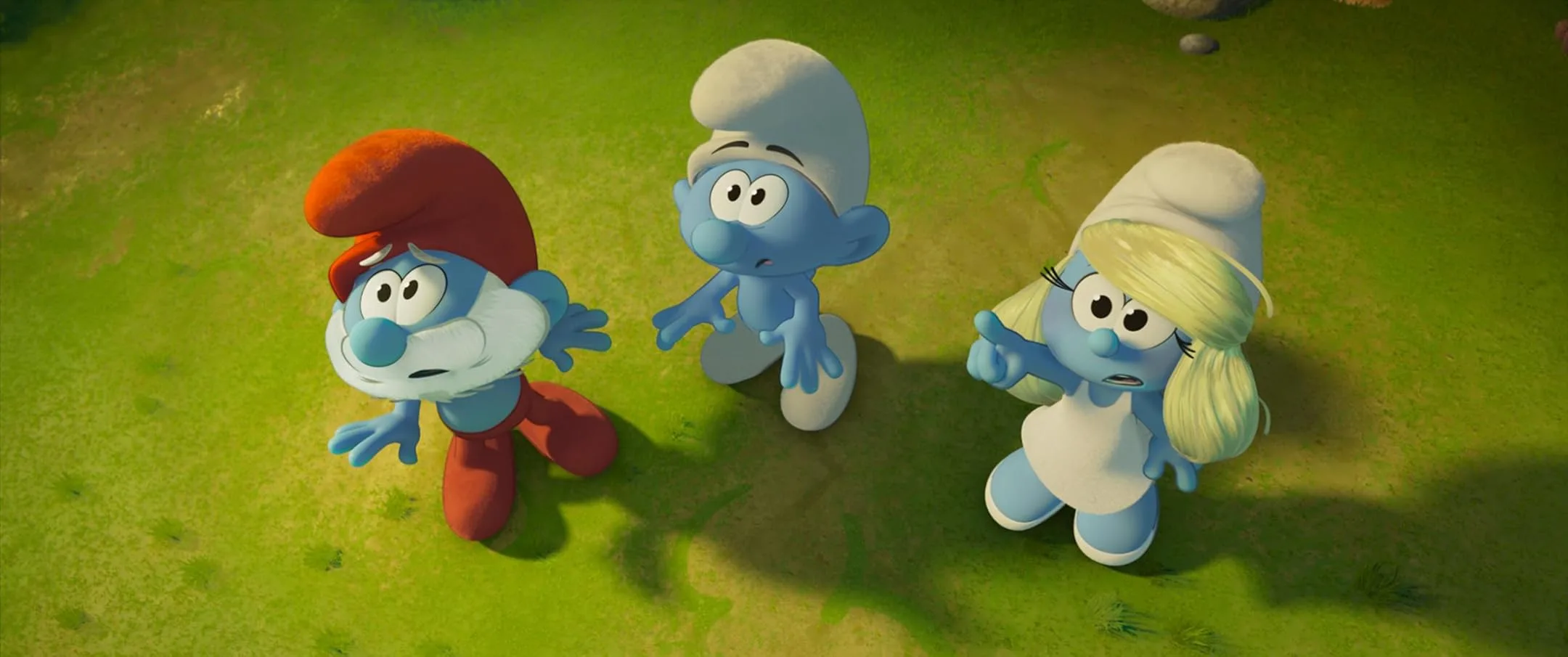
Visually, the film is in a state of civil war with itself. The dominant aesthetic is an admirable, if now commonplace, attempt at the Spider-Verse-ification of a classic property. The goal is to mimic the spirit of Peyo’s original comic art, wedding three-dimensional character models to the flat, expressive charm of two-dimensional effects. Magic blasts and puffs of smoke appear as hand-drawn flourishes against the CGI forms. In isolated moments—a frenetic chase through a Parisian nightclub, the gothic angles of a villain’s lair—this fusion works. It is vibrant, energetic, and for a few seconds, you believe in the world.
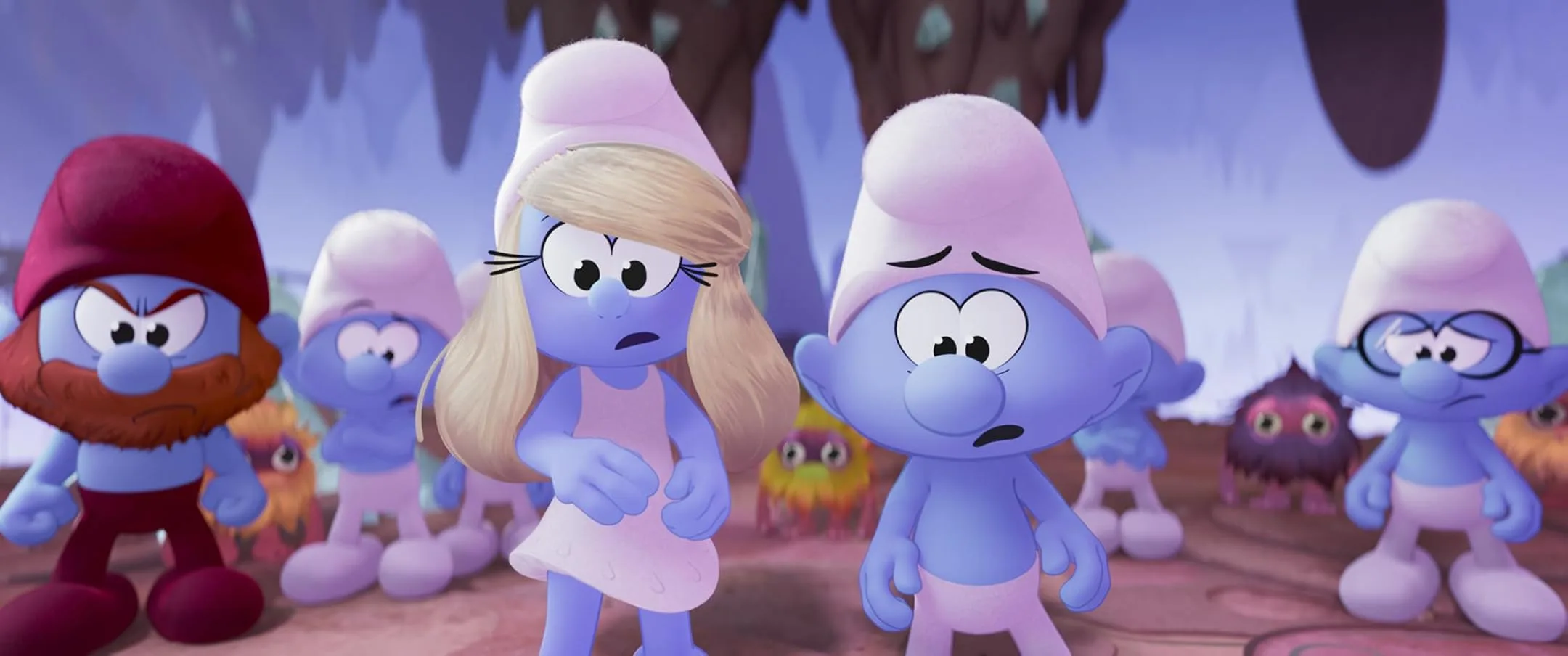
But the coalition is unstable. For every striking sequence, there are long stretches where the style regresses into something resembling a well-lit but soulless video game cutscene from 2003. The ambition is there, but the execution is wildly inconsistent. This inconsistency metastasizes into outright absurdity during the film’s brief excursions into our world.
Here, the animated Smurfs are dropped onto photorealistic, live-action backdrops. The effect is profoundly jarring, less a bold artistic statement and more a baffling technical compromise. It creates a disconnect so severe it verges on the experimental, as if a children’s film accidentally stumbled into a Brechtian alienation technique.
There is one sequence, a fleeting montage, where the film seems to acknowledge its own stylistic indecision. For less than a minute, the Smurfs are rendered in a cascade of different forms: Claymation, crude sketchbook drawings, 8-bit sprites, a lazy anime pastiche. It is a flash of genuine creativity, a glimpse into a dozen more interesting movies that might have been. But it is just a gimmick, a stylistic channel-surfing that serves only to highlight the lack of a coherent vision in the film it’s actually in.
Audible Dissonance
The film’s sonic landscape is as conflicted as its visual one. We are subjected to a series of perfectly engineered, utterly forgettable pop songs, including an obligatory anthem from producer-star Rihanna. This anachronistic sonic wallpaper serves no narrative purpose; the tunes arrive with the abruptness of a pop-up ad, halting the story for a mandatory music video break. The effect is like finding a discarded vape pen in a Brothers Grimm manuscript.
It is a cynical exercise in brand alignment, a soundtrack in search of a movie.
This same philosophy of brand-over-substance applies to the vocal cast, a veritable who’s who of actors with better things to do. The poster can boast names like John Goodman, Nick Offerman, and even Kurt Russell, but their presence is spectral. They are deployed not for their unique talents but as A-list vocal wallpapering, delivering functional lines that rarely register. One gets the sense of immense talent being squandered in sterile recording booths for a few days’ easy work, a system that prioritizes famous names for marketing materials above all else.
Amidst this sea of expensive indifference, two performances break through. JP Karliak, voicing both squabbling wizards, injects a welcome dose of theatrical villainy into the proceedings. And then there is Natasha Lyonne as the leader of a tribe of furry things. She doesn’t just voice her character; she mainlines her distinct, gravel-and-honey persona directly into the film’s veins. For a few glorious minutes, her charismatic nihilism gives the movie a pulse.
The Blue Void
So what is one to make of this artifact? It stands as a monument to its own squandered potential. The film gestures toward a compelling meditation on selfhood only to abandon it for a flurry of empty motion and noise. Its flashes of visual ingenuity are untethered to any discernible emotional core, leaving a shell of impressive technique surrounding a void.
The result is a perfect cultural calorie: brightly packaged, algorithmically optimized for maximum distraction, and entirely devoid of nutritional value.
It asks nothing of its audience and offers nothing in return except for 90 minutes of mild sensory agitation. This is not a film to be remembered or discussed. It is a product to be consumed and disposed of, a blue smear in the relentless content stream. By the time you reach the parking lot, the specifics will have already begun to sublimate into a vague memory of the color blue and a faint sense of regret for the price of a cinema ticket in 2025.
Full Credits
Director: Chris Miller
Writers: Pam Brady
Producers and Executive Producers: Ryan Harris, Jay Brown, Rihanna, Tyran “Ty-Ty” Smith
Cast: Rihanna, James Corden, John Goodman, Nick Offerman, JP Karliak, Daniel Levy, Amy Sedaris, Natasha Lyonne, Sandra Oh, Jimmy Kimmel, Octavia Spencer, Nick Kroll, Hannah Waddingham, Alex Winter, Maya Erskine, Kurt Russell, and John Goodman
Editor: Matt Landon
Composer: Henry Jackman
The Review
Smurfs
Smurfs is a hollow spectacle, a film so preoccupied with frantic motion and corporate synergy that it abandons its few interesting ideas before they can take root. While flashes of visual ambition and a pair of standout vocal performances prevent it from being a total wash, they cannot salvage a product built on a weak script, superficial characters, and a profound lack of emotional substance. It is a brightly colored, aggressively loud, and instantly forgettable piece of content that mistakes activity for artistry.
PROS
- Ambitious animation style with occasional moments of visual flair.
- A charismatic, scene-stealing vocal performance from Natasha Lyonne.
- An energetic dual role for JP Karliak as the villains.
CONS
- A promising central theme of identity is introduced only to be quickly abandoned.
- The plot is a generic and recycled "save the world" adventure.
- Pacing is chaotic, preventing any emotional moments from landing.
- Humor is weak, relying on awkward pop culture references that instantly date the film.
- A star-studded voice cast is largely wasted on unremarkable characters.
- Lacks genuine warmth or a compelling emotional core.