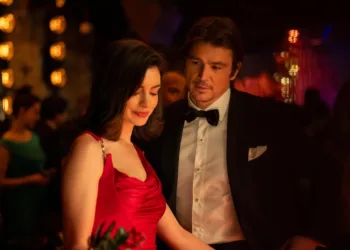


















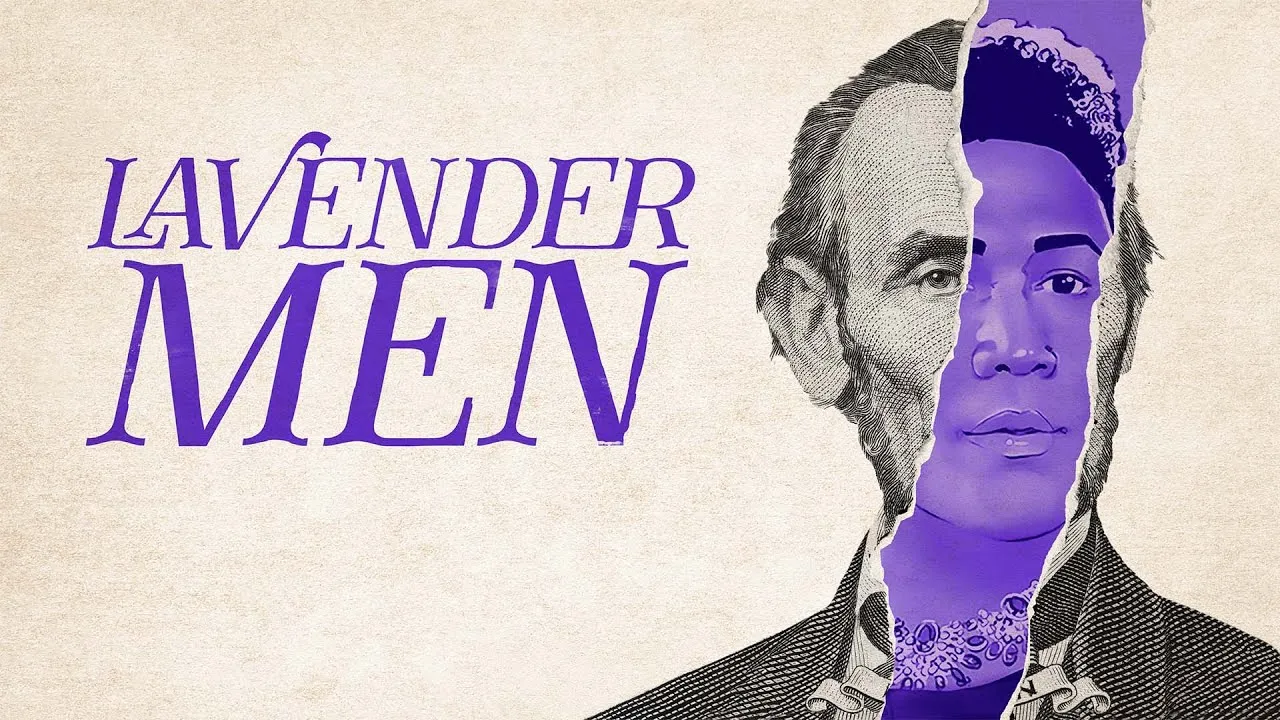

The film introduces us to Taffeta (Roger Q. Mason), a Black, Filipinx, queer, and plus-size stage manager whose vibrant identity is rendered invisible in the beige world of a tired theatrical production about Abraham Lincoln. We first meet them in the thankless shadows of the wings, their expertise and passion met with dismissive nods and patronizing smiles.
The story ignites after a particularly cruel moment of dismissal and abuse from one of the play’s actors, a final humiliation that leaves Taffeta alone in the empty theater. It is in this void, a space of profound frustration and pain, that something transformative happens. Taffeta claims the stage for themself, conjuring a personal “fantasia” from sheer will.
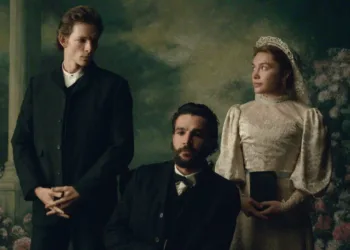
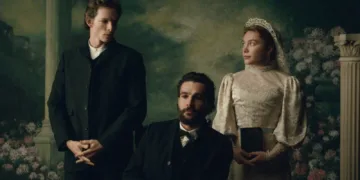
Here, they take control of the narrative, resurrecting the rumored, hidden romance between a young, vital Abraham Lincoln and his devoted companion, Elmer Ellsworth. This reclamation is not a dry academic exercise; it is a desperate, brilliant act of survival—a journey to find a voice loud enough to fill the silences imposed by history and the present day.
History Reimagined
Taffeta’s fantasia is a dazzlingly surreal space where the rules of time and storytelling collapse, a direct response to a world that has imposed rigid and suffocating rules upon them. It functions as a meta-theatrical dreamscape, a stage where history is not simply retold but ripped apart and reassembled with new, urgent purpose.
Taffeta does not merely direct this new vision; they explode into it, embodying a dizzying array of characters. When they play Mary Todd Lincoln, it’s a commentary on the gilded cage of heteronormativity. When they become a flamboyant, dancing chandelier, it’s an act of joyous, absurd rebellion against being seen as a mere functional object.
This is a radical act of insertion, a way of planting a contemporary, marginalized body directly into a historical narrative that has long excluded it. The film masterfully blurs the lines between this imagined past and Taffeta’s present, flashing back to painful, real-world moments of rejection that fuel the fantasia’s fire. By frequently breaking the fourth wall, Taffeta makes the audience a confidante, pulling us into their process of creative discovery.
The film’s true genius lies in this framework, connecting one person’s urgent, contemporary search for acceptance with the quieted queer history of a nation’s most iconic figure, suggesting that the ghosts of our national past are inextricably linked to the personal ghosts that haunt us today.
A Commanding and Vulnerable Central Performance
At the heart of this audacious experiment is the powerhouse performance by Roger Q. Mason. As Taffeta, they are the film’s undeniable anchor, delivering a performance of breathtaking range and honesty. Mason’s physicality tells its own story: they begin the film hunched, making themself small to navigate a world that won’t make space for them, but within the fantasia, their posture opens up, their gestures become grand, their voice booms with newfound authority.
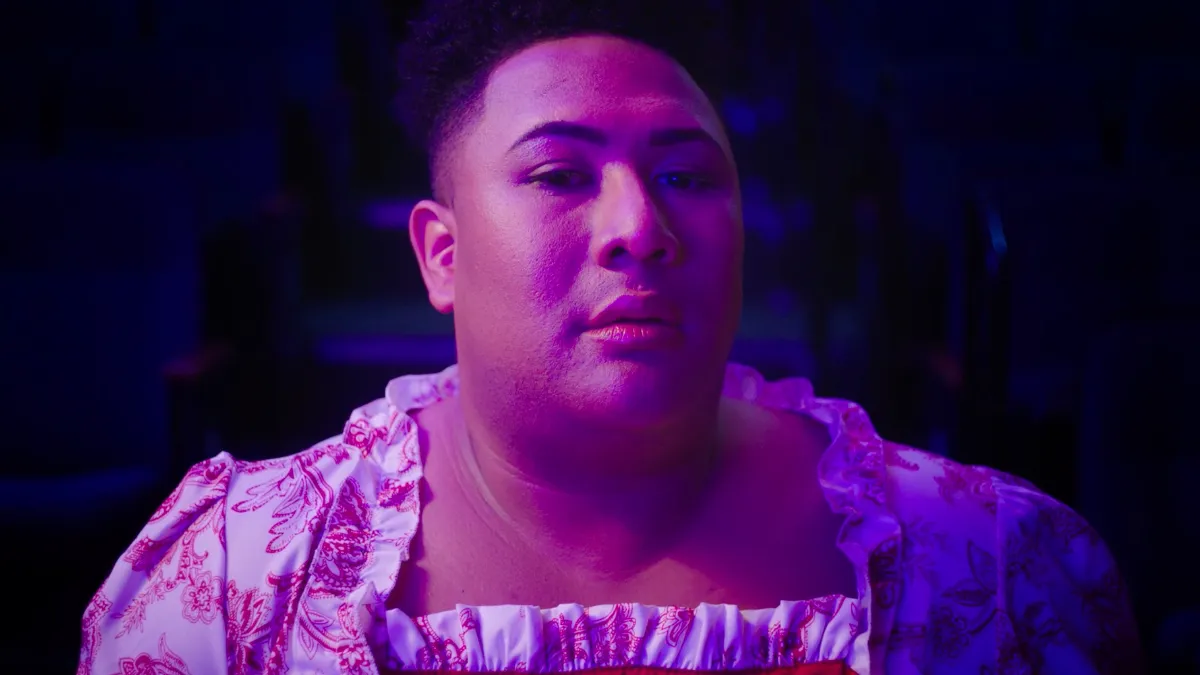
They chart Taffeta’s transformation with stunning precision, moving from a pained, withdrawn figure to a gloriously confident master of their own universe. One moment, their face registers the deep sting of a lifetime of slights; the next, they are exploding with a joy that feels both hard-won and utterly liberating.
While Mason is the sun around which this story orbits, the planets of Pete Ploszek’s Abe Lincoln and Alex Esola’s Elmer Ellsworth are crucial to its gravity. Ploszek’s Lincoln is a fascinating mix of genuine affection for Elmer and a chillingly pragmatic fear for his own legacy, his body language stiffening whenever Taffeta challenges his historical image.
Esola’s Elmer embodies a kinder, yet still conditional, form of acceptance, one that values Taffeta’s utility over their personhood. The tense, shifting dynamic between these three characters becomes a compelling exploration of power, attraction, and the complicated, often contradictory, path to being truly seen.
From Stage to Screen
Lavender Men wears its stage-play origins as a badge of honor, representing a bold trend in streaming-era filmmaking that values raw intimacy over polished spectacle. Director Lovell Holder makes no attempt to disguise the film’s theatricality; instead, he leans into it.
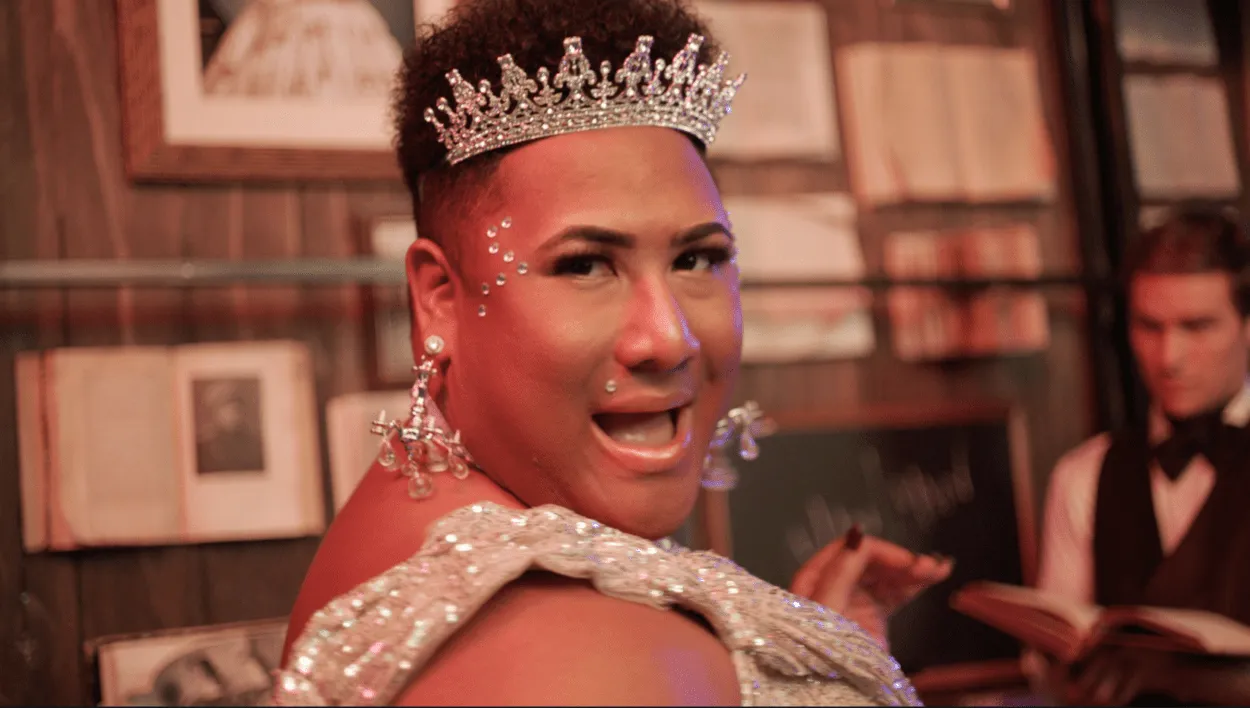
The single-location, black-box setting creates an atmosphere that is both intensely intimate and bracingly claustrophobic, trapping the characters and the audience together in this pressure cooker of history and identity. The film’s low-budget aesthetic feels less like a limitation and more like a deliberate political choice. In an age of impossibly expensive blockbusters, this film’s power comes from its minimalism, suggesting that the most potent special effect is a human being telling their truth on a bare stage.
This approach directly challenges mainstream filmmaking trends. The self-aware, non-linear structure is not a gimmick but the very message of the film. Taffeta’s story could never be told in a straight line because their life, like so many queer lives, has been a series of interruptions, detours, and revisions.
The film’s lasting impact is its profound statement on the power of narrative. For those pushed to the margins, taking control of the story is the ultimate act of defiance, a way to build a future by first dismantling and then reimagining the past.
“Lavender Men” had a limited theatrical release in the United States on May 2, 2025. The film became available on digital platforms and VOD on June 17, 2025. You can watch it on platforms like Apple TV, Amazon Prime Video, Fandango at Home, Google Play Movies, and YouTube.
Full Credits
Director: Lovell Holder
Writers: Lovell Holder, Roger Q. Mason
Producers: Mia Chang, Mia Ellis, Lovell Holder, Roger Q. Mason
Cast: Roger Q. Mason, Pete Ploszek, Alex Esola, Ted Rooney, Charlie Thurston, Philippe Bowgen, Gillian Williams, Mia Ellis, Natasha Dewhurst, Cherie Corinne Rice, Chad Callaghan
Director of Photography (Cinematographer): Matt Plaxco
Editor: Morgan Halsey
Composer: David Gonzalez
The Review
Lavender Men
Lavender Men is a fiercely imaginative and intellectually ambitious film that succeeds on the strength of its convictions and a truly star-making lead performance. While its stage-bound theatricality may prove challenging for some, its raw, unapologetic approach to rewriting history is its greatest asset. The film is less a historical document and more a vital act of personal and political reclamation, using the past as a canvas to paint a future where everyone can be the main character in their own story. It is a bold, necessary, and unforgettable piece of filmmaking.
PROS
- A stunning, multifaceted lead performance from Roger Q. Mason that is both powerful and deeply vulnerable.
- An intelligent and audacious script that brilliantly merges personal identity politics with national mythology.
- A powerful central theme about the importance of narrative reclamation for marginalized communities.
CONS
- The highly theatrical style and single-location setting may feel stagy or restrictive to audiences expecting a more conventional film.
- Its non-linear and meta-narrative structure can be intellectually demanding.
- The low-budget aesthetic, while thematically fitting, may come across as unpolished.