




























![Kingdom Hearts Collection [I-III] Review](https://gazettely.com/wp-content/uploads/2026/10/Kingdom-Hearts-Collection-I-III-1-360x180.webp "Kingdom Hearts Collection [I-III] Review: KHII Holds Steady as Newer Entries Fluctuate 40")


The turn of the millennium was a strange country, a digital dawn where adolescent angst was repackaged for mass consumption. In this landscape of sugar-rush rebellion, where bands like blink-182 courted pop artifice and Sum 41 flirted with metal, a musical identity crisis brewed.
Into this contested space came Simple Plan, a Montreal act born seemingly out of time, bearing a sound too polished for the punk purists. Their pop-forward sensibility became a kind of original sin, casting them into a liminal state—not quite belonging, forever seeking validation. They were an anomaly, trapped in a purgatory of genre.
The documentary Simple Plan: The Kids in the Crowd is not merely a recounting of a career; it is an act of reclamation. It is an attempt, after a quarter-century of weathering storms of criticism, to build a monument over a contested memory, to define a legacy against the ghosts of what others claimed they should have been.
Chronicles of a Willed Existence
The film unfolds as a secular scripture, a grainy mosaic of youth captured on videotape by a friend, a non-judgmental eye that saw only motion and sound before they were burdened with the weight of legacy. This archival footage is the film’s lifeblood, a collection of ghosts flickering on magnetic tape that offers a powerful, almost painful, intimacy.
We follow a near-mythic trajectory from the basement hum of a prior band, Reset, to the eventual roar of international arenas. Here is the evidence of a life lived, of tour van antics and the earnest fumbling of early rehearsals before the world was watching. Through this lens, the band’s notorious trial on the Warped Tour becomes less a hardship and more a baptism by projectile—a necessary, violent crucible to forge an identity against a hostile world of gatekeepers.
It is a visceral depiction of the chasm between their self-perception as punk kids and the scene’s verdict of them as commercial impostors. This chronicle of perseverance is presented as their central virtue. Interviews with parents ground the story in a disarming suburban normalcy, a foundation of the mundane that makes the later fame feel all the more fragile and surreal.
The band members themselves appear as the architects of their own history, recounting their grind for a record deal with a practiced sincerity, their narrative a testament to an existence willed into being through sheer, relentless effort against the forces of dismissal.
The Carefully Constructed Void
Yet, a document’s truth is often found not in what it shows, but in the shape of its absences. The Kids in the Crowd is haunted by a silence, a carefully constructed void where the most difficult truths should reside. It is an act of curation that feels less like storytelling and more like surgery, excising the inconvenient parts of the body to present a cleaner, though incomplete, form.
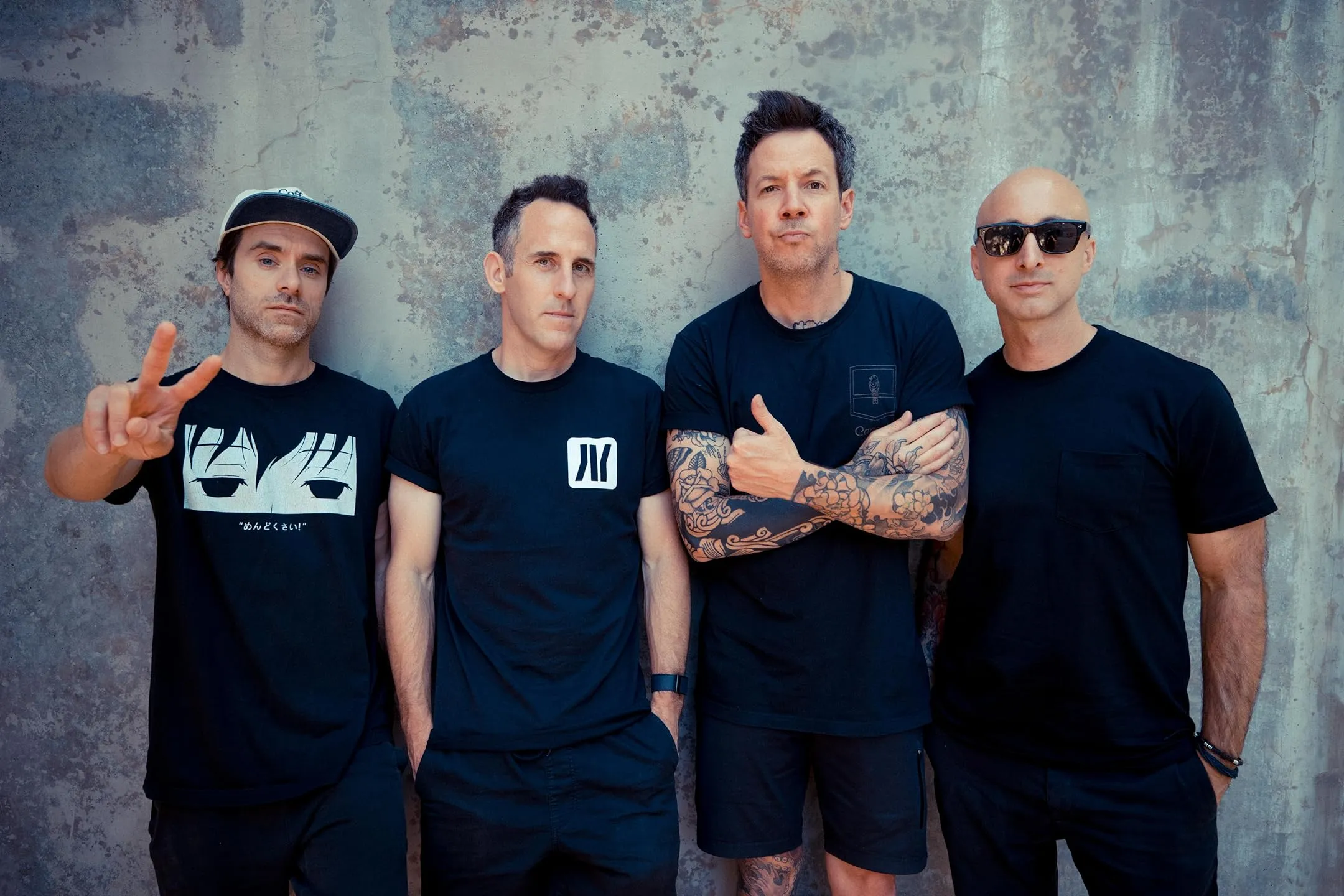
The most glaring of these is the departure of bassist David Desrosiers. The scandal that precipitated his exit is a spectre acknowledged only in passing, a black hole in the narrative addressed with the cold, impersonal text of a news headline before the film quickly averts its gaze. This deliberate erasure is a profound statement; it transforms the work from a potential confession into a careful piece of hagiography. This is not the only silent room in this well-lit house.
The phantom of their Québécois soul, a cultural root system that surely shaped them, is given but a fleeting moment of screen time. The uncharted territory of their later creative life, albums met with diminishing returns, is a map that ends abruptly.
Darker times on the road are alluded to, then abandoned, a promised descent into the psyche that never arrives. The knowledge that the film was produced with management’s collaboration is the ghost in the machine, the unseen hand that ensures the final product is a fortress of image, not a house of truth.
An Icon for the Faithful
For the devotee, this film will function as a sacred text, a deeply felt communion. It is a reaffirmation of faith, where the archival footage serves as a collection of cherished relics and the band’s anthems act as a familiar liturgy. Every frame is a memory, every song a validation. For this audience, the documentary is a resounding success, a warm and nostalgic embrace that honors years of allegiance.

For the uninitiated, however, or for the seeker of unvarnished truth, the film becomes something else entirely: a case study in modern myth-making. It is a perfectly sealed vessel whose contents are ultimately less interesting than the craftsmanship of the seal itself. Its value lies in what it reveals about the anxiety of legacy in an age of brand management.
The story it tells is one of persistence, a Sisyphean act of will against the forces of criticism and the slow entropy of time. Their continued existence against the cultural tide feels like their primary artistic statement.
The Kids in the Crowd builds a beautiful, resonant cathedral for its believers. It does so, however, on unexamined ground, with crucial pages torn from its own history. The beauty of the illuminated manuscript cannot entirely mask the violence of the excision, leaving one to wonder about the ghosts still stirring in the foundation.
“Simple Plan: The Kids in the Crowd” is a documentary that explores the 25-year journey of the Canadian punk rock band Simple Plan. The film delves into their rise from their early days in Montreal to achieving global success, featuring interviews with band members and appearances by other punk rock figures like Mark Hoppus (Blink-182) and Avril Lavigne. It was released on July 8, 2025, and can be watched on Prime Video.
Full Credits
Director: Didier Charette
Producers: Samuel Sauvageau, Sphere Media
Executive Producers: Bruno Dubé, Renaud Chassé, Marie-Hélène Tremblay, Samuel Sauvageau
Cast: Pierre Bouvier, Chuck Comeau, Jeff Stinco, Sébastien Lefebvre, Mark Hoppus, Avril Lavigne, Dexter Holland, Noodles, Fat Mike
The Review
Simple Plan: The Kids in the Crowd
Simple Plan: The Kids in the Crowd is a heartfelt but frustratingly guarded love letter to the band's own legacy. While it succeeds as a nostalgic archive for devoted fans, its refusal to confront the darker, more complex aspects of its history makes it feel more like a polished piece of brand management than a revealing documentary. It is a film haunted by the stories it chooses not to tell.
PROS
- Offers an intimate and extensive look at the band's early years and rise to fame.
- Serves as a powerful dose of nostalgia and a celebration of the band's journey for long-time followers.
- Effectively portrays the band's relentless work ethic and determination in the face of criticism.
CONS
- Glosses over significant issues, most notably the sexual misconduct allegations against a former member.
- Feels carefully controlled and avoids any genuine, deep exploration of conflict or creative struggles.
- Forgoes the chance to be a truly compelling, honest rock documentary in favor of a safer, celebratory tone.