



























The snow falls with fairy tale precision in “Unwrapping Christmas: Mia’s Prince,” where romance novels bleed into reality through the sheer force of a dreamer’s will. Mia, proprietor of “All Wrapped Up,” exists in that liminal space between the pragmatic demands of small business ownership and the intoxicating pull of literary escapism.
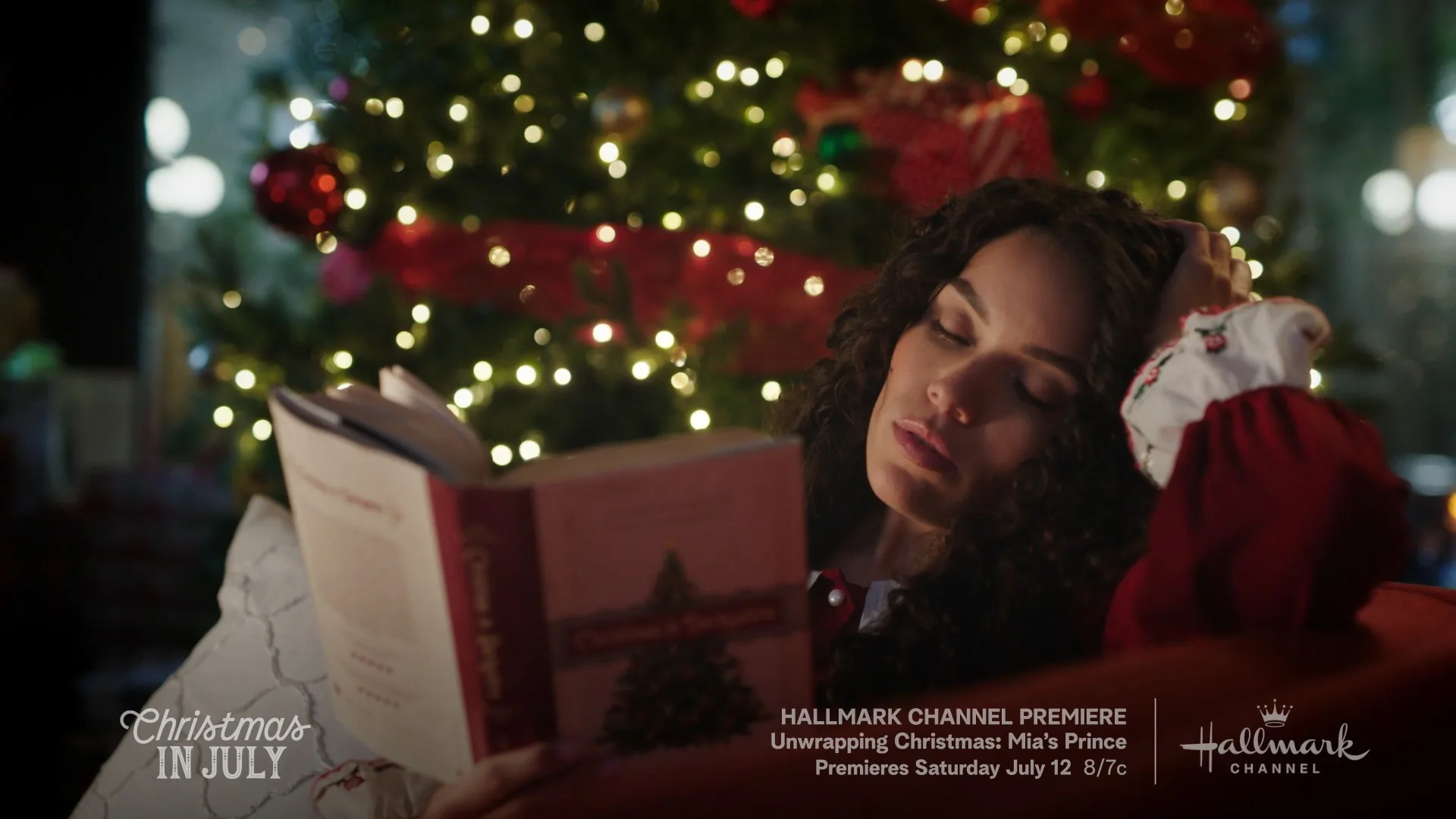
Her obsession with “Christmas in Derbyshire” becomes the film’s central metaphor—a woman so steeped in fictional romance that she begins to manifest its archetypes in her waking life. The second installment in this holiday series finds its protagonist literally sleeping among the wrapping paper and ribbons of her shop when fate arrives in the form of Beau, a man desperately seeking late-night gift-wrapping services.
What begins as a chance encounter transforms into the kind of class-conscious romance that would make Jane Austen nod in recognition. The Cinderella dynamics are unmistakable: the working-class shopkeeper and the heir to vast wealth, their worlds separated by more than mere economics. The charity gala serves as their shared destination, though the paths they take to reach it could not be more different.
The Architecture of Longing
Mia’s nocturnal refuge in her shop—a consequence of her sister Ashlyn’s unexpected arrival and her own cat allergies—becomes the perfect staging ground for serendipity. The late-night encounter with Beau transforms mundane commercial space into something approaching sacred ground, where two souls recognize each other across the chasm of social expectation.
The revelation of Beau’s identity as a Cavannagh—and the introduction of his formidable mother Claire—shifts the narrative into familiar territory. Here lies the arranged engagement to Penelope, a woman who exists as both obstacle and unexpected ally, harboring her own romantic secrets. The film’s most intriguing dynamic emerges from this triangle of reluctant participants, each trapped by familial obligation rather than genuine desire.
The book club subplot provides elegant scaffolding for deepening relationships. When Mia agrees to teach gift-wrapping to Claire’s literary circle, the activity becomes a form of cultural diplomacy—the working woman’s craft elevated to art form within the rarefied atmosphere of inherited privilege. The shared reverence for “Christmas in Derbyshire” creates an unexpected bridge between Mia and Beau, their mutual literary obsession functioning as a kind of secret language.
The charity gala looms as both destination and reckoning, the event that will either validate or shatter Mia’s fairy tale aspirations. Her sister’s subplot provides necessary tension, reminding us that even in fairy tales, family obligations can complicate the path to happiness.
The Alchemy of Performance
Kathryn Davis inhabits Mia with the kind of luminous vulnerability that makes romantic heroines memorable. Her portrayal avoids the trap of making the character’s bookish nature feel performative; instead, Mia’s literary obsession emerges as genuine emotional need. Davis captures the delicate balance between strength and fragility that defines women who dare to dream beyond their circumstances.
Nathan Witte brings surprising depth to what could have been a thankless role. His Beau manages to feel both privileged and trapped, a man whose wealth cannot purchase the one thing he truly desires—the freedom to choose his own path. The chemistry between Davis and Witte feels earned rather than manufactured, their connection building through shared glances over gift-wrapping demonstrations and whispered conversations about fictional romance.
Lanette Ware’s Claire Cavannagh represents the film’s most complex challenge. The role demands she embody maternal authority while maintaining enough humanity to make her eventual transformation believable. Ware walks this line with calculated precision, her initial coldness gradually revealing the protective instincts beneath.
The supporting players—Penelope with her own romantic complications, Ashlyn with her disruptive presence—function as both obstacles and catalysts. Their interactions with the central couple create the necessary friction that prevents the romance from feeling too easy or predetermined.
Visual Poetry and Seasonal Magic
The film’s visual language speaks fluent fairy tale, from the opening dream sequence that bleeds into reality to the snow-dusted small town that seems designed for romantic encounters. The cinematography captures both the intimate warmth of Mia’s shop and the imposing grandeur of the Cavannagh estate, using space to reinforce the class divisions that drive the central conflict.
The inclusion of Japanese Furoshiki gift-wrapping technique adds unexpected cultural dimension, transforming a commercial transaction into artistic expression. This attention to craft speaks to the film’s respect for Mia’s profession, refusing to dismiss her work as merely functional.
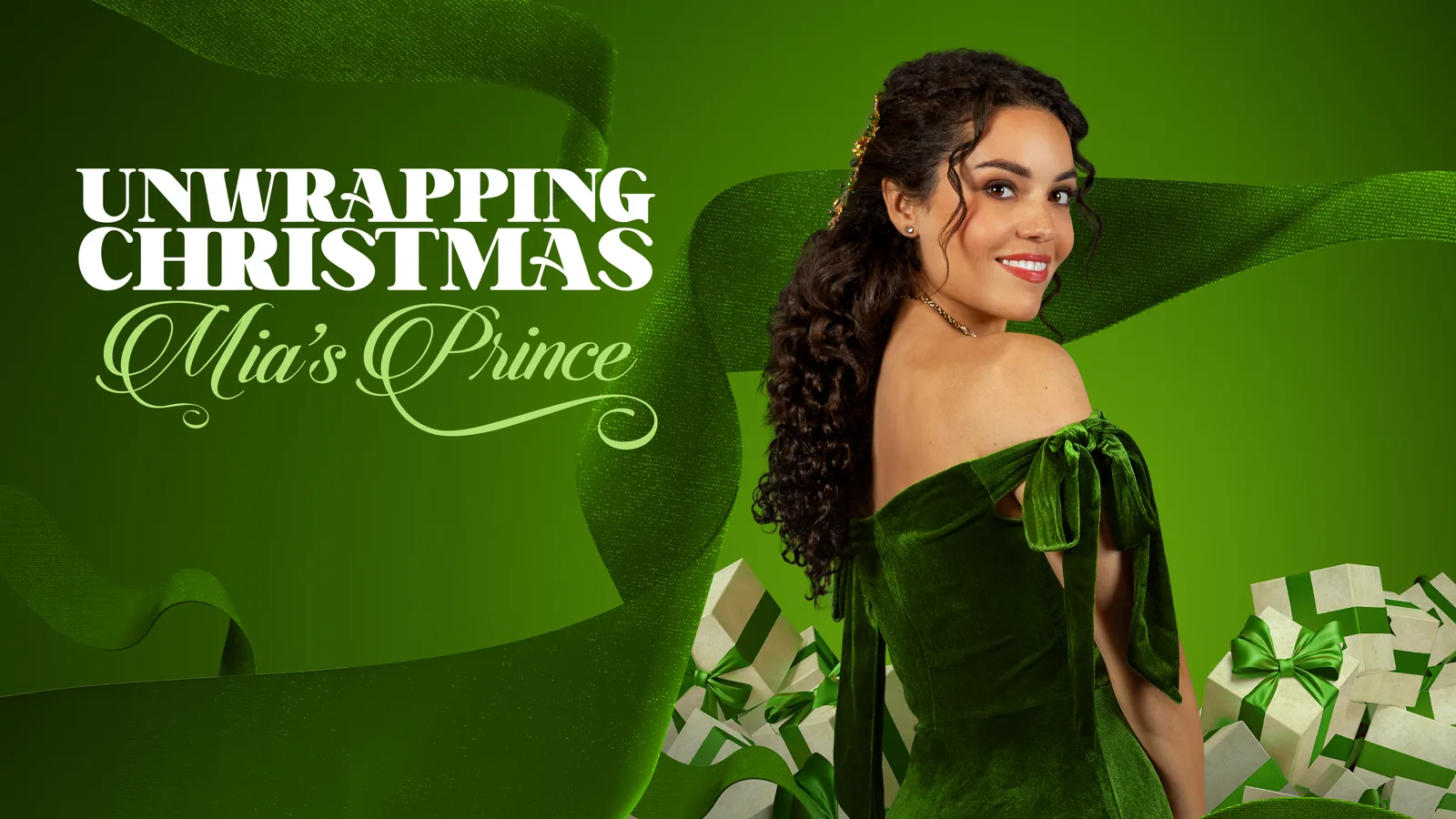
Costume design reaches its apex in Mia’s green gala dress—a garment that transforms her from shop owner to princess without sacrificing her essential identity. The costume choices consistently reinforce character development, from Mia’s practical work clothes to Claire’s armor-like formal wear.
The musical score weaves traditional holiday melodies with romantic themes, creating an audio landscape that supports the film’s emotional peaks without overwhelming them. The sound design pays particular attention to the intimate moments—the rustle of wrapping paper, the whispered conversations, the ambient sounds of a small town preparing for celebration.
Director Amy Force maintains steady pacing that allows both romance and character development to unfold naturally. The film succeeds in balancing its fairy tale aspirations with grounded emotional truth, creating a viewing experience that satisfies both the heart and the mind. For those seeking holiday entertainment that honors both the magic of the season and the complexity of human connection, “Unwrapping Christmas: Mia’s Prince” delivers wrapped in ribbons of genuine charm.
Full Credits
Director: Amy Force
Writers: Kathleen Fox, W. Stewart
Producers: Lex Emanuel, Josie Fitzgerald
Executive Producers: Lisa Alford, Oliver De Caigny, Andrew C. Erin, Timothy O. Johnson, Carley Smale, Michael Vickerman
Cast: Kathryn Davis, Nathan Witte, Lanette Ware, Julia Borsellino, Marlo Aquilina, Darrin Baker, Cindy Busby, Mylene Carino, Torrance Coombs, Suzanne Cyr, Natalie Hall, Ashley Newbrough, Tara O’Brien, David Rosser, Alec Santos, Joshua Young
Director of Photography: Michael Tien
Editors: Wade Taves
Composers: Russ Howard III, Erick Schroder
The Review
Unwrapping Christmas: Mia's Prince
"Unwrapping Christmas: Mia's Prince" elevates familiar holiday romance tropes through thoughtful performances and genuine emotional resonance. While the plot treads well-worn territory, Davis and Witte's chemistry, combined with the film's respect for craft and artistry, creates something genuinely enchanting. The fairy tale elements feel earned rather than forced, making this a standout entry in the seasonal romance genre.
PROS
- Kathryn Davis delivers a nuanced, vulnerable performance
- Strong chemistry between lead actors
- Beautiful cinematography and costume design
- Thoughtful incorporation of literary themes
- Respectful treatment of working-class protagonist
CONS
- Predictable plot structure
- Claire's character transformation feels rushed
- Some subplot elements feel underdeveloped
- Relies heavily on genre conventions