




























BMF Season 4 arrives with the weight of empire on its shoulders, and this time, it’s carrying the load with surprising grace. The Black Mafia Family saga continues its dramatized dive into the real-life drug empire that Demetrius “Big Meech” Flenory and Terry “Southwest T” Flenory built from Detroit’s streets, now expanding into Atlanta’s glittering, dangerous 1990s landscape. Curtis “50 Cent” Jackson’s executive production touch remains evident, but the series has matured beyond its initial growing pains into something more focused and emotionally resonant.
The casting coup of having Demetrius Flenory Jr. portray his own father adds an authenticity that no amount of method acting could achieve. There’s something both haunting and healing about watching a son embody his father’s criminal legacy on screen. This season pushes the timeline into the late 1980s and early 1990s, a period when hip-hop culture was exploding and Atlanta was becoming the South’s cultural capital. The show’s approach to historical accuracy remains playfully loose—part documentary, part fever dream, all entertainment.
New additions Michael Chiklis and Jordan Alexander inject fresh energy into the proceedings, while the series continues to walk that fascinating tightrope between fact and fiction. The disclaimer might as well read: “Based on a true story, emphasis on ‘based.'” But sometimes the most honest truths emerge from the most artful lies.
The Enemy Within: When Brothers Become Strangers
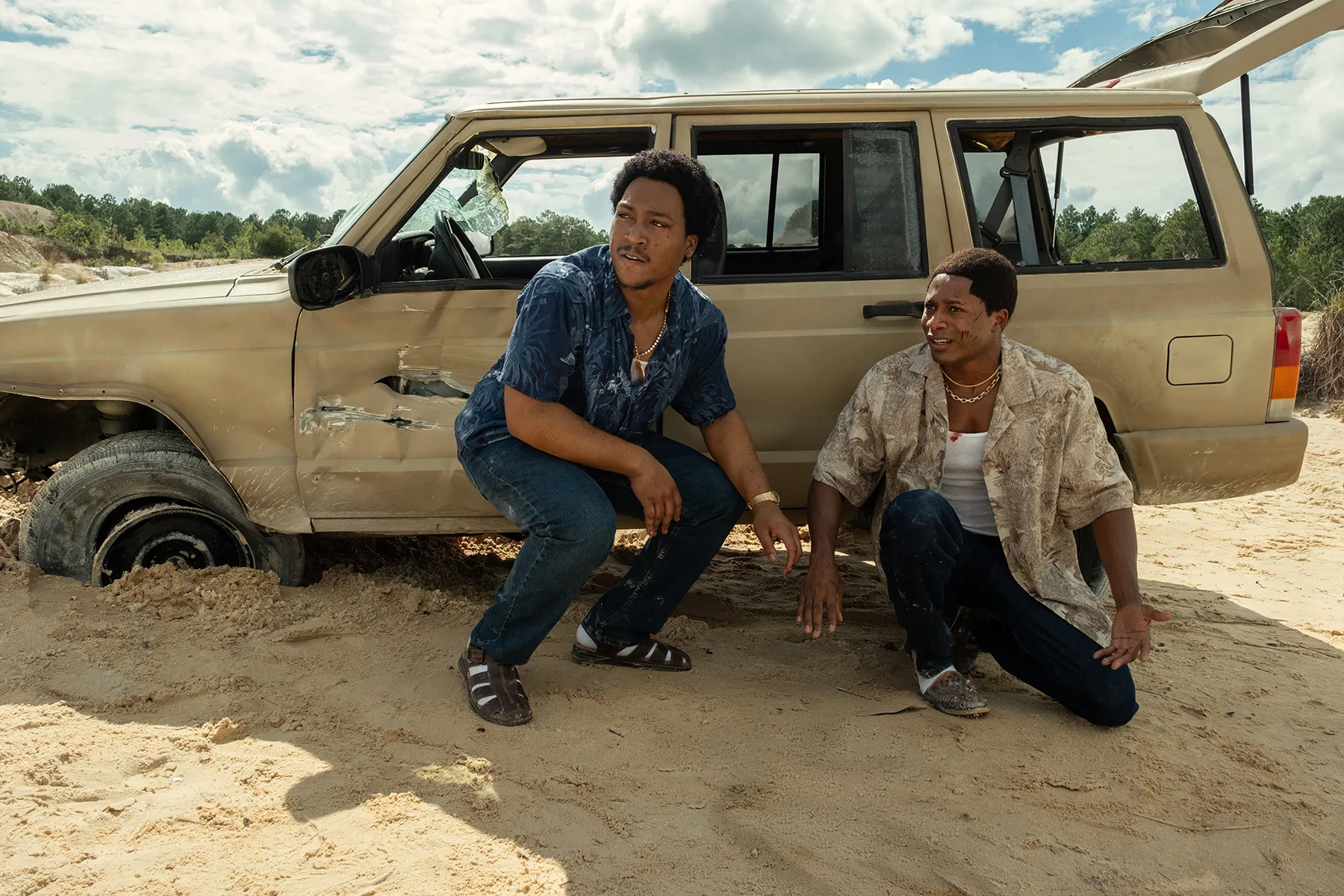
The season opens with a literal bang in the Mexican desert, picking up immediately from Season 3’s cliffhanger before jumping six months ahead. This time shift proves to be a masterstroke, allowing the writers to skip the tedious aftermath and land directly in the psychological wreckage. The Mexico incident becomes less about what happened and more about how it’s eating away at the brothers’ bond from the inside.
Terry’s consolidation of power in Detroit feels like watching a chess master play against himself. He’s micromanaging everything from drug distribution to his soldiers’ sneaker choices, a control freak born from chaos. Meanwhile, Meech’s Atlanta operations bloom with the kind of ambition that makes empires—and destroys them. The geographic split mirrors their emotional distance, with each brother building their own kingdom while the foundation of their partnership crumbles.
The season’s central theme of “the enemy within” permeates every storyline without feeling heavy-handed. External threats like the returning Lamar and law enforcement pressure serve as catalysts rather than primary antagonists. The real war is internal: brother against brother, family against legacy, survival instinct against grand ambition. It’s a classic tragedy dressed in designer suits and gold chains.
Also Read






What’s remarkable is how the show balances multiple locations and storylines without losing focus. The pacing has improved dramatically from previous seasons, with each episode building momentum rather than treading water. The writers have learned to trust their audience’s intelligence, letting character motivations unfold through action rather than exposition. When Meech talks about fulfilling his destiny, we see it in his eyes before we hear it in his words.
Bloodlines and Breaking Points
Demetrius Flenory Jr. continues to grow into his father’s skin with unsettling precision. His portrayal of Big Meech captures both the magnetic charisma that built an empire and the dangerous narcissism that would eventually destroy it. There’s a moment mid-season where he’s addressing his crew, and you can see the exact instant when confidence crosses into delusion. It’s a performance that honors both the man and the myth.
Da’Vinchi’s Terry operates in a different register entirely, all quiet intensity and calculated moves. His increasing isolation feels earned rather than plotted, a natural consequence of trying to hold together an organization that’s pulling apart at the seams. When he questions where his brother is, it’s not just logistical curiosity—it’s existential dread.
The family dynamics extend beyond the brothers, with Lucille’s journey toward pastoral leadership providing unexpected emotional depth. Michole Briana White navigates the complex terrain of a woman trying to find her own purpose while her family falls apart around her. Her scenes in the church feel like documentary footage, raw and authentic in a way that elevates the entire series.
Nicole’s transition to adulthood gets the attention it deserves after seasons of being the forgotten Flenory child. Her struggle with family legacy feels particularly relevant in an era where children of notorious figures must navigate their own paths. The weight of carrying someone else’s reputation while trying to forge your own identity resonates across generations.
B-Mickey’s return adds moral complexity without cheap sentiment. His desperation to save his ill daughter creates a character caught between redemption and damnation, making choices that feel both inevitable and heartbreaking. Detective Bryant’s revenge tour transforms him from law enforcement officer to something more primal and dangerous. The show wisely avoids making him a simple antagonist, instead presenting him as another casualty of the violence that surrounds the BMF world.
The reduction of stunt casting pays immediate dividends. Previous seasons suffered from rappers-turned-actors who brought name recognition but little else. Season 4 prioritizes performance over promotion, creating a more cohesive ensemble that serves the story rather than disrupting it.
Neon Nights and Missed Beats
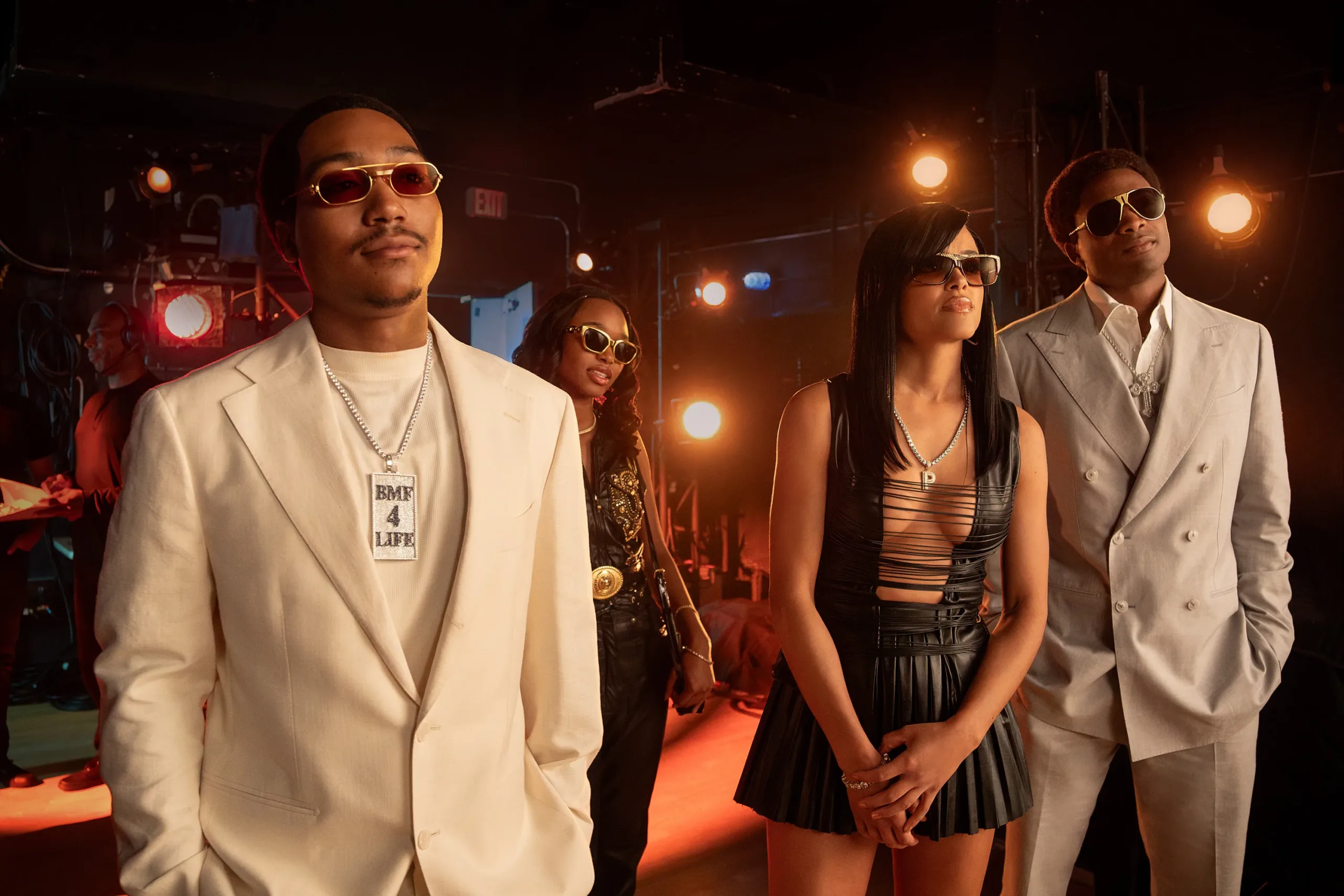
The production design deserves particular praise for its authentic recreation of 1990s Atlanta. The city becomes a character itself, all neon lights and emerging hip-hop culture, providing the perfect backdrop for BMF’s expansion. The attention to period detail—from the cars to the clothes to the club scenes—creates an immersive experience that transports viewers back to a pivotal moment in American culture.
However, the promised dive into the music industry feels like a missed opportunity. While the show references significant moments like the 1995 Source Awards and the East Coast-West Coast rivalry, it treats them more as window dressing than integral plot elements. The music subplot exists in service of the main narrative rather than as a fully realized exploration of how BMF influenced hip-hop culture. It’s competent but not compelling.
The integration of historical elements like the welfare system and Atlanta’s Red Dogs police unit adds layers of social commentary without feeling preachy. These aren’t just background details but active forces shaping the characters’ choices and limitations. The show understands that crime doesn’t exist in a vacuum—it emerges from systemic pressures and institutional failures.
Visually, the series has found its rhythm. The cinematography captures both the glamour and the grime, the aspirational lifestyle and the underlying violence. The editing has improved significantly, with scenes flowing naturally rather than feeling chopped together. The sound design deserves special mention, particularly in the club scenes where the music becomes another character in the room.
The question remains whether BMF can maintain this level of quality while navigating the inevitable conclusion of its real-life inspiration. The series has found its voice just as the story approaches its most challenging chapters. Can it stick the landing, or will it become another cautionary tale about the difficulty of adapting true crime for television?
Full Credits
Director: Timothy A. Burton, Tchaiko Omawale, Russell Hornsby, Katrelle N. Kindred, Cierra Glaude
Writers: Randy Huggins, Heather Zuhlke, Raphael Jackson Jr., Damione Macedon, Shaquayla Mims, Tariq Simmons, Jazmen Darnell Brown, Patrick Moss, Rose McAleese, Kirkland Morris, Jeff Dix, Garen Thomas
Producers and Executive Producers: Randy Huggins, Curtis “50 Cent” Jackson, Heather Zuhlke, Anthony Wilson, Damione Macedon, Raphael Jackson Jr., Terri Kopp, Tasha Smith, Anne Clements, Ted Fox, Stan Wertlieb, Lionsgate Television
Cast: Demetrius Flenory Jr., Da’Vinchi, Russell Hornsby, Michole Briana White, Steve Harris, Alani “La La” Anthony, Myles Truitt, Sydney Mitchell, Laila Pruitt, Kofi Siriboe, Skai Jackson, Tyler Lepley, Clifton Powell, Rockmond Dunbar, Aketra Sevillian, Karina Willis, Stacey Sargeant, Jordan Alexander, Saweetie, Roberto Sanchez, Donnell Rawlings, Michael Chiklis
Director of Photography (Cinematographer): Timothy A. Burton
Composer: Meshell Ndegeocello
The Review
BMF Season 4
BMF Season 4 represents the series at its most mature and focused. The "enemy within" theme drives compelling character development, while improved pacing and reduced stunt casting create a more cohesive viewing experience. Though the music industry subplot feels underdeveloped, the authentic period details and strong ensemble performances elevate the material. The Flenory brothers' fractured relationship provides genuine emotional stakes that transcend typical crime drama tropes. This season proves BMF has evolved beyond its initial promise into something genuinely engaging.
PROS
- Strong character development and family dynamics
- Improved pacing and narrative cohesion
- Authentic 1990s Atlanta atmosphere
- Reduced stunt casting issues
- Compelling "enemy within" theme
CONS
- Underdeveloped music industry subplot
- Lamar's return feels unnecessary
- Some storylines feel rushed
- Missed opportunities for deeper cultural exploration