

















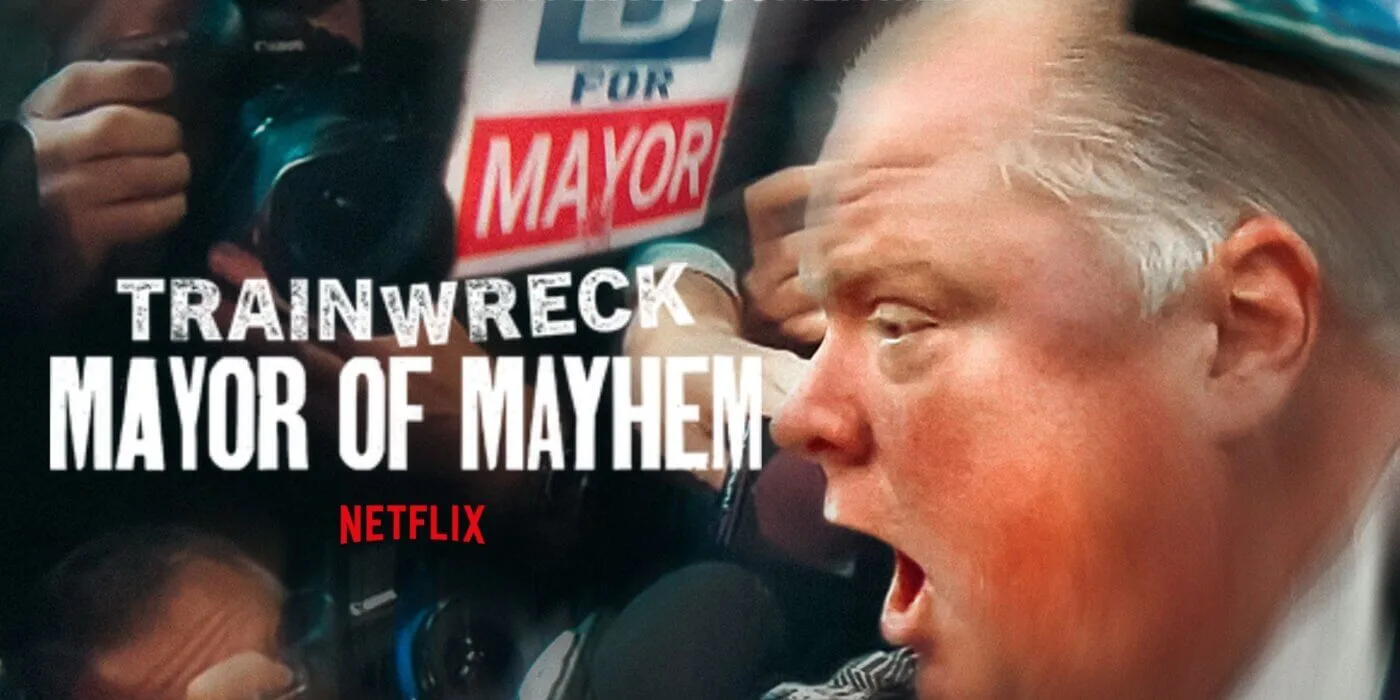

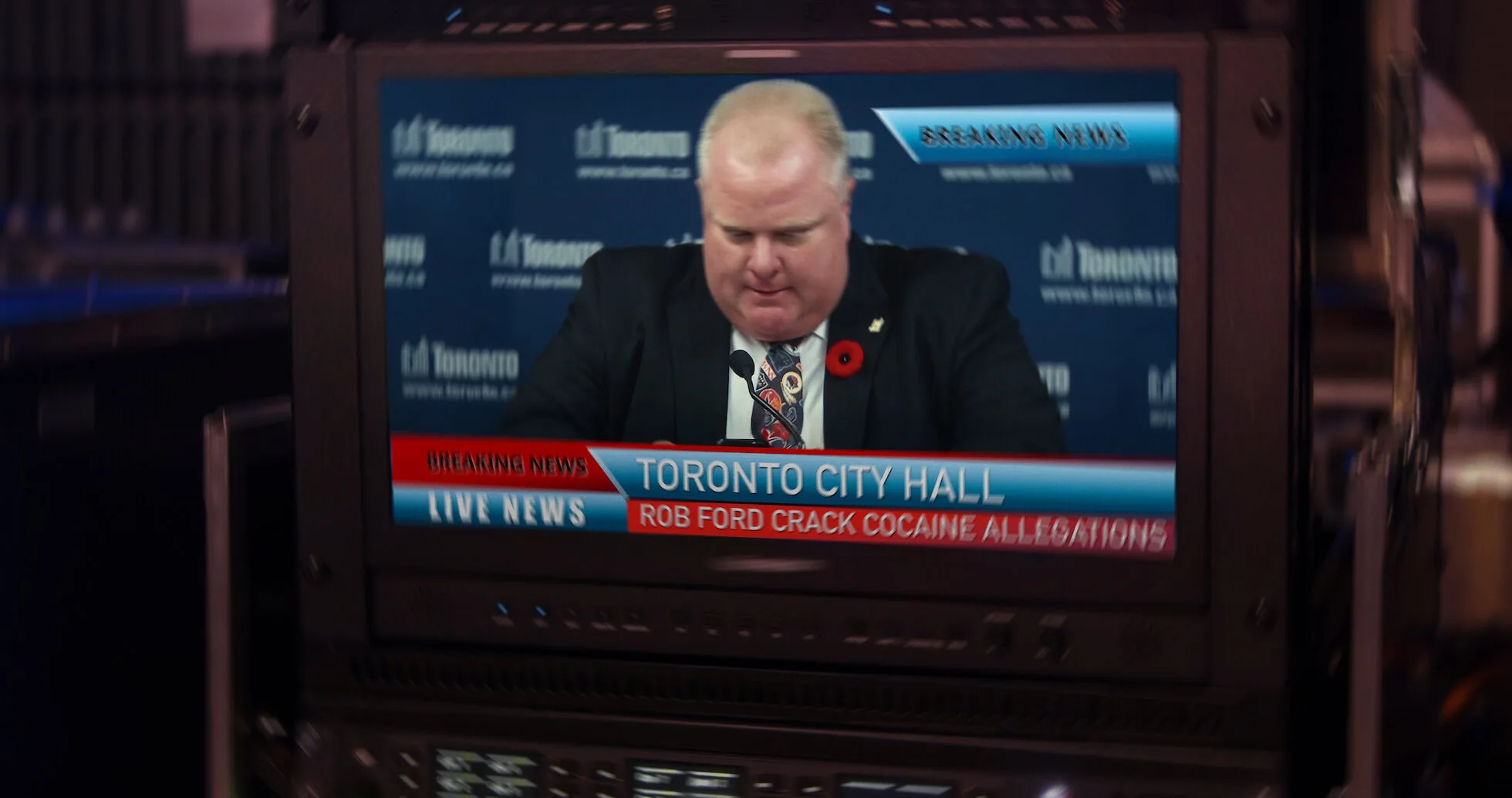
There exists a peculiar comfort in witnessing disasters we’ve already survived. Shianne Brown’s 49-minute Netflix entry “Trainwreck: Mayor of Mayhem” functions as both historical document and inadvertent oracle, chronicling Rob Ford’s catastrophic tenure as Toronto’s mayor from 2010 to 2014. Ford—that sweating, stumbling avatar of populist rage—transformed from municipal long-shot to international punchline through a series of scandals that would make Caligula blush. The crack cocaine video that catapulted him to global infamy represents merely the crescendo in a symphony of civic chaos.
What renders Ford’s story particularly unsettling (and the documentary’s timing unnervingly prescient) is how his political playbook reads like a rough draft for contemporary democratic backsliding. Here was a man who weaponized victimhood, demonized institutional oversight, and maintained surprising electoral durability despite behavior that would have torpedoed previous generations of politicians. His “gravy train” rhetoric and anti-establishment posturing tapped into something primal in the electorate—a yearning for authentic dysfunction over polished competence.
Ford’s death from cancer at 46 transforms this documentary from mere political autopsy into something approaching tragedy. The man who promised to clean up City Hall became its most spectacular contaminant.
The Architecture of Spectacle: Form Following Dysfunction
Brown constructs her narrative with the efficiency of a coroner’s report—clinical, chronological, and devastatingly precise. The documentary’s compressed runtime mirrors Ford’s own political trajectory: meteoric rise, sustained chaos, abrupt end. This isn’t accidental. The film’s structure becomes a metaphor for contemporary attention spans, designed for audiences who consume political scandals like potato chips—one shocking revelation after another until the bag is empty and we’ve forgotten what we were actually hungry for.
The archival footage serves dual purposes: historical record and cultural archaeology. Watching Ford lumber through press conferences, his perpetual sheen of perspiration catching studio lights, we witness the precise moment when politics became performance art. The talking heads—Mark Towhey’s thousand-yard stare particularly haunting—provide testimony from the front lines of democratic collapse. Their recollections carry the weight of survivors describing natural disasters.
The documentary’s tone oscillates between schadenfreude and genuine pathos, a balancing act that feels ethically precarious. We’re invited to laugh at Ford’s malapropisms while contemplating the systemic failures that elevated him to power. This tonal ambiguity reflects our broader cultural confusion about how to process political absurdity that carries real consequences.
Doug Ford’s absence from the proceedings creates a spectral presence—the ghost of political dynasty haunting every frame. His refusal to participate speaks volumes about the Ford family’s relationship with accountability. Sometimes silence shouts louder than confession.
The Populist Prototype: Democracy as Wrestling Match
Ford’s genius (and I use that term with deliberate irony) lay in recognizing that political authenticity had become synonymous with political dysfunction. His supporters didn’t want competent governance; they wanted cathartic revenge against the abstract “elite” who had supposedly betrayed their interests. This represents a fundamental shift in democratic expectations—from leadership to performance, from policy to personality.
The documentary captures Ford’s retail politics approach with anthropological precision. His practice of distributing his personal phone number transformed mayoral governance into a customer service hotline. This wasn’t merely populist theater; it was the commodification of political access, reducing complex urban policy to individual grievances. Brilliant in its simplicity, devastating in its implications.
Ford’s ability to transform media scrutiny into electoral advantage anticipated our current post-truth landscape by nearly a decade. Every investigative report became evidence of persecution, every fact-check proof of conspiracy. The documentary shows how Ford’s supporters interpreted his scandals as authentication of his outsider status—only someone truly threatening to the establishment would face such coordinated attack.
His policy record receives cursory treatment here, which feels like a missed opportunity. Ford’s stance on transit workers and AIDS funding reveals the material consequences of performative politics. When spectacle becomes governance, real people suffer real consequences. The documentary’s reluctance to dwell on these policy failures suggests our collective comfort with treating politics as entertainment rather than as the distribution of power and resources.
The parallels to subsequent political developments hover unspoken throughout the film. Ford’s tactics—the strategic deployment of victimhood, the weaponization of media criticism, the cultivation of loyal bases through cultural grievance—became the template for a broader authoritarian drift in liberal democracies.
The Tragedy of Surfaces: What Lies Beneath the Spectacle
Here the documentary falters most significantly. Ford’s obvious struggles with addiction receive acknowledgment without analysis, as if his substance abuse were merely another colorful detail in his political saga rather than the driving force behind his erratic behavior. This represents a broader cultural failure to grapple seriously with addiction as a public health crisis rather than a source of tabloid entertainment.
The film’s treatment of Ford’s family dynamics feels similarly superficial. His relationship with his father—that archetypal tough businessman whose approval Ford seemingly spent his life seeking—receives minimal exploration. Yet this psychological dynamic likely explains more about Ford’s political motivations than any policy platform. The documentary opts for anecdotal humanization over genuine psychological excavation.
Ford’s cancer diagnosis and death transform the entire narrative retrospectively. Suddenly, his sweating and erratic behavior acquire tragic dimension. The man we laughed at becomes the man we should have pitied. This reversal feels manipulative, yet undeniably effective.
The documentary’s brief acknowledgment of Ford’s “good side”—helping constituents with mundane problems, delivering sandwiches to strangers—reads like obligatory balance rather than genuine insight. These moments of humanity feel disconnected from the larger narrative of political destruction, as if kindness and chaos existed in parallel universes rather than within the same complicated individual.
What emerges is a portrait of a man fundamentally unsuited for public office who nonetheless intuited something essential about contemporary democratic psychology. Ford understood that voters craved authentic dysfunction over polished competence, that scandal could become political asset rather than liability. His tragedy lies not in his failures but in his successes—he gave people exactly what they claimed to want, with predictably disastrous results.
Full Credits
Director: Shianne Brown
Producers: Sheun Adelasoye De Nicola (executive producer), Casey Feldman (executive producer), Alexander Marengo (executive producer), Erica Roberts (executive producer), Ben Rumney (series producer), William Swann (executive producer), Tim Wardle (executive producer)
Cast: Rob Ford, Katie Simpson, Dave Rider, Tom Beyer, John Filion, Mark Towhey, Josh Matlow, Robyn Doolittle, Jerry Agyemang, Bill Blair, John Cook
Director of Photography (Cinematographer): Oscar Gregg, Mat Davidson (as Matthew Davidson), Jean-Louis Schuller
Editors: Bjorn Johnson, Napoleon Stratogiannakis
The Review
Trainwreck: Mayor of Mayhem
Trainwreck: Mayor of Mayhem succeeds as an entertaining political spectacle that captures the absurdity of Rob Ford's mayoral tenure. While the documentary's brisk pace keeps viewers engaged, its surface-level treatment of Ford's addiction and personal struggles feels like a missed opportunity for deeper analysis. The film works best as a timely reminder of how political scandals can become normalized and how populist tactics foreshadowed our current political climate.
PROS
- Fast-paced, engaging narrative that maintains viewer interest
- Effective use of archival footage and news clips
- Timely political commentary about populist tactics
- Balanced tone between spectacle and humanity
- Solid interview subjects provide insider perspectives
CONS
- Superficial treatment of Ford's addiction issues
- Limited exploration of his personal life and family dynamics
- Missed opportunities for deeper policy analysis
- Brief runtime leaves many questions unanswered
- Lacks the depth needed for a complete character study