



















Obsidian Entertainment’s Neverwinter Nights 2 stands as a titan from the mid-2000s era of computer role-playing games. Built on the meticulous framework of the Dungeons & Dragons 3.5 edition rules, it was celebrated for its deep mechanics and branching narratives.
This Enhanced Edition arrives as a complete package, bundling the massive base game with its three acclaimed expansions: Mask of the Betrayer, Storm of Zehir, and Mysteries of Westgate.
It makes one of the most content-rich RPGs of its time accessible on modern machines, but this accessibility comes with a clear reminder of its nearly two-decade-old origins. This is a direct return to a specific school of RPG design, not a modern reinterpretation.
The Player’s Handbook Comes to Life
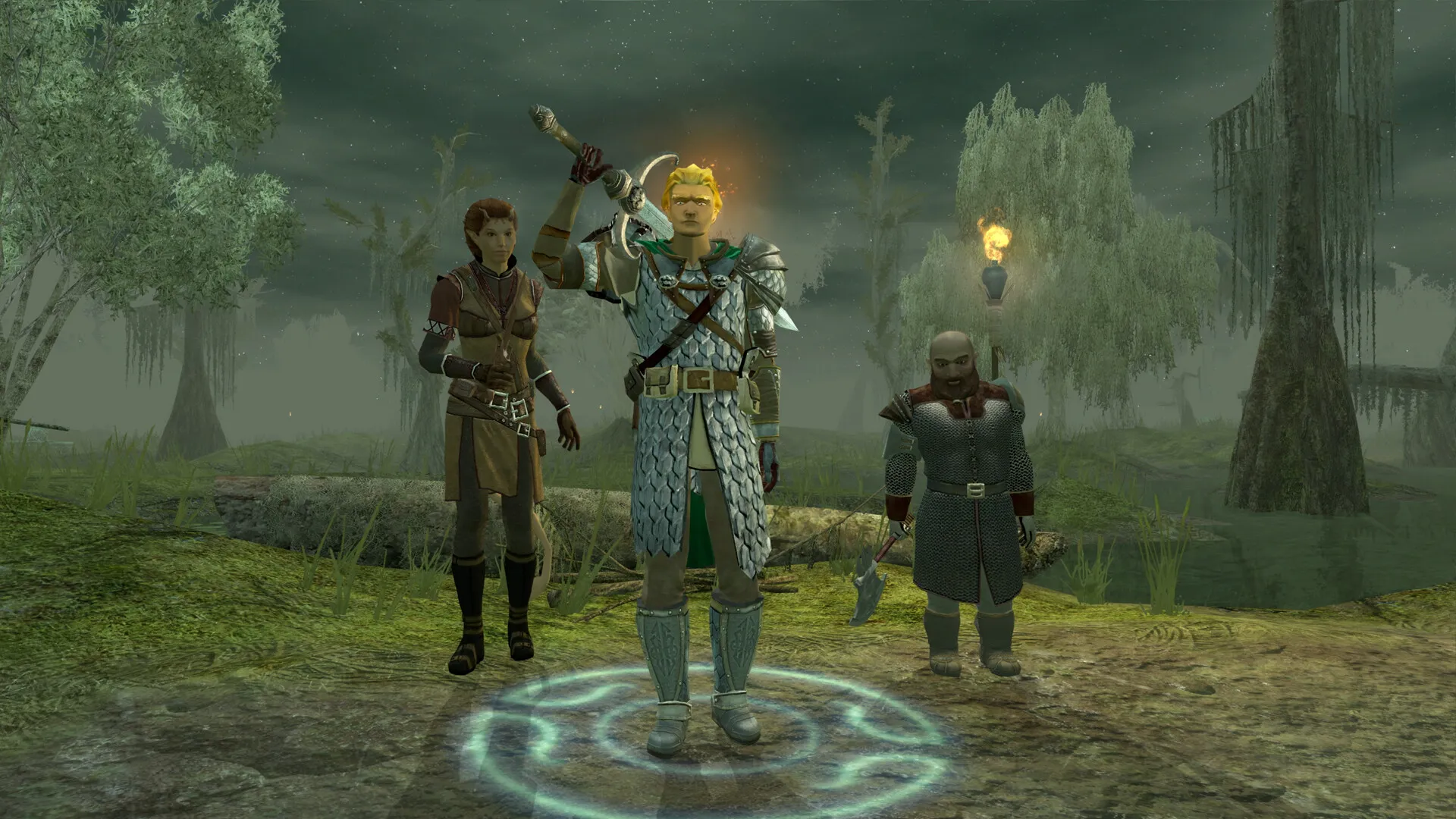
The experience begins with a character creation process that is a faithful, uncompromising digital version of a tabletop character sheet. This is not a simple choice of appearance and class; it is a deep dive into the minutiae of the D&D 3.5e system.
You will select from a wide array of races, from humans and elves to the more exotic Tieflings, who curiously lack their signature tails in this depiction. You then choose a starting class, which dictates your fundamental abilities. A Fighter will excel in direct combat, while a Wizard will be physically fragile but capable of powerful magic.
The system makes no effort to protect you from poor choices; building a Wizard with low Constitution or a Rogue with low Dexterity will create a character who struggles immensely, a harsh reality familiar to any tabletop veteran.
Beyond class and race, you must define your character’s ethical and moral standing by choosing an alignment, from Lawful Good to Chaotic Evil. This choice has tangible consequences, dictating how NPCs react to you and opening or closing certain dialogue paths. You will also select skills like Diplomacy, Bluff, and Intimidate, which provide non-violent solutions to many problems, and a list of feats that grant special abilities. The sheer number of options can feel overwhelming, recalling the density of classic titles like Baldur’s Gate. Once your hero is forged, the story begins in the small village of West Harbor.
You are the “Shard Bearer,” an orphan raised by the ranger Daeghun, whose fate is tied to an ancient artifact. When the village is attacked by a band of Githzerai and Gray Dwarves, you are sent on a journey to the great city of Neverwinter. This is where the true adventure begins, a sprawling narrative that sees you recruit a large cast of companions and confront the malevolent King of Shadows. Your choices throughout this quest will determine not only your own path but the very future of the Sword Coast.
The Dice Roll Behind the Curtain
Gameplay in Neverwinter Nights 2 is a direct reflection of its tabletop roots, centered on a “real-time-with-pause” combat system. When a battle begins, the action unfolds continuously, but you can pause at any moment to issue specific commands to each member of your party.
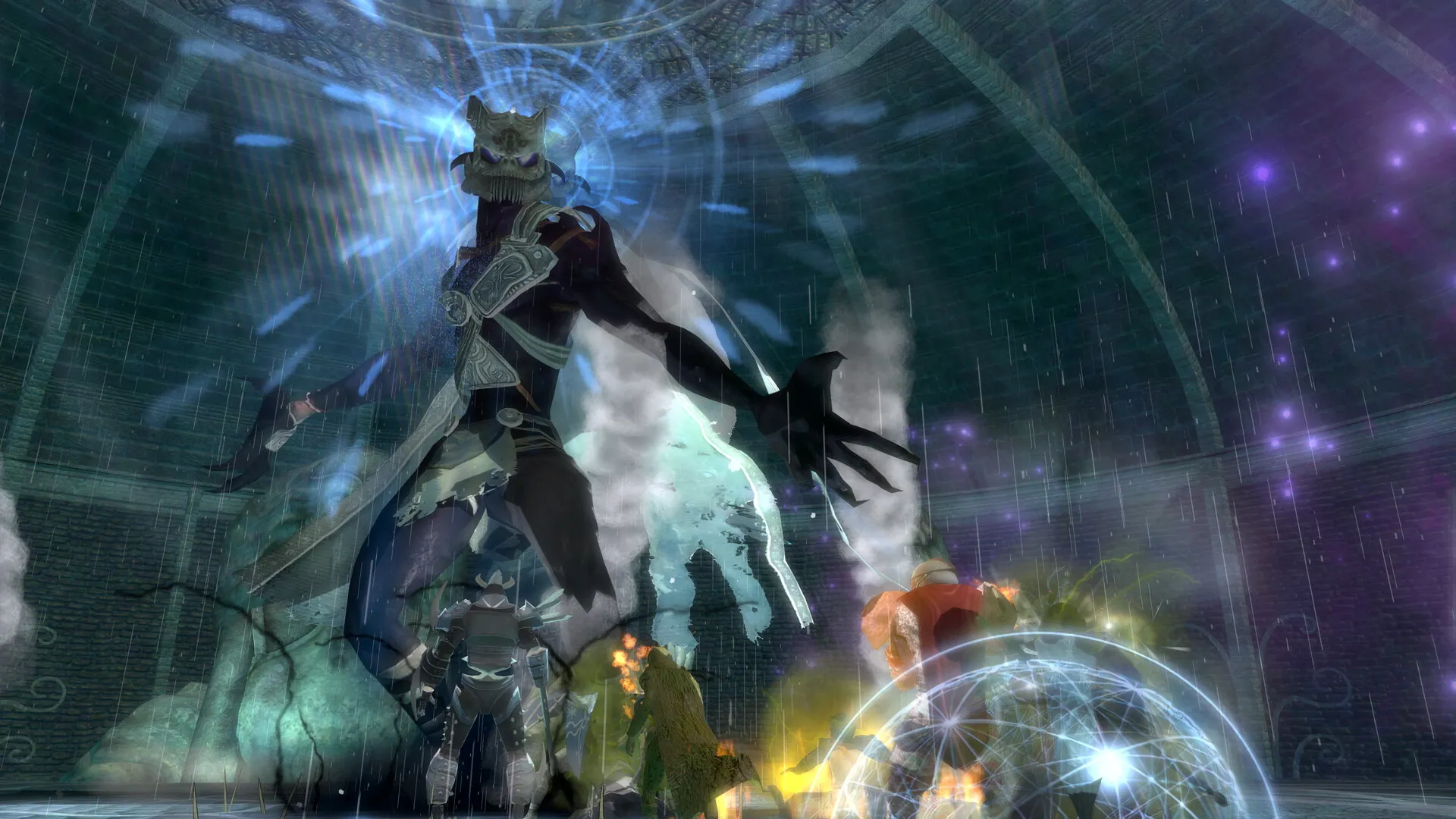
This creates a hybrid tactical experience where planning is key. Every sword swing, defensive block, and arcane spell is governed by automated dice rolls happening behind the screen, determining turn order through initiative, checking attack rolls against armor class, and forcing saving throws against magical effects. While this system offers tactical depth, its visual execution is a product of its time.
Animations are often stiff and disconnected from the action, leading to moments where characters appear to strike empty air while their opponent reacts to a hit. This lack of satisfying feedback can make combat feel abstract and less impactful than the systems in more modern RPGs.
The game’s reliance on a party of adventurers introduces another significant, and frustrating, legacy issue: poor companion AI. The pathfinding algorithms are rudimentary at best. Your party members will frequently get stuck on rocks, trees, and even invisible bits of level geometry.
This is not a minor inconvenience; it can lead to situations where you enter a critical fight only to discover your healer or main damage-dealer is stuck on a corner a hundred feet away, forcing a difficult battle or a frustrating reload.
This flaw, present in the 2006 original, remains unfixed. The user interface is another artifact of its era, a dense collection of overlapping windows for inventory, character sheets, and spellbooks. It is a system built exclusively for the precision of a mouse and keyboard.
The inclusion of controller support is a welcome thought, but in practice, it is a clumsy and inefficient way to play. Navigating the crowded menus with an analog stick is slow and cumbersome, and even simple actions can become a chore, turning the experience into a steep, and often unpleasant, learning curve for anyone on a console.
A Coat of Paint on Ancient Stone
As a remaster, this Enhanced Edition’s greatest success is technical stability. Veterans of the original 2006 release will remember a game plagued by a host of debilitating issues, from frequent crashes to corrupted save files and quests that would break, halting all progress. Aspyr Media has done a commendable job of cleaning this up.
The game now runs smoothly on modern operating systems and hardware, supports widescreen resolutions without issue, and, most importantly, is free from the game-breaking bugs that once made playing it a precarious endeavor. Being able to complete the entire adventure without fearing a technical meltdown is a massive quality-of-life improvement and the single most compelling reason for a returning player to pick up this version.
Unfortunately, the enhancements beyond stability are far more superficial and uneven. The camera system remains a primary source of frustration. The game offers three camera presets—Character, Exploration, and Strategy—but the first two are nearly identical, offering a clunky third-person view that is prone to getting stuck behind walls and scenery.
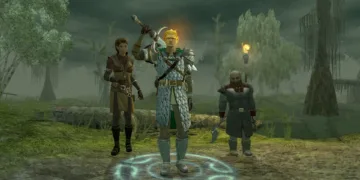
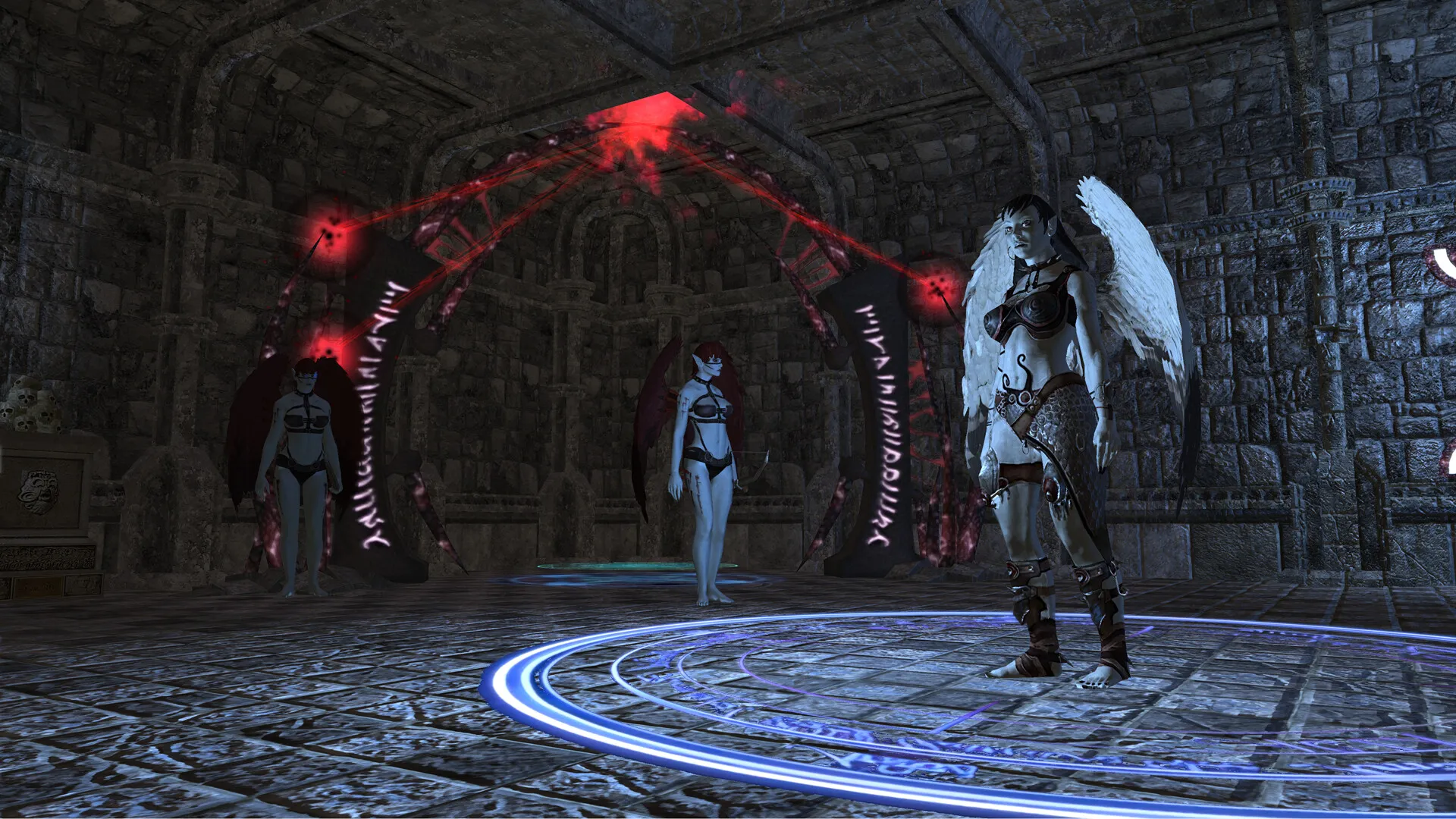
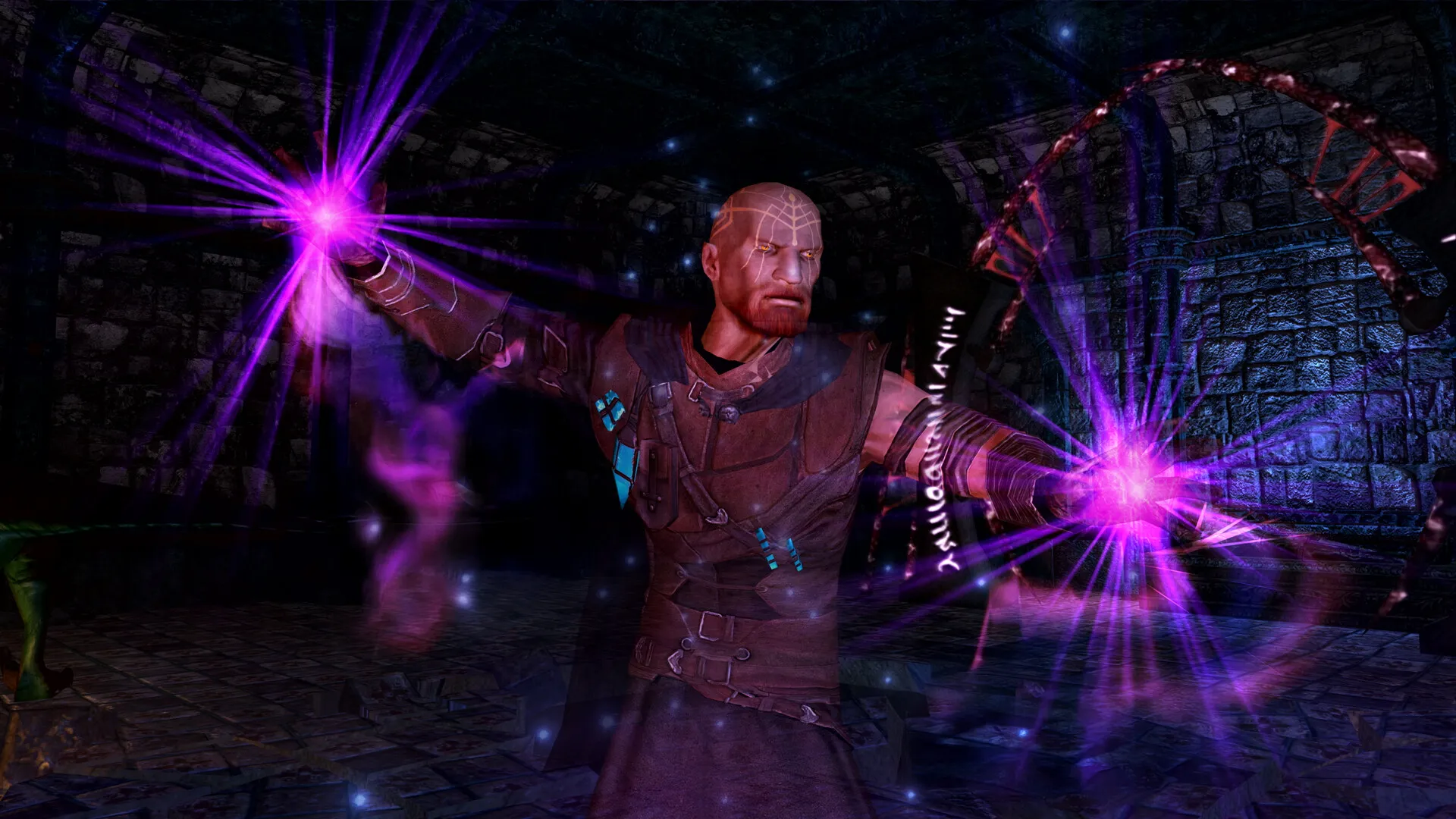
The top-down Strategy mode is more functional for combat but feels like a necessary workaround rather than an intended playstyle. The visual upgrades are a mixed bag. Textures have been sharpened, which makes the world look cleaner, but this newfound clarity only serves to highlight the age of the underlying assets. Character models are low-polygon and move with a stiff, robotic quality.
Facial animations are particularly dated, with “dead-eyed” stares and repetitive, out-of-sync lip movements that fail to convey any real emotion. This creates a jarring inconsistency, where the high-quality voice acting is paired with a vacant expression.
The audio design has its own problems, specifically with sound mixing. In busy city hubs, the ambient noise of the crowd is often so loud that it completely drowns out important NPC dialogue, forcing you to manually lower the effects volume, which in turn mutes critical audio cues in combat.
A Flawed but Formidable Tome
The undeniable strength of this package is the staggering amount of content it contains. This is not just one game; it is a massive saga. Beyond the lengthy base campaign, you get three full expansions. Mask of the Betrayer is frequently hailed by fans as one of the finest RPG expansions ever made, offering a dark, epic narrative for high-level characters.
Storm of Zehir shifts the formula with a greater focus on open-world exploration and party management, while Mysteries of Westgate provides a more compact, self-contained adventure. Together, this content offers hundreds of hours of gameplay, representing a value proposition that is almost unmatched in the genre. This collection is a historical document, a window into a specific moment in RPG design.
It is crucial to understand what this edition is not: it is not a modern remake. It is a faithful, if conservative, port designed to make a classic playable again. The experience demands patience and a willingness to overlook archaic design choices and a clunky presentation.
The ideal player is either a nostalgic veteran or a newcomer who appreciates the depth and complexity of old-school computer RPGs like Planescape: Torment or Icewind Dale. The reward for this tolerance is an immense level of freedom in character building and a narrative that reacts to your choices in meaningful ways.
As with the original, the long-term life of Neverwinter Nights 2 will likely rest in the hands of its dedicated modding community. The Enhanced Edition’s support for years of fan-made content ensures that this vast world can continue to grow, preserving a rich legacy of community creation for a new generation of adventurers.
The Review
Dungeons & Dragons Neverwinter Nights 2: Enhanced Edition
Dungeons & Dragons Neverwinter Nights 2: Enhanced Edition is the definitive way to experience a classic, content-rich RPG. Its greatest achievement is fixing the original's stability issues, making hundreds of hours of deep, tactical gameplay reliably accessible. However, it is not a remake. Players must contend with a frustrating camera, dated graphics, and a clunky interface that betray its age. This is a formidable package for RPG purists and nostalgic fans, but its archaic design will prove too unwieldy for many newcomers.
PROS
- An immense amount of content with the base game and three expansions.
- Deep and faithful implementation of D&D 3.5e rules.
- Vastly improved stability over the original 2006 release.
- Strong writing with meaningful player choice and consequences.
CONS
- Severely dated graphics and stiff character animations.
- A clunky and often obstructive camera system.
- Frustrating companion AI and pathfinding issues persist.
- The user interface is cumbersome and not well-suited for controllers.