
























![Kingdom Hearts Collection [I-III] Review](https://gazettely.com/wp-content/uploads/2026/10/Kingdom-Hearts-Collection-I-III-1-360x180.webp "Kingdom Hearts Collection [I-III] Review: KHII Holds Steady as Newer Entries Fluctuate 37")




Marianne Faithfull’s voice has always felt like a piece of living history, a sound that carries the weight of a cultural epoch within its gravelly texture. The documentary Broken English serves as a final, collaborative reflection on the life that shaped that voice. Made with Faithfull’s full participation before her death, the film immediately signals that it will not follow the standard beats of a biographical picture.
It instead offers a far more creative and interpretive exploration of a life lived against the grain. This is a film less concerned with a chronological timeline and more interested in the spirit of its subject, appreciating her artistic ambition and centering her powerful, unfiltered presence from start to finish.
An Archive of Feeling
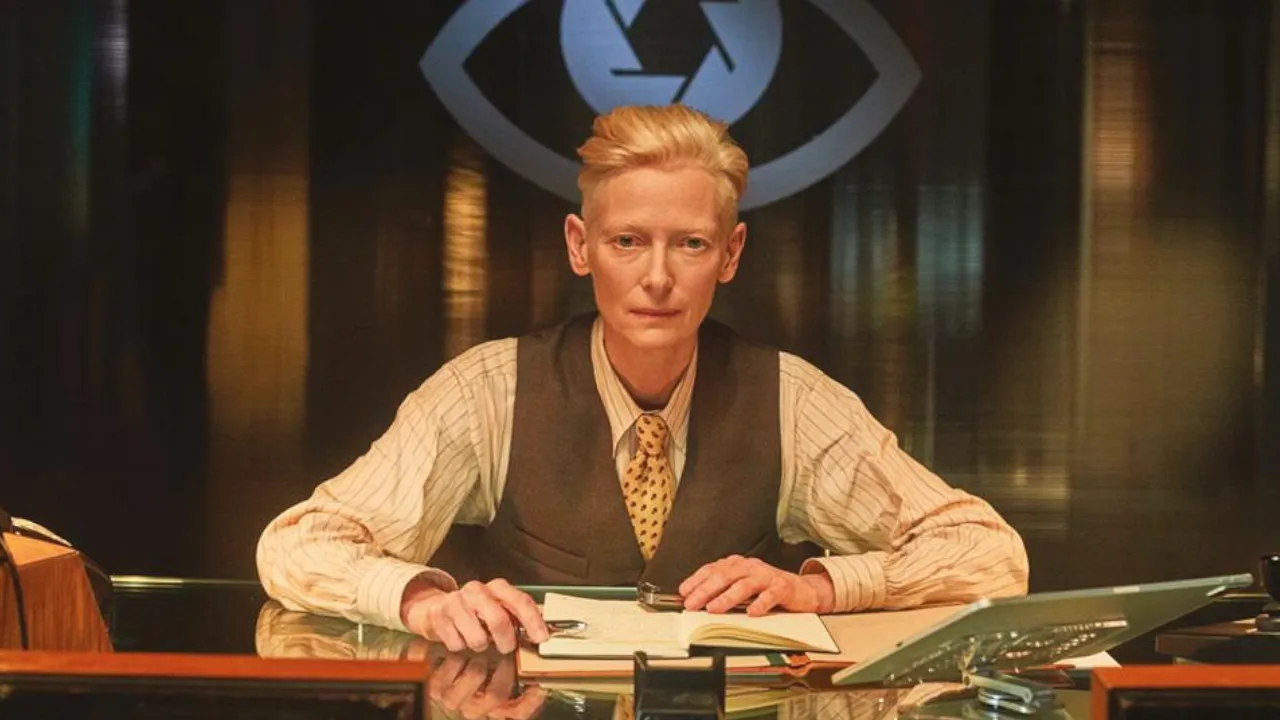
The film’s most distinct choice is its storytelling frame: the “Ministry of Not Forgetting.” It is a fictional, almost theatrical institution where an archivist, “The Record Keeper” (George MacKay), interviews Faithfull under the watch of his superior, “The Overseer” (Tilda Swinton).
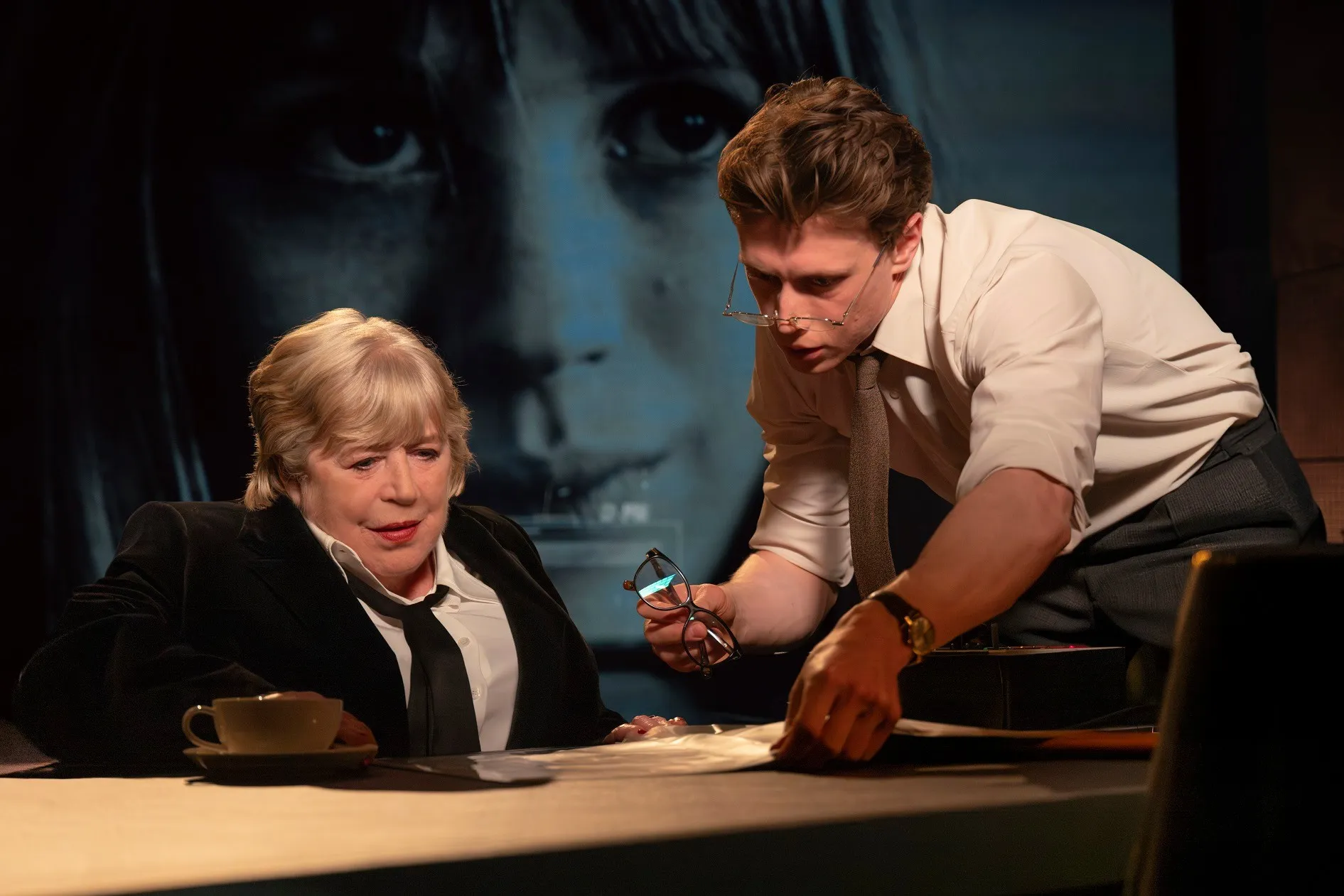
This device intentionally subverts the conventions of the music documentary, a genre that has grown tired with its predictable rhythm of talking heads and archival montages. The directors, Iain Forsyth and Jane Pollard, are clearly pushing against the idea of a single, objective truth in biography.
The Ministry itself has a wonderful analog feel, a place of whirring tape machines, shadowy corridors, and physical scrapbooks designed with a palpable weight of history. The aesthetic reminds me of my own process of discovering an artist’s past, sifting through used record bins and piecing together a story from liner notes and faded magazine articles.
This approach suggests that a life’s story is not a clean file but a collection of tactile, sometimes contradictory, artifacts. The stated goal is to find “resonance,” an emotional truth that facts alone cannot supply. For some, this construct might feel artificial or overly complex. I found it a fascinating attempt to mirror the subjective, often messy, nature of memory itself, making the act of looking back an artistic process.
Facing the Footage
Whatever one thinks of the film’s structure, Marianne Faithfull herself is the undeniable center of gravity. In her conversations with MacKay, she is completely unvarnished: sharp, funny, and refreshingly direct. Watching her review archival footage is a study in contrasts. She dismisses early, infantilizing promotional copy with a blunt, “Well, that’s bullshit,” reclaiming her own image in real time.
The film’s editing powerfully arranges a series of clips from old talk shows, creating a rising tide of fury as one male host after another asks sanctimonious questions about her affairs and drug use. This sequence forces the viewer to experience the oppressive scrutiny she faced. Her story becomes a direct challenge to the way female artists were historically sidelined as accessories to the famous men around them.
Faithfull actively controls her own story here, at one point flatly refusing to discuss the infamous Redlands drug bust. There is a deep poignancy in her self-reflection, particularly when she considers that her difficult life might have, in fact, “broken” her.
The gentle rapport she builds with MacKay allows for these moments of vulnerability, creating an intimacy that cuts through any artifice and stands in stark opposition to the combative interviews of her youth.
The Last Performance
The film situates Faithfull’s work through musical reinterpretations from artists like Beth Orton and Courtney Love. These performances act as a tribute to her enduring influence, but they occasionally slow the film’s momentum, feeling like detours from the more absorbing interviews.
A roundtable discussion where a panel of women talk about her cultural importance has a similar effect; while its intention is valuable, the conversation offers more admiration than deep analysis. These elements feel like attempts to build a case for her legacy that Faithfull herself makes more effectively on her own. The film’s most potent statement is its last.
The final sequence is a raw recording of her performing the song “Misunderstanding,” accompanied by Nick Cave and Warren Ellis. Frail and using oxygen, she delivers the lines with a power that seems to emanate from her entire life’s experience.
The camera stays close, capturing every flicker of emotion on her face. The sound is sparse, focusing completely on her weathered voice. It is an absolutely spellbinding scene that stands as a definitive final word, a moment of pure expression that makes any other summary feel redundant.
Broken English premiered at the Venice Film Festival on August 29, 2025. The documentary feature is an ode to singer and actress Marianne Faithfull, who passed away before the film’s completion. As of August 30, 2025, the film is available for streaming on Plex.
Full Credits
Directors: Iain Forsyth, Jane Pollard
Writers: Iain Forsyth, Jane Pollard
Producers and Executive Producers: Beth Earl (Producer), Iain Forsyth (Executive Producer), Jane Pollard (Executive Producer)
Cast: Marianne Faithfull, Zawe Ashton, Nick Cave, Calvin Demba, Sophia Di Martino, George MacKay, Tilda Swinton
Editors: Alec Rossiter
The Review
Broken English
While its inventive "Ministry of Not Forgetting" framework can sometimes feel cumbersome, Broken English is anchored by the undeniable power of its subject. Marianne Faithfull is a captivating presence, raw and refreshingly honest. The film's true strength lies in these moments of direct connection, culminating in a final musical performance of breathtaking poignancy. It is an ambitious, if occasionally flawed, portrait that honors its subject’s spirit.
PROS
- Marianne Faithfull’s candid, witty, and powerful on-screen presence.
- The emotionally shattering final performance serves as a perfect ending.
- An ambitious and unique structure that challenges documentary conventions.
- Effective use of archival footage to critique historical media treatment of female artists.
CONS
- The fictional framing device can occasionally distract from the main subject.
- Pacing can lag during the musical tribute segments and roundtable discussions.







