
























![Kingdom Hearts Collection [I-III] Review](https://gazettely.com/wp-content/uploads/2026/10/Kingdom-Hearts-Collection-I-III-1-360x180.webp "Kingdom Hearts Collection [I-III] Review: KHII Holds Steady as Newer Entries Fluctuate 37")



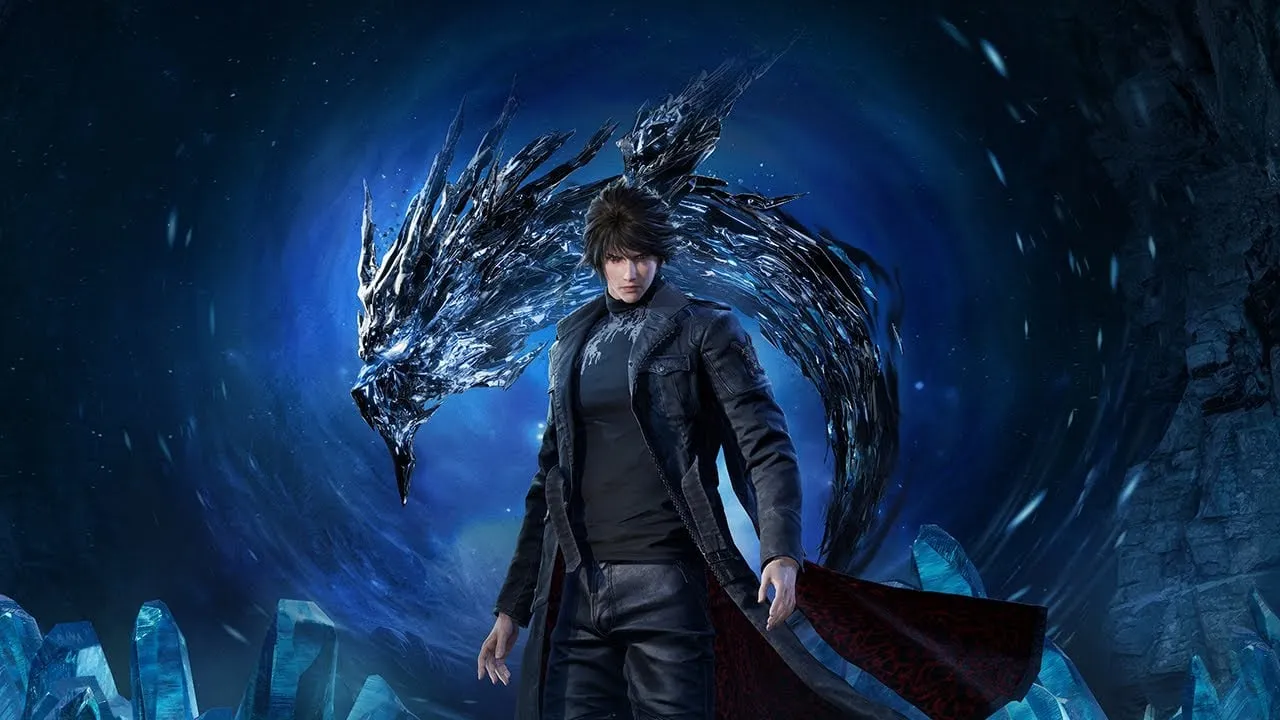

Lost Soul Aside arrives after a long period of development, its journey beginning as the vision of a single creator before expanding significantly under the PlayStation China Hero Project. The nearly ten-year cycle built considerable anticipation for this action title. The game introduces Kazer, a stoic hero bonded to a talkative dragon spirit named Arena.
Their quest is straightforward: Kazer must rescue his sister, whose soul has been taken by the Voidrax, an enigmatic threat from another dimension. At its foundation, this is a stylish, fast-paced action game. It layers several RPG-style systems on top of its core of frenetic combat, establishing a clear priority on swordplay from its opening moments.
The Symphony of Steel
Kazer’s fighting ability is defined by four distinct armaments, and the game’s strength lies in how they interact. The longsword serves as the reliable starting point, a balanced weapon with predictable attack patterns perfect for learning enemy behaviors. The greatsword trades speed for power, requiring more deliberate timing to land its heavy, sweeping attacks, but its charged strikes can break through an enemy’s defense.
It also possesses a built-in defensive counter, making it a solid choice for absorbing and returning damage. The dual-bladed spear is a tool of pure aggression, unleashing a rapid flurry of strikes designed to overwhelm a single target’s poise and keep them locked down.
Finally, the scythe functions as the high-skill centerpiece of the arsenal. Its special property allows it to pull enemies into the air or hold them in place, giving the player direct control over battlefield positioning. This is the key to extending attack sequences and is reminiscent of the crowd-control abilities seen in character action titles like Devil May Cry.
The ability to switch between these weapons instantly is what elevates the combat model. A player can launch an enemy with the longsword, switch to the scythe to hold them aloft, batter them with the spear, and then crash down with a greatsword strike.
Animation cancels are fluid, allowing one move to flow directly into another from a different weapon. This creates a freeform system that encourages improvisation and rewards player creativity. Against the game’s common foes, the combat becomes a canvas for expression, inviting players to dispatch enemies with as much flair as possible.
Defense is built on two simple, effective actions: a dodge and a block. The timing for both is generous, making them accessible to players of all skill levels without penalty for repeated use. A perfectly timed dodge provides a flash of slow-motion and restores resources for special attacks, rewarding smart evasion. Certain powerful enemy attacks are telegraphed with a blue glow; a successful block against these moves will parry the foe, draining their resilience and leaving them open to a powerful counterattack.
This system effectively turns an enemy’s offense into an opportunity for the player. Character improvement is handled through skill trees that unlock new moves which often create new interactions between abilities. There is also a custom parts system where players can find components to attach to their weapons, modifying their appearance and statistical properties in a visible way.
The Gauntlet: Enemy and Boss Design
The opposition Kazer faces is spread across five different regions, with enemy types ranging from wild beasts and alien creatures to robotic soldiers and armored warriors. This variety prevents combat from becoming stale, as each new area introduces new challenges.
Flying enemies demand the use of aerial abilities, heavily armored brutes require guard-breaking attacks from the greatsword, and nimble skirmishers test the precision of the player’s parry. The game often arranges these foes in specific groups, creating small combat puzzles that require prioritizing targets and controlling space. A player who relies on a single strategy will find themselves quickly overwhelmed.
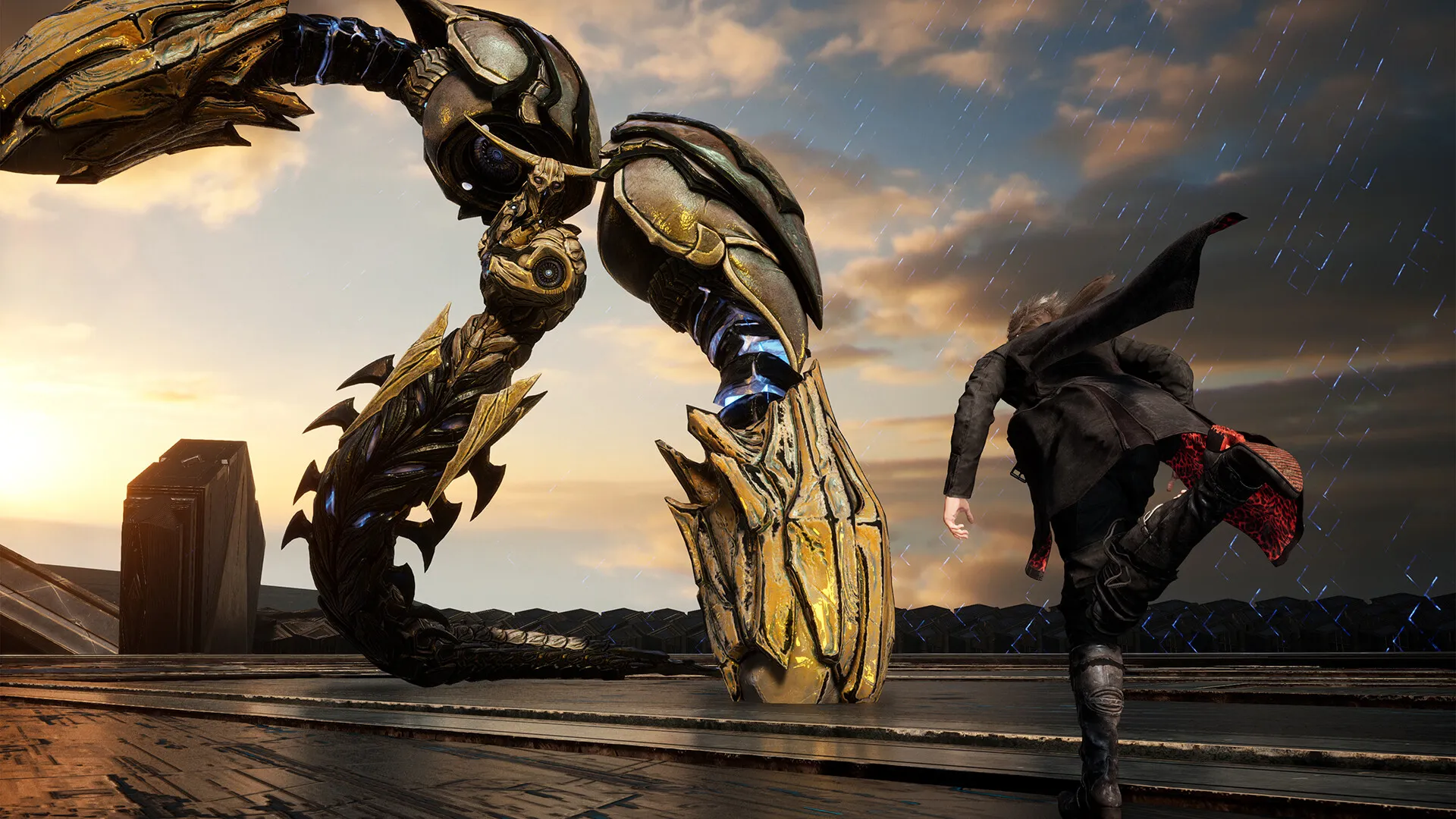
The true tests of skill, however, are the numerous boss encounters. These battles are large-scale spectacles that shift the rules of engagement. While standard enemies can be juggled and stunned, bosses possess a resilience gauge that must be depleted before they can be staggered. This design creates a distinct two-phase feel for each fight.
The first phase is a patient, defensive dance where the player must learn the boss’s attack patterns and find safe openings to deal damage. Once the resilience gauge is broken, the second phase begins: a brief window for an all-out offensive assault before the boss recovers. This structure values observation and caution just as much as aggression. The bosses themselves are visually impressive, ranging from giant mechanized weapons to skilled swordsmen who challenge Kazer to a one-on-one duel.
The game is demanding and offers no adjustable difficulty settings, presenting a single, curated challenge. About a third of the way through the story, a specific boss serves as a significant difficulty increase, acting as a gatekeeper that requires mastery of the defensive systems. For those who find themselves struggling against any foe, the game has an interesting solution.
After several defeats in the same encounter, the player is given a set of powerful equipment with significant damage and defense buffs. This feature acts as a built-in method to lower the challenge for a difficult section, allowing players to overcome a roadblock without needing a traditional difficulty slider.
The Spaces Between Fights
The game’s structure is built around a series of wide, yet linear, maps. Getting around involves standard platforming actions like jumping and dashing, along with sequences where Kazer can surf on his dragon companion. The controls for these traversal sections can feel imprecise, with a floaty jump arc and a dash that can be difficult to aim.
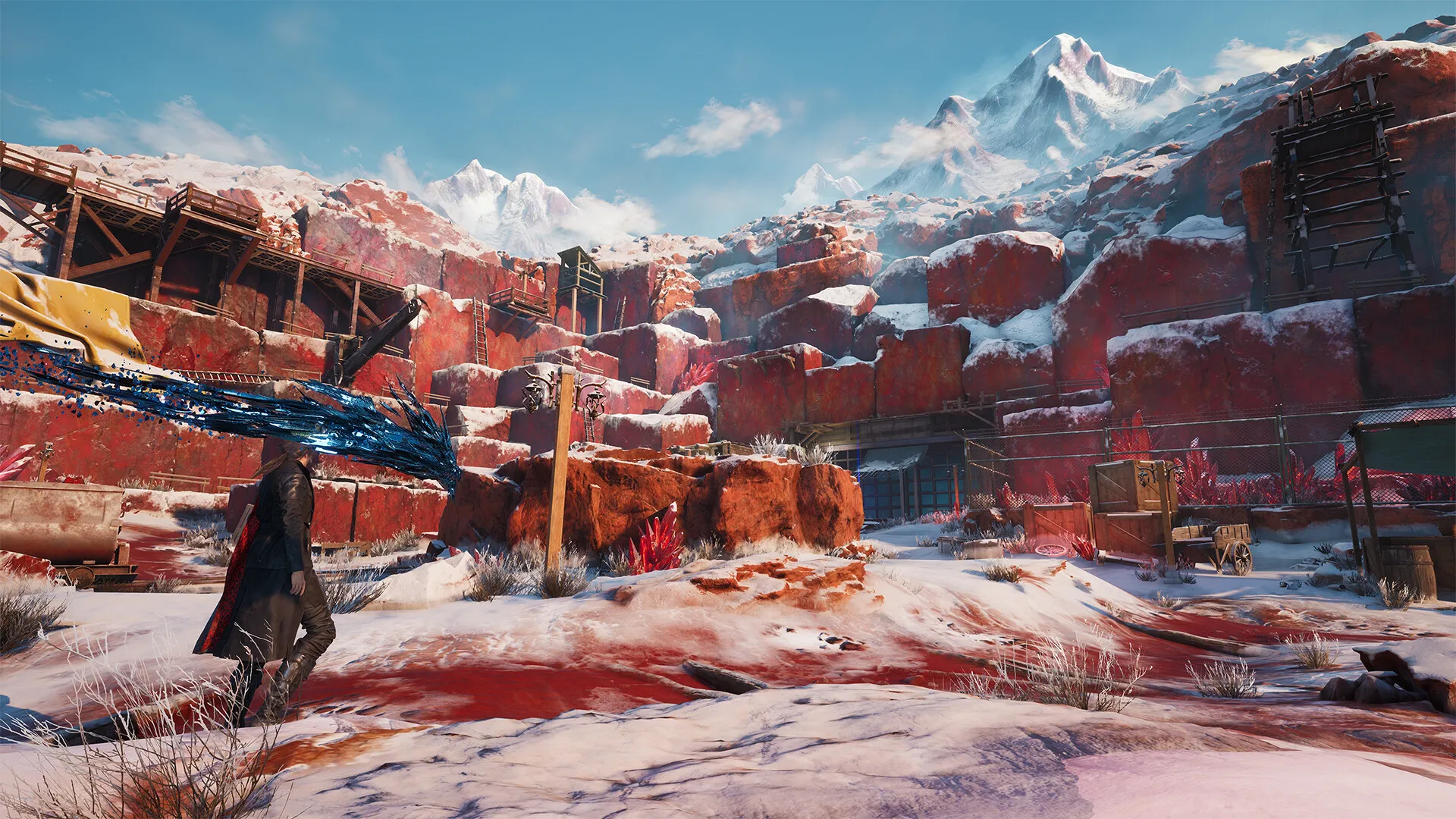
Invisible walls sometimes halt progress unexpectedly, adding to the frustration. The dragon-surfing is a visually interesting idea, but it is undermined by loose controls that make navigating obstacle courses a chore. These movement-focused segments are frequently paired with puzzles.
The high frequency of these platforming and puzzle sections often interrupts the flow of the action. Players may be tasked with finding three stone tablets scattered across a large, confusing area or navigating a maze of lasers under a strict time limit.
These challenges feel disconnected from the game’s core strengths. They halt the momentum built up in combat and replace it with slow, often tedious, trial-and-error tests. They feel less like an organic part of the world and more like filler content designed to extend the game’s length.
Outside of these challenges, the game includes other systems that feel underdeveloped. A crafting function exists for making potions, but its utility is minimal. Players will also find loot that offers small stat boosts, but these rewards have little tangible effect, existing as a system that feels present but not meaningful.
An Echo of a Story
The plot of Lost Soul Aside is constructed from familiar elements found in many fantasy stories. It features a tyrannical empire, a fledgling rebellion, and an ancient evil that has reawakened after a thousand years. The central thread follows Kazer’s personal quest to save his sister, a motivation that sometimes feels at odds with the world-ending stakes presented elsewhere.
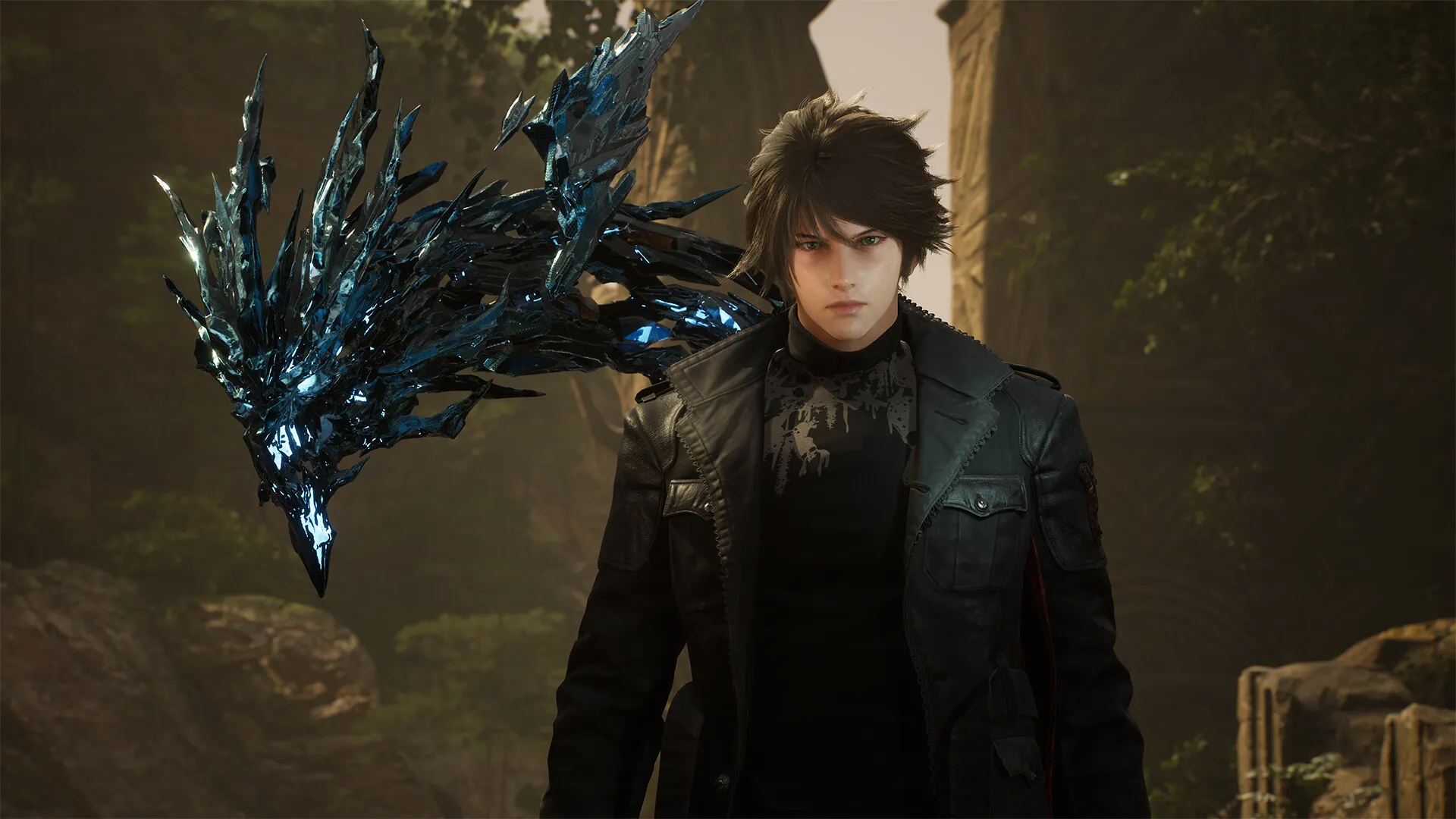
The story struggles to connect these two threads in a meaningful way, leaving the plot feeling disjointed. The characters themselves are thinly drawn. Kazer is a quiet protagonist, a blank slate who reacts to events rather than driving them.
His dragon partner, Arena, handles most of the exposition, but the banter between them rarely reveals deeper personality traits. The supporting cast is composed of recognizable archetypes, like a cold princess and a rival warrior, who are not given sufficient time or dialogue to develop into memorable figures. They appear when the plot requires them and then fade into the background.
The world feels similarly underdeveloped. Much of the background information about the setting is located within text-based menu entries instead of being shown through events in the game. A well-built world makes its history and rules felt through its environment and character interactions; here, the world is a series of disconnected stages.
The presentation of the story also struggles to make an impact. Cutscenes are hampered by flat, uninspired voice acting, which prevents key emotional moments from landing with the intended weight. When a character is supposed to be in distress or filled with anger, the vocal performance often fails to convey that emotion. The dialogue is functional, serving only to move the plot from one point to the next without building a believable or interesting world.
Cracks in the Armor
The game presents a visual style that merges futuristic technology with old-world fantasy architecture. This artistic direction has its moments, particularly in some of the grander vistas, but the technical execution is inconsistent. Character models often appear stiff and have a waxy texture, which limits their ability to show emotion.
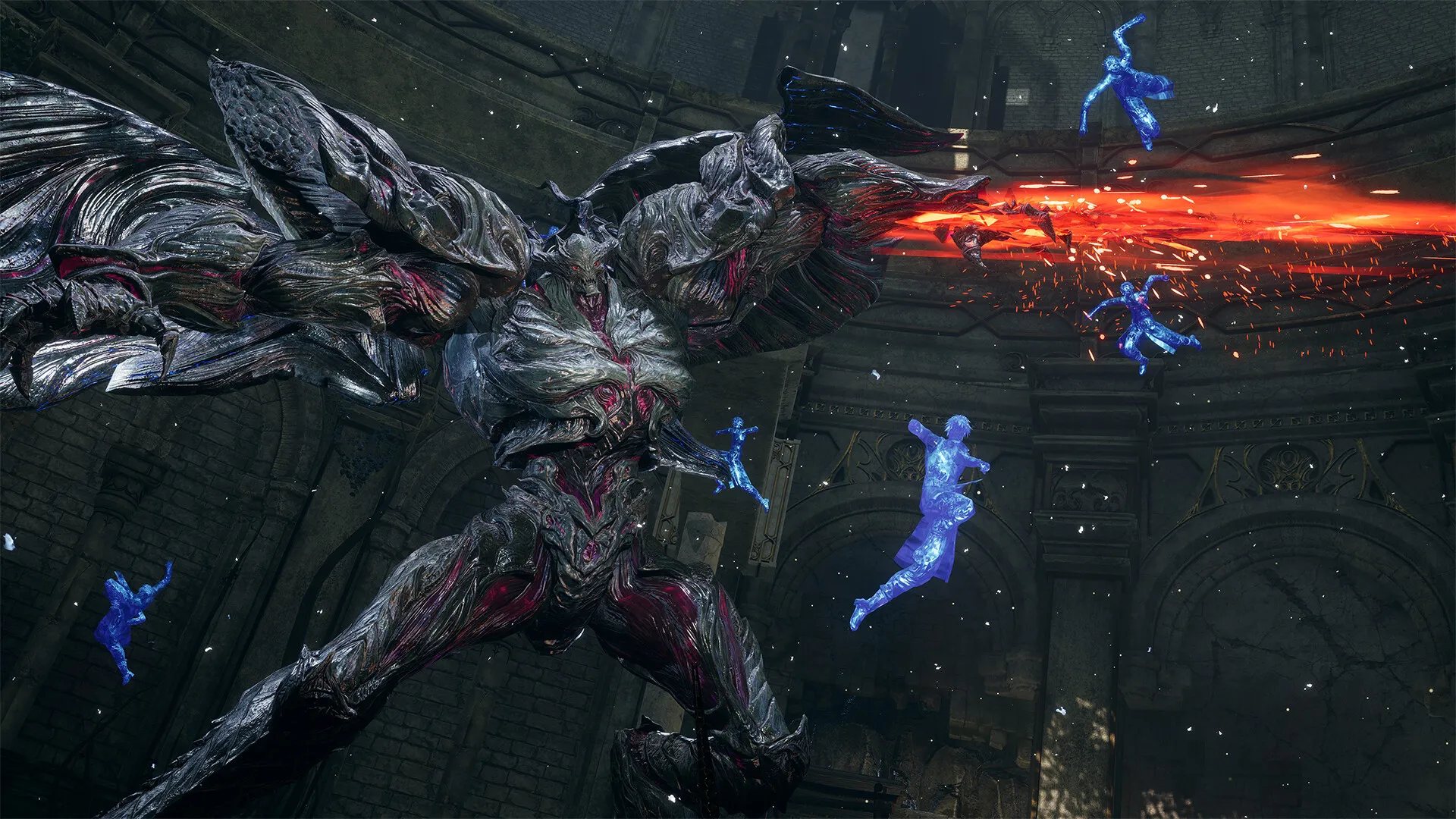
During dramatic cutscenes, the unexpressive faces create a jarring disconnect from the events unfolding. Environments can look good from a distance, but many areas feel generic and sparsely detailed upon closer inspection, resembling placeholders rather than fully realized locations.
The sound design is a more serious weakness. Many powerful attacks lack an audible sense of impact, which diminishes the satisfaction of combat.
A massive sword slash that cleaves an enemy in two may be accompanied by a faint whoosh, undercutting the feeling of power. Explosions lack a deep, satisfying boom. Sound is a key part of player feedback, and its weakness here makes the otherwise excellent combat feel slightly hollow. The musical score is largely forgettable, with only a few tracks during major boss fights standing out.
Audio mixing is also poor. Music will often cut out entirely or restart abruptly during the brief loading screens that separate areas, breaking any sense of atmosphere. On the performance front, the game maintains a steady frame rate during combat, ensuring the action remains smooth. When moving through the world, however, the performance is less stable, with noticeable stutters occurring.
The Review
Lost Soul Aside
Lost Soul Aside features a superb and intricate combat system that stands among the best in the character action genre. Its fluid, expressive swordplay and spectacular boss battles are a genuine highlight. This mechanical excellence is unfortunately anchored to a generic story, forgettable characters, and a world that feels hollow. The experience is further hampered by frequent, frustrating platforming sections and a lack of polish in its sound design and presentation. It is a game of two disparate halves: one brilliant, the other deeply flawed.
PROS
- Deep, fluid, and expressive combat system with excellent weapon variety.
- Spectacular and challenging boss battles that test player skill.
- Accessible yet rewarding defensive mechanics (dodge and parry).
- High degree of player freedom in creating combos.
CONS
- A generic and underdeveloped story with forgettable characters.
- Poor sound design and audio mixing that lessen the impact of combat.
- Frequent and frustrating puzzle and platforming sections that hurt pacing.
- Inconsistent technical polish, from character models to performance hitches.







