
























![Kingdom Hearts Collection [I-III] Review](https://gazettely.com/wp-content/uploads/2026/10/Kingdom-Hearts-Collection-I-III-1-360x180.webp "Kingdom Hearts Collection [I-III] Review: KHII Holds Steady as Newer Entries Fluctuate 37")



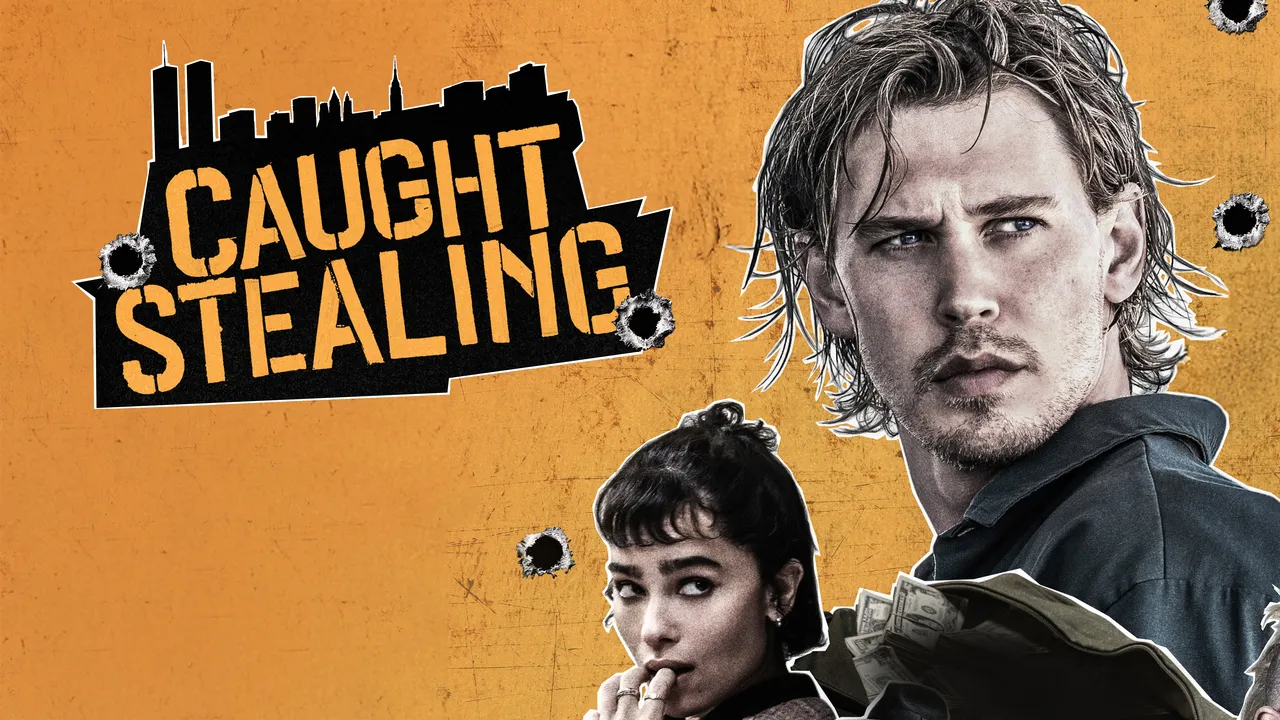

A man with an orange mohawk asks for a favor. It is a simple request, made between neighbors in a Lower East Side walk-up: watch my cat. For Hank Thompson, a bartender whose life is a quiet study in contained regret, this small act of courtesy is the pebble that starts an avalanche.
His past as a baseball phenom was obliterated a decade ago in the wreckage of a drunk-driving accident, leaving him with a phantom limp and a life spent pouring drinks for others. He tries to maintain a fragile sobriety, a relationship, and a sense of routine.
When his neighbor Russ disappears, Hank’s agreement to care for the cat, Bud, becomes an unwitting inheritance of a deadly secret. Soon, violent men are breaking down his door, all searching for something he does not have. This is how his world unravels. Hank, a fundamentally decent person, is abruptly pulled into a criminal vortex where his survival depends on skills he never knew he possessed.
The Ghost of a Swing
Hank Thompson is a character haunted not by ambition, but by the ghost of it. The potential that once defined him is now the source of his inertia. His nightmares, flashing with images of twisted metal and a ruined knee, are a nightly penance for the drunk-driving accident that ended his athletic career.
This history has calcified into a state of quiet self-pity and a deep-seated desire for an uncomplicated existence, which makes the chaos that descends upon him feel like a cosmic joke. Yet the core of the man is not his trauma, but his almost anachronistic humanity. In a genre populated by avengers and hardened anti-heroes, Hank is an anomaly.
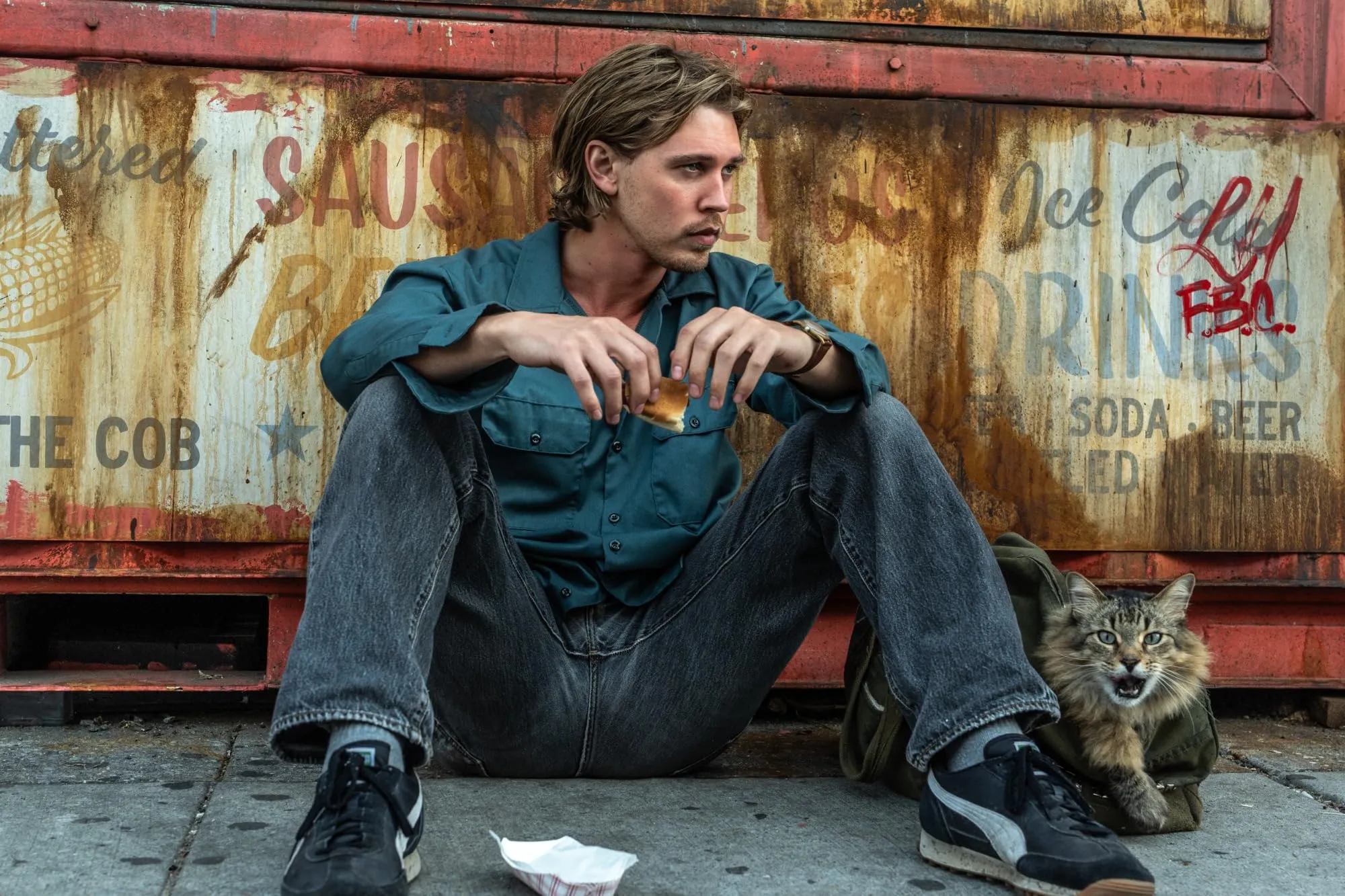
His politeness to neighbors is reflexive, his instinct is to de-escalate, and his primary concern after a brutal beating leaves him short one kidney is not revenge, but simple avoidance. His most profound connection is with Russ’s Maine coon, an ornery creature that bites everyone but him, sensing a gentleness others overlook. This protective instinct is his defining trait, a moral compass in a world devoid of one.
The film wisely connects his past life to his present predicament; the athlete’s body memory, long dormant, reawakens for survival. He ducks under a truck tailgate with the fluid grace of a player sliding into home plate and wields a baseball bat not with malice, but with a desperate, defensive precision born of muscle memory.
Austin Butler’s performance is key to the character’s believability. He brings a laid-back, almost recessive energy to Hank, his physicality conveying a world of weariness. His shoulders are slumped, his gaze often downcast, a stark contrast to the preening posture of his “Elvis.” Butler allows the chaos to wash over Hank before he is forced to react, making his moments of action feel earned and desperate.
He carries the film with an easy charm that generates genuine empathy, portraying a man whose quiet strength is his most surprising asset. This role is a significant departure from his more theatrical work, a stripped-down performance that demonstrates a versatile ability to find the compelling heart of an ordinary man.
A Gallery of Friends and Fiends
Hank’s New York is a city of isolated encounters, populated by a memorable collection of allies and antagonists who drift in and out of his nightmare. His support system is perilously small, a fragile buffer against the encroaching violence. Zoë Kravitz plays Yvonne, a paramedic girlfriend who represents a lifeline to a stable, brighter future.
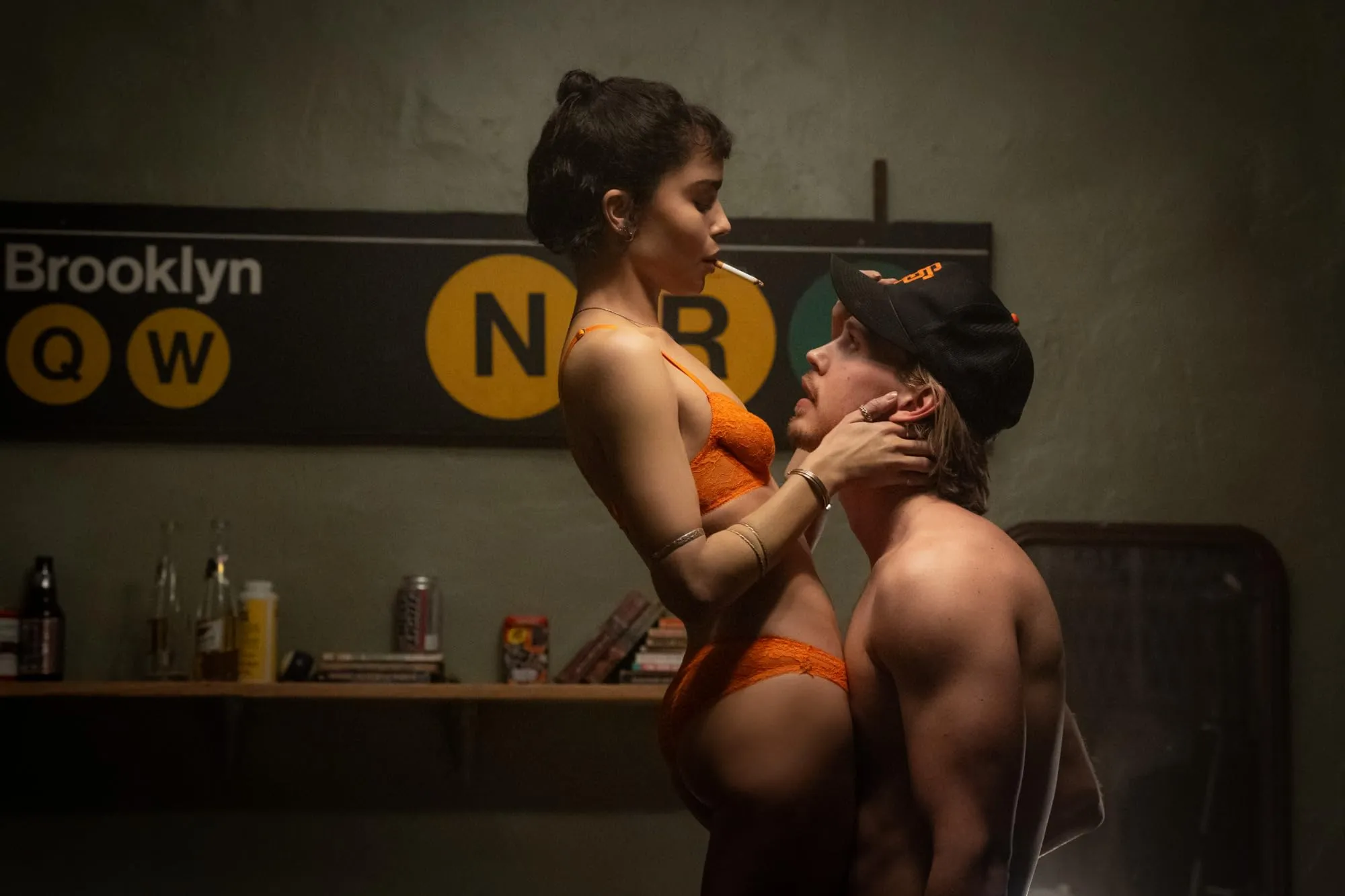
She is pragmatic and sharp, and their relationship is tested by the escalating strangeness of Hank’s situation. She must weigh her affection for the man she knows against the unbelievable stories and physical injuries he brings home, making her a grounded emotional anchor in the story.
Regina King provides a sharp, knowing presence as Detective Elise Roman, an official observer tracking the same criminal syndicates Hank has stumbled into. She exists on the periphery, a wary authority figure watching him sink deeper, her interrogations a mix of professional duty and genuine concern. She represents the orderly world of law that seems powerless to protect Hank from the city’s darker forces.
The true texture of the film comes from its parade of villains, each faction more bizarre than the last. The threat begins with a pair of bald, belligerent Russian thugs who operate with the brute, impersonal force of a wrecking ball. Their initial assault on Hank sets a tone of visceral danger.
From there, the circle of antagonists widens to include a pair of exceptionally violent Orthodox Jewish brothers, portrayed with a unique and unsettling verve by Liev Schreiber and Vincent D’Onofrio. They conduct business from within their deeply traditional community, a jarring juxtaposition of piety and brutality that produces some of the film’s darkest humor.
Their scenes are studies in controlled menace, their religious devotion adding a strange layer to their ruthlessness. Figures like the unpredictable gangster Colorado, played by Bad Bunny, and Matt Smith’s punk-rock instigator Russ, the careless catalyst of the whole affair, round out the roster. This assortment of criminals ensures the film’s energy remains volatile, as each new group brings its own particular brand of menace and turns the screws on Hank a little tighter.
The Grit and the Grind
Darren Aronofsky, a director known for intense, subjective cinematic explorations into obsession and self-destruction, takes a noticeable step toward a more accessible narrative form. The claustrophobic psychology of his previous work is replaced by a propulsive, street-level crime story that feels both fresh for the director and familiar in its genre roots.

The movie’s clearest cinematic ancestor is Martin Scorsese’s “After Hours,” another tale of an ordinary New Yorker’s frantic, perilous journey through the city’s nocturnal underbelly. The film shares that same feeling of a protagonist caught in a relentless series of bizarre and dangerous events from which there is no easy escape.
Aronofsky directs with a steady hand, finding a rhythm that services the plot while still allowing for moments of quiet character insight. This stylistic shift shows a filmmaker confident enough to work within genre conventions while subtly bending them.
The world Hank inhabits feels authentic, a credit to the film’s technical craftsmanship. Cinematographer Matthew Libatique, a frequent Aronofsky collaborator, captures the specific grit of a late-90s New York. The color palette is muted, the lighting often sourced from the harsh glow of streetlamps and neon signs. The camera moves with a purpose that mirrors Hank’s own frantic journey, trailing him through cramped apartments and across the expansive, lonely grounds of Flushing Meadows or the distinct atmosphere of Brighton Beach.
The city has a tangible presence, a labyrinth that is both home and a trap. The period detail is further strengthened by Mark Friedberg’s production design, which recreates the era with an eye for lived-in detail, from the grime on a subway platform to the clutter in Hank’s apartment.
The movie’s rhythm can feel intentionally uneven, shifting between moments of sudden, shocking violence and longer stretches of dialogue. This pacing creates a story that breathes, mirroring the stop-start nature of a real crisis and balancing its dark comedic impulses with the genuine threat that surrounds its protagonist.
The Measure of a Man
The physical violence Hank endures is immediate, but his deeper struggle is with the weight of his past. The film layers new trauma on top of old scars, as each life-threatening encounter compounds the PTSD from his long-ago accident. This psychological distress is a constant undercurrent, a quiet hum of pain beneath the noisy chaos of the plot.
The film’s attempt to balance this serious psychological element with its lighter, dark-comedy tone creates a peculiar effect. It suggests that trauma is not always a somber, dramatic affair, but something that must be navigated amidst the absurdity of daily life.
The central conflict is a test of character. Faced with relentless brutality, Hank’s identity is thrown into question. Does survival in a predatory world require one to become a predator? The film suggests an answer through his relationship with Bud the cat.
The animal, feral and distrustful of all others, becomes a strange arbiter of character. Bud’s acceptance of Hank is the film’s most definitive statement on its hero’s nature. This bond is the story’s moral anchor, a small, persistent sign of the goodness Hank fights to protect. The essential dramatic question is not about the key or the money, but about whether an ordinary man can navigate a world of profound corruption and emerge with his humanity intact.
Caught Stealing is a crime thriller film scheduled for release in US theaters on August 29, 2025. The film had its world premiere in Guaynabo, Puerto Rico, on August 7, 2025. The film is distributed by Sony Pictures Releasing. It is based on the book of the same name by Charlie Huston
Full Credits
Director: Darren Aronofsky
Writers: Charlie Huston
Producers and Executive Producers: Darren Aronofsky, Jeremy Dawson, Dylan Golden, Ari Handel, Tarak Ben Ammar, Charlie Huston, Mohannad Malas, Ann Ruark
Cast: Austin Butler, Zoë Kravitz, Regina King, Matt Smith, Liev Schreiber, Vincent D’Onofrio, Griffin Dunne, Bad Bunny, Carol Kane, Will Brill, D’Pharaoh Woon-A-Tai, Action Bronson, George Abud
Director of Photography (Cinematographer): Matthew Libatique
Editors: Andrew Weisblum
Composer: Rob Simonsen, Idles
The Review
Caught Stealing
Darren Aronofsky delivers an entertaining and gritty crime story, anchored by a grounded and compelling lead performance from Austin Butler. The film successfully creates a tense, lived-in version of New York City, populated by a memorable cast of dangerous characters. While its pacing can be inconsistent and the tone sometimes wavers between serious drama and dark comedy, it remains a sharp, engaging, and satisfying thriller about an ordinary man caught in an extraordinary and perilous situation.
PROS
- A strong, charismatic lead performance from Austin Butler.
- An authentic, well-realized late-90s New York City setting.
- A diverse and entertaining supporting cast of antagonists.
- An engaging and unpredictable plot that keeps the stakes high.
- A successful stylistic departure for director Darren Aronofsky.
CONS
- The pacing can be uneven, with lulls between moments of high tension.
- The balance between dark humor and serious trauma is not always seamless.
- Some supporting characters and relationships could have been more developed.







