
























![Kingdom Hearts Collection [I-III] Review](https://gazettely.com/wp-content/uploads/2026/10/Kingdom-Hearts-Collection-I-III-1-360x180.webp "Kingdom Hearts Collection [I-III] Review: KHII Holds Steady as Newer Entries Fluctuate 37")




The end is where we begin. Across a field slick with mud and blood, two men, figures etched against a monochrome dawn of violence, call each other’s name. “William!” “Harold!” The cries are not of kings, but of men. They are sounds swallowed by the chaos of 1066, a moment of recognition before history’s tide washes one away.
King and Conqueror opens with this terminus, then pulls us back into the river of time that flowed inevitably to this shore. We are shown the “years earlier,” a world of political maneuvering and fragile alliances built around the waning light of Edward the Confessor.
The series presents itself as an explanation, a charting of the currents of ambition and birthright that carried these two souls to their collision. It is a study of a path laid in advance, a chronicle of two lives shrinking toward a single, fated point on a battlefield in Sussex.
Two Vessels of History’s Will
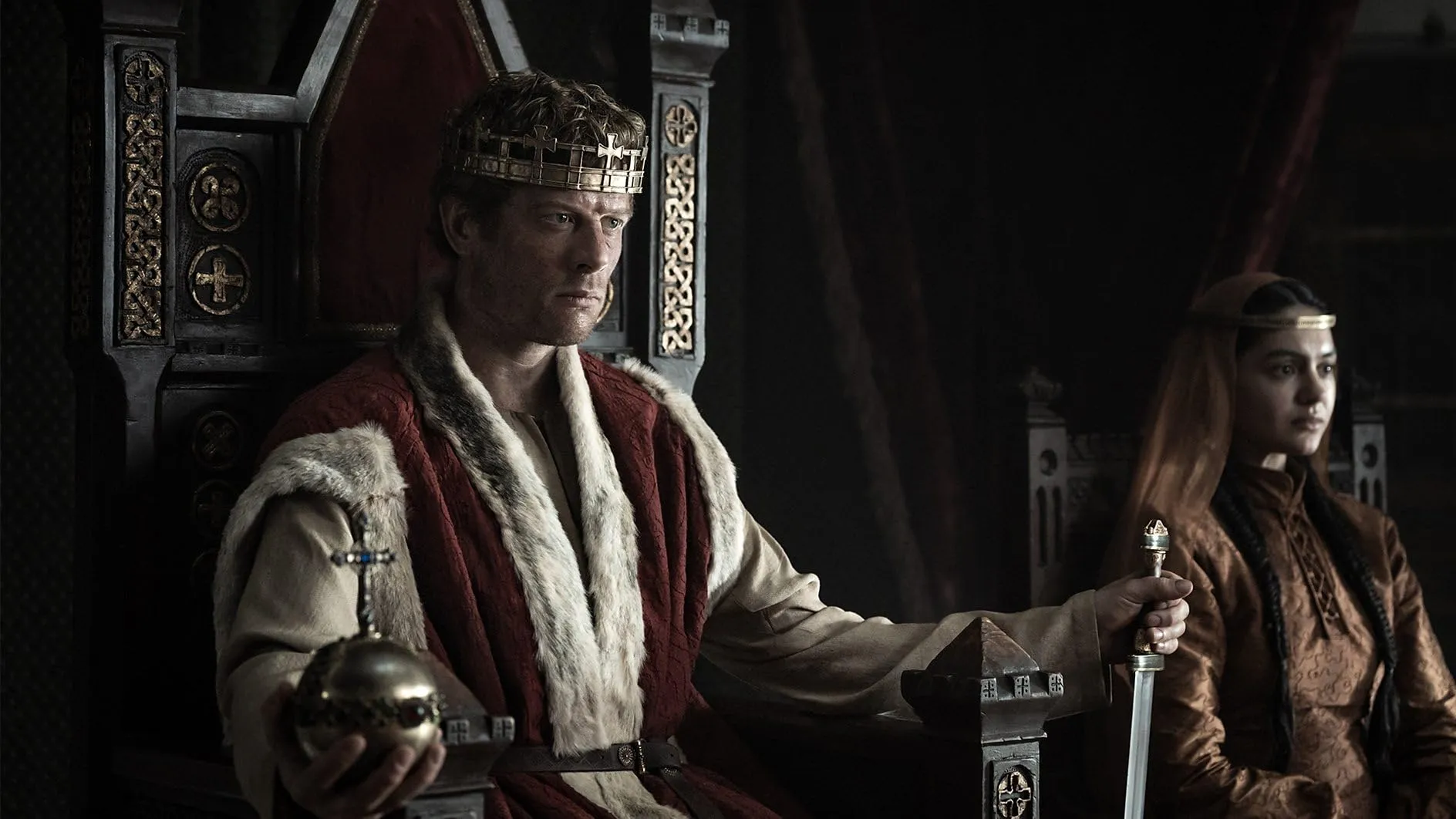
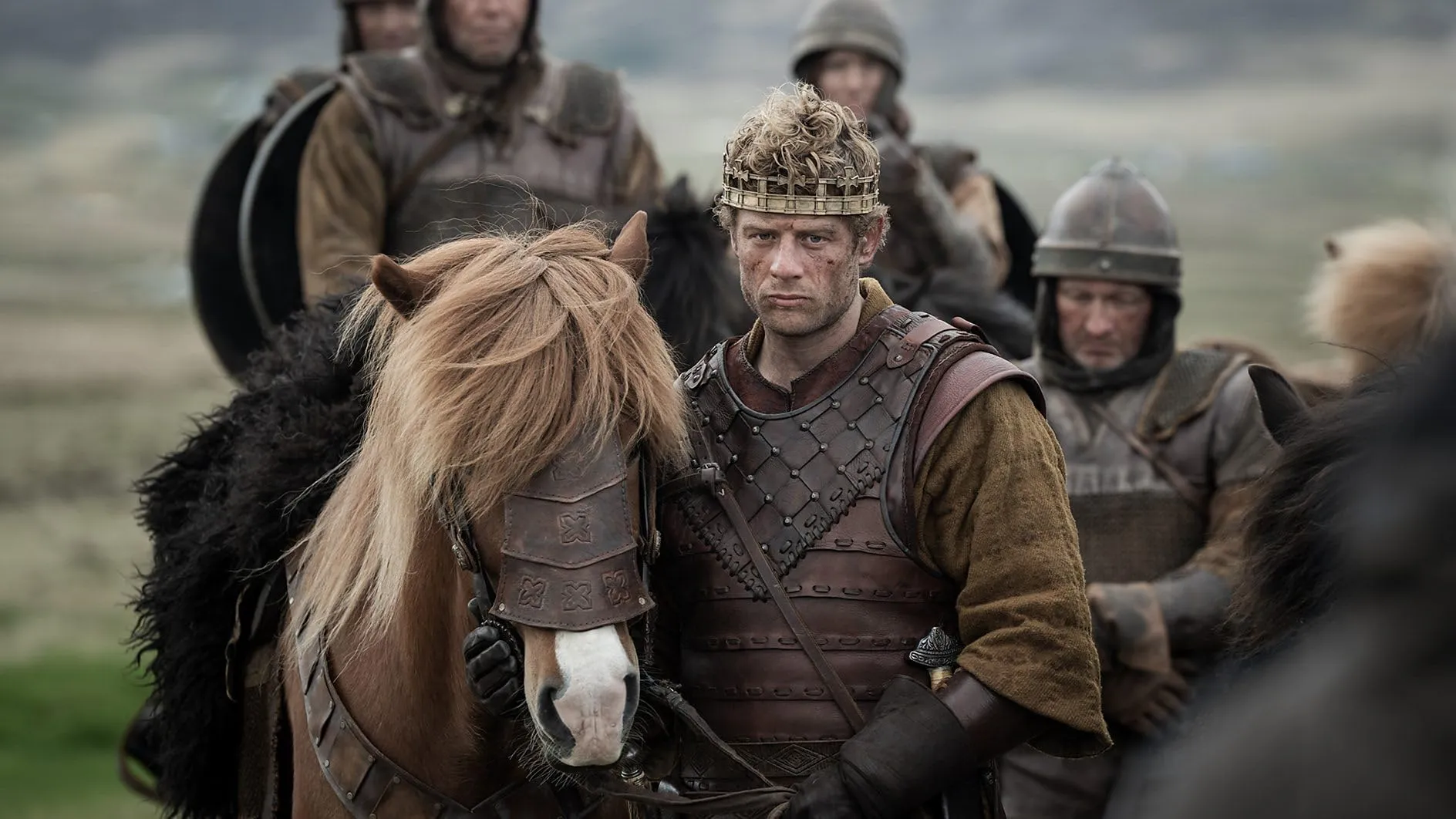
James Norton gives Harold Godwinson the weight of tragic nobility, a man whose virtue feels less like a choice and more like a cage. His honor is a script he is compelled to follow, a societal expectation that isolates him from the grubby reality of the world he seeks to rule. In a court of whispering schemers, his steadfast goodness is a form of profound solitude.
The series positions him as its hero, yet this heroism is passive, a quality of being rather than doing. He is a man reacting to the inexorable pull of events, his dashing figure a mere vessel for a preordained fate. This limitation in the characterization is perhaps the point.
We see not a man shaping his destiny, but a man enduring it, his internal world a landscape of duty and burden that stands in stark contrast to the simple, violent ambitions of his rivals. He is a beautiful, fragile thing in a world that values only what is sharp and durable.
Opposite him, Nikolaj Coster-Waldau’s William of Normandy is a chilling study in the hollowing out of the self by a singular will to power. His ambition is not a desire but a metaphysical condition, a force that organizes his entire being around one objective. Coster-Waldau portrays him with a rigid physicality, as if the man has been replaced by the function he must perform: Conqueror.
The show’s most daring fiction, an early friendship forged with Harold, serves as the perfect lens through which to view this bleak reality. For William, the bond is purely instrumental, a temporary alignment of interests with a man he must eventually erase.
It is a terrifyingly lucid depiction of how ambition negates humanity, turning connection into calculation. He is a man becoming a historical force, and in the process, he sheds the parts of himself that might feel the cost. The earnest gaze is a mask; behind it lies the cold, silent machinery of a man who has already surrendered his soul to the outcome.
The Gravity of the Crown
The true pulse of this series beats not within its protagonists, but in the decaying orbit around the English throne, where power is a venomous, animating fluid. Here, in the space between church and state, spirit and flesh, the drama finds its most compelling expression.
Eddie Marsan’s Edward the Confessor is a creature of sublime fragility, a king whose spirit has fled the profane duties of the material world for the imagined purity of the divine. His piety is a form of existential escape, a desperate attempt to build a sanctuary from the terrifying chaos of his own reign. Into the vacuum left by his abdication of will steps his mother, Lady Emma.
Juliet Stevenson portrays her with a chilling, pragmatic cruelty that feels ancient and elemental. She is the embodiment of dynastic survival, a mind that sees human lives as assets or liabilities. Their scenes together are a grotesque, symbiotic dance, a son recoiling from the very earthiness of the mother who secured his supposedly divine throne. This court is a place where the soul is a liability.
The women of this world, like Emily Beecham’s Edith and Clémence Poésy’s Matilda, operate within this brutal system with a different kind of perception. The show grants them a sharp, modern intelligence, a choice that feels less like an anachronism and more like a recovery of a perspective history has often erased. They are astute observers and strategists, their power more subtle, born from the constraints of their marginalized positions.
They see the folly of men with a clarity the men themselves cannot afford. Elsewhere, the court is populated by figures who dispense with any pretense of nobility. Geoff Bell’s Earl Godwin carries the unmistakable air of a modern gangster, a patriarch ruling through fear and transactional loyalty.
This characterization is a raw statement about the nature of power: strip away the robes and crowns, and you are left with the primal, thuggish impulse to dominate. These figures confirm the grim truth that civilization is a thin veneer over a set of unchanging, brutal instincts.
A Kingdom’s Dim Reflection
The world of King and Conqueror is submerged in a perpetual, suffocating twilight. It is a kingdom rendered in shades of mud and charcoal, a visual choice so absolute it becomes a philosophical statement. The darkness is not a mere absence of light; it is an active presence, an element of the world as real as the soil.
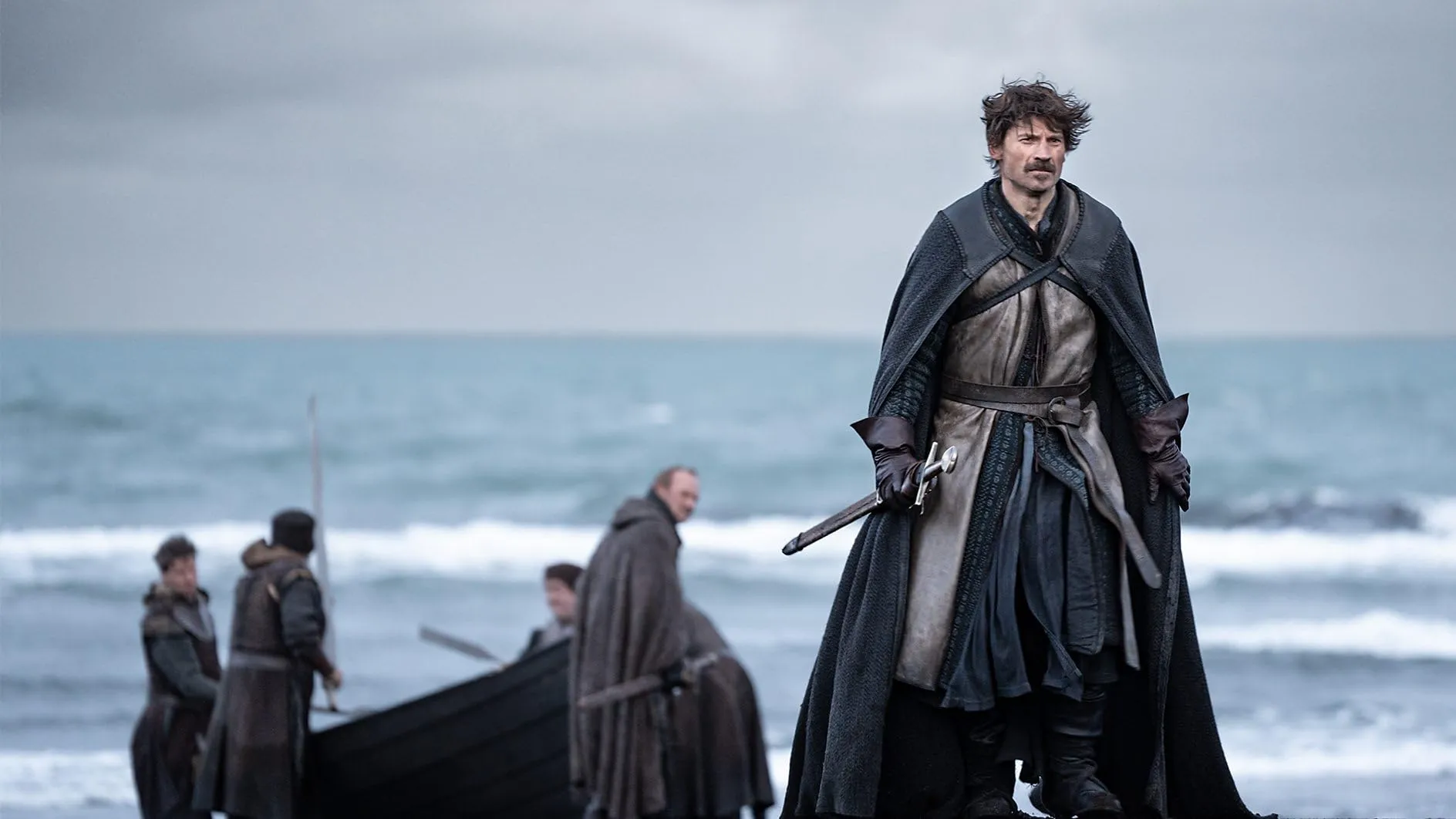
This pervasive gloom functions as a metaphor for the moral ambiguity of its characters and the deep uncertainty of the historical record itself. We are watching figures emerge briefly from an immense, unknowable void.
While other historical dramas strive for a luminous clarity, this series commits to an oppressive obscurity, a choice that, while frustrating for the viewer, argues that the past is fundamentally illegible. We are forced to lean in, to strain our eyes, to accept that we can never see the whole picture.
This sense of confinement is amplified by the production’s scale. The grand struggle for England often feels like a squabble in a forgotten outpost. The world is a place of tents, rudimentary halls, and a few lonely castles. This is not a failure of budget so much as an accidental commentary on the interiority of power.
The choice to film in a stark, treeless Iceland rather than the green fields of England further estranges the story, placing it in a mythic non-place that underscores the characters’ isolation. Their ambitions feel almost pitiable against such a vast, indifferent landscape.
The claustrophobic sets force the drama inward, transforming a national conflict into a series of tense, psychological confrontations. The fight for a kingdom becomes a fight for a room, a chair, a small patch of barren ground, revealing the small, human core of epic historical events.
The Contours of a Forged Past
This series is not a story about what happened; it is an inquiry into what it means to tell a story about the past at all. It consciously discards the sparse skeleton of historical fact to build a new body of psychological drama. Fabricated events, like Harold’s early rescue of William, are not mere embellishments.
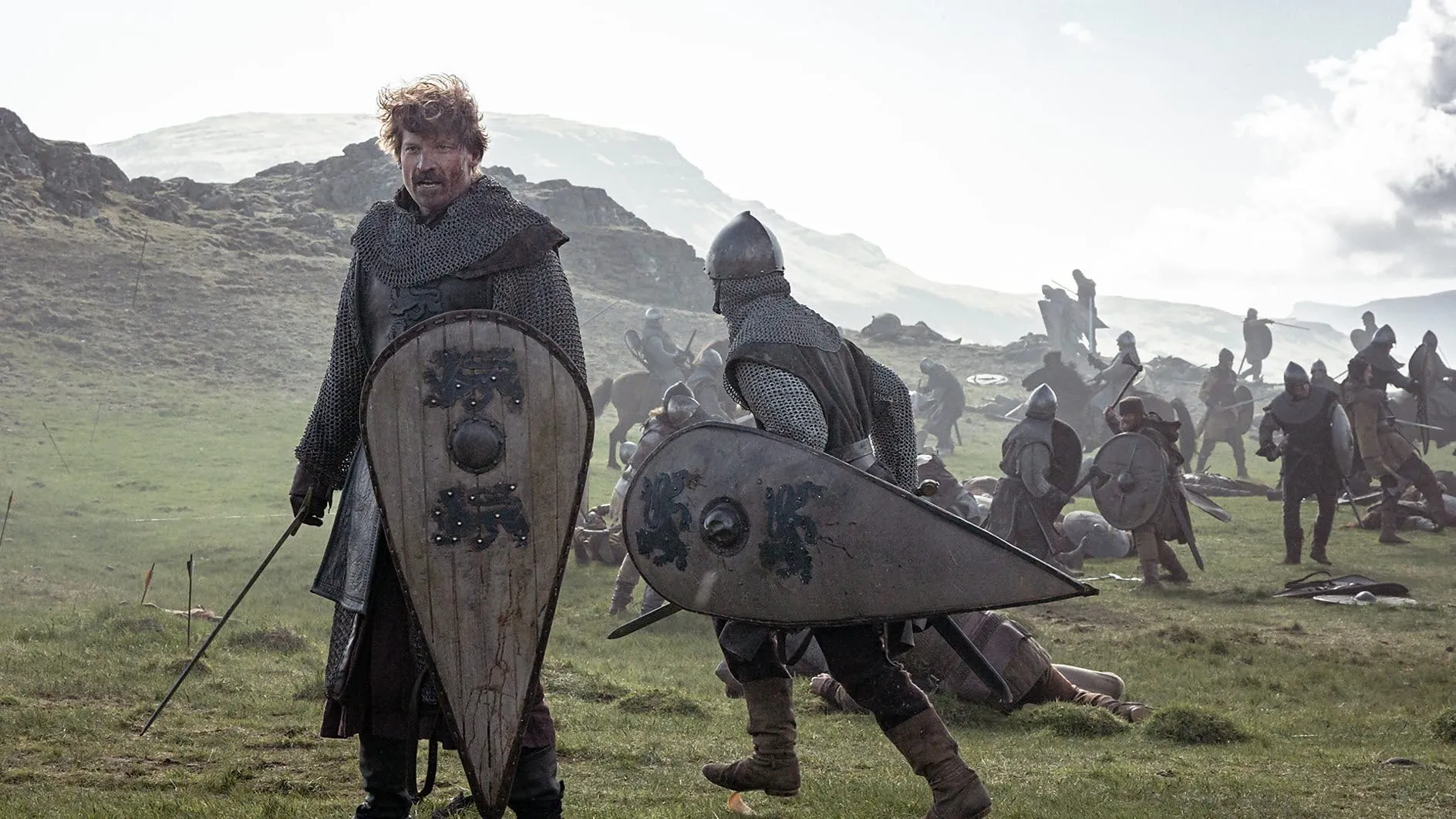
They are foundational choices that reframe a political conflict as a personal tragedy, suggesting that the sting of betrayal is a more powerful narrative engine than the cold logic of succession. The show makes a quiet argument for emotional truth over factual accuracy, asking if the soul of history lies not in its verifiable data but in the passions we project onto its silent figures. It is an act of myth-making, creating a new legend of Harold and William that serves modern dramatic conventions.
Yet this commitment is tested by its own execution. The narrative’s momentum is often lost in the opening episodes, which labor under the weight of exposition. The eight-hour runtime makes the viewer feel the slow, grinding passage of time, the arduous crawl toward a known and bloody end. This deliberate pace can feel like a burden.
The historical illusion is further fractured by its dialogue, which is frequently peppered with modern profanity and syntax. These anachronisms act like cracks in a painting’s varnish. They are moments that pull us out of the dream, reminding us that we are watching a contemporary artifice.
It is a modern voice speaking through an ancient mask, raising unsettling questions about our ability to ever truly hear the past in its own tongue. The artifice reveals a deeper truth: every act of historical recreation is a form of translation, and something is always lost.
An Echo, Not a Voice
King and Conqueror is a work of profound contradictions, a collection of fierce, intelligent performances housed within a flawed and challenging structure. The cast, especially the constellation of schemers orbiting the throne, brings a vital, desperate energy to the material that often transcends the script’s limitations.
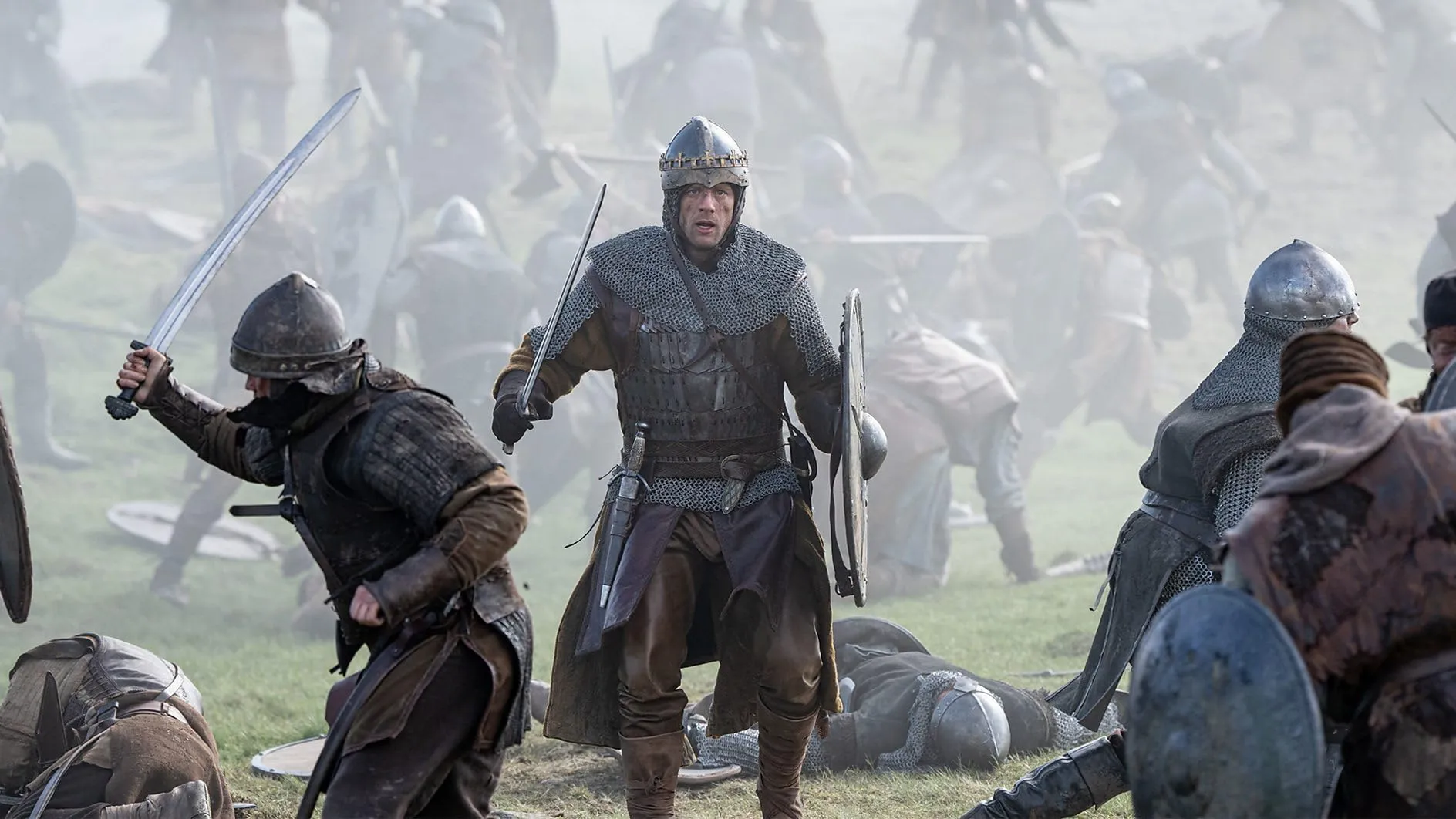
Their work, however, fights against a production that commits to a murky, alienating aesthetic and a narrative that waivers between solemn historical epic and anachronistic melodrama. The series succeeds not as a depiction of history, but as a meditation on the act of depicting it.
Its flaws are intertwined with its philosophical arguments. Its visual ugliness is part of its statement on the past’s unknowability; its slow pace suggests the immense weight of time. It is best understood not as the clear voice of history, but as its distorted echo, a reflection warped by our own anxieties and narrative desires. It offers a version of the 1066 story that is populated by powerful actors but is ultimately a ghost, a shape whose features remain indistinct in the perpetual gloom.
King and Conqueror is a historical drama television series that premiered in the United Kingdom on BBC One and BBC iPlayer on August 24, 2025. The series is also available in the US on Prime Video and in several other territories on HBO Max. It was created by Michael Robert Johnson and stars James Norton as Harold Godwinson and Nikolaj Coster-Waldau as William the Conqueror. The series was filmed primarily in Iceland.
Full Credits
Director: Baltasar Kormákur, Erik Leijonborg, Bálint Szentgyörgyi, Nikolaj Coster-Waldau
Writers: Michael Robert Johnson
Producers and Executive Producers: Sindri Páll Kjartansson, Robert Jones, Melissa Axelrod, Nikolaj Coster-Waldau, James Norton, Kitty Kaletsky, Baltasar Kormákur, Michael Robert Johnson, Lindsey Martin, Dave Clarke, Ed Clarke, Richard Halliwell, Robert Taylor
Cast: Nikolaj Coster-Waldau, James Norton, Emily Beecham, Clémence Poésy, Geoff Bell, Juliet Stevenson, Eddie Marsan, Jason Forbes, Elander Moore, Valdimar Örn Flygenring, Calum Sivyer, Sveinn Geirsson, Björgvin Franz Gíslason, Ines Høysæter Asserson, Þorsteinn Bachmann, Tommi Thor Gudmundsson, Daniel Hans Erlendsson, Asgeir Gunnarsson, Ebba Katrín Finnsdóttir, Louise Kim Salter, Anthony Bacigalupo, Haraldur Stefansson, Andre Vonport, Bo Bragason, Elliot Cowan, Clare Holman, Oliver Masucci, Ingvar Sigurdsson, Indy Lewis, Jean-Marc Barr, Luther Ford, Bjarne Henriksen, Sveinn Ólafur Gunnarsson, Vigdís Hrefna Pálsdóttir
Director of Photography (Cinematographer): Arseni Khachaturan
Editors: Sigurður Eyþórsson
Composer: Högni Egilsson
The Review
King and Conqueror
A potent character study masquerading as a historical epic, King and Conqueror is sustained by phenomenal performances from its supporting cast. It is a visually oppressive and narratively uneven experience, yet its philosophical commitment to the grim, unknowable nature of the past is haunting. The series chooses psychological depth over historical clarity, resulting in a flawed but frequently powerful piece of television that lingers like a dark dream.
PROS
- Exceptional, scene-stealing performances from the supporting cast, particularly Juliet Stevenson and Eddie Marsan.
- A philosophically rich and contemplative approach to historical drama.
- Strong characterizations that explore the psychological burdens of power.
- The series successfully creates a bleak, oppressive, and memorable atmosphere.
CONS
- The pervasive darkness and murky visuals often obscure the action and can be frustrating to watch.
- Anachronistic dialogue that frequently breaks historical immersion.
- The pacing is slow and ponderous, especially in the early episodes.
- The lead protagonists can feel passive compared to the more dynamic supporting characters.







