

























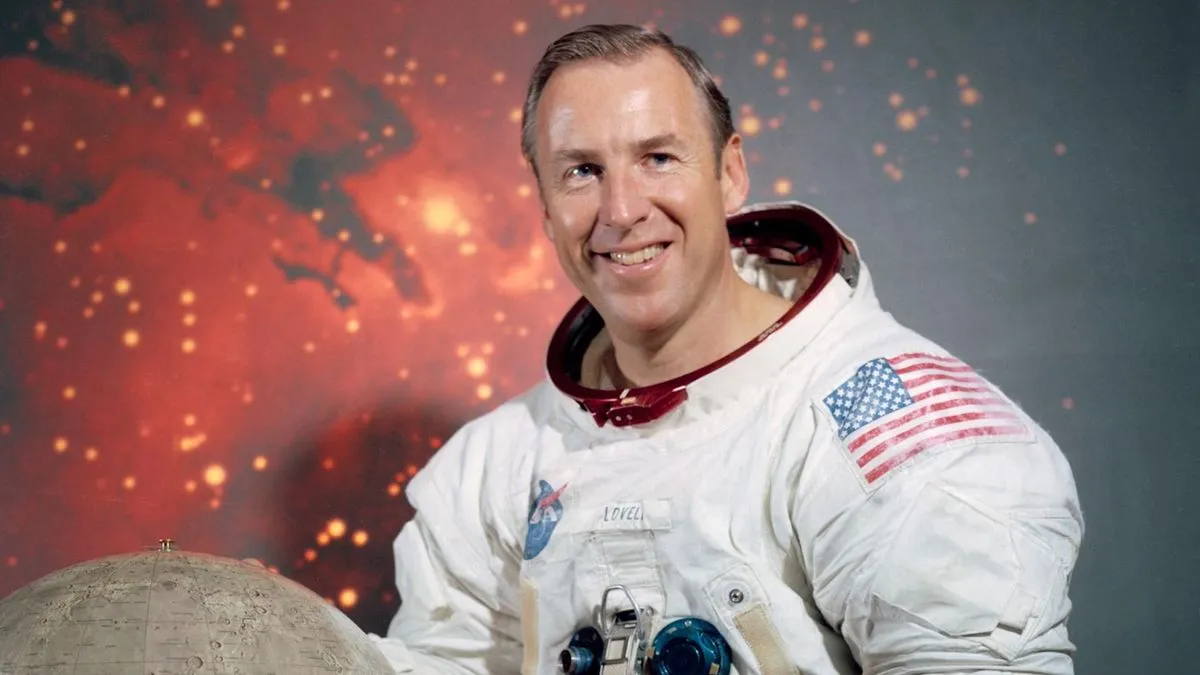

Jim Lovell, the Apollo 13 commander whose steady leadership helped bring his crew safely home after a mid-mission explosion, died on August 7 in Lake Forest, Illinois, at age 97, NASA said. Acting NASA Administrator Sean Duffy called him an explorer who “helped our nation reach the Moon,” praising the calm resolve that turned a potential catastrophe into a learning milestone for the agency. Lovell’s passing was announced publicly on Friday, with tributes from the spaceflight community highlighting a four-flight career that made him one of the era’s most experienced astronauts.
Selected to NASA’s second astronaut class in 1962, Lovell flew Gemini 7’s 14-day endurance flight with Frank Borman and later partnered with Buzz Aldrin on Gemini 12. He then served as command module pilot on Apollo 8, which in December 1968 became the first crewed mission to orbit the Moon. Two years later, as commander of Apollo 13, Lovell and crewmates Jack Swigert and Fred Haise aborted a planned lunar landing after an oxygen tank exploded, conserving power and using the lunar module as a lifeboat before a safe splashdown in the Pacific.
Lovell was awarded the Presidential Medal of Freedom following Apollo 13’s return, recognition that framed the mission as a “successful failure” for the ingenuity it demanded of the crew and Mission Control. Over four missions he logged 715 hours in space, and he was the first person to travel to the Moon twice, though he never landed. Beyond NASA, he co-wrote the 1994 book Lost Moon with Jeffrey Kluger, later adapted into Ron Howard’s film Apollo 13, which amplified the story for new generations.
Lovell’s family, in a statement shared by the agency, remembered him as a Navy officer, astronaut and “leader,” and as the optimistic center of a large family.