












Influencers drifts into view like a phantom on a sun-drenched current, a sequel that breathes a more venomous air than its predecessor. We are returned to the world of CW, a woman who is less a character than a human-shaped void, an entity defined by the digital skins she sheds and acquires. She is a true creature of our age, her existence a curated fiction built from the stolen lives of others.
The film finds her nesting in the French countryside, attempting to simulate a life with a new love, a fragile performance of normalcy. Yet, the past is not a memory to be deleted; it is a persistent specter. From across the world, Madison, the survivor left in the wreckage of CW’s last project, begins a new hunt.
She is a glitch in the system, a ghost in the machine determined to force a system crash. The narrative sets its stage across glamorous, empty landscapes, where a new breed of online prophets preach to their followers, their hollow voices echoing in the same abyss CW calls home.
Mirrored Antagonists in a Glass Prison
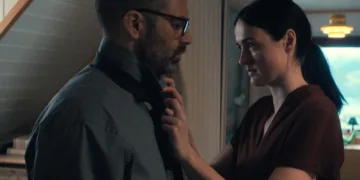
The film anchors its existential inquiry in the psychic space between its two female leads, creating a chilling dialectic on the nature of self. CW’s attempt at a genuine relationship with Diane is a fascinating, tragic study in paradox. She performs the rituals of love, seeking an authentic connection that might fill the vacuum of her own being, a potential refuge from the predatory nihilism that defines her.

This fragile domesticity is a constructed reality, and Cassandra Naud’s performance captures its precariousness with breathtaking subtlety. Her face can be a mask of warmth and affection, yet a flicker in her eyes or a stillness in her posture betrays the cold, calculating machinery working underneath. Her violence, when it inevitably returns, feels less like a choice and more like a law of her nature, the eruption of a fundamental emptiness that cannot be suppressed by love or scenery.
Across this chessboard of identity moves Madison, no longer the terrified victim from the first film. She has been forged anew in the crucible of another’s narrative, her life stolen, her identity erased and rewritten by a digital phantom. Her quest for retribution transcends simple revenge; it is a desperate, philosophical act of self-reclamation.
She hunts CW to kill the reflection that has usurped her existence. Emily Tennant imbues this new Madison with a stark, quiet intensity. Her purpose is singular, her soul pared down to the bone of vengeance. The dynamic between them is not a simple chase. It is a fatal orbit, the collision course of a constructed self, desperate to maintain its fiction, and a deconstructed one, determined to assert its truth.
Sermons from the Infinity Pool
The camera does not merely capture the film’s opulent settings; it frames them as symptoms of a profound spiritual sickness. David Schuurman’s cinematography renders the sun-drenched French villas and lush Balinese resorts with a cold, sterile perfection that is beautiful yet deeply unsettling.

Sweeping drone shots glide over infinity pools that spill into the horizon, creating an aesthetic of impossible, alienating luxury. The light is sharp, the architectural lines are clean, and the spaces feel vast and uninhabited even when people are in them. This is a world of flawless surfaces, a gilded cage where the soul atrophies and human connection seems like a distant rumor. This visual language is the perfect habitat for the film’s new collection of targets.
The manosphere streamer Jacob and his conservative ideologue girlfriend Ariana are not presented as mere satirical caricatures. They are manifestations of cultural decay, their online sermons broadcast from a place of deep inner emptiness. They perform their toxic personas for validation, their identities a collage of borrowed rhetoric and hollow posturing.
The film presents their loathsome worldviews without overt commentary, allowing their words to poison the pristine environment. Their presence offers a dark rationale for CW’s nihilistic project, creating an unsettling moral ambiguity. The viewer is not manipulated into rooting for a killer. Instead, we are placed in the position of a detached observer, watching a corrupt ecosystem begin to devour itself with a grim, almost scientific curiosity.
Fractured Timelines, Inevitable Blood
The film’s narrative structure is as fragmented as the identities it portrays, deliberately disorienting the viewer. Its non-linear leaps across time and geography mirror a consciousness shattered by the dislocating experience of digital existence. We are unmoored, forced to piece together a reality from broken shards of information, much like the characters themselves.
What could be seen as plot contrivances, particularly the story’s reliance on impossibly powerful technology, feel more like a central, chilling thesis. The film suggests we live in a world where reality itself is a hackable system, a fluid medium that can be manipulated by those with the right tools. A suspension of disbelief is not a prerequisite for viewing; it is the very subject of the film’s inquiry.
This structural uncertainty creates a tone that shifts between the taut mechanics of a thriller, the grim humor of the absurd, and a pervasive sense of existential dread. The final confrontation is the logical endpoint of this design. It is not a clean, heroic battle choreographed for audience satisfaction.
It is a raw, messy, and desperate brawl, the physical manifestation of an existential war where each woman fights to assert her version of reality over the other’s. The climax offers a violent purge that resolves little, leaving behind not a sense of triumph but the unsettling quiet that follows a storm. It solidifies the film as a grimly satisfying and intelligent piece of horror that understands that the deepest wounds are the ones we cannot see.
Influencers is a 2025 Canadian-American horror thriller film that serves as a sequel to the 2022 film “Influencer”. It was written and directed by Kurtis David Harder and features Cassandra Naud reprising her role from the first film. The film premiered at the 29th Fantasia International Film Festival on July 26, 2025.
Full Credits
Director: Kurtis David Harder
Writers: Kurtis David Harder
Producers: Jack Campbell, Chris Ball, Taylor Nodrick, Rebecca Campbell, Kurtis David Harder, Micah Henry
Executive Producers: Jack Campbell, Rebecca Campbell
Cast: Cassandra Naud, Georgina Campbell, Jonathan Whitesell, Lisa Delamar, Veronica Long, Dylan Playfair
Director of Photography: David Schuurman
Editors: Rob Grant, Kurtis David Harder
Composer: Avery Kentis
The Review
Influencers
Influencers is a chillingly elegant sequel, a polished obsidian mirror reflecting the void of our digital age. It sacrifices narrative plausibility for a deeper, more disturbing philosophical inquiry into the nature of the self. While its logic may be as fractured as its timeline, its thematic resonance is sharp and its atmosphere is intoxicatingly venomous. A bleak, beautiful, and intelligent horror film that lingers long after the credits roll.
PROS
- Intelligent exploration of dark, philosophical themes about identity and digital existence.
- Stunning cinematography and a rich, atmospheric visual style.
- Strong, nuanced lead performances that deepen the characters.
- Effective and biting satire of modern influencer culture.
CONS
- The plot requires a significant suspension of disbelief, particularly with technology.
- Its non-linear structure and contemplative pace may not appeal to all viewers.
- The narrative can feel secondary to its thematic ambitions.