
















• Latest
  • Trending
Survival Mode Review

Survival Mode Review: Portraits of Grace Under Pressure

The Assassin(s) Review

The Assassin(s) Review: Suspicion, Censorship, and the Cost of Asking Questions

Toronto

Everybody Wants to F*ck Me Review: A Nice Guy Meets His Worst Nightmare

Wild, Wild East Review

Wild, Wild East Review: The Western Myth Meets Occupied Poland

Faith

Faith Review: Erin Doherty Grounds an Uneasy Leap Into the Supernatural

Lovers in the Blue Night Review

Lovers in the Blue Night Review: Searching for Intimacy in a City That Keeps Asking Questions

A Bit Of Light Review

A Bit Of Light Review: The Quiet Weight of Staying Alive

Big Little Things Review

Big Little Things Review: The Cost of Making Love Invisible

Donutal Review

Donutal Review: Two Aliens, One Interrogation Room, Plenty of Trouble

The Stunt Driver Review

The Stunt Driver Review: Ken Carter’s Biggest Risk Was Becoming His Own Legend

High Value Target: The Hunt for Saddam Review

High Value Target: The Hunt for Saddam Review: The Best Scenes Need Nothing Except Two Men Talking

Shuhua Yeh

K-pop Star Shuhua Steps Into Acting With TIFF Premiere “Happily Ever After”

16 hours ago
Misty Green

Chris Rock’s “Misty Green” Ignites Oscar Buzz After Toronto Premiere

16 hours ago
  • Home
  • Privacy Policy
  • Terms and Conditions
  • Gazettely Review Guidelines
Monday, September 14, 2026
GAZETTELY
  • Home
  • Movie and TV News
    Shuhua Yeh

    K-pop Star Shuhua Steps Into Acting With TIFF Premiere “Happily Ever After”

    Misty Green

    Chris Rock’s “Misty Green” Ignites Oscar Buzz After Toronto Premiere

    Elephants in the Fog

    Nepal’s Cannes-Winning “Elephants in the Fog” Expands Global Reach Ahead of Oscar Run

    Words Are Weapons Michaël R. Roskam

    Belgian Director Revives a Wartime Newspaper Hoax That Fooled the Nazis

    Jeremy Thomas

    Jeremy Thomas, Oscar-Winning Producer of “The Last Emperor” and “Crash,” Dies at 77

    Maggie Gyllenhaal

    Maggie Gyllenhaal Denies Gender Played Role in “Woman Unknown” Golden Lion Win

    Mia Wasikowska Agata the Writer

    Mia Wasikowska Leads Kuba Dorabialski’s Bold Venice Debut “Agata the Writer”

    Possible Love

    Venice Wins for Malkovich, “Possible Love” and “NAZA” Reshape Early Oscar Race

    Seth Rogen Babies

    Seth Rogen Says Wife’s TIFF Film “Babies” Is His Most Personal Role Yet

  • Movie and TV Reviews
    The Assassin(s) Review

    The Assassin(s) Review: Suspicion, Censorship, and the Cost of Asking Questions

    Toronto

    Everybody Wants to F*ck Me Review: A Nice Guy Meets His Worst Nightmare

    Wild, Wild East Review

    Wild, Wild East Review: The Western Myth Meets Occupied Poland

    Faith

    Faith Review: Erin Doherty Grounds an Uneasy Leap Into the Supernatural

    Lovers in the Blue Night Review

    Lovers in the Blue Night Review: Searching for Intimacy in a City That Keeps Asking Questions

    A Bit Of Light Review

    A Bit Of Light Review: The Quiet Weight of Staying Alive

    Big Little Things Review

    Big Little Things Review: The Cost of Making Love Invisible

    The Stunt Driver Review

    The Stunt Driver Review: Ken Carter’s Biggest Risk Was Becoming His Own Legend

    High Value Target: The Hunt for Saddam Review

    High Value Target: The Hunt for Saddam Review: The Best Scenes Need Nothing Except Two Men Talking

  • Game Reviews
    Donutal Review

    Donutal Review: Two Aliens, One Interrogation Room, Plenty of Trouble

    The Alighieri Circle: Dante's Bloodline Review

    The Alighieri Circle: Dante’s Bloodline Review: Hell Is Better Solved Than Explained

    Marvels Wolverine Review

    Marvel’s Wolverine Review: A Great Logan Trapped in a Limited Action Game

    NHL 27 Review

    NHL 27 Review: EA Has the Right Ideas, Mostly

    Welcome to Elderfield Review

    Welcome to Elderfield Review: Roll the Dice and Tend the Crops

    Barbarian Saga: The Beastmaster Review

    Barbarian Saga: The Beastmaster Review: Great Transformations, Rough Execution

    Apidya' Special Review

    Apidya’ Special Review: One Cult Classic Still Has Plenty of Sting

    Bus Simulator 27 Review

    Bus Simulator 27 Review: A Management Sim Waiting for Mechanical Repairs

    SPRAWL zero Review

    SPRAWL zero Review: Disposable Guns, Permanent Fun

  • The Bests
No Result
View All Result
  • Home
  • Movie and TV News
    Shuhua Yeh

    K-pop Star Shuhua Steps Into Acting With TIFF Premiere “Happily Ever After”

    Misty Green

    Chris Rock’s “Misty Green” Ignites Oscar Buzz After Toronto Premiere

    Elephants in the Fog

    Nepal’s Cannes-Winning “Elephants in the Fog” Expands Global Reach Ahead of Oscar Run

    Words Are Weapons Michaël R. Roskam

    Belgian Director Revives a Wartime Newspaper Hoax That Fooled the Nazis

    Jeremy Thomas

    Jeremy Thomas, Oscar-Winning Producer of “The Last Emperor” and “Crash,” Dies at 77

    Maggie Gyllenhaal

    Maggie Gyllenhaal Denies Gender Played Role in “Woman Unknown” Golden Lion Win

    Mia Wasikowska Agata the Writer

    Mia Wasikowska Leads Kuba Dorabialski’s Bold Venice Debut “Agata the Writer”

    Possible Love

    Venice Wins for Malkovich, “Possible Love” and “NAZA” Reshape Early Oscar Race

    Seth Rogen Babies

    Seth Rogen Says Wife’s TIFF Film “Babies” Is His Most Personal Role Yet

  • Movie and TV Reviews
    The Assassin(s) Review

    The Assassin(s) Review: Suspicion, Censorship, and the Cost of Asking Questions

    Toronto

    Everybody Wants to F*ck Me Review: A Nice Guy Meets His Worst Nightmare

    Wild, Wild East Review

    Wild, Wild East Review: The Western Myth Meets Occupied Poland

    Faith

    Faith Review: Erin Doherty Grounds an Uneasy Leap Into the Supernatural

    Lovers in the Blue Night Review

    Lovers in the Blue Night Review: Searching for Intimacy in a City That Keeps Asking Questions

    A Bit Of Light Review

    A Bit Of Light Review: The Quiet Weight of Staying Alive

    Big Little Things Review

    Big Little Things Review: The Cost of Making Love Invisible

    The Stunt Driver Review

    The Stunt Driver Review: Ken Carter’s Biggest Risk Was Becoming His Own Legend

    High Value Target: The Hunt for Saddam Review

    High Value Target: The Hunt for Saddam Review: The Best Scenes Need Nothing Except Two Men Talking

  • Game Reviews
    Donutal Review

    Donutal Review: Two Aliens, One Interrogation Room, Plenty of Trouble

    The Alighieri Circle: Dante's Bloodline Review

    The Alighieri Circle: Dante’s Bloodline Review: Hell Is Better Solved Than Explained

    Marvels Wolverine Review

    Marvel’s Wolverine Review: A Great Logan Trapped in a Limited Action Game

    NHL 27 Review

    NHL 27 Review: EA Has the Right Ideas, Mostly

    Welcome to Elderfield Review

    Welcome to Elderfield Review: Roll the Dice and Tend the Crops

    Barbarian Saga: The Beastmaster Review

    Barbarian Saga: The Beastmaster Review: Great Transformations, Rough Execution

    Apidya' Special Review

    Apidya’ Special Review: One Cult Classic Still Has Plenty of Sting

    Bus Simulator 27 Review

    Bus Simulator 27 Review: A Management Sim Waiting for Mechanical Repairs

    SPRAWL zero Review

    SPRAWL zero Review: Disposable Guns, Permanent Fun

  • The Bests
No Result
View All Result
GAZETTELY
No Result
View All Result
Survival Mode Review

Running With The Wolves Review: Is Italy the New Wales?

Blue Film Review: Kieron Moore and Reed Birney Navigate Uncomfortable Territory

Home Entertainment TV Shows

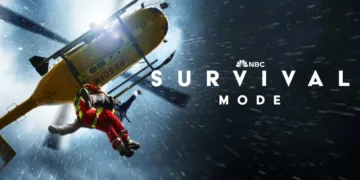
Survival Mode Review: Portraits of Grace Under Pressure

Naser Nahandian by Naser Nahandian
1 year ago
in Entertainment, Reviews, TV Shows
Reading Time: 5 mins read
A A
0
Share on FacebookShare on TwitterShare on PinterestShare on WhatsAppShare on TelegramSummarize with ChatGPTSummarize with Perplexity

The air in the walk-in cooler of a gas station convenience store is cold and still. It is a space designed for preservation, a sharp contrast to the violent chaos of a massive tornado tearing Joplin, Missouri, apart. Inside, 25 people huddle together, their survival dependent on this insulated box and the quick thinking of a store employee.

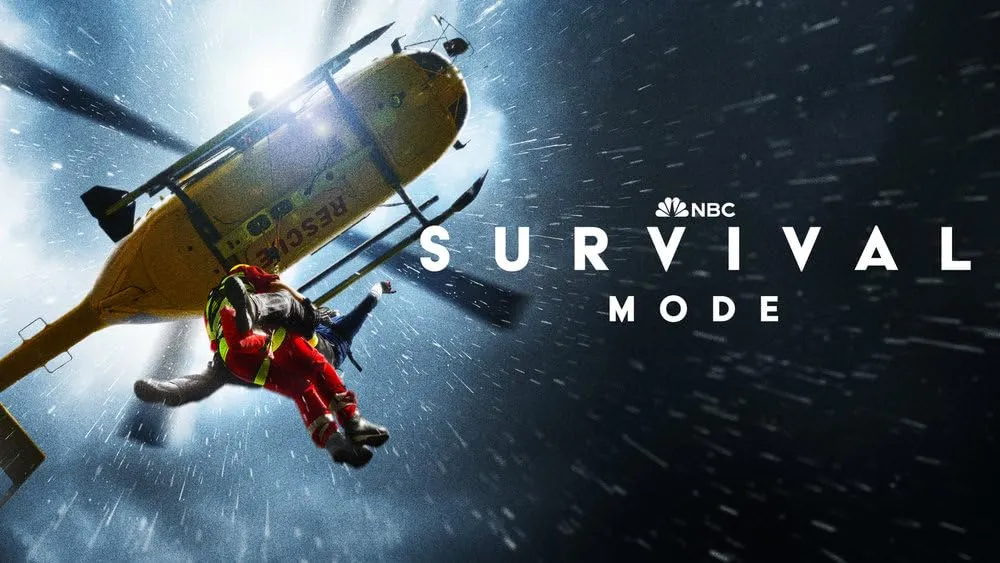
This is the kind of critical moment that NBC’s docuseries Survival Mode dissects. The series bypasses spectacle to investigate the psychology of existence during catastrophe. Each episode revisits a recent disaster, from the Joplin tornado to the 133-car pile-up in Fort Worth, focusing entirely on the accounts of those who lived through it. The show’s premise is an examination of the instantaneous, life-altering choices made when the ordinary world is violently interrupted, revealing a profound human strength.

The Architecture of Catastrophe

Survival Mode adopts an anthology format, dedicating each episode to a single, contained cataclysm. This structural choice is fundamental to its impact. By refusing to serialize a disaster across multiple installments, the show mirrors the brutal compression of the experience itself.

A tragedy that unfolds over minutes or hours is presented within a taut, focused narrative framework, denying the viewer the comfort of a prolonged investigation and instead forcing an engagement with the event’s immediacy. The series builds its world through a careful synthesis of two distinct forms of media: the objective record and the subjective memory.

On one hand, it deploys the seemingly impartial evidence of archival materials. News footage, traffic cameras, and weather service data provide a detached, panoramic view of destruction, charting the storm’s path or the pile-up’s expansion with dispassionate clarity. This is the disaster as a set of facts and figures.

Juxtaposed against this is the deeply personal, fragmented, and emotionally charged testimony of the survivors. Through direct-to-camera interviews, the series accesses the internal experience of the crisis. Here, the timeline is not linear but emotional, marked by moments of terror, confusion, and sudden lucidity. The show’s power emerges from the tension between these two modes.

We see the tornado on a weather map as a swirling red mass, and then we are locked inside the perspective of a mother shielding her son in a bathtub, for whom the tornado is only a deafening roar and the feeling of the house disintegrating around her. This technique allows the series to construct a fuller, more resonant truth.

The pacing is intentionally abrupt, dispensing with lengthy exposition to plunge the viewer into the moment where things begin to go wrong. This narrative velocity serves a thematic purpose, simulating the suddenness with which normalcy is fractured. There is no time for contemplation, only reaction. The show’s most sophisticated device is its use of cross-cutting between concurrent storylines, a technique that grants the audience a kind of dramatic omniscience.

We are made aware of the multiple dramas unfolding simultaneously, a privilege the participants themselves are denied. In the Joplin episode, the use of on-screen maps to pinpoint the locations of each group heightens this effect, creating an almost unbearable suspense as we watch the tornado’s path converge on people who are tragically unaware of their specific peril.

The Calculus of Instinct

The series shifts its focus from the mechanics of disaster to the granular details of human response. It is here, in the personal accounts, that the show finds its true subject. The individuals chosen are not arbitrary; they often embody distinct archetypes of behavior in a crisis. We are introduced to figures like Ruben Carter, the gas station employee in Joplin, who becomes an accidental commander.

His calm, decisive action to move strangers into the store’s cooler represents the emergence of leadership from necessity, a demonstration of how social order can be spontaneously re-established even as the physical world comes apart. His actions are not born of a grand design but of a practical assessment of a dire situation, making his heroism feel both extraordinary and accessible.

Then there are figures like Trey, the paramedic in the Fort Worth pile-up. He represents the trained professional whose sense of duty is so ingrained that it operates beyond the shock of personal trauma. Even after his own vehicle is destroyed, his immediate impulse is to render aid.

His story explores the theme of purpose in chaos, where training provides a script for action when instinct alone might lead to paralysis. The series uses these examples to conduct a nuanced inquiry into the nature of bravery. It suggests that heroism is less about dramatic gestures and more about a form of profound clarity, a quick and accurate calculus of the immediate possibilities.

The interview segments function as more than simple exposition; they are intimate portraits of trauma and its aftermath. The tight camera work, focusing on faces rather than surroundings, creates a confessional atmosphere. The viewer witnesses not just the recounting of a story, but the complex emotional process of reliving it.

It is in these moments—a flicker of an eye, a catch in the throat—that the true cost of survival is conveyed. These personal narratives are essential in translating abstract tragedy into something tangible. The statistic of a 133-car pile-up is staggering but impersonal.

The story of Destiny, a young woman grievously injured in that wreck, and her emotional on-camera reunion with her rescuers, gives the event a human face and a focal point for empathy. The show argues that the full measure of a disaster can only be understood through the specific lives it touches.

The Question Posed by Chaos

In documenting such harrowing events, Survival Mode navigates a difficult ethical terrain. The line between bearing witness and exploiting suffering is a fine one, yet the series manages to stay on the side of dignity. It achieves this by consistently framing its stories around agency and decision-making.

The focus is not on the passive experience of victimhood but on the active, difficult work of survival. By concentrating on the “how” and “why” of a person’s actions, the show grants its subjects a measure of control over their own narratives, presenting them as protagonists in their own lives rather than simply as casualties of circumstance.

This approach taps into a deep cultural fascination with resilience. These stories function as modern fables, offering reassurance that human ingenuity and spirit can withstand even the most overwhelming forces. They provide a powerful counter-narrative to the sense of helplessness that often accompanies news of large-scale disasters.

The series does more than just tell stories; it invites the viewer into a state of active contemplation. The detailed, moment-by-moment reconstruction of a crisis implicitly asks, “What would you do?” It transforms the viewing experience from a passive reception of information into a vicarious mental simulation.

One watches and instinctively begins to strategize, to evaluate the choices made by the people on screen. This engagement is a form of cognitive rehearsal for the unthinkable, allowing the audience to confront fears of mortality and randomness from a safe distance. The ultimate offering of the show is a form of catharsis built on a foundation of respect.

It provides a structured and meaningful way to process the anxieties of a world where disaster can strike without warning. The show’s final assertion is that while individuals may be powerless against a tornado or a mudslide, they are not without agency. Survival, the series suggests, is not always a matter of luck, but often the result of awareness, clarity, and the unbreakable will to make one more choice.

“Survival Mode” is a nine-episode American docuseries that showcases real-life accounts of people caught in devastating natural disasters and other catastrophes. The series combines first-hand accounts from survivors and rare archival footage. The first two episodes premiered on NBC on July 7, 2025, and the remaining episodes followed weekly on Mondays in the same timeslot. The entire season is available to stream on Peacock starting the day after the episode premieres on NBC. The docuseries is produced by NBC News Studios.

Full Credits

Producers & Executive Producers: Chris Cassel (executive), Liz Cole (executive), Elizabeth Fischer (executive), Andy Berg (executive), Molly O’Brien (executive), Zeke Dunn (line producer)

The Review

Survival Mode

8 Score

Survival Mode is a masterfully crafted docuseries that elevates the disaster genre. It avoids sensationalism, focusing instead on the psychology of survival and the quiet heroism of ordinary people. Through its taut pacing and respectful storytelling, the series offers a profound and moving examination of human resilience in the face of unimaginable chaos. It is a powerful, thought-provoking, and deeply humanizing viewing experience.

PROS

  • The series handles its sensitive subject matter with dignity, focusing on survivor agency rather than gratuitous spectacle.
  • Each episode is a self-contained, focused, and well-paced examination of a single event, making for a compelling watch.
  • By centering the personal accounts of survivors, the show provides a powerful and emotionally resonant exploration of trauma and resilience.
  • The focus on split-second decision-making offers a unique and intelligent angle on the disaster documentary format.

CONS

  • The episode-to-episode format, while effective, can feel repetitive over the course of the entire season.
  • The intense and harrowing nature of the content can be emotionally draining for some viewers.

Review Breakdown

  • Overall 0
Tags: Andy BergChris CasselDocumentaryElizabeth FischerFeaturedLiz ColeMolly O'BrienNBCNBC News StudiosPeacockReality-TVSurvival Mode
Previous Post

Running With The Wolves Review: Is Italy the New Wales?

Next Post

Blue Film Review: Kieron Moore and Reed Birney Navigate Uncomfortable Territory

Try AI Movie Recommender

Gazettely AI Movie Recommender

This Week's Top Reads

  • Is This Seat Taken? Review

    Is This Seat Taken? Review: A Satisfying Mental Workout

    1294 shares
    Share 0 Tweet 0
  • Fauda Season 5 Review: Revenge Crosses the Mediterranean

    1 shares
    Share 0 Tweet 0
  • Peter Farrelly’s “I Play Rocky” Scores TIFF Standing Ovation, Eyes Oscar Run

    0 shares
    Share 0 Tweet 0
  • You Can See Everything Review: Three Hours Inside a Manufactured Reality

    0 shares
    Share 0 Tweet 0
  • The Grand Tour Review: The Keys Change Hands

    0 shares
    Share 0 Tweet 0
  • Trust Review: Squandered Potential and an Incoherent Plot

    6 shares
    Share 0 Tweet 0
  • Last Seen Review: A Missing-Girl Thriller With Better Questions

    1 shares
    Share 0 Tweet 0

Must Read Articles

Marvels Wolverine Review
PlayStation

Marvel’s Wolverine Review: A Great Logan Trapped in a Limited Action Game

1 day ago
American Hostage Review
TV Shows

American Hostage Review: A Hostage Crisis Traps the Reporter Too

1 day ago
NHL 27 Review
Games

NHL 27 Review: EA Has the Right Ideas, Mostly

1 day ago
The Drop A Snowfall Saga Review
TV Shows

The Drop: A Snowfall Saga Review: West Coast Hip-Hop Gives the Franchise Fresh Energy

1 day ago
The Debut Review
Movies

The Debut Review: Julianne Moore Finds Herself and Becomes Everyone Else’s Problem

2 days ago
Loading poll ...
Coming Soon
Which of Alfred Hitchcock's 1960s thrillers is your all-time favorite?

Gazettely is your go-to destination for all things gaming, movies, and TV. With fresh reviews, trending articles, and editor picks, we help you stay informed and entertained.

© 2021-2026 All Rights Reserved for Gazettely

What’s Inside

  • Movie & TV Reviews
  • Game Reviews
  • Featured Articles
  • Latest News
  • Editorial Picks

Quick Links

  • Home
  • About US
  • Contact Us
  • Advertise with Us
  • Review Guidelines

Follow Us

Facebook X-twitter Youtube Instagram
No Result
View All Result
  • Gazettely | Movie, TV & Game Reviews, News, and Rankings
  • Movies
  • Entertainment News
  • Movie and TV Reviews
  • TV Shows
  • Game News
  • Game Reviews
  • Contact Us

© 2024 All Rights Reserved for Gazettely