














Elliot Tuttle’s feature debut “Blue Film” arrives like a transmission from cinema’s most unforgiving frequencies, demanding audiences confront the digital age’s peculiar relationship with desire and its discontents. This 85-minute psychological drama presents Aaron Eagle (Kieron Moore), a Los Angeles camboy whose online dominance dissolves when confronted by a $50,000 proposition from a masked stranger (Reed Birney). What begins as a seemingly straightforward transactional encounter transforms into something far more disturbing and psychologically complex.
The film operates as a two-hander within the confines of a sterile rental apartment, where the mysterious client’s hidden face and probing questions gradually strip away Aaron’s carefully constructed persona. Tuttle, whose previous work includes the podcast series “Lina’s Song,” demonstrates remarkable confidence in tackling material that would send most filmmakers retreating toward safer territory. Here, the provocative elements serve the story rather than vice versa, though the film’s confrontational nature makes it suitable primarily for adventurous festival audiences.
The Edinburgh International Film Festival premiere signals the kind of challenging cinema that thrives in such environments, where difficult questions about power, desire, and the commodification of intimacy can be examined without commercial constraints. “Blue Film” belongs to that rarefied category of debut features that announce a filmmaker’s willingness to explore the spaces where other directors fear to tread.
The Architecture of Performance and Vulnerability
Moore delivers a performance that recalls early Brando in its combination of swagger and sensitivity, though the comparison feels less derivative than inevitable. His Aaron Eagle exists in a state of perpetual performance, whether addressing his online audience or navigating this unexpected encounter. The actor’s physical presence commands attention, but his real achievement lies in revealing the fragility beneath the bravado. When Aaron’s carefully maintained facade begins to crack, Moore allows glimpses of genuine boyish uncertainty to emerge.
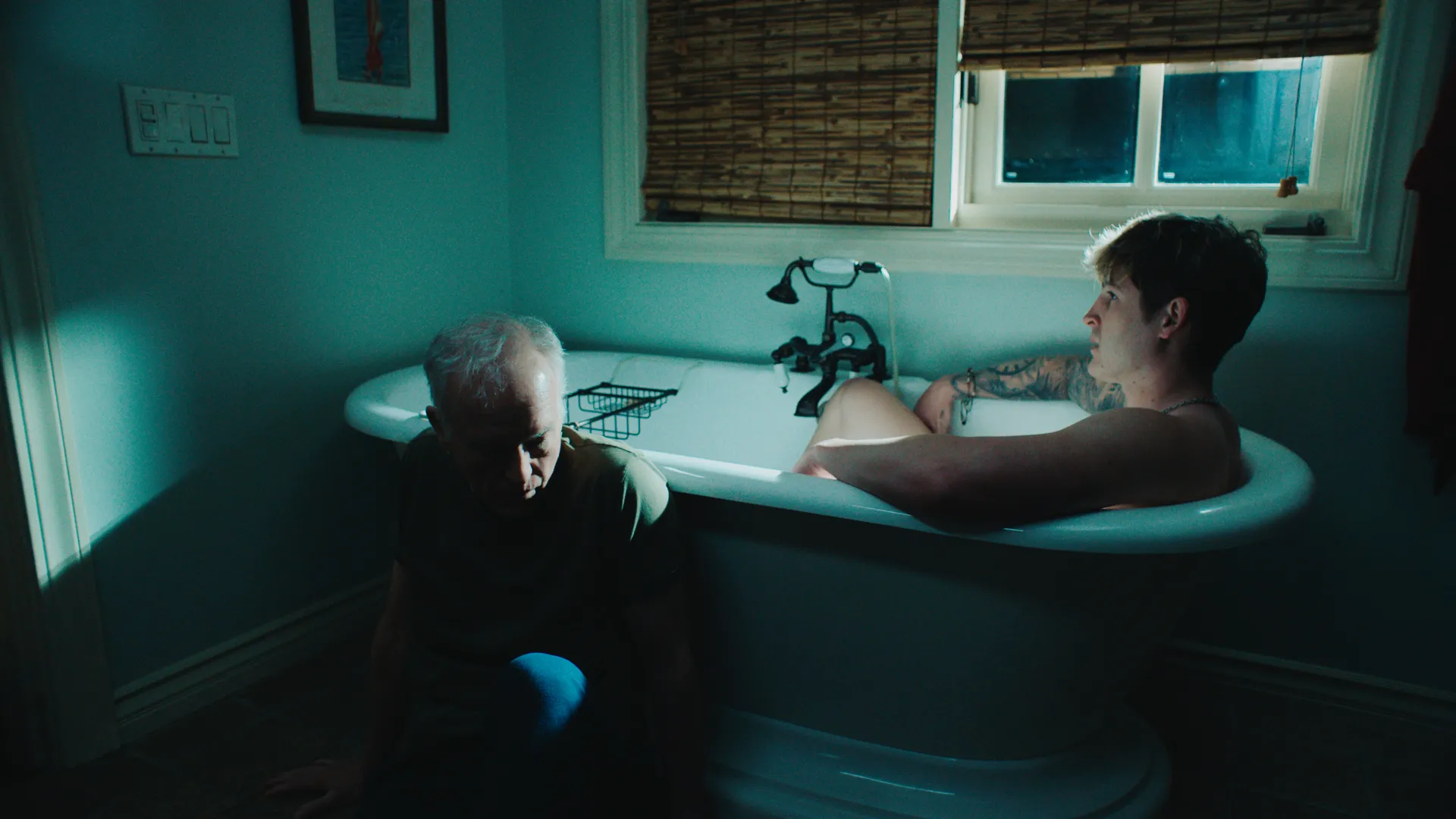
The transformation proves particularly striking given the character’s profession. Aaron has built his livelihood on being desired and controlled simultaneously, a paradox that Moore navigates with surprising nuance. His defensive mechanisms (the aggressive posturing, the calculated vulnerability) become transparent as the night progresses, revealing someone who has perhaps forgotten where performance ends and authentic self begins.
Birney faces the considerably more challenging task of humanizing a character whose very presence on screen might trigger audience revulsion. His Hank operates with the quiet calculation of someone who has spent years rehearsing this moment, yet Birney avoids the trap of making him purely manipulative. There’s genuine neediness here, a pathetic quality that makes the character unsettling rather than simply monstrous. The actor’s measured delivery suggests someone attempting to maintain control over impulses he knows to be destructive.
The dynamic between these men shifts like tectonic plates throughout their extended conversation. Aaron initially holds the perceived power (youth, physical strength, sexual desirability), while Hank possesses information that gradually destabilizes that advantage. Both actors understand that their characters are using revelation as a form of psychological warfare, each attempting to expose the other while protecting their own vulnerabilities.
Cinema as Confessional Booth
Tuttle’s directorial approach reflects an understanding that controversial material requires steady hands and clear vision. The single-location constraint could have felt limiting, yet the director uses the confined space to create genuine claustrophobia. The apartment becomes a kind of secular confessional, where secrets are extracted through technological mediation rather than spiritual absolution.
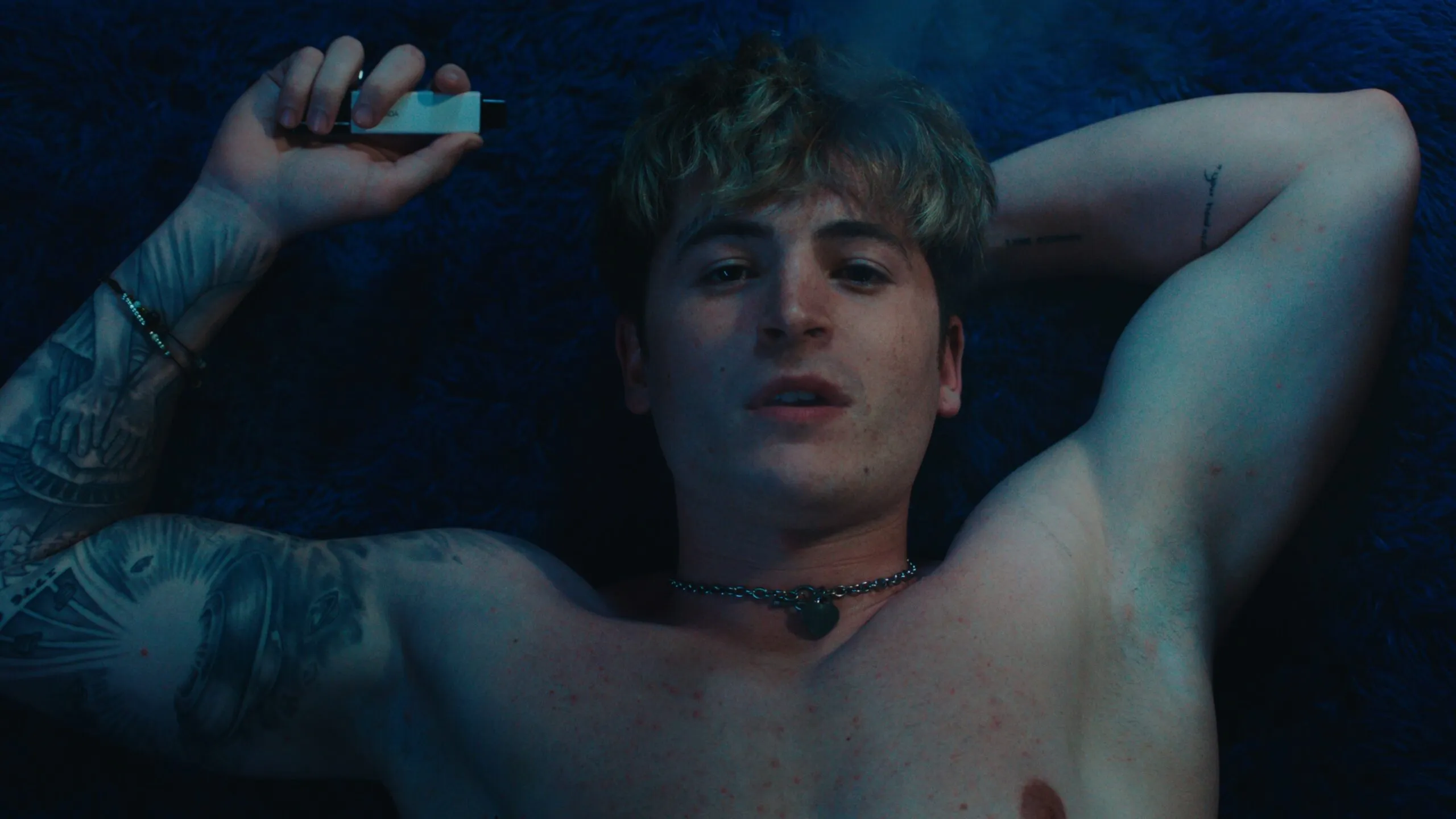
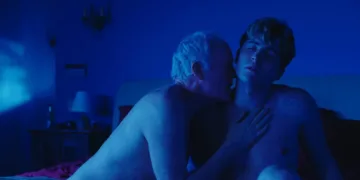
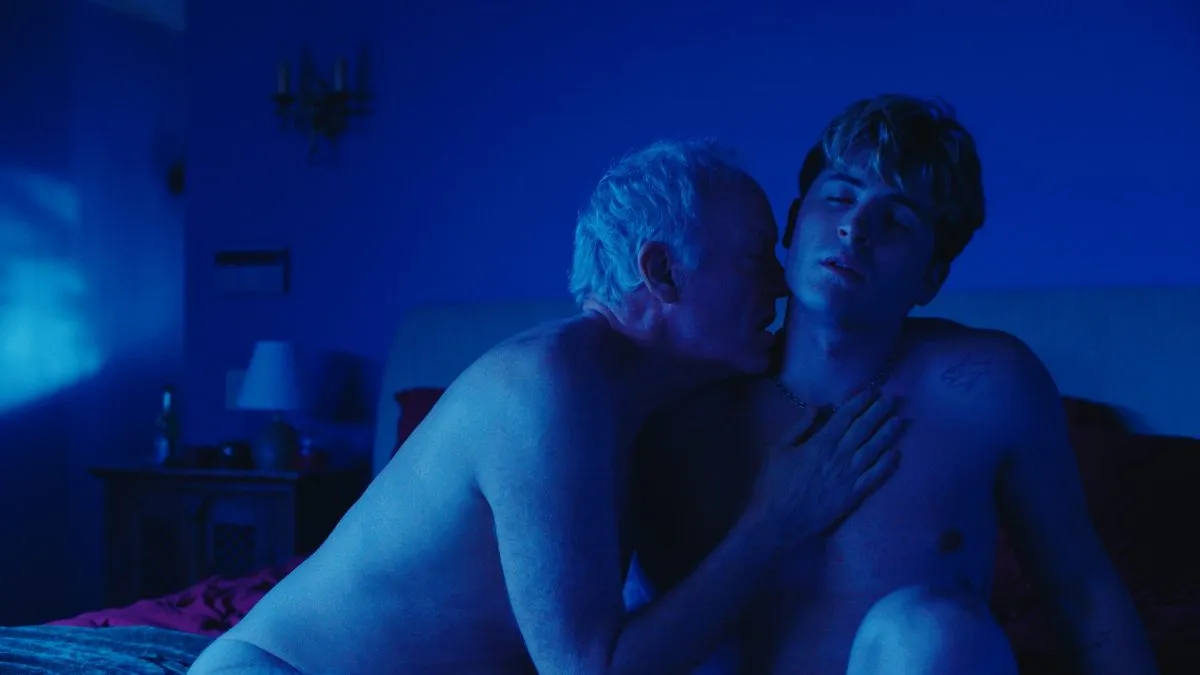
Ryan Jackson-Healy’s cinematography deserves particular attention for its textural sophistication. The contrast between crisp digital imagery and the grainy aesthetic of webcam footage creates visual layers that mirror the characters’ multiple identities. Those blue-tinted night scenes (which give the film its title) bathe the proceedings in an almost supernatural glow, transforming mundane spaces into something approaching the mythic. The lighting choices suggest influence from both film noir and contemporary digital media, a hybrid approach that feels entirely appropriate.
The editing maintains remarkable restraint given the material’s potential for sensationalism. Conversations flow with natural rhythm, allowing tension to build through accumulation rather than manipulation. The three-act structure functions efficiently within the single location, with each revelation serving to deepen rather than simply complicate the central relationship.
Production design embraces the anonymous quality of temporary spaces. This isn’t a home but a stage set rented by the hour, its bland functionality focusing attention on the human drama unfolding within. The presence of recording equipment (Aaron’s familiar territory made strange) adds another layer of performance anxiety to an already charged situation.
Digital Age Morality Plays
“Blue Film” functions as a peculiar species of morality play for the internet age, where traditional concepts of sin and redemption collide with new forms of commodified intimacy. The title itself references the industry term for pornography, yet the film contains remarkably little explicit sexual content. Instead, Tuttle examines the psychological architecture that underlies our contemporary relationship with desire and shame.
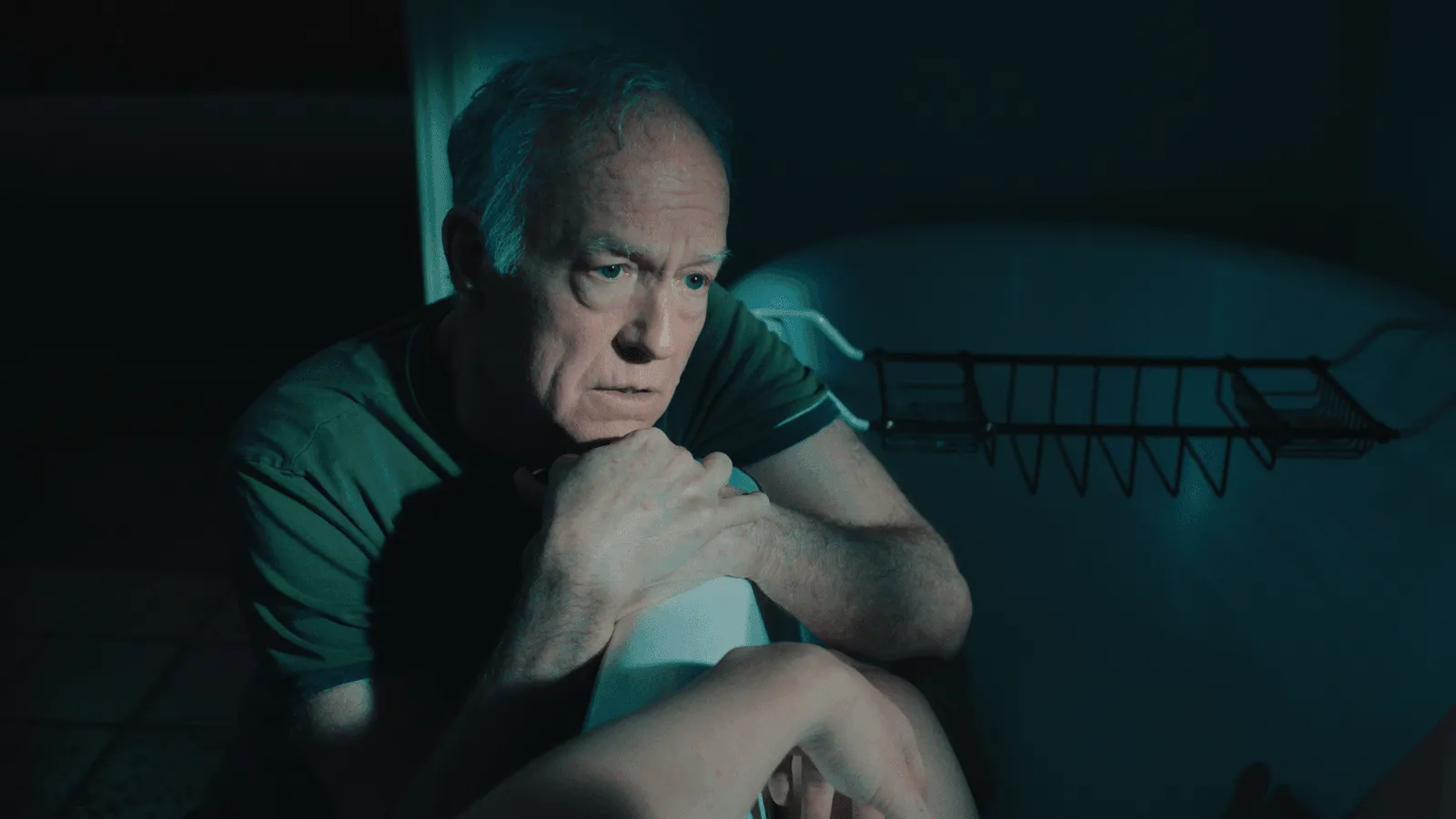
The power dynamics at play extend far beyond the personal, reflecting broader cultural anxieties about authenticity in digital spaces. Aaron’s online persona represents a kind of weaponized vulnerability, turning his own objectification into economic advantage. Yet this reversal of traditional power structures proves fragile when confronted with genuine human connection (however twisted that connection might be).
Religious imagery surfaces sporadically, with Hank’s newfound faith serving as both genuine attempt at redemption and sophisticated rationalization. The film suggests that spiritual seeking might sometimes function as elaborate self-deception, a way of reframing destructive impulses as spiritual struggle. This adds theological complexity to what might otherwise read as simple exploitation narrative.
The treatment of past trauma avoids easy psychological explanations while acknowledging the lasting impact of childhood experiences. Both characters carry damage from their shared history, though they have channeled that damage in radically different directions. Aaron transforms his objectification into empowerment, while Hank’s arrested development has calcified into something considerably more disturbing.
Tuttle’s willingness to examine these themes without providing comfortable moral certainties marks the film as genuinely provocative rather than merely shocking. The questions raised about consent, power, and the nature of desire resist simple answers, forcing viewers to confront their own assumptions about sexuality and morality in contemporary society.
“Blue Film” succeeds precisely because it treats its controversial subject matter with intellectual rigor rather than sensational exploitation. This is challenging cinema that rewards careful attention while demanding emotional resilience from its audience. Tuttle has crafted a debut that announces a filmmaker unafraid of difficult territory, though whether that territory needed exploring remains a question each viewer must answer individually.
“Blue Film” is a drama film that premiered at the Edinburgh International Film Festival on August 15, 2025. The movie was also featured at the 2025 Toronto International Film Festival.
Full Credits
Director: Elliot Tuttle
Writers: Elliot Tuttle
Producers & Executive Producers: Bijan Kazerooni, Will Youmans, Waylon Sall, Adam Kersh, Reed Birney (executive), Eric Kohn (executive)
Cast: Kieron Moore, Reed Birney
Director of Photography (Cinematographer): Ryan Jackson-Healy
Editors: Zach Clark
Composer: Isaac Eiger
The Review
Blue Film
Tuttle's debut demonstrates remarkable maturity in handling genuinely disturbing material, anchored by two committed performances that refuse to sentimentalize their characters' damage. The film's intellectual ambitions occasionally strain against its confined structure, yet this limitation forces a psychological intensity that broader canvases might have diluted. "Blue Film" will alienate many viewers by design, but those willing to engage with its provocations will find a work of genuine artistic merit.
PROS
- Fearless performances from Moore and Birney
- Sophisticated cinematography and visual design
- Thoughtful exploration of digital age sexuality
- Confident direction for debut feature
- Genuine psychological complexity
CONS
- Limited appeal due to controversial subject matter
- Dialogue occasionally becomes overly theatrical
- Single-location constraint feels restrictive at times
- Pacing issues in the film's second half