
























![Kingdom Hearts Collection [I-III] Review](https://gazettely.com/wp-content/uploads/2026/10/Kingdom-Hearts-Collection-I-III-1-360x180.webp "Kingdom Hearts Collection [I-III] Review: KHII Holds Steady as Newer Entries Fluctuate 37")



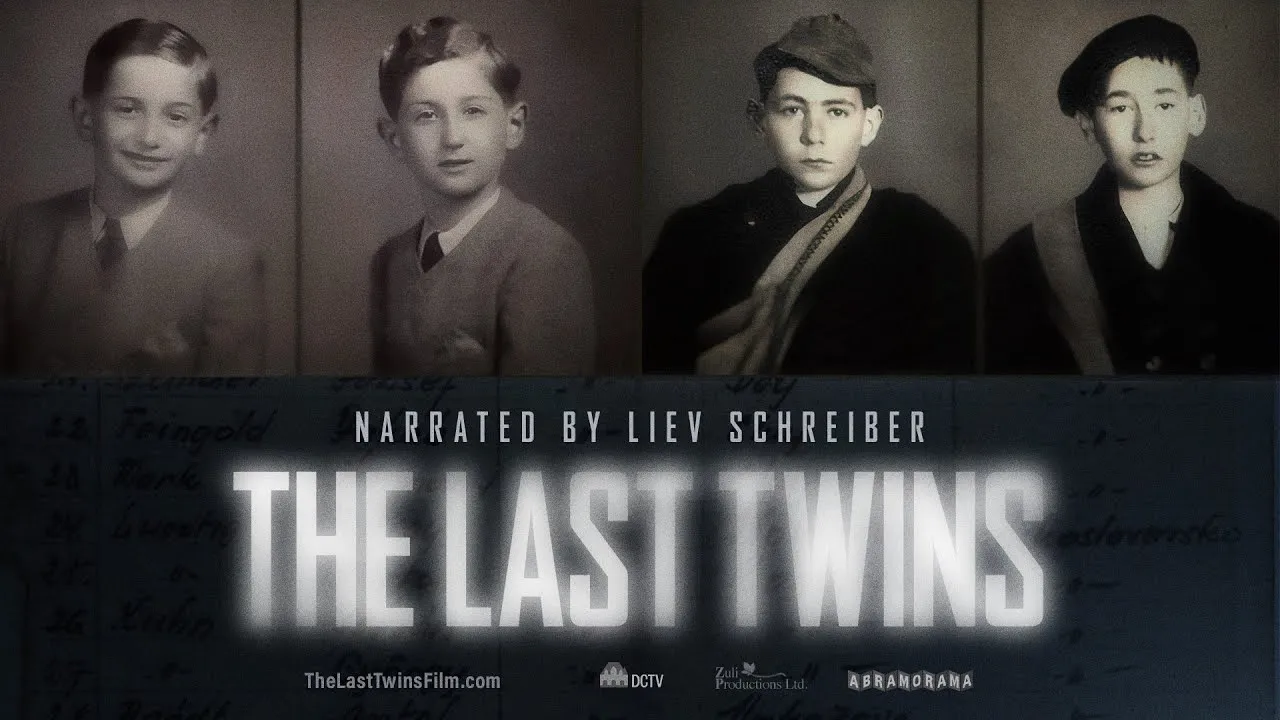

Some of history’s most profound acts of courage unfold without an audience. Such is the case of Erno “Zvi” Spiegel, a man whose story, captured in the documentary The Last Twins, remained a secret even from his own family for nearly four decades.
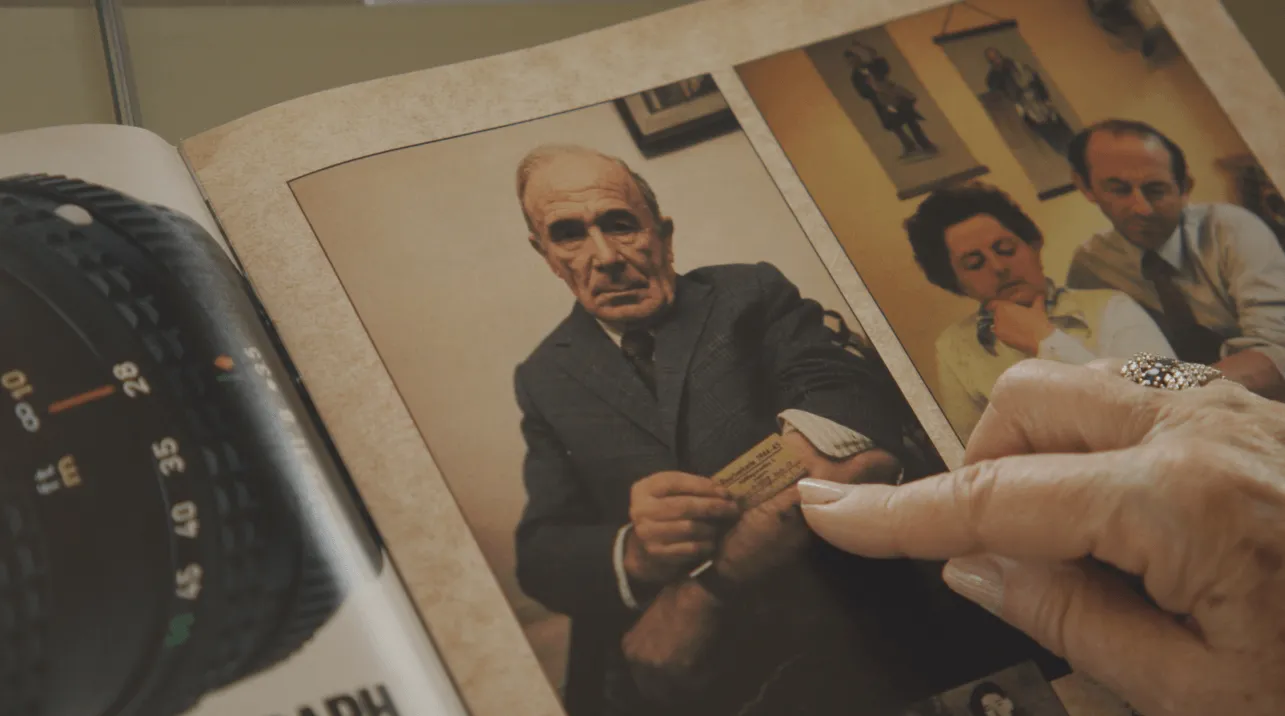
His daughter, Judith Richter, grew up knowing her father was a survivor, but the specifics of his time in Auschwitz were a closed book. That book was unexpectedly opened in 1981, when a chance grocery store purchase of LIFE Magazine revealed her father’s photograph and an account of his role in the camp.
Directors Perri Peltz and Matthew O’Neill wisely frame their film not as another exploration of Josef Mengele’s monstrous experiments, but as an intimate portrait of one man’s quiet, determined effort to shield the innocent from the center of the abyss.
A Small Society Against Annihilation
Spiegel’s position in Auschwitz was a grim paradox. Arriving from Hungary in 1944, he was identified as a twin and assigned by the infamous Dr. Josef Mengele to be the caretaker, or Häftlings-Pfleger, of the boys’ barracks. This horrific assignment was also the children’s only shield from the gas chambers that claimed most other arrivals of their age.
The film makes clear the terrible reality: to survive the initial selection was to be handed over to a man whose scientific curiosity was a license for torture. Within this space of calculated cruelty, Spiegel began a subtle but persistent campaign of resistance rooted in the preservation of dignity. He famously forged documents, identifying non-twin siblings who looked alike as twins, a quick-witted deception that saved them from immediate death.
More than a simple warden, he became a father figure to the dozens of boys in his charge. He established a micro-society built on principles of mutual responsibility, a direct counter-commandment to the camp’s ethos of individual survival at any cost.
He mandated that all food, no matter how scarce, must be shared equally. He spent hours teaching the boys history, geography, and mathematics, an act that insisted they had a future and a world to return to. These lessons were a mental and spiritual fortification against the dehumanization that surrounded them. His heroism was not theatrical; it was the daily, disciplined work of performing decency.
This is seen in his confrontation with another Nazi doctor who had lined the boys up for extermination. Spiegel risked his own life to seek out Mengele—the source of their suffering—to appeal for their lives, successfully getting the order overruled. His care did not end with liberation; he personally led the surviving children on a brutal winter trek from Poland back to Hungary, completing his promise to them long after their captors had fled.
The Architecture of Memory
Peltz and O’Neill construct the film with a classical documentary approach, allowing the weight of the subject matter to dictate the form. The structure rests on a foundation of archival material, firsthand interviews, and the understated narration of Liev Schreiber.
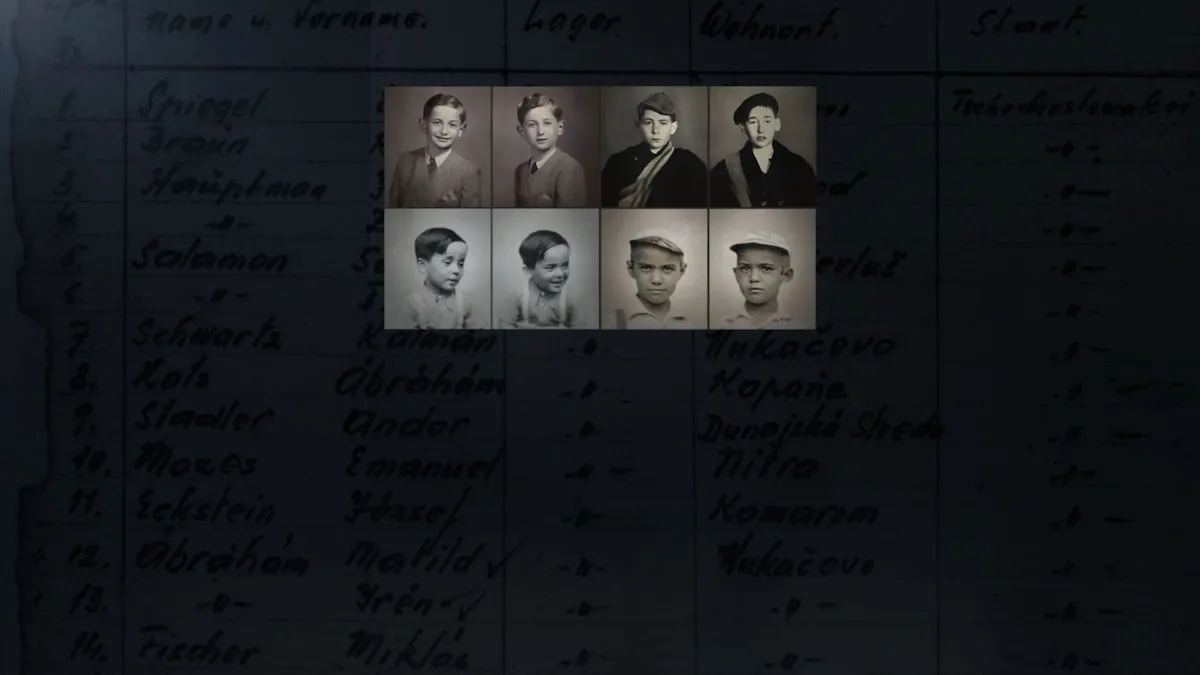
The directors give new context to familiar, haunting footage of the camp’s liberation, suggesting the small children seen with their arms raised to show their tattoos are the very subjects of this story. The film gains a deep layer of authenticity by incorporating audio of Spiegel’s own testimony, given at a trial for Mengele held in absentia, and by showing the meticulous lists of the children’s names he kept.
These artifacts make his presence felt directly. Schreiber’s somber delivery provides a steady through-line, but the film’s emotional force comes from the faces and voices of the men Spiegel protected.
Now in their nineties, filmed shortly before many of them passed away, their testimony is both heartbreaking and essential. The temporal distance allows for reflection not just on the trauma, but on the full shape of the lives they managed to build afterward.
The interviews, conducted in Hebrew, Hungarian, and English, paint a picture of a scattered diaspora united by a shared memory. The filmmakers’ confidence in their material is evident in their restrained style. They focus on the human cost and the spirit of resilience rather than lingering on graphic details.
The story of Ephraim Reichenberg, who speaks with a mechanical voice box because of experiments on his throat, conveys the depth of the trauma without needing to depict the violent act itself. This straightforward method proves effective, as no cinematic flourish could be more powerful than the direct accounts of the witnesses.
The Ultimate Refutation
The film’s final message is one of life as the most powerful answer to an ideology of death. It moves from the past to the present, showing how the survivors went on to build meaningful careers and families, many of them in the new state of Israel.
The reunion scenes, showing Spiegel reconnecting with the men he saved, are deeply affecting, closing a circle of memory and gratitude after decades of silence. The act of the film itself is a form of breaking that silence, giving voice to a story that was deliberately hidden, both by a man who did not see himself as a hero and by a post-war society often hesitant to look into the abyss.
The most impactful statement comes from the images of the survivors with their own children and grandchildren, culminating in a large family gathering at the Wailing Wall. These moments need no narration. They are a living, breathing testament to survival. Spiegel’s true legacy is not simply the boys who walked out of Auschwitz, but the generations that followed. The Last Twins is a powerful document of hope’s endurance.
“The Last Twins” is a documentary film that premiered in select theaters on June 6, 2025. It tells the story of Erno “Zvi” Spiegel, a Holocaust survivor who, as a prisoner at Auschwitz, risked his life to protect dozens of young twins targeted by Dr. Josef Mengele’s horrific experiments.
Full Credits
Director: Perri Peltz, Matthew O’Neill
Writer: Patrick McMahon
Producers: Tom Denison, Perri Peltz, Matthew O’Neill, Yuval Lifshitz, Ben Shani
Cast: Liev Schreiber (Narrator), László Kiss, Ephraim Reichenberg, Mordechai and Yoel Alon, Peter Somoygi, Tom Simon, György Kun, Judith Richter
Editors: Patrick McMahon
Composer: Jonathan Zalben
The Review
The Last Twins
The Last Twins is a vital and deeply moving documentary that brings a forgotten story of profound courage to light. Its power lies in its straightforward, respectful approach, allowing the incredible testimony of the last living witnesses to stand at the forefront. By focusing on the quiet, determined humanity of Erno Spiegel instead of the spectacle of horror, the film offers a profound meditation on resistance, hope, and the enduring power of a life lived well. It is a necessary document that honors both its hero and the community he fought to preserve.
PROS
- Shines a light on a powerful and little-known true story of heroism.
- Centered on the moving, direct testimony of the survivors themselves.
- Focuses on themes of resilience and humanity over graphic depictions of horror.
- Features respectful, understated filmmaking that allows the story's weight to resonate.
CONS
- The conventional documentary style may feel stylistically safe to some viewers.
- Its subject matter is emotionally intense and can be difficult to watch.







