





















![Kingdom Hearts Collection [I-III] Review](https://gazettely.com/wp-content/uploads/2026/10/Kingdom-Hearts-Collection-I-III-1-360x180.webp "Kingdom Hearts Collection [I-III] Review: KHII Holds Steady as Newer Entries Fluctuate 37")



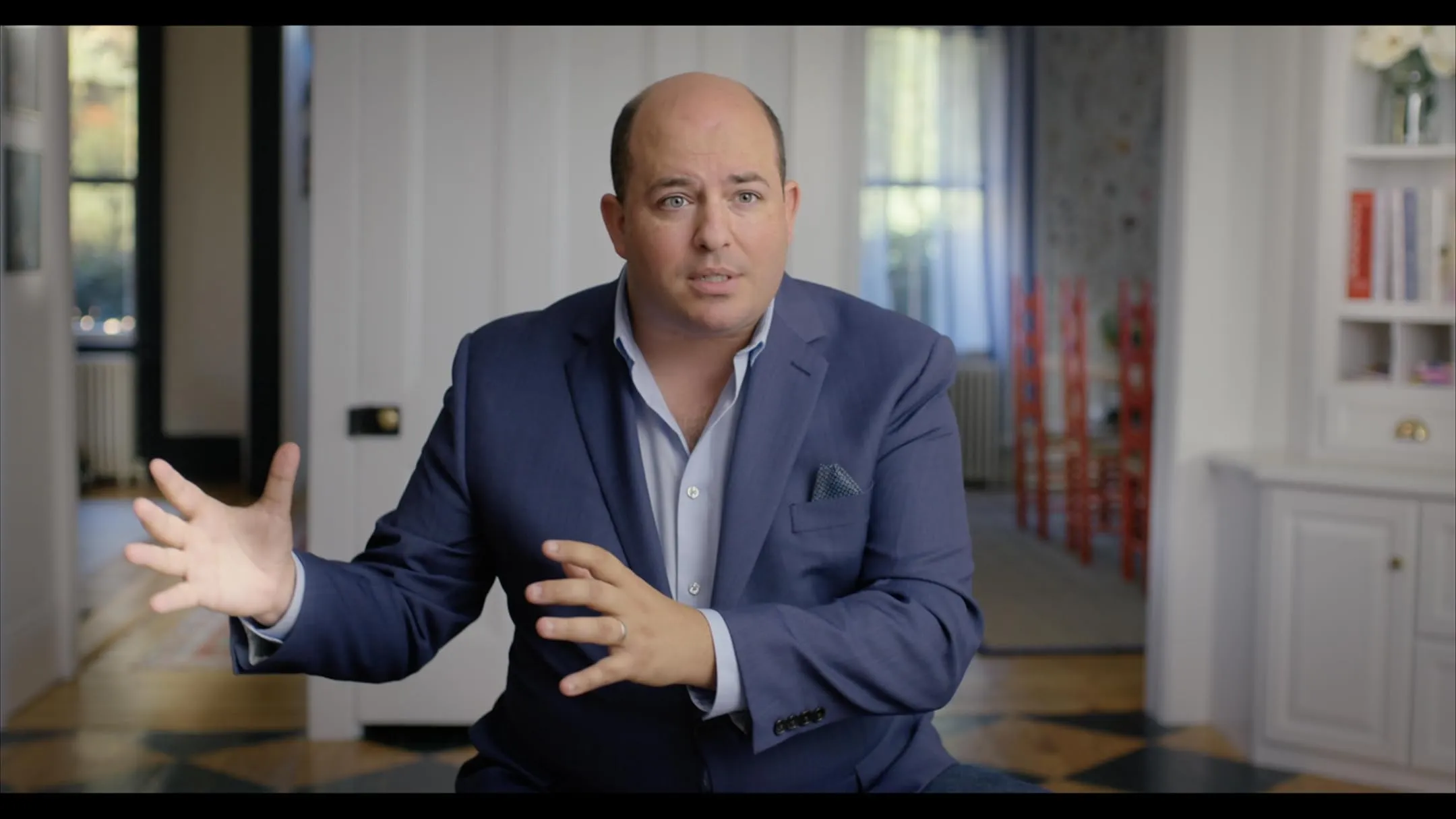

Andrew Goldberg’s political documentary White with Fear functions less as a film and more as an autopsy. With the detached precision of a medical examiner, it lays bare the anatomy of a specific, enduring strategy in American political life.
Its central thesis is as blunt as a noir detective’s opening line: for more than fifty years, political and media operatives have deliberately manufactured and weaponized the racial anxieties of white Americans to consolidate power. Goldberg frames this not as a collection of unfortunate events but as a meticulously maintained playbook, passed down through generations of power brokers.
The film’s camera acts as an unblinking eye, tracing this phenomenon from the smoke-filled rooms of the Nixon administration to the glaring floodlights of modern political rallies. It is a stark, often grim examination of how division is not just a byproduct of politics, but its very engine.
The Blueprint of Grievance
The film’s narrative structure is a clean, chronological incision, beginning with Richard Nixon’s presidency. Goldberg posits the infamous “Southern Strategy” as the foundational architecture for the entire enterprise, dissecting the coded lexicon—”law and order,” “thug,” “gangbanger”—as a tool engineered to resonate with the anxieties of a white electorate.
The camera lingers on archival footage from the era, the grainy, oversaturated images of campaign ads acquiring a kind of ghostly weight, their once-subtle messages now screamingly obvious in retrospect. The editing choices here are deliberate, often juxtaposing a politician’s placid public face with the chaotic results of their rhetoric, creating a palpable sense of unease.
From this origin point, the documentary follows a direct, almost deterministic path through the decades. It meticulously charts the evolution of the playbook, showing how it was refined by right-wing media outlets that served as the operational bridge between political eras.
This is where the film presents the “white fear industrial complex,” a self-perpetuating machine where ratings, power, and racial animus feed one another. The film’s final act lands squarely on Donald Trump. Goldberg argues he represents not a deviation but a loud and brutish culmination.
The “dog whistle,” a classic tool of misdirection, was amplified into a train’s piercing shriek, transforming subtext into the main text of a political movement. The film stitches together a montage of manufactured crises—the “birther” conspiracy, Critical Race Theory as a national security threat, the phantom border “invasion”—presenting them as modern iterations of the same core tactic. The film’s structural power lies in its relentless compilation, arranging decades of disparate events into a single, chillingly coherent narrative of a machine feeding on fear.
The Unreliable Narrators
A documentary’s soul often resides in its subjects, and White with Fear assembles a cast worthy of a psychological thriller. The film’s most arresting sequences feature the architects of the strategy itself. Former Republican operatives and media figures like Steve Bannon and Stuart Stevens sit for interviews shot with high-contrast, expressionistic lighting that carves their faces from the darkness.
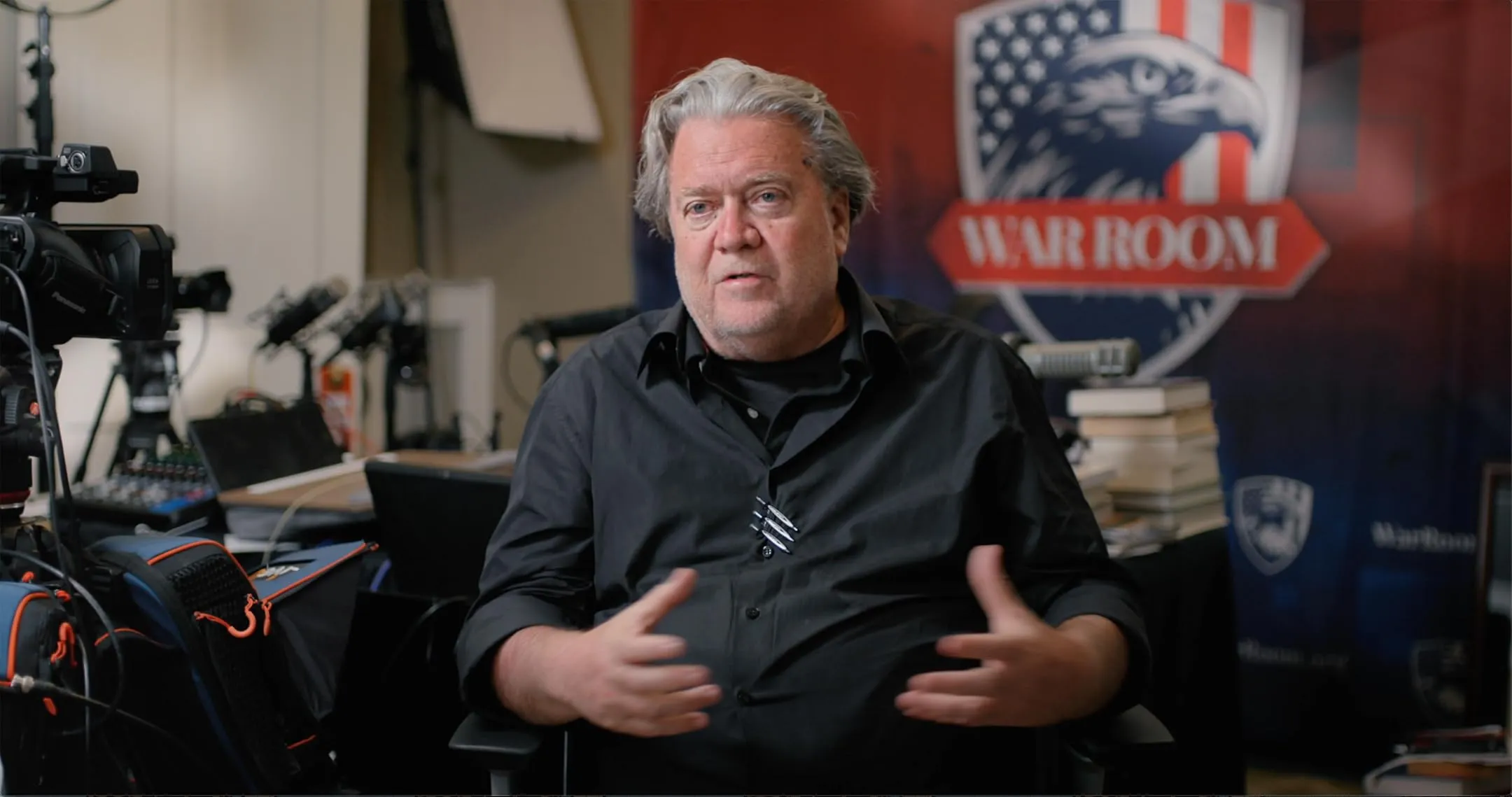
This is not the flat, even lighting of a typical news segment; it is classic chiaroscuro, rendering their motives as ambiguous as their shadows. One subject leans into the camera with a conspiratorial smirk; another appears genuinely haunted by their own reflection.
These are not simple testimonies; they function as confessionals from morally compromised figures, and the film forces the viewer into the role of interrogator. Is this a genuine act of bearing witness, a warning from a reformed sinner? Or is it the final, self-serving performance of an unreliable narrator, a calculated act of absolution that doubles as a boast?
The philosophical implications are unsettling, raising questions of free will versus systemic determinism. When one operative shrugs and suggests, “Hey, that’s politics,” he is not just excusing his actions but erasing his own agency.
These insiders are cross-examined by the film’s other voices: journalists, historians, and political opponents like Hillary Clinton, who serve as the story’s conscience. Director Andrew Goldberg masterfully intercuts these interviews with a barrage of archival evidence.
The editing rhythm feels prosecutorial, using a jarring jump-cut to expose a verbal contradiction or a slow dissolve to connect a modern face to a past transgression. The technique constantly challenges the words of the confessors with the indelible record of their actions.
Diagnosis of an Unresolved Case
As a diagnostic tool, White with Fear is a resounding success. It synthesizes a half-century of complex political history into a lucid, accessible, and deeply unsettling primer. The argument is presented with the force and clarity of a closing statement from a prosecutor who knows they have the goods. Yet, for all its diagnostic power, the film offers no prescription.

It is the cinematic equivalent of a detective solving the case only to find the killer is untouchable, the corruption too deeply embedded in the system to be purged. It meticulously documents the disease but leaves the patient on the operating table, providing no clear path toward a cure. One feels the cold truth of the diagnosis without the comfort of a possible remedy.
This raises the existential question of the film’s intended audience. Is it a sermon for the choir, a validation for those already convinced of the sickness? It seems unlikely to penetrate the defenses of those who subscribe to the very narratives it deconstructs.
The film’s slick packaging and brisk pace make it an easy watch, but this very accessibility may inadvertently soften its punch. The film’s most telling silence, a true structural weakness, is its marginal use of non-white voices. For a work centered on the profound impacts of weaponized racism, the subjects of this strategy are given surprisingly little screen time.
This omission risks recentering the narrative on the white perpetrators and their internal moral struggles, turning a story of systemic oppression into a psychodrama about the oppressors’ supposed angst. It is a film that identifies the mechanics of the crime with brilliant clarity but leaves the victim’s full testimony largely unheard.
“White with Fear” is a documentary film directed by Andrew Goldberg. It explores the decades-long strategy of politicians and media outlets to amplify racial divisions and white victimization narratives for power and profit. The film premiered at the Chelsea Film Festival in October 2024 and was released on Video On Demand (VOD) platforms on June 3, 2025.
Full Credits
Director: Andrew Goldberg
Writers: Andrew Goldberg
Producers: Andrew Goldberg, Diana Robinson
Executive Producers: Eric Ward (Co-Producer)
Cast: Steve Bannon, Hillary Clinton, Rick Gates, Eddie S. Glaude Jr., Ian Haney López, Jean Guerrero, Tim Miller, Stuart Stevens
Director of Photography (Cinematographer): Robert Hanna
Editors: Diana Robinson
The Review
White with Fear
White with Fear is a meticulously crafted autopsy of a political strategy, assembling its evidence with the chilling precision of a seasoned prosecutor. It succeeds brilliantly as a historical diagnosis, tracing the lineage of manufactured division with an unflinching gaze. The film's power is undeniable, yet its silence on solutions and its omission of key perspectives leave a void at its center. It solves the case but offers no justice, leaving the audience in the cold, unsettling knowledge that the perpetrators remain at large and the system unchanged.
PROS
- Presents a clear, chronological history of a complex political strategy.
- Masterfully weaves insider interviews with sharp archival footage.
- Functions as an excellent and accessible primer on its subject matter.
- Employs precise editing and effective visual storytelling to build its case.
CONS
- Offers a potent critique without exploring any potential remedies or paths forward.
- Features a significant lack of non-white perspectives, whose voices are central to the topic.
- Can leave the viewer with a sense of hopelessness or cynicism.
- The "confessional" interviews from insiders can feel self-serving.