













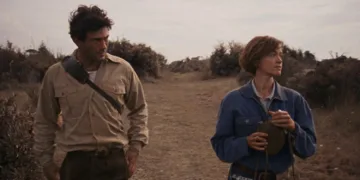











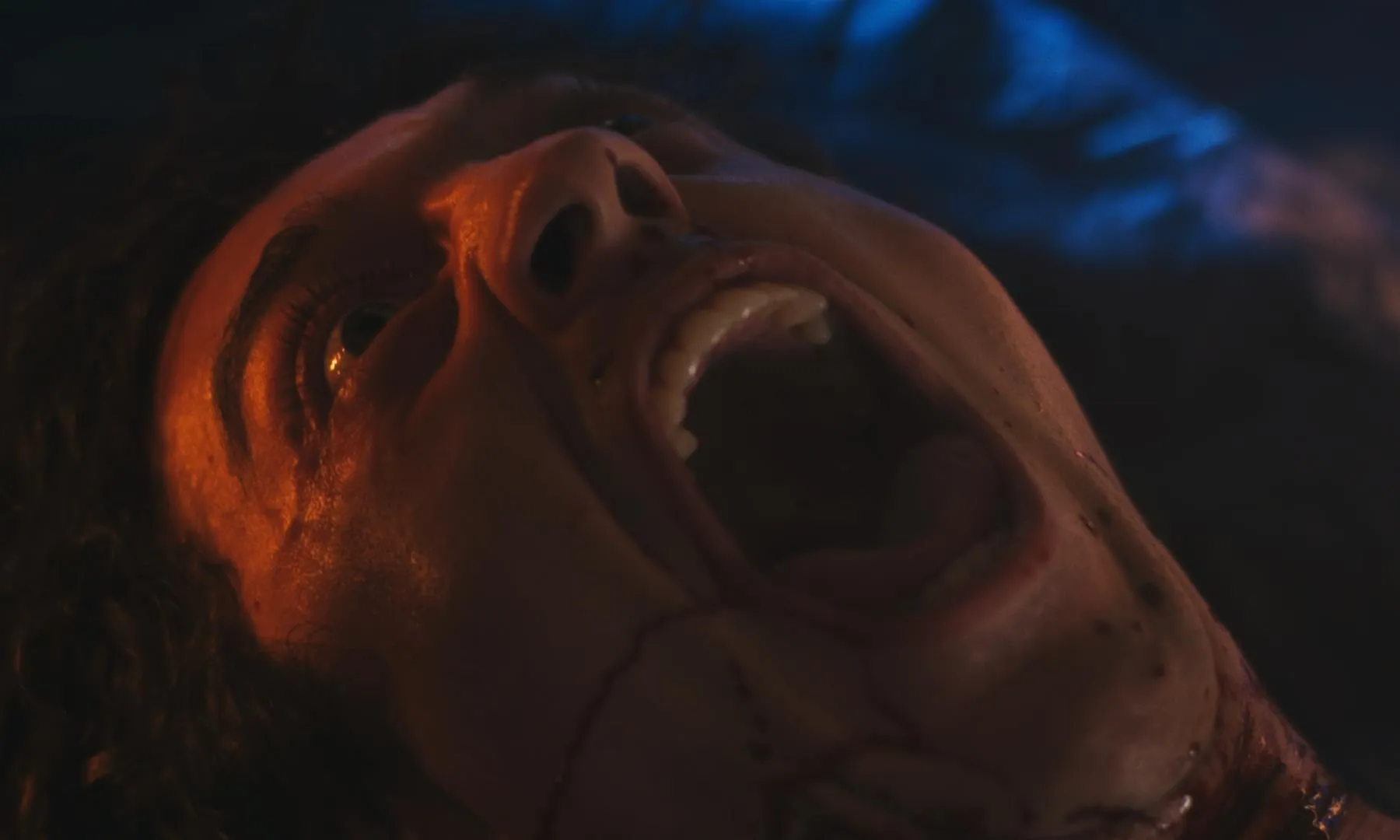

Writer-director Andrew Bell’s debut feature, Bleeding, enters a cinematic landscape littered with vampire stories. Yet it sidesteps gothic castles and romantic anti-heroes for something far grimier. The film presents a world where vampirism is not a curse but a commodity; their blood is a narcotic, harvested and sold on the street.
Here we find cousins Eric and Sean, young men anchored to a reality of rust and decay. Eric is haunted by the death of his brother, another casualty of the drug, while Sean slides deeper into its world as a user and dealer. When a transaction goes wrong, Sean finds himself in debt to a dangerous supplier, pulling both cousins into a desperate scheme that forces them to confront what it truly means to be a monster.
Monsters as a Natural Resource
The vampire-as-addict allegory is well-worn territory, a narrative shortcut the horror genre has used for decades to give its supernatural threats a relatable, real-world texture. Bleeding commits to the premise by treating it less as a metaphor and more as a grimly logical system of exploitation. It pushes past the simple internal struggle of addiction to build a world around its economy.
The film’s most interesting narrative choice is its positioning of the vampires themselves. They are not predators stalking from the shadows; they are livestock, a natural resource to be tapped. This small but significant shift in perspective changes the entire dynamic of the story. As a hunted and drained commodity, they become figures of profound sympathy, their monstrosity eclipsed by the methodical cruelty of their human harvesters.
This framework allows the story to find its horror not in fangs but in the casual viciousness of the supply chain. The true monstrousness is found in the actions of the dealers, the desperation of the users, and the quiet complicity of a society that allows this to happen.
The film’s setting, a bleak and isolated pocket of the Pacific Northwest, is more than just a backdrop. It is a mirror to the characters’ inner lives, a place where hope has been strip-mined and opportunities have decayed. Bell’s direction argues that the most terrifying monsters are the ones created by desperation and greed, and that the system itself is the most fearsome predator of all.
The Chemistry of Codependence
A film built on such a bleak foundation requires performances that can ground its themes in human reality, preventing the social commentary from becoming a sterile lecture. Bleeding finds its anchor in the central relationship between its leads, whose work gives the story its bruised and beating heart.
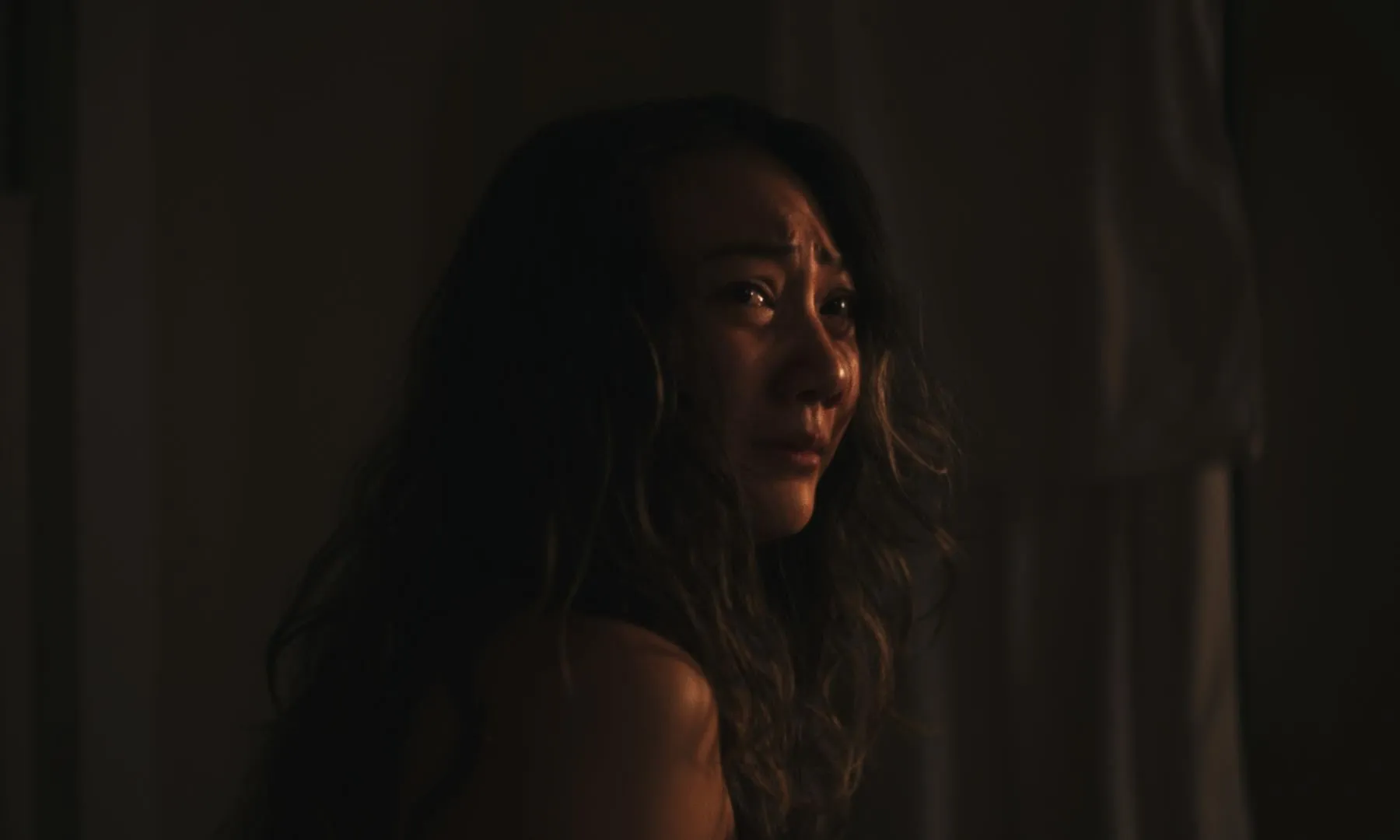
John R. Howley as Eric and Jasper Jones as Sean build a dynamic that feels believably frayed and authentic. Their chemistry is one of shared history and mutual exasperation, two people bound by blood and a stark lack of better options.
Howley gives Eric a core of wounded decency, effectively portraying a young man trying to steer toward a moral high ground that barely exists in his world. His struggle is quiet, conveyed in hesitant glances and a physical weariness that speaks to the weight of his grief and responsibility. In contrast, Jasper Jones gives Sean a raw, seething energy that feels both dangerous and deeply sad.
His performance captures the frantic desperation of an addict, but it also reveals the self-loathing beneath the bravado, making him a compellingly tragic figure. Their codependence is the engine of the plot, a toxic bond that neither can bring himself to sever.
The narrative is given its primary catalyst with the introduction of Sara, the captive vampire played by Tori Wong. It is a difficult role, requiring a balance between menace and vulnerability, and Wong navigates it with skill. She makes Sara’s situation terrifyingly real, forcing the audience and the characters to see her as a person even when her instincts are predatory.
She is the embodiment of the film’s central question, a figure whose humanity is being violently stripped away. In a smaller but impactful role, Jay Dunn appears as Sean’s father, a figure whose terrifying rage feels like another symptom of this broken world.
An Ambitious Debut, Dimly Lit
For a debut feature, Bleeding shows a clear confidence in its ideas and a willingness to prioritize thematic depth over easy scares. Andrew Bell constructs a story that is more interested in its characters’ moral decay than in conventional horror, and for much of the runtime, this approach works.
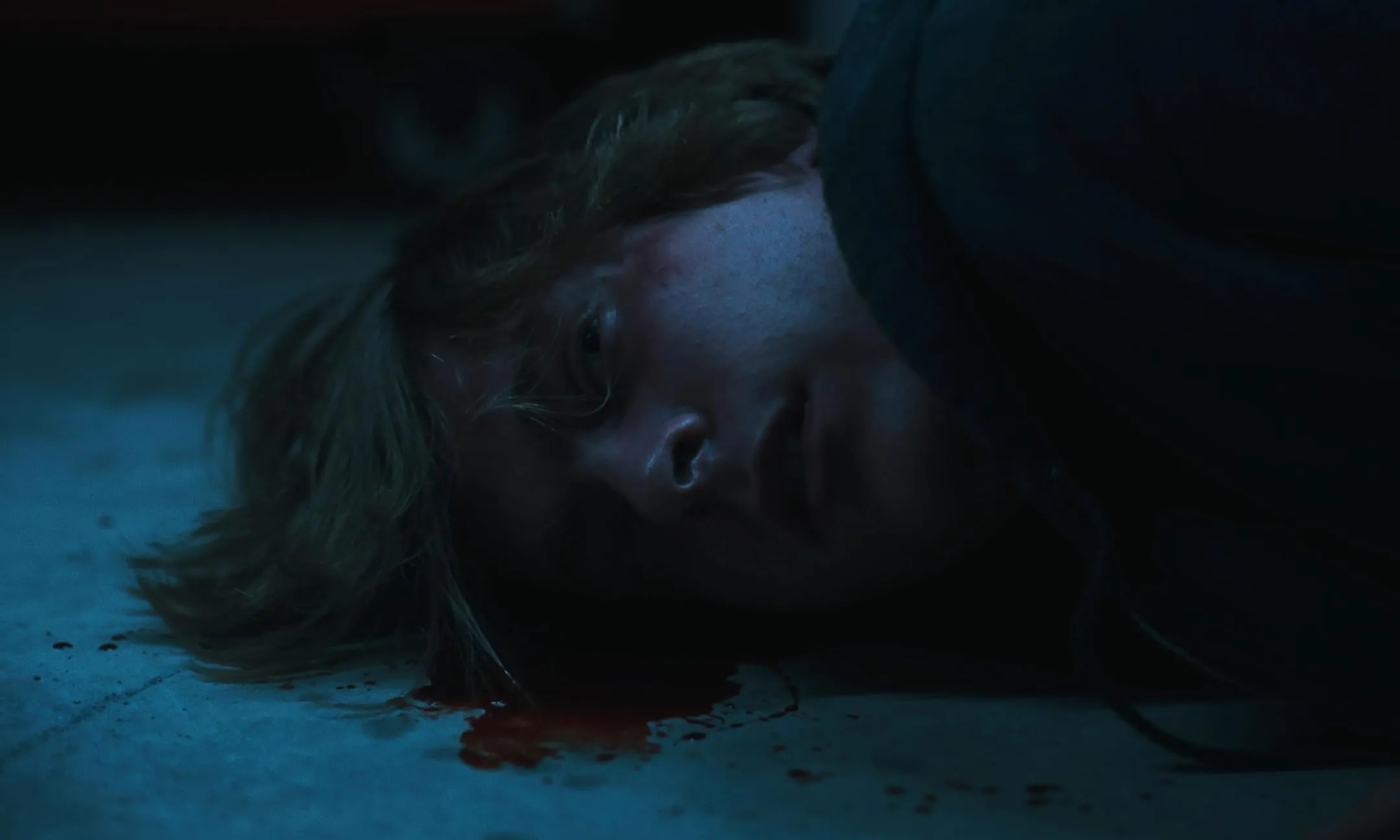
The commitment to a grim, atmospheric tone is effective, using its dreary locations to create a palpable sense of confinement and hopelessness. That commitment, however, appears to extend to the lighting department with a bit too much enthusiasm. Many scenes are so poorly lit they obscure key character moments and render action sequences incoherent, a technical flaw that moves from atmospheric to simply frustrating.
The script also suffers from structural issues that keep it from fully realizing its potential. The pacing frequently slackens, with meandering scenes that dissipate the tension the film otherwise works hard to build. A crime subplot involving the main dealer feels underdeveloped and generic, lacking the emotional weight of the central character drama.
These are common pitfalls for ambitious independent films, where the reach of the concept can exceed the grasp of the execution. The film’s execution does not always match its conceptual power, but its potent central theme, harrowing tone, and excellent lead performances make it a memorable piece of horror. It successfully finds its terror not in the supernatural, but in the quiet, grinding desperation of its characters.
“Bleeding” is a horror-drama film released on Video On Demand (VOD) platforms on June 10, 2025. It had its world premiere at Grimmfest 2024 on October 6, 2024, in the United Kingdom.
Full Credits
Director: Andrew Bell
Writers: Andrew Bell
Producers: Andrew Bell, Kenneth F. Green, Nicholas Santos, Bofan Zhang
Cast: John R. Howley, Jasper Jones, Jay Dunn, Tori Wong, Chloe Sirene, Josh Krol, Michael King, Kourtney Kelly, Jonathan Biver, Mark Diaco, Ryan Genz, Frank Ippolito, Jayda Jones, Josh Karle, Christian Keller
Director of Photography (Cinematographer): Daniel Cho
The Review
Bleeding
Bleeding is a conceptually ambitious debut that is anchored by excellent, raw performances from its young cast. Its transposition of the vampire myth into a grim narrative about addiction and exploitation is potent and thought-provoking. The film’s power is unfortunately diluted by technical shortcomings, including persistently dark lighting and an uneven pace that hampers its momentum. It remains a worthwhile watch for its thematic weight and the strength of its central character drama, even if the execution is imperfect.
PROS
- Excellent and authentic lead performances from John R. Howley and Jasper Jones.
- A compelling and dark central allegory for drug addiction and exploitation.
- The sympathetic and unique portrayal of vampires as a harvested resource.
- An effective, bleak atmosphere that enhances the film's grim tone.
CONS
- Poor lighting that frequently obscures the on-screen action.
- Uneven pacing, with some scenes that feel stretched and unnecessary.
- An underdeveloped crime subplot that lacks emotional weight.