



























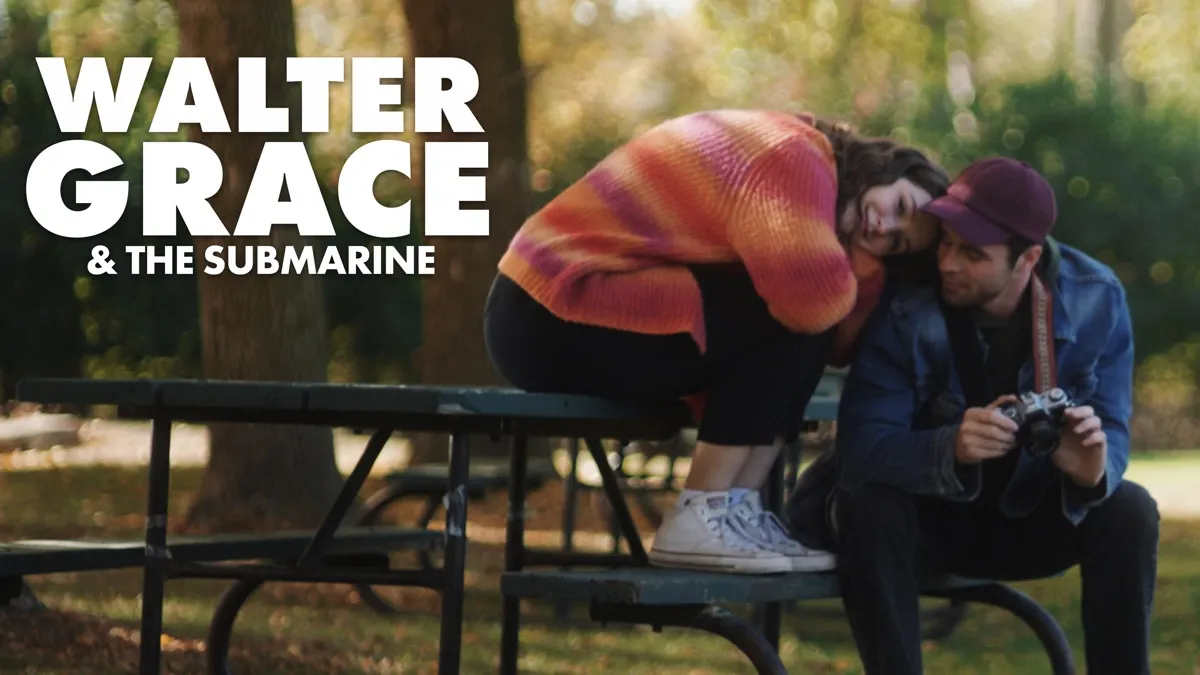

Some stories grab you with a premise that’s both simple and emotionally loaded. Noah Bashore’s debut feature, Walter, Grace & The Submarine, does just that. It poses a familiar question with a sharp, modern edge: what do you do when you meet someone wonderful, but your time together has a firm expiration date?
The film introduces us to Walter (Kyle Patrick), a lonely newcomer to Grand Rapids, Michigan, and Grace (Jessie Carl), a woman just two weeks away from moving across the country. They connect, as many do now, through a dating app, beginning a countdown clock on a relationship that has barely started.
Like Richard Linklater’s Before Sunrise, the story is built on the bittersweet tension of a fleeting connection. Bashore immediately establishes an intimate, character-focused atmosphere where the city of Grand Rapids itself feels like a silent observer to their brief, delicate romance. It’s a quiet film that promises not grand gestures, but small, authentic moments.
Grand Rapids’ Quiet Heartbeat
In many films, the setting is just wallpaper; in Walter, Grace & The Submarine, the city of Grand Rapids is a fundamental piece of the narrative architecture. The film avoids generic cityscapes, instead grounding its story in a tangible reality with specific, recognizable locations like the illuminated Blue Bridge or the local bar, The Pyramid Scheme.
For Walter, a newcomer, the city is an unknown territory he explores only through Grace’s guidance, making his emotional journey synonymous with his physical one. For Grace, these same streets are imbued with memory and the tinge of farewell, turning every shared walk into a quiet act of saying goodbye.
This deep integration of place and character is a technique often perfected in narrative-heavy games. Exploring the meticulously crafted setting of Arcadia Bay in Life is Strange, for example, creates an intimate bond between the player and the environment. Bashore achieves a similar effect cinematically.
The filmmaking masterfully creates a “city of two” atmosphere, frequently isolating the couple to make their brief romance feel like a secret, magical world. This is enhanced by the film’s patient and observant visual language. Cinematographer Rich Tran utilizes what are known as “pillow shots,” a term from the work of Japanese director Yasujirō Ozu.
These are brief, transitional shots of scenery—a building, a street corner, a quiet park—that serve as visual punctuation. They regulate the film’s gentle pacing, giving the audience a moment to breathe and absorb the emotional weight of a scene. They allow the city’s quiet mood to seep into the story, making Grand Rapids not just a location, but a silent, empathetic participant in the couple’s fleeting moment together.
An Awkward, Authentic Connection
A romance film lives or dies on the chemistry of its leads, and this film succeeds because the connection between Kyle Patrick and Jessie Carl feels completely genuine. Their performances are grounded and natural, making it easy for an audience to invest in their story.

The characters themselves are drawn with relatable complexity. Walter is more than just a lonely guy; he carries the weight of a peculiar family history involving his father’s near-drowning in a homemade submarine, a backstory that informs his gentle awkwardness and deep desire for a meaningful connection. Grace is a woman in profound flux.
As a recent divorcée who is also exploring her bisexuality and preparing to leave town, her presence on a dating app speaks to a deeply human, if contradictory, impulse: a search for a final, meaningful moment before a complete life reset.
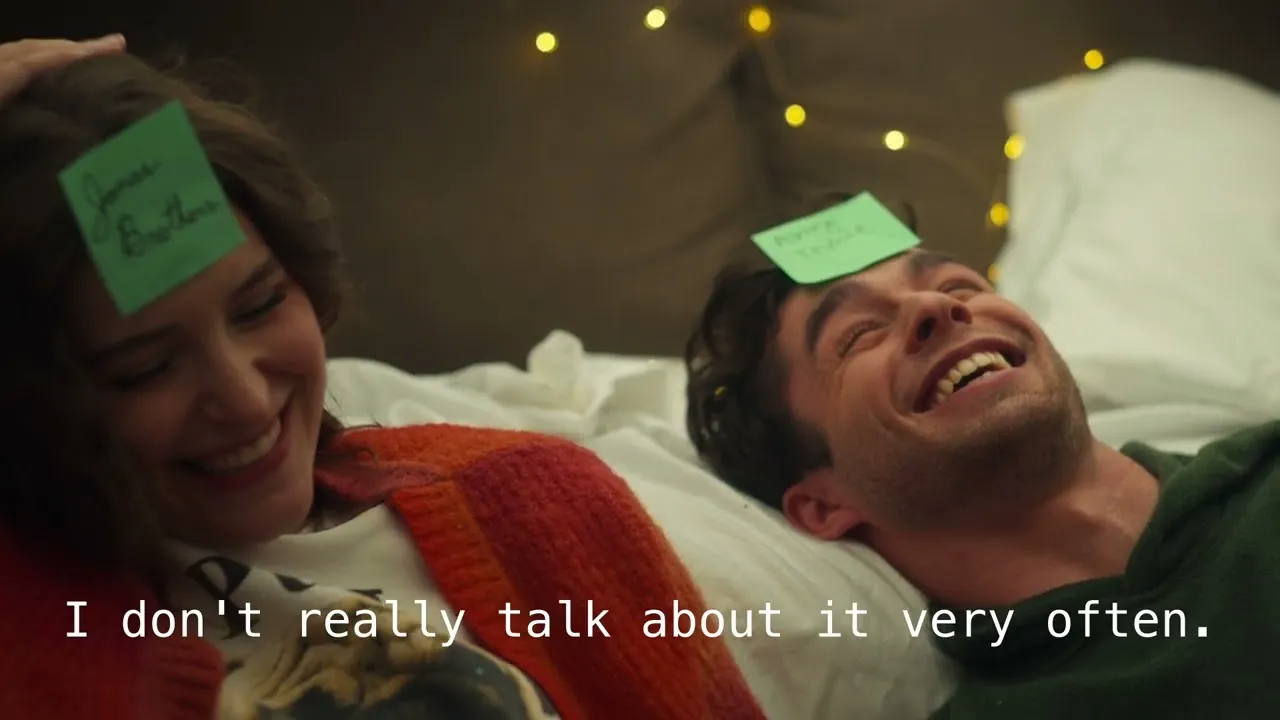
The script’s commitment to naturalism is its greatest strength. It bypasses polished, witty banter for something far more realistic and affecting. Their first date is a masterclass in this approach, filled with the hesitant questions, gentle fumbling, and comfortable silences that mark real-life encounters.
This dedication to authentic interaction feels akin to the design philosophy of games like Night in the Woods, which find profundity not in dramatic plot points but in the small, seemingly mundane conversations that reveal deep truths about its characters.
By allowing the dialogue to be imperfect, Bashore makes the bond between Walter and Grace feel earned. We see them navigate the initial awkwardness and build a rapport from the ground up. Their emotional arc is defined by this central conflict: two people building a sincere, powerful attachment while the sand in the hourglass runs out, steering them directly toward an inevitable and heartfelt separation.
Refining the Mumblecore Playbook
For a debut feature, Walter, Grace & The Submarine shows remarkable directorial restraint and confidence. Where many first-time filmmakers might employ flashy camera work to make their mark, Noah Bashore trusts his story and his actors, allowing the film’s power to emerge from stillness. This patience is the film’s defining stylistic choice.
The cinematography by Rich Tran is deliberate and emotionally intelligent. Consider an early shot where Walter stands alone on a bridge, small in the frame against the urban landscape. The static, wide composition wordlessly conveys his overwhelming loneliness and vulnerability far more effectively than any dialogue could.
The film operates within the mumblecore subgenre, but it elevates the style’s conventions. Mumblecore is often characterized by its naturalistic dialogue and low-budget aesthetic, but can sometimes be criticized for aimlessness. Bashore’s film takes these core elements and applies a stronger narrative discipline and a deep emotional sincerity.
The story is focused, and its emotional beats are precise. Even the romance itself shows restraint; it is largely chaste, prioritizing emotional intimacy over physical encounters. This choice reinforces the idea that their connection is something fragile and deeply personal. Supported by a quiet, non-intrusive score by Ings, the film stands as a thoughtful, heartfelt, and meticulously crafted piece of independent cinema. It is a successful testament to the power of small, authentic moments.
Walter, Grace & The Submarine” is a romantic dramedy filmed in Grand Rapids, Michigan. The film premiered on June 10, 2025, and is available for rent or purchase on various Video On Demand (VOD) platforms.
Full Credits
Director: Noah Bashore
Writers: Noah Bashore
Producers: Noah Bashore, Gillian Noonan, Kyle Patrick
Executive Producers: Kyle Patrick, Rich Tran, Alan Jacobson, Chuck Pletcher
Cast: Kyle Patrick, Jessie Carl, Jonathan Connolly, Lauren Patchett
Director of Photography (Cinematographer): Rich Tran
Editors: Noah Bashore
Composer: INGS
The Review
Walter, Grace & The Submarine
Walter, Grace & The Submarine is a beautifully sincere and heartfelt indie romance. It succeeds because of the genuine chemistry between its leads and a patient, restrained filmmaking style that trusts its characters. While its deliberately slow pace and quiet nature may not be for everyone, it is a wonderfully crafted story about a fleeting connection, anchored by strong performances and a vivid sense of place. It is a true gem for viewers who appreciate thoughtful, character-driven stories.
PROS
- Authentic and believable chemistry between the lead actors.
- A strong sense of place, making Grand Rapids a key part of the story.
- Patient, confident direction and cinematography.
- Sincere dialogue that captures the awkwardness of real connection.
CONS
- The deliberately slow pacing might feel uneventful to some viewers.
- Its low-stakes, intimate story may not satisfy those who prefer more plot.
- The naturalistic dialogue, while a strength, can feel meandering.