
























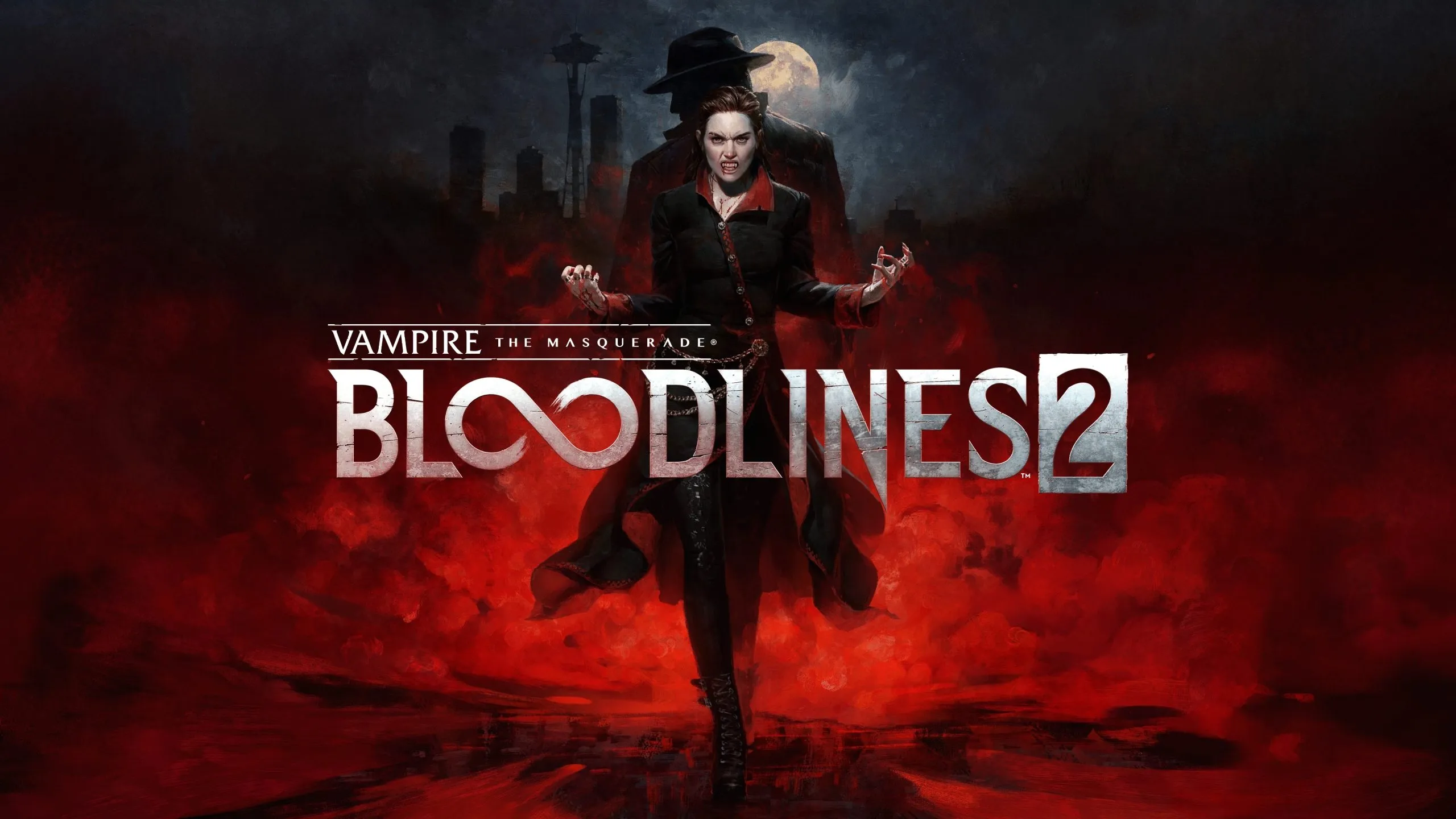

Twenty years separate Troika Games’ cult classic from The Chinese Room’s long-awaited sequel, and the cultural gulf between these two iterations speaks volumes about how Western genre fiction has evolved. Where the 2004 original traded in early-millennium subcultural aesthetics—fetish clubs, gothic punk, the last gasps of analog counterculture—Bloodlines 2 presents a 2024 Seattle stripped of such textural richness.
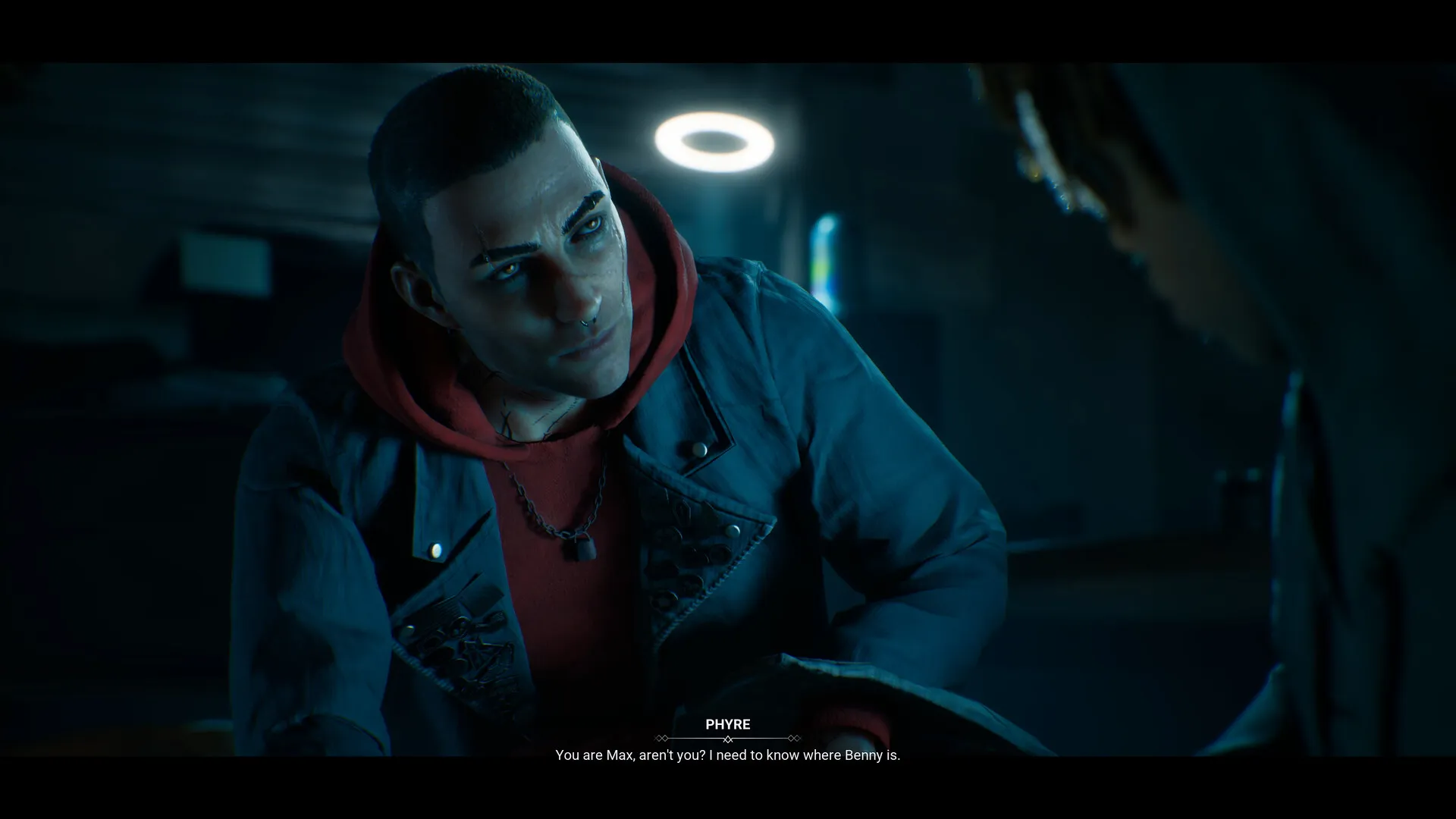
You inhabit Phyre, a 400-year-old European vampire awakening from torpor in the Pacific Northwest, branded with a mark that saps supernatural abilities and imprisons you within city limits. Fabien, a Prohibition-era detective turned vampire, exists as a disembodied consciousness sharing your mental space.
The Chinese Room constructs a neo-noir framework around these dual perspectives, weaving political intrigue through Seattle’s vampire court while you investigate serial murders threatening the Masquerade. This is elder vampire power fantasy territory rather than the coming-of-age narrative that defined its predecessor. The 15-to-22-hour experience attempts to balance action, stealth, and narrative ambition, though the results suggest a development process marked by compromise rather than vision.
Urban Geography as Constraint
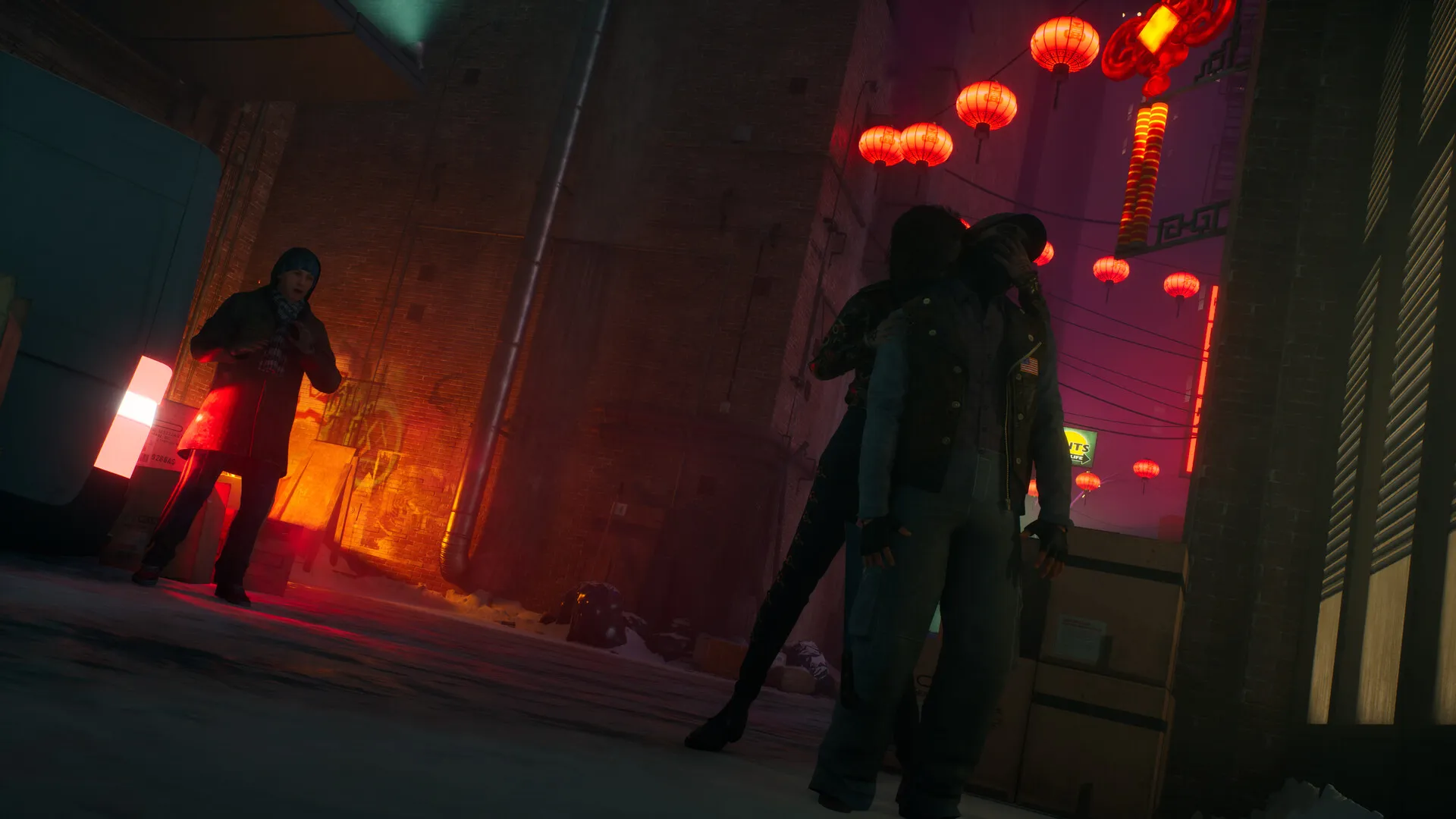
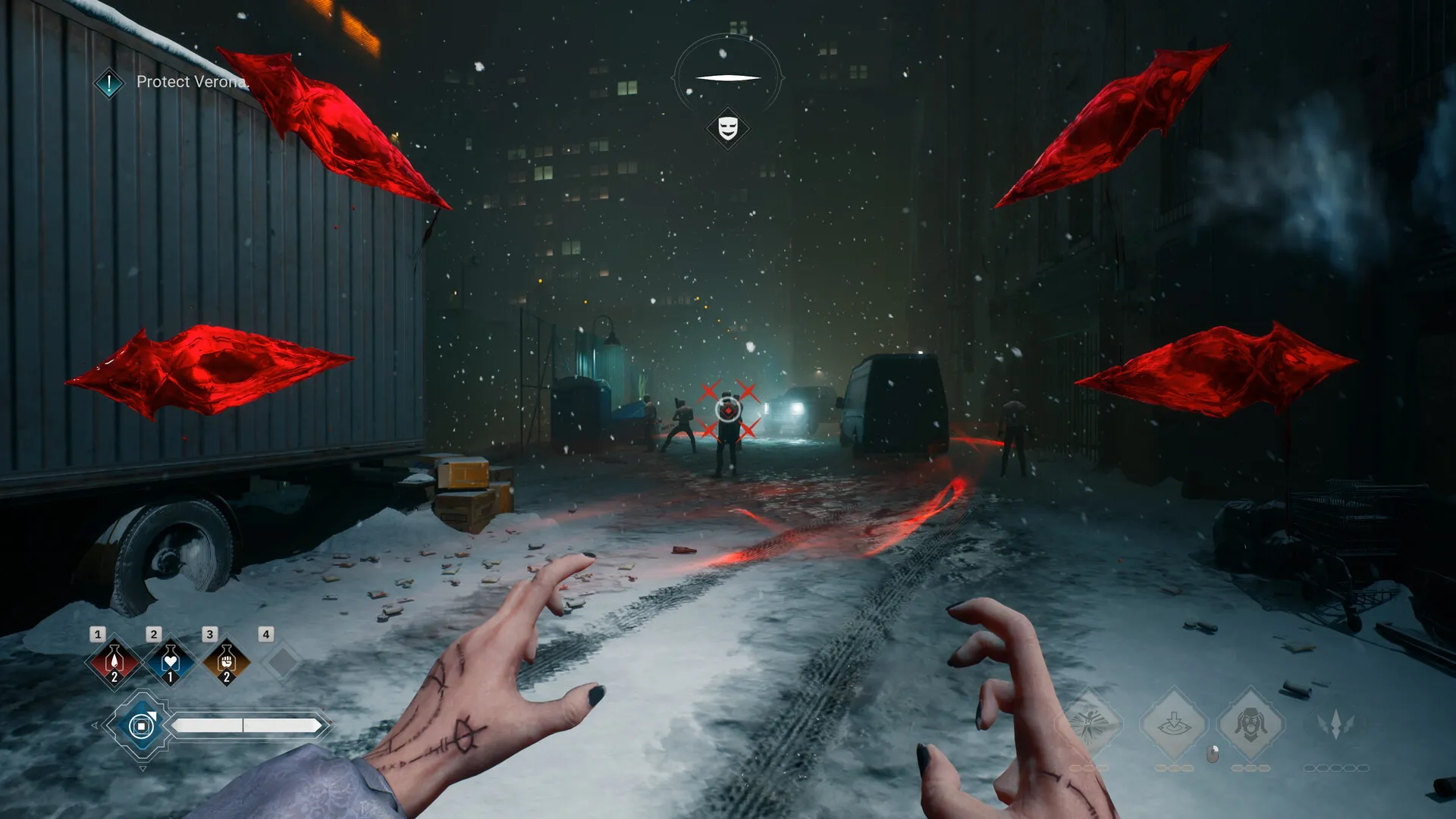
The Chinese Room’s Seattle occupies roughly five blocks squared, featuring Pioneer Square’s weathered charm and Chinatown’s lantern-lit corridors. The developers have drawn from recognizable Seattle landmarks to create a space that reads as authentically regional in its surface details. Moonlight refracts through falling snow while street lamps cast pools of amber across wet pavement. The environmental artists have clearly studied how light behaves in Pacific Northwest winters.
Yet the game’s relationship with its setting reveals tension between aesthetic ambition and systemic purpose. Buildings climb vertically, rooftops connect in traversable networks, and the vertical geography suggests possibilities for exploration that the game’s structure never fulfills. This Seattle functions as a lobby between mission spaces rather than a living ecosystem. The absence of fast travel might seem like a commitment to spatial coherence, but Masquerade rules forbid using supernatural movement at street level, forcing you into a rhythm of climbing to rooftops, crossing enemy-infested spaces, descending to engage with quest markers, then repeating the cycle.
Compare this to how Yakuza’s Kamurocho transforms a handful of Tokyo blocks into a dense cultural artifact. Bloodlines 2’s Seattle lacks this specificity. Blood resonance quests spawn generically across the map. Side content reduces to stationary NPCs offering package delivery or bounty contracts. The game asks you to traverse this space dozens of times across twenty hours but provides little reason to engage with it beyond functional necessity.
Technical failures compound these structural issues. On both PlayStation 5 and PlayStation 5 Pro, the frame rate collapses into single digits during combat sequences. Stuttering occurs even when simply rotating the camera in enclosed rooms. I encountered seven crashes during my playthrough. A quest-blocking bug prevented story progression for days. Characters phase through walls. Enemies ignore collision detection. Facial animations remain stiff despite the strength of vocal performances underneath. This level of technical failure in a full-price release has become increasingly rare, making Bloodlines 2 feel like an artifact from an earlier era of janky PC RPGs.
The Vampire as Predetermined Identity
Vampire: The Masquerade’s tabletop foundation treats clan identity as fundamental to character conception. Each lineage carries distinct cultural associations, supernatural abilities, and social positions within vampire society. Toreador aesthetes, Tremere occultists, Ventrue aristocrats, Brujah rebels—these archetypes draw from centuries of vampire fiction across European literary traditions.
Bloodlines 2 presents four clans at character creation: Brujah, Tremere, Banu Haqim, and Ventrue. Your selection determines starting combat abilities and unlocks specific outfits. NPCs occasionally reference your clan affiliation in dialogue. Then the game undermines this foundational choice by making every clan’s abilities available for purchase regardless of your initial selection. The progression system unlocks all Disciplines within the first eight hours, after which character development stalls. You can equip only four abilities simultaneously, one from each category, preventing creative hybridization.
The game also offers a background selection where Phyre reminisces about their centuries-spanning history. This moment gestures toward meaningful character-building specificity. Then the game essentially forgets these choices exist, mentioning them occasionally in throwaway lines but never integrating them into how the story unfolds.
Playing an elder vampire rather than a fledgling represents a conceptually interesting inversion of RPG conventions. This could facilitate meaningful exploration of what immortality and supernatural strength actually mean in a contemporary urban setting. Instead, the progression systems flatten any sense of growth or change. Melee damage remains identical from the first encounter to the final boss.
You discover blood symbols painted throughout Seattle that marginally increase health, but this scavenger hunt provides the only mechanical progression outside those first eight hours of Discipline unlocks. The game locks you into a power curve and holds you there, which might work if the narrative emphasized themes of stagnation. But Phyre’s story arc doesn’t engage with these ideas. The static mechanics simply exist as a design limitation dressed up as an intentional choice.
Violence and the Vocabulary of Control
First-person melee combat requires spatial awareness and timing that differs fundamentally from third-person action games. Bloodlines 2’s combat fundamentals—light attacks, heavy attacks, directional dodges that enable unique follow-ups—demonstrate competent understanding of this challenge. Parries and kicks add depth. The basics feel satisfyingly physical when the frame rate holds steady.
Then the supernatural abilities transform these encounters into something approaching the game’s best self. Telekinesis lets you rip weapons from enemy hands and fling them back. You can yank opponents off rooftops, watching them plummet to the streets below. Tremere Blood Sorcery boils blood inside veins, a grotesque display that literalizes the violence usually abstracted in action games. Possession forces enemies to attack their allies. Mass Manipulation turns entire groups into puppets. Blood Curse spreads death through crowds.
Late in the game, when you’ve assembled a full arsenal of these powers and learned to chain them fluidly, combat achieves a kind of balletic grace. These sequences, however rare, deliver on the fantasy of playing as an apex predator with centuries of experience.
Yet the same design choices that occasionally enable these moments regularly undermine them. You can only equip four Disciplines at once, forced to select one from each category rather than allowing focused specialization. Boss fights often occur in spaces that prevent stealth approaches, punishing builds focused on invisibility. Enemies wielding shotguns and SMGs spray gunfire that makes the screen shake violently. You can’t maintain a lock-on target, so these high-speed encounters devolve into disorienting chaos.
The game requires blood to fuel Disciplines, which should create interesting resource management decisions. But each Discipline draws from its own pool rather than a shared reserve. This transforms resource management into a rigid rotation: use ability, feed, use different ability, feed again. Encounters against bloodless enemies remove your ability to recharge powers entirely, reducing combat to repetitive light attacks. Worse, advancing certain skill lines requires farming resonant blood from specific NPC types in the open world, leading to grinding sessions where you repeat the same feeding dialogue dozens of times.
The most glaring omission sits at the conceptual heart of Vampire: The Masquerade’s fiction. The Beast represents the monstrous hunger within every vampire, a separate consciousness that drives them toward violence and cruelty. The tabletop game’s Fifth Edition uses an escalating hunger track where vampires become more likely to lose control the longer they go without feeding. Bloodlines 2 gestures toward this concept in a single cutscene, then abandons it entirely.
You feed only to recharge combat abilities. There’s no steadily draining blood pool, no growing desperation, no risk of losing control. The game never asks you to reckon with what it means to be a predator among humans. This absence transforms Bloodlines 2 into a generic supernatural action game rather than an exploration of the specific anxieties embedded in Vampire: The Masquerade’s fiction.
Stories Without Agency
The writing staff clearly studied what made the original Bloodlines memorable: pulpy dialogue delivered with conviction, characters who embody vampire clan stereotypes while adding enough human detail to make them three-dimensional.
Fabien’s 1920s detective noir patter could easily become insufferable, yet the writers give him enough vulnerability and wit to make his presence welcome. Lou Graham plays the aristocratic narcissist role with just enough glimpses of genuine pain to complicate her villainy. Ryong struggles visibly with the gap between her idealistic vision and the pragmatic compromises power demands.
Katsumi leads the Anarchs because someone needs to protect the vampires the Camarilla ignores. Safia brings scientific curiosity and awkward sincerity to every interaction. Tolly, a Nosferatu whose transformation stole his conventional beauty, reflects on how surviving the AIDS crisis as a gay man taught him to value existence over appearance. These characters feel thoughtfully constructed, performed with skill by voice actors who understand the material’s camp potential while treating it seriously enough to sell the emotional beats.
Phyre themselves works better than expected. The vaguely Romanian accent never becomes grating across twenty hours. The fish-out-of-water humor about modern technology mostly lands. The decision to make Phyre a pre-established character rather than a blank slate opens narrative possibilities unavailable to traditional RPG protagonists, creating investment in discovering who you were alongside deciding who you’ll become.
Then the game systematically betrays every suggestion that your choices matter. Dialogue options present four different responses that all express the same idea with slightly altered attitude. Telltale-style notifications inform you that “Tolly loved that” or “Lou hated that,” but these relationship changes never manifest in how characters treat you.
Early in the story, you can choose to help the Anarchs instead of following Camarilla orders, apparently a significant faction decision. The Camarilla responds by promoting you, claiming this restrictive role lets them watch you closely. This promotion proves mandatory regardless of your choice—the game needs Phyre embedded in the Camarilla power structure, so player intent becomes irrelevant.
The game presents numerous moments framed as meaningful decisions, then routes all these branches back to the same trunk. Characters tell you your actions had consequences. The game never shows you those consequences. This represents a fundamental dishonesty about what the experience offers.
Bloodlines 2 makes its most honest gesture toward player impact during the final hours, where two or three key decisions genuinely determine which ending you receive. This makes the preceding fifteen hours of false choice feel worse rather than better. The game possesses the capacity to create meaningful reactivity. It simply chooses not to implement that capacity until the story is almost over.
The finale compounds these problems by denying narrative payoff for the intrigue you’ve been constructing. Every alliance forged, every political maneuver executed, every chess piece positioned for what should be a climactic confrontation—all of it gets resolved in a thirty-second epilogue voiceover. The game builds toward showdowns between major factions and characters, then refuses to stage those confrontations. The writing spent hours establishing stakes and conflicts, then abandons them at the moment of resolution.
The Detective’s Burden
Each chapter concludes with Fabien’s mandatory flashback sequences, and these sections encapsulate everything confused about Bloodlines 2’s design philosophy. You inhabit Fabien’s corporeal form during his 1920s investigation of a serial killer, walking through the same Seattle streets Phyre traverses a century later. Fabien possesses four vampiric abilities specific to his Malkavian clan: altering how people perceive him, reading surface thoughts, and two others that similarly manipulate cognition.

The concept holds promise. Playing detective through flashbacks could provide historical context for present-day mysteries while exploring how Seattle’s vampire society evolved. The Malkavian powers could enable creative puzzle-solving where you manipulate perceptions and extract hidden information.
Instead, Fabien’s sections reduce to walking between objective markers scattered across the map. He lacks Phyre’s movement abilities, so traversal becomes a slow trudge through streets you’ve already explored extensively.
When you reach quest objectives, dialogue trees present every option without meaningful choice. You select all available responses until someone reveals the next piece of information. The Malkavian powers activate only at prescribed story moments, solving predetermined puzzles in predetermined ways. You never choose how to use them. The game never asks you to think like a detective or a Malkavian.
These sequences kill momentum repeatedly. You’ll reach the end of a chapter feeling invested in Phyre’s present-day situation, and the game forces you back to 1920s Seattle for another hour of aimless wandering punctuated by conversations you can’t meaningfully influence. Fabien should function as an ally whose perspective enriches the narrative. Instead, his segments become an endurance test that destroys any desire to replay the game.
Genre Without Purpose
The original Bloodlines emerged from a specific moment in CRPG design philosophy: Troika’s commitment to systemic depth and player freedom, the influence of Deus Ex’s immersive sim principles, the assumption that RPG audiences wanted statistical complexity and meaningful choice architecture. Bloodlines 2 struggles to articulate what kind of game it wants to be.
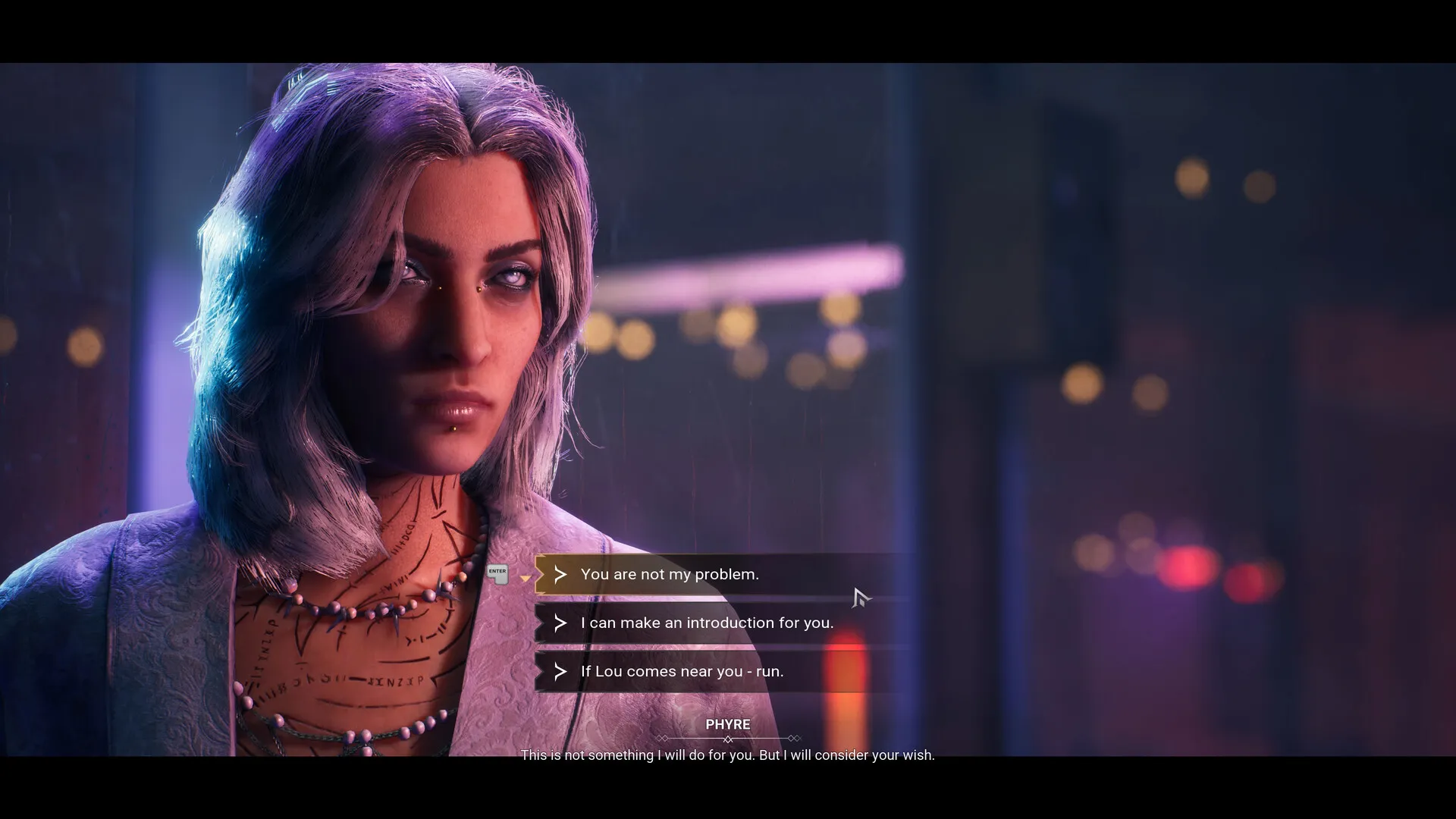
The Chinese Room describes it as “streamlined,” suggesting intentional decisions to reduce mechanical complexity. But the streamlining extends past removing complexity into eliminating core genre elements. Dialogue options exist without consequences. Character builds reach completion within hours. Side content serves no purpose beyond filling time.
This isn’t simply a philosophical debate about what defines an RPG. The game explicitly frames itself as offering meaningful choice and character development, then fails to deliver on both promises. It presents faction conflicts and relationship systems, then reveals them as decorative. It suggests your clan identity matters, then makes it functionally irrelevant within hours. The problem isn’t that Bloodlines 2 prioritizes action over role-playing depth. The problem is that it promises role-playing depth while actually prioritizing action, creating constant dissonance between what it claims to offer and what it provides.
The game’s appreciation for Vampire: The Masquerade lore shows through in small moments—references to vampire history, explanations of clan dynamics, the political structure of the Camarilla. The writers clearly care about the source material. But caring about lore doesn’t substitute for implementing the tabletop game’s core appeal: the sensation of inhabiting a specific vampire identity, making difficult choices about how to balance humanity and monstrosity, navigating a complex social hierarchy where politics proves as dangerous as physical combat.
The Review
Vampire: The Masquerade - Bloodlines 2
The Chinese Room delivers a sequel caught between competing identities, never committing fully to action spectacle or role-playing depth. When supernatural abilities chain together during late-game encounters, the elder vampire fantasy briefly materializes. Strong voice performances and thoughtful character writing create moments of genuine intrigue. Yet technical catastrophes, hollow player choice, momentum-killing flashback sequences, and the complete absence of the Beast mechanics strip away what makes Vampire: The Masquerade conceptually compelling. This is a game that respects its source material's aesthetics while misunderstanding its soul.
PROS
- Late-game combat combinations feel graceful and powerful when abilities chain together
- Strong voice acting brings well-written characters to life
- Atmospheric Seattle environment with beautiful lighting and weather effects
- Thoughtful character representation (particularly Tolly's backstory)
- Telekinesis and Blood Sorcery abilities provide visceral supernatural moments
CONS
- Catastrophic technical performance with single-digit frame rates and multiple crashes
- Player choices lack meaningful consequences until final hours
- Mandatory Fabien flashback sequences kill momentum and replay value
- Clan selection becomes irrelevant within eight hours
- Missing Beast/Frenzy mechanics fundamental to Vampire: The Masquerade
- Static character progression with no sense of growth
- Restrictive Discipline system prevents creative build specialization
- Generic open-world structure without meaningful exploration incentives
- Anticlimactic ending that denies payoff for narrative buildup
- Repetitive blood farming required for ability unlocks