





















![Kingdom Hearts Collection [I-III] Review](https://gazettely.com/wp-content/uploads/2026/10/Kingdom-Hearts-Collection-I-III-1-360x180.webp "Kingdom Hearts Collection [I-III] Review: KHII Holds Steady as Newer Entries Fluctuate 40")
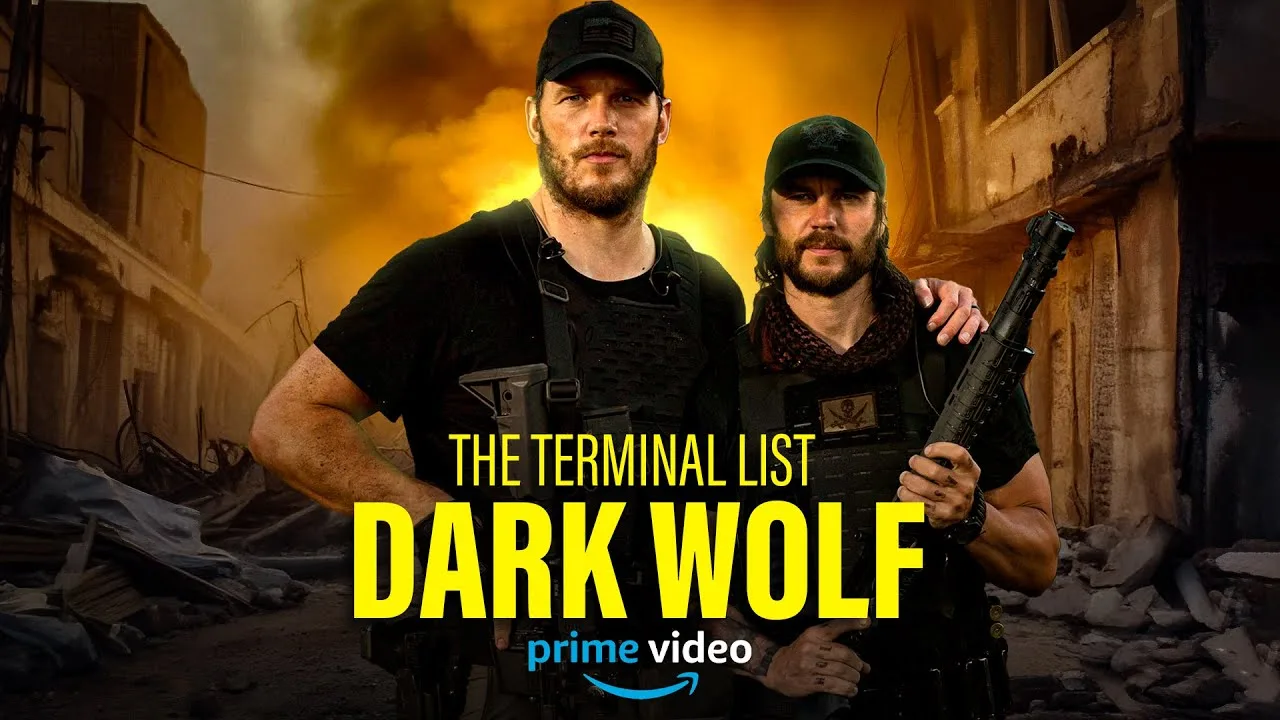

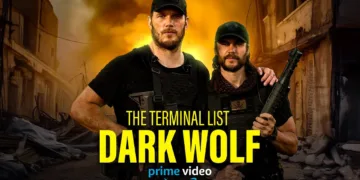
While Chris Pratt’s James Reece was the grimly determined center of The Terminal List, it was Taylor Kitsch’s Ben Edwards who often felt like the show’s simmering, unpredictable soul. The prequel series, The Terminal List: Dark Wolf, wisely puts that soul front and center. The story kicks off in 2015, dropping us into Mosul where Edwards is a decorated Navy SEAL at the top of his game.
This is years before the conspiracy that unraveled his best friend’s life. Here, Edwards is a leader, defined by the rigid code of the brotherhood. That code is shattered by a single moment of battlefield fury, an impulsive act that gets him and his second-in-command booted from the SEALs.
Before they can even process their fall from grace, a shadowy figure from the CIA makes them an offer they can’t refuse. Stripped of his uniform, Edwards finds his deadly skills are still in high demand, just with fewer rules and longer shadows. The series quickly pivots from a military procedural to a globe-trotting spy thriller.
The Kitsch Factor
This series is, first and foremost, the Taylor Kitsch show. For years, Kitsch has been an actor seemingly searching for a project that fully understands his specific frequency of bruised charisma, and Dark Wolf is it. He is perfectly cast as a man whose competence in violence is matched only by his profound weariness of it. He wears his character’s exhaustion like a second layer of body armor. His Ben Edwards is a man guided by a simple, fierce loyalty to his team, yet that loyalty fuels a recklessness that costs him everything.
The performance finds its strength in this central contradiction. Kitsch excels in this gray area, presenting an antihero who is both intimidatingly capable and deeply compromised. His physicality is key; he moves with the efficient, coiled tension of a trained operator, making every fight feel earned and weighty. The real artistry is in the moments of stillness, where a flicker in his eyes or the clench of his jaw communicates the internal war he is losing.
The characterization of Edwards depends entirely on this nuanced portrayal. On paper, he risks becoming a generic action hero, complete with a few token lines about Wilfred Owen’s poetry to signify depth. Kitsch manages to make these elements feel authentic to the character, suggesting a man who contains more than the jingoistic script sometimes allows. He grounds the show’s more outlandish moments with a palpable sense of consequence.
His descent from a principled soldier to a paramilitary operative is marked by a slow erosion of his own code. Each decision pushes him further into moral ambiguity, and the audience is left to question where the line between hero and monster truly lies. It is a stark contrast to the original series’ protagonist.
Where Pratt’s Reece was a blunt instrument of vengeance on a clear path, Kitsch’s Edwards is a sharper, more conflicted weapon being aimed by unseen hands. Pratt’s appearances in the first and last episodes serve as effective bookends, reinforcing the universe’s continuity while highlighting just how different a show this is with Kitsch at the helm.
Guns, Gadgets, and Geopolitics
The show’s seven-episode arc moves with military precision through three distinct phases, giving the season a satisfying sense of progression. It begins with the dusty, sun-bleached grit of Iraq, establishing Edwards’ bona fides as a field commander and setting up the brotherhood theme that will be systematically dismantled. The middle section transitions to the clandestine recruitment grounds of European intelligence, shifting the tone toward espionage and paranoia.
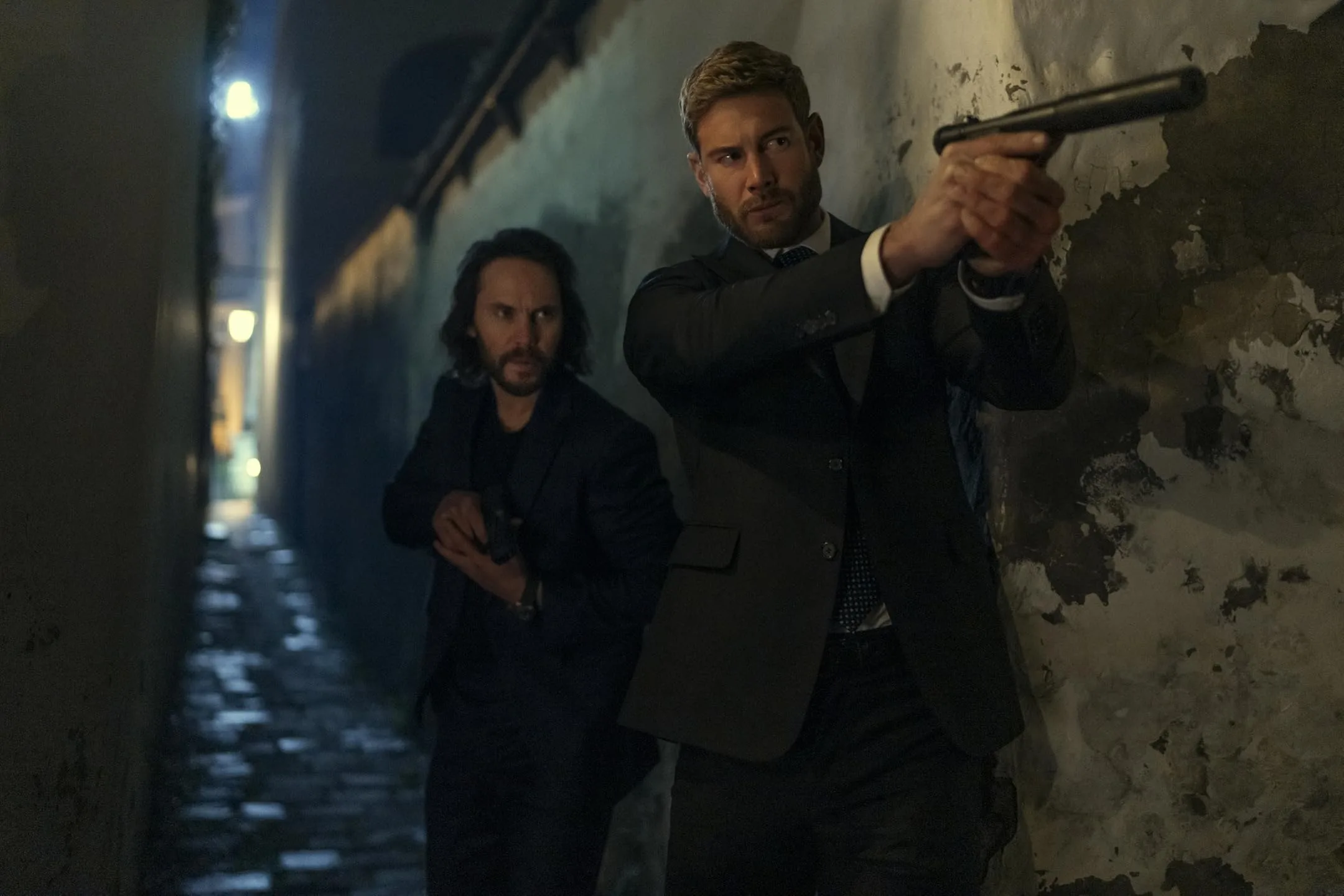
The final act escalates into a high-stakes mission targeting Iran’s nuclear ambitions, where the stakes become global and the methods increasingly brutal. The narrative hops from Geneva to Vienna to Zurich, giving the proceedings a classic espionage feel, though the show seems less interested in the local culture than in how many shadowy corridors each city contains.
Its action sequences are executed with impressive clarity and impact, representing a high point for the genre on streaming platforms. Large-scale firefights feel chaotic yet coherent, a difficult balance to strike that allows the viewer to follow the tactical flow of battle. The series also knows when to scale down for more personal brutality.
A standout mission inside a thumping Austrian nightclub has flashes of modern James Bond, using the disorienting environment and pulsing techno soundtrack to heighten the tension of a stealth operation. Even better is a vicious, close-quarters brawl involving the operative Tal Varon, a sequence that strips away the high-tech gear for a desperate, messy fight for survival. It proves the show’s action credentials extend beyond big explosions.
The plot’s engine is a classic MacGuffin: highly specialized centrifuge bearings required for uranium enrichment. This device sends Edwards and his new team on a collision course with rival agencies and treacherous double agents, neatly blending the grounded tactics of a military thriller with the paranoia of a spy story. The bearings themselves are less important than their function as a catalyst, forcing these characters into impossible situations and testing their fragile allegiances.
The Company You Keep
At its heart, the show is about the idea of brotherhood. Edwards’ mantra is protecting his team, an ideal that becomes warped and tested when he trades his SEAL Trident for a CIA expense account. In the structured world of the Navy, the code was clear. In the freelance world of black ops, loyalty is a liability. The supporting cast effectively populates this treacherous landscape, each character representing a different point on the spectrum of cynicism and duty.
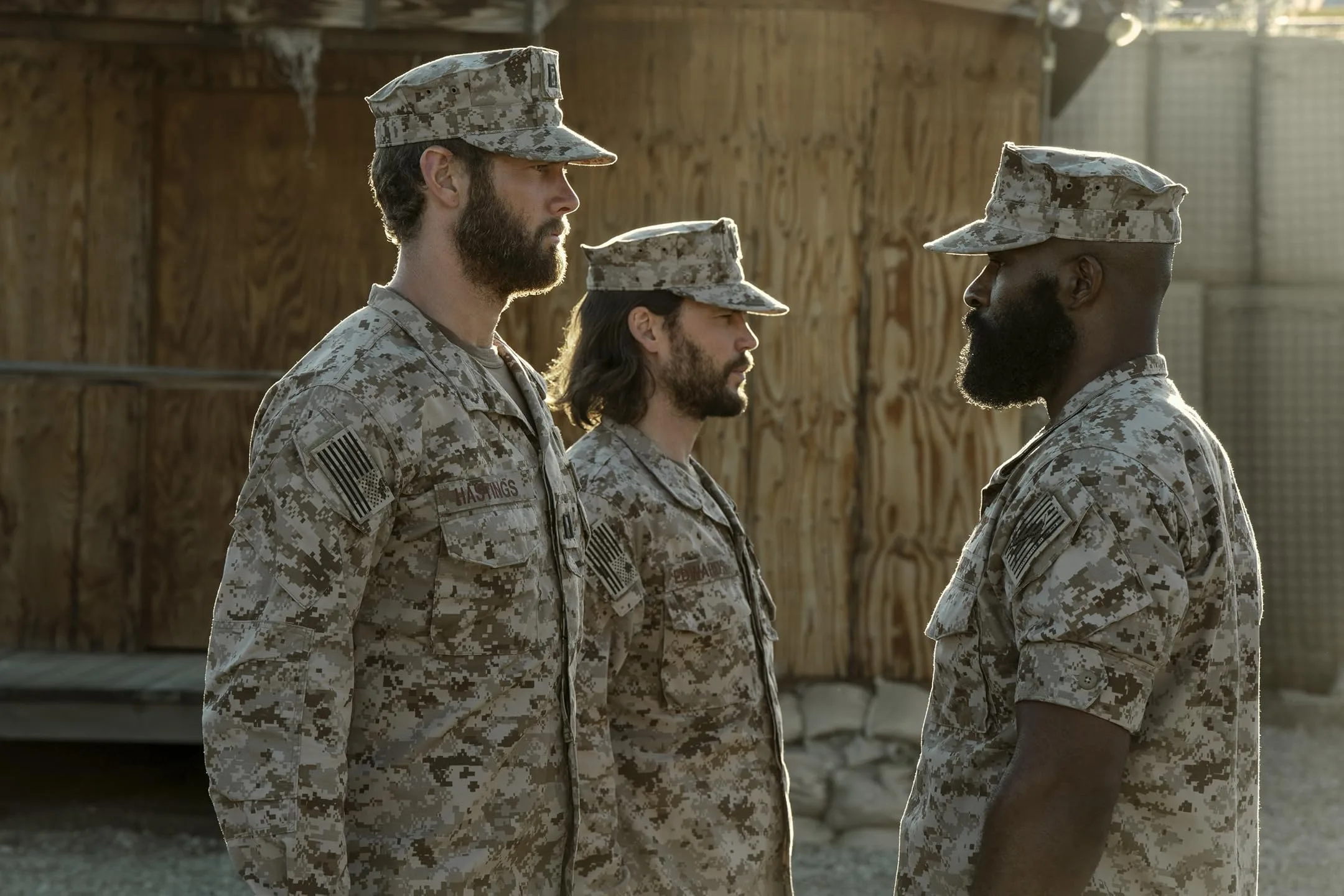
Tom Hopper plays Raife Hastings, Edwards’ steadfast but wary partner in exile. Hopper’s imposing frame makes him a believable operator, and he provides a necessary anchor for Edwards’ volatility, questioning the mission when Edwards is blinded by it. He embodies the struggle of a career soldier trying to find a new purpose outside the institution that defined him.
As the grizzled CIA spymaster Jed Haverford, Robert Wisdom brings a quiet, commanding gravitas; he’s the recruiter from the shadows who sees a tool where the Navy saw a problem. His performance is all calm reassurance and veiled threats, the perfect embodiment of an agency that views people as assets. The series smartly populates its world with genuinely capable players, especially the tough Mossad operatives Eliza Perash and Tal Varon, who are presented as Edwards’ undisputed equals in skill and ruthlessness.
Their presence prevents the team from feeling like a boys’ club and injects a different operational philosophy into the mix. Their loyalties are to their own nation, creating an undercurrent of tension within the ad hoc alliance. Even smaller roles, like Luke Hemsworth’s abrasive contractor Jules Landry, add texture and internal friction to the team, reminding everyone that this is a group of professionals, not friends. His presence highlights the messy human element in a world of precise operations.
Welcome to the Gloom
Someone on the production team appears to have a deep-seated grudge against light bulbs. Much like its predecessor, Dark Wolf is a visually dark show, and I mean that literally. Many of its scenes unfold in dimly lit safe houses, subterranean tunnels, and shadowy alleyways. While this creates a certain mood, it sometimes comes at the expense of clarity, shrouding impressive European locations in a perpetual twilight and occasionally making complex action difficult to follow.
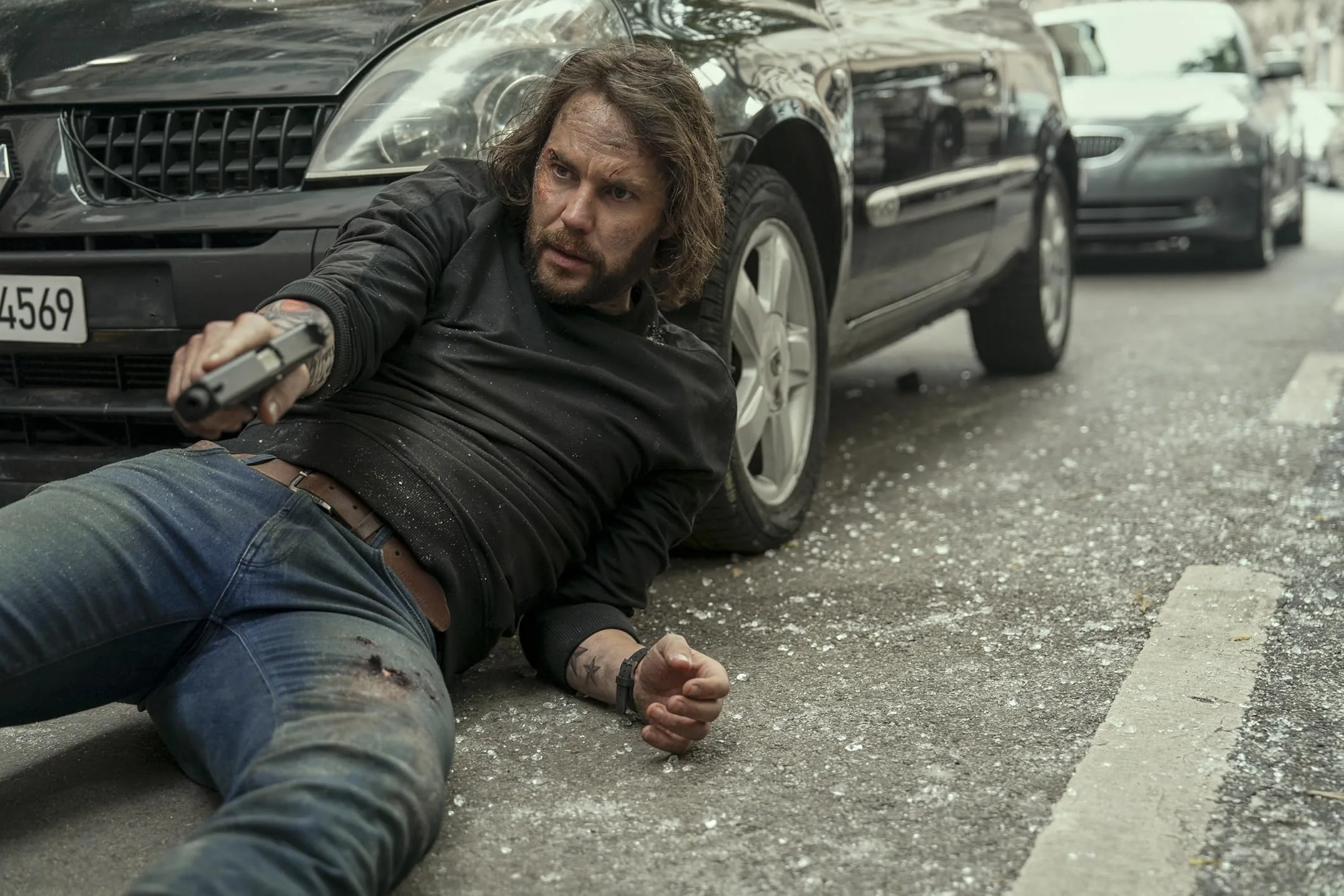
This aesthetic choice feels deliberate, a visual metaphor for the murky moral world the characters inhabit. The moody visuals are often paired with a soundtrack full of dad-rock fury, with AC/DC and Tool providing the auditory punch for key action beats. It is not subtle, but it is effective.
Thematically, the show operates from a clear perspective: the real work is done by the operators on the ground, who are often hindered by out-of-touch bureaucrats. It champions a brand of muscular interventionism, a worldview common in the military-thriller genre. This series fits comfortably into the modern “Dad TV” canon alongside shows like Reacher and Jack Ryan. The term is not a slight; it describes a confident, well-oiled machine built for a specific audience that values straightforward plotting, high-impact action, and a certain kind of old-school hero.
Dark Wolf knows its mission and executes it with exemplary craftsmanship. It is a confident enterprise, delivering a fantasy of righteous action with a solemn tone. The series presents a polished story of a good soldier learning to become a dangerous man. The real question is whether he, or the audience, can tell the difference by the end.
Full Credits
Director: John Curran, Jann Turner
Writers: David DiGilio, Jack Carr
Producers and Executive Producers: Chris Pratt, Antoine Fuqua, David DiGilio, Jack Carr, Taylor Kitsch, Kat Samick, Max Adams, Jared Shaw, Kenny Sheard, Erika Milutin, Gergö Balika, Frederick E.O. Toye
Cast: Taylor Kitsch, Chris Pratt, Tom Hopper, Luke Hemsworth, Dar Salim, Robert Wisdom, Rona-Lee Shimon, Shiraz Tzarfati, Jared Shaw, Jai Courtney, Riley Keough, Jeanne Tripplehorn, Patrick Schwarzenegger, Constance Wu, LaMonica Garrett, Chris Diamantopoulos
Director of Photography (Cinematographer): David Stockton, Matt Windon
Composer: Ruth Barrett
The Review
The Terminal List: Dark Wolf
Anchored by a commanding performance from Taylor Kitsch, Dark Wolf delivers a superior brand of military thriller. Its action is visceral and expertly crafted, and the globe-trotting spy plot moves with brutal efficiency. While the relentlessly dark cinematography can be frustrating and the script occasionally leans on familiar platitudes, the series knows its audience and executes its mission with confidence. It is a grim, well-oiled machine that serves as a perfect vehicle for its star.
PROS
- A fantastic, layered lead performance from Taylor Kitsch.
- Expertly choreographed and impactful action sequences.
- A strong supporting cast, particularly the capable female operatives.
- Efficient pacing that blends military action with spy-thriller tension.
CONS
- The cinematography is often literally too dark, obscuring on-screen detail.
- The script can rely on genre clichés and repetitive dialogue about "brotherhood."
- Its thematic perspective on geopolitics is straightforward and lacks deep nuance.