















Most fairy tales operate on a fixed track, their endings pre-written. 100 Nights of Hero takes that rulebook and sets it on fire, offering a story where the act of storytelling itself becomes the path to survival. We are dropped into a fantastical, quasi-medieval world where the oppressive deity Bird Man sets the rules, and women are expected to be silent vessels for producing heirs.
The film immediately establishes its stakes through Cherry, a young woman trapped in a loveless and unconsummated marriage. Her husband, Jerome, makes a cruel wager with his predatory friend, Manfred: if Manfred can seduce Cherry while Jerome is away for 100 nights, the castle and Cherry herself become his property.
This setup could be grim, but the film’s true protagonist, Cherry’s clever maid Hero, introduces a brilliant mechanic. Harkening back to Scheherazade, Hero begins spinning an elaborate tale each evening to distract Manfred, weaponizing narrative to stall a terrible fate. It’s a premise that feels like a high-stakes narrative game, establishing the film as a visually decadent, queer, and sharply satirical fable.
The Players in the Tale
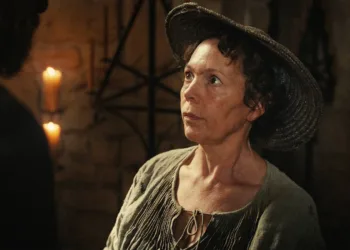
A story this theatrical lives or dies by its cast, and the performances here are its beating heart. Emma Corrin is the anchor as Hero, delivering a magnetic performance that is sharp, cunning, and alive with a mischievous spark. They embody the role of a trickster bard, physicalizing the act of storytelling so it becomes an active, captivating defense.
Their deadpan reactions to the absurd pronouncements of the men provide some of the film’s best comedic moments, landing with a precision that elevates the satire. Opposite them, Maika Monroe gives a wonderfully subtle performance as Cherry. Her journey from a passive, caged noblewoman to a person of quiet, determined strength is the central emotional arc.
Monroe charts this evolution through small, meaningful shifts: a newfound straightness in her posture as she listens to Hero’s tales, a flicker of defiance in her eyes. The pacing of her awakening feels earned over the 100-night structure. The tender, believable chemistry between Corrin and Monroe grounds the entire fantastical narrative, building through shared glances and the protective intimacy of their nightly ritual. Nicholas Galitzine rounds out the main trio with a delightful, self-aware turn as Manfred.
He leans into the role of the sleazy villain, effectively mocking the handsome-prince archetype. His character operates with the one-dimensional logic of a poorly written video game NPC, making his preening and predatory entitlement both menacing and hilariously pathetic. Even Charli XCX, in a small role within Hero’s nested story, adds a unique layer. Casting a real-world pop artist known for her defiant persona reinforces the film’s themes of female artistry as a powerful form of rebellion.
Designing a Gilded Cage
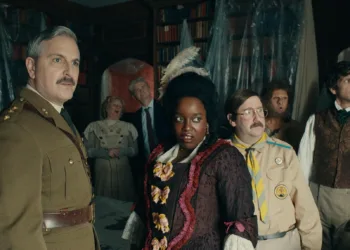
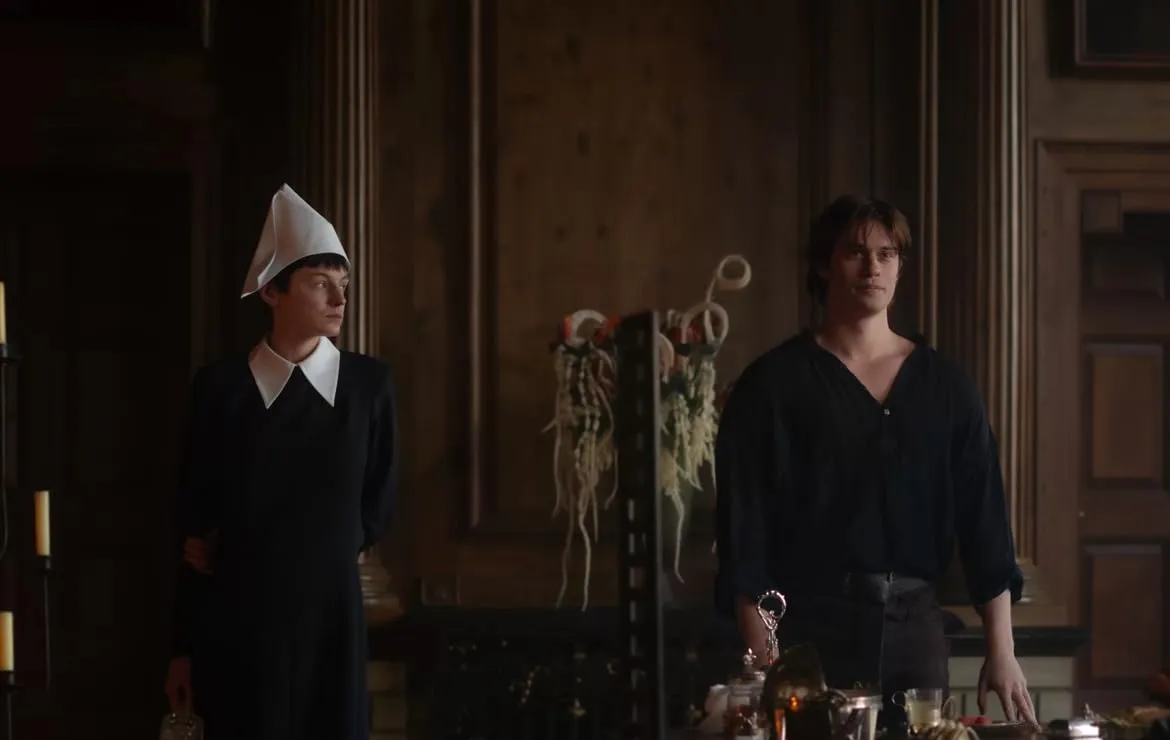
Director Julia Jackman builds a world that is as beautiful as it is oppressive, using every cinematic tool to reinforce its peculiar rules. The environmental storytelling is exceptional; stained-glass windows depict cautionary figures like “Janet the Barren” and “Nadia the Lesbian,” functioning like lore entries that build the world’s grim history without exposition.
The society is governed by the disciples of Bird Man, the Beak Brothers, whose ridiculous papier-mâché bird masks immediately signal the film’s satirical intent. This world’s design is a standout feature. The costumes by Susie Coulthard are symbolic and stunning.
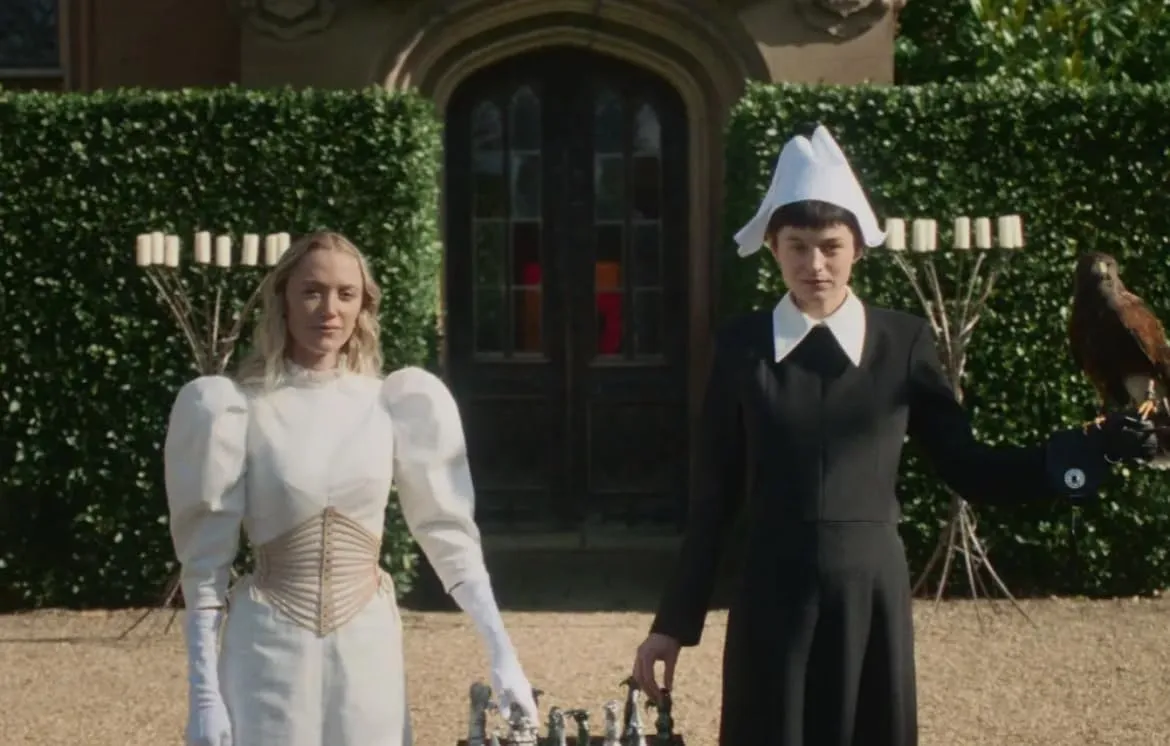
Cherry’s elaborate, almost architectural gowns with their pleated sleeves and feathered neckpieces represent her decorative status, while Hero’s severe, minimalist black and sculptural white hat suggest her clarity and purpose.
The contrast visually charts their shifting dynamic. Sofia Sacomani’s production design fills the castle with opulent, candlelit dread, making it feel like both a sanctuary and a prison. Jackman’s direction is playful yet precise, using the deadpan, symmetrical framing reminiscent of Yorgos Lanthimos’s work to find the humor in the horror.
The wide-angle lenses slightly distort the lavish halls, enhancing the sense of a rigid, absurd system. This aesthetic is perfectly complemented by Oliver Coates’s anachronistic electronic score. Its modern, synth-heavy beats create a tonal dissonance that keeps the audience off-balance, reinforcing that this is not a conventional period piece but a fairy tale made urgent and new.
The Narrative as Weapon
The film’s greatest strength is its deep understanding of how stories function. The nested, matryoshka-like structure is more than a clever gimmick; it’s the central metaphor for narrative as a tool of resistance. Hero’s tale about rebellious sisters directly empowers Cherry, showing her a reality beyond her own confinement.
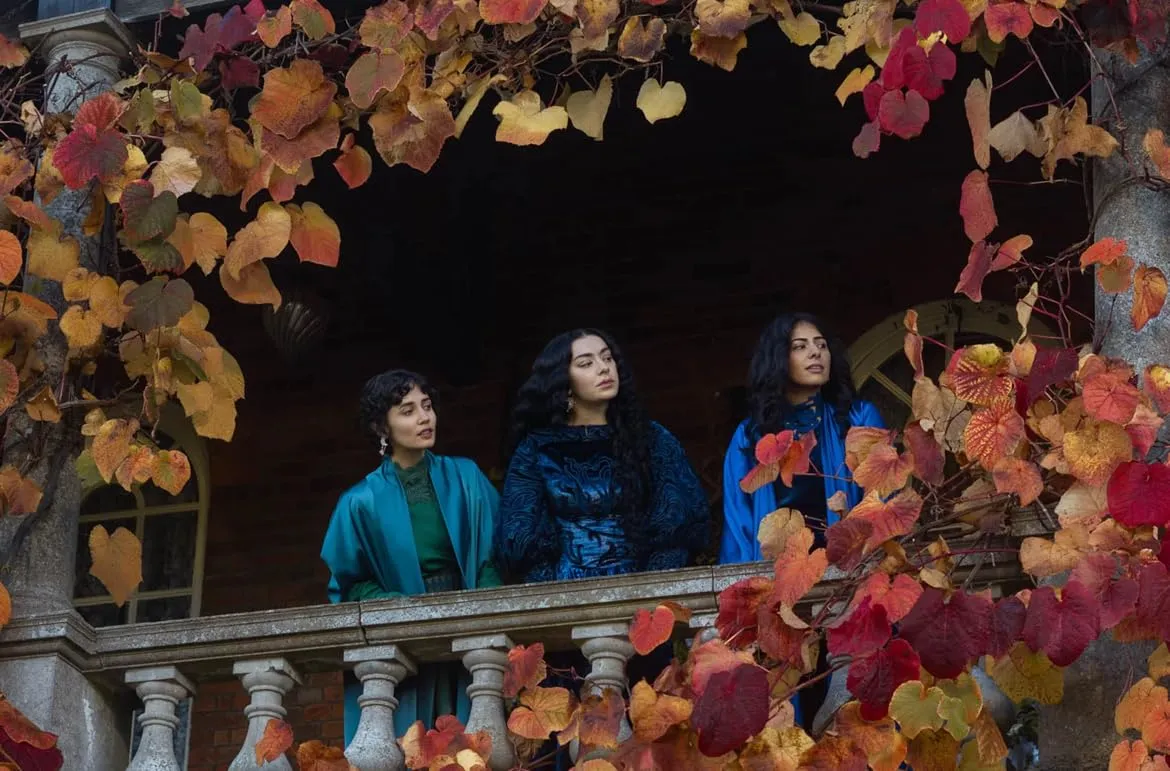
The film occasionally risks losing the momentum of its main plot by diving into these side stories, but this choice reinforces the central theme: the stories we tell are as vital as the lives we lead. The satire is sharp, best exemplified in Manfred’s absurd list of qualities for a perfect wife, which includes being “interested in maps, falconry, chess… but obviously not too good at them.”
The line is a potent critique of misogyny because it feels so close to real-world foolishness. At times, the thematic messaging can feel direct, leaving little room for subtext. However, these moments of bluntness feel less like a flaw and more like a feature of the film’s bold, independent spirit.
This lack of slick polish is a sign of its sincerity, a welcome departure from homogenized blockbusters. 100 Nights of Hero is an inventive and heartfelt fable that celebrates female solidarity and the radical power of telling your own story. Its joyous defiance makes it a truly memorable experience, a cult classic in the making.
“100 Nights of Hero” had its world premiere at the Venice International Film Festival on September 6, 2025. It is scheduled to be released in theaters in the United States on December 5, 2025. The film will be distributed by IFC Films.
Full Credits
Director: Julia Jackman
Writers: Julia Jackman, Isabel Greenberg
Producers: Helen Simmons, Stephanie Aspin, Grant S. Johnson
Executive Producers: Nicholas Galitzine, Felicity Jones, Thomas K Richards
Cast: Emma Corrin, Nicholas Galitzine, Maika Monroe, Charli XCX, Richard E. Grant, Felicity Jones, Amir El-Masry, Varada Sethu, Safia Oakley-Green, Markella Kavenagh, Christopher Fairbank, Tom Stourton, Clare Perkins, Josh Cowdery, Bijan Daneshmand, Olivia D’Lima, Felix Uff, Clarence, Zaris-Angel Hator, Lisa, Jeff Mirza, Jordan Coulson, Sam
Director of Photography (Cinematographer): Xenia Patricia
Editors: Amélie Labrèche, Oona Flaherty
Composer: Oliver Coates
The Review
100 Nights Of Hero
100 Nights of Hero is a wonderfully defiant and visually stunning fable. Its sharp satire and heartfelt performances, especially from Emma Corrin, create a memorable experience. While its messaging can be direct and its pacing eccentric, these are small prices to pay for a film with such a unique, independent spirit. It’s a joyous celebration of female solidarity and the radical power of storytelling, succeeding as both a clever fantasy and a necessary piece of art.
PROS
- Magnetic lead performances from Emma Corrin and Maika Monroe.
- Stunning and symbolic costume and production design.
- A sharp, satirical script with genuinely funny moments.
- A unique and effective electronic score that enhances the tone.
- Creative use of narrative as a central plot mechanic.
CONS
- Thematic messages are occasionally too direct.
- The nested story structure can sometimes interrupt the main plot's momentum.
- Its eccentric, theatrical style may not appeal to all viewers.