









The Polish countryside of 1670 is back, and the mud is just as thick. Netflix’s satirical mockumentary returns to the village of Adamczycha, a place where serfdom is a drag and feudal lords have influencer-level aspirations. The show’s comedy comes from its central collision: an impeccably rendered 17th-century world meets the petty grievances and vapid ambitions of the 21st century.
Characters stare into the camera to complain about their problems, creating a historical comedy that feels uncannily like a modern workplace sitcom. At the center of it all is Jan Paweł Adamczewski, a nobleman whose self-importance is matched only by his incompetence.
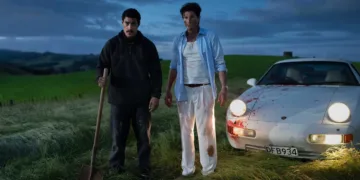
He is a man who believes he is destined for greatness, even if greatness requires him to step on a peasant or two. Season two opens with Jan Paweł dragging his family to an all-inclusive Turkish resort, a diplomatic minefield he sees as a networking opportunity. His plan, of course, goes immediately and wonderfully sideways, launching him into a new misguided campaign for local glory.
The Nobleman’s Folly and Strained Narrative
After a rival nobleman conveniently chokes to death on a mutton wrap, Jan Paweł misreads the man’s dying gasps as anointment. His new mission is clear in his mind: he is destined to become the new leader of the local gentry, the most respected man in his half of the country.
This singular obsession becomes the season’s narrative spine, with his primary project being the organization of a harvest festival so profoundly impressive it will cement his legacy. This goal, however, highlights the show’s growing reliance on a predictable formula. Jan Paweł’s character arc is less an arc and more a flat circle of egotistical planning, clumsy execution, and humiliating failure. While this pattern supplied many of the first season’s laughs, its repetition here reveals a static core.
The show’s intense focus on him leaves little room for other stories to breathe, and his buffoonery, once a sharp tool for social commentary, now often feels like simple silliness. His quest for status feels less like a specific critique of the Polish-Lithuanian Commonwealth’s aristocracy and more like a generic tale of a bumbling idiot.
This structural repetitiveness is amplified by the season’s pacing problems. The central plot of the harvest festival should build momentum, but it frequently stalls. The narrative momentum is consistently interrupted by detours that add little value. Entire sequences are dedicated to setups that go nowhere, draining the comedic tension from the main storyline.
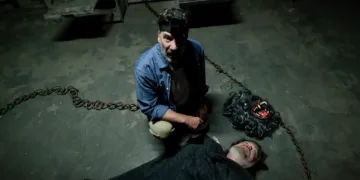
The storytelling feels disjointed, jumping between Jan Paweł’s festival preparations, his son’s half-hearted betrayals, and the season’s most bewildering addition: a demonic possession. The subplot involving Jan Paweł’s brother-in-law, Bogdan, is a glaring misstep. It attempts to shift the show from historical satire into supernatural farce, a tonal leap the series is unprepared to make.
This lengthy diversion feels disconnected from the show’s established reality, and its attempts at humor through exorcism rites and demonic pronouncements fall flat. It consumes significant screen time that would have been better spent developing the more grounded and interesting conflicts within the village. The result is a narrative that feels both overstuffed and underdeveloped, a collection of disparate ideas that fail to form a cohesive whole.
A Capable Daughter and Dedicated Performances
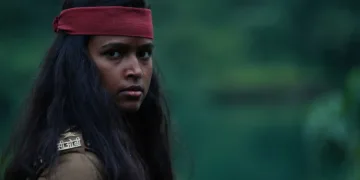
While Jan Paweł is busy chasing phantoms of prestige, his daughter Aniela emerges as the season’s undeniable bright spot and narrative anchor. Her evolution from a cynical observer to a capable manager of the family estate provides the show with a genuine sense of forward movement and purpose. In a world of flamboyant incompetence, Aniela is practical, intelligent, and quietly determined.

Her storyline offers a nuanced exploration of female agency within a rigidly patriarchal society. While her father attempts grand, empty gestures, Aniela focuses on the difficult, unglamorous work of actually running the estate, a contrast that serves as the show’s sharpest and most effective piece of social commentary this season.
Her personal conflict, balancing these new responsibilities with her forbidden romance with the peasant Maciej, provides the show with a welcome emotional depth. Their relationship is more than a simple love story; it is a class-crossing alliance that subtly challenges the feudal order of their world.
The performances across the board remain a significant strength, with the cast navigating the show’s peculiar tone with skill. Bartłomiej Topa continues his excellent work as Jan Paweł, managing to make an infuriatingly dense character watchable. Through his pitch-perfect physical comedy and earnest delivery of absurd proclamations, Topa finds the flicker of vulnerability beneath the bravado, turning Jan Paweł from a simple caricature into a pitiable figure.
Yet the season truly belongs to Martyna Byczkowska as Aniela. Her performance is a masterclass in subtlety. Surrounded by characters who operate at maximum volume, Byczkowska communicates Aniela’s intelligence, frustration, and resolve with little more than a weary sigh or a knowing glance at the camera. She is the calm, rational center in a whirlwind of absurdity.
The supporting cast also shines, particularly Michał Sikorski as the ambitious son Jakob, who presents himself as a ruthless pragmatist but is ultimately just a more cynical version of his father. The ensemble’s chemistry is what makes Adamczycha feel like a real, deeply dysfunctional community.
Visual Inventiveness and Inconsistent Humor
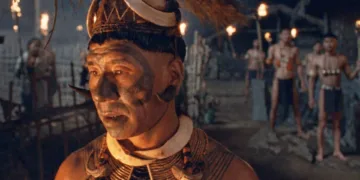
1670 continues to be a visual feast, a triumph of production design and cinematography. The decision to film in an open-air museum in Kolbuszowa gives the village of Adamczycha an unparalleled sense of authenticity. The world feels lived-in, from the smoky interiors of the peasant cottages to the rough-hewn timber of the manor house.

This grounding in historical reality serves as the perfect canvas for the show’s anachronistic humor. The cinematography cleverly mimics the conventions of documentary filmmaking with its occasional handheld shots and direct-to-camera interviews, yet it frames these scenes with a rich, painterly quality. The lighting often recalls the Dutch Masters, creating a beautiful visual dissonance that enhances the comedy.
This creative spirit extends to the show’s props, which are a consistent source of delight. Inventive contraptions, like a rotating platform powered by a simple lever or a headlamp made from a leather strap and two lit candles, function as brilliant sight gags that also contribute to the show’s unique world-building.
This visual creativity, however, often carries the burden of a script whose humor has become inconsistent. The show is at its best when it leans into dry, observational wit and clever visual punchlines. A throwaway line about a poorly written poem about ducks or a simple joke involving salt lands perfectly.
The show stumbles when it aims for broader, more elaborate comedic scenarios. A “good priest, bad priest” interrogation routine, for example, feels like a tired sketch-comedy concept that lacks the sharp, specific satire the show is capable of. The main difference from its debut is the loss of novelty. The first season was a delightful surprise, its unique format and fresh perspective feeling new.
In its second outing, the show seems more self-aware, and its meta-humor, like the fourth-wall breaks, can feel less like an inventive choice and more like a comfortable habit. This familiarity exposes the script’s weaker points more starkly. The attempt to introduce pathos feels forced, turning what should be a sharp comedy into something occasionally bland. The result is a season that feels caught between repeating a successful formula and attempting an awkward evolution.
The television series is a Polish mockumentary satirical comedy. The second season premiered on Netflix on September 17, 2025, where it is available to watch.
Full Credits
Director: Maciej Buchwald, Kordian Kądziela
Writer: Jakub Rużyłło
Producers: Ivo Krankowski, Jan Kwieciński
Cast: Bartłomiej Topa, Katarzyna Herman, Martyna Byczkowska, Michał Sikorski, Michał Balicki, Andrzej Kłak, Dobromir Dymecki, Kirył Pietruczuk, Filip Zaręba
Director of Photography (Cinematographer): Nils Croné
Editors: Albert Bana, Magdalena Chowańska, Anna Luka, Sebastian Mialik
The Review
1670 Season 2
1670’s second season is a beautiful, ambitious, but uneven return. The exceptional production design and committed performances, particularly from Martyna Byczkowska, remain high points. Yet, the series struggles under the weight of a disjointed narrative and inconsistent humor. The satire feels less potent, and questionable subplots dilute the show’s strengths. It is a visually inventive series that has lost some of its comedic and narrative focus, making for a watch that is often amusing but rarely as sharp as it once was.
PROS
- Exceptional, authentic production design and cinematography.
- Strong performances from the entire cast, with Martyna Byczkowska as a standout.
- Aniela's character arc provides a compelling and coherent storyline.
- Clever visual gags and creative physical props.
CONS
- The script's humor is inconsistent and often fails to land.
- A disjointed narrative structure with poor pacing.
- Weak and distracting subplots, particularly the demonic possession story.
- The central plotline for Jan Paweł feels repetitive and static.