














Some creations are born as ruins. They do not crumble over time; they emerge from the void already fragmented, their incompletion serving as their only true form. So it is with Franco Maresco’s Bravo Bene!, a cinematic document that is not about a film but about an absence. It is an anti-biopic, a black-and-white ghost that traces the edges of a failed project dedicated to the radical artist Carmelo Bene.
Maresco, a Sicilian director who wields pessimism as his primary aesthetic tool, places his own creative implosion at the heart of the work. When his chaotic production is mercifully shuttered, Maresco himself evaporates, leaving his collaborators to sift through the wreckage. The film that remains is this sifting, a philosophical inquest into a deliberate act of artistic disappearance and a monument to a masterpiece that refused to exist.
Mirrors in a Void
The film operates as a series of nested realities, a structural labyrinth from which there is no escape because there is no center. We are guided by Umberto Cantone, the director’s friend, whose search for the missing Maresco provides the film’s ostensible narrative. This journey, however, leads not to answers but to deeper layers of artifice. It unearths fragments of the collapsed Bene project, celluloid shards that glitter with a strange, surreal light.
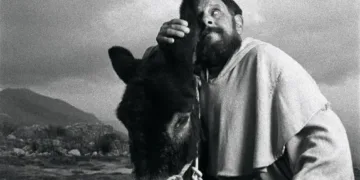
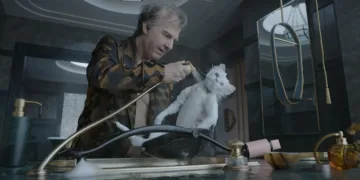
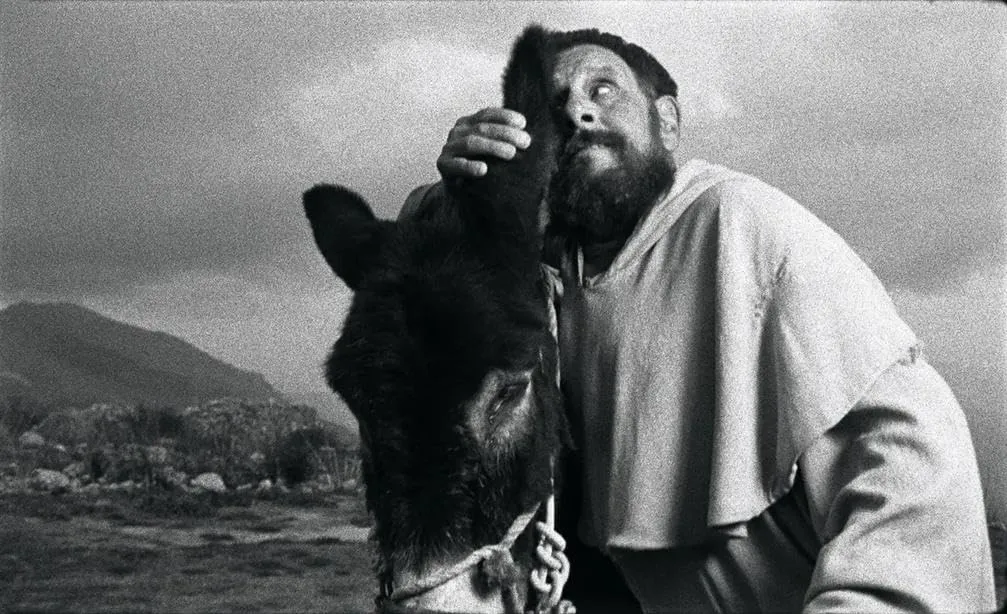
We witness a Franciscan friar, Giuseppe da Copertino, who levitates with his donkey until the crane breaks and he plummets back to earth, a literal and metaphorical fall from grace. We sit at a grotesque dinner party where actors smeared in garish makeup perform a hollow tribute to Bene, their dialogue empty of meaning.
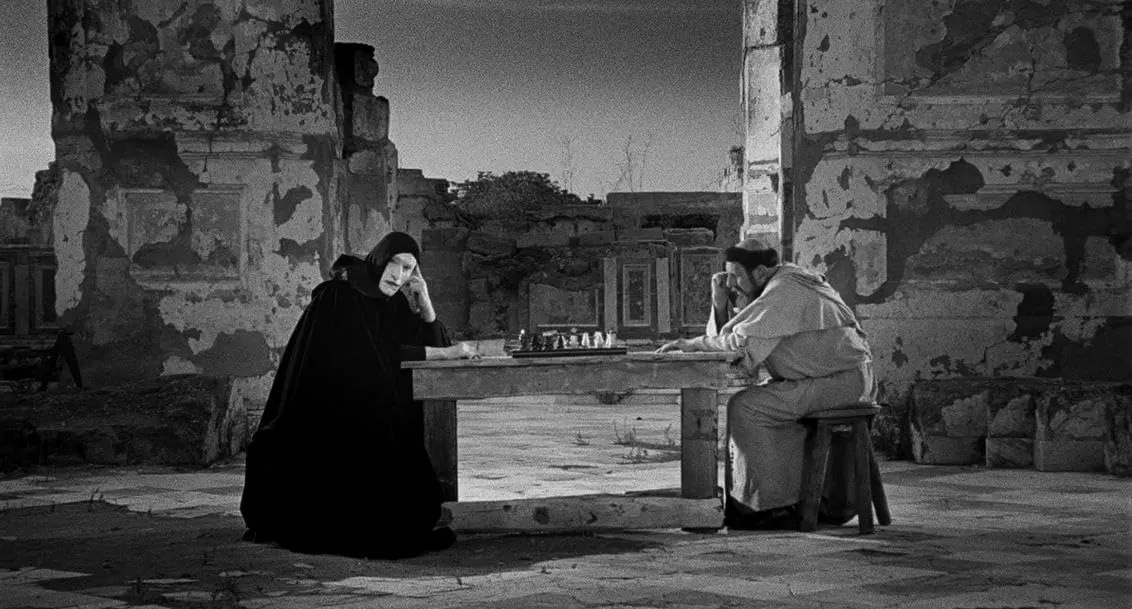
Even a solemn parody of Bergman’s The Seventh Seal collapses into farce, as Death’s opponent reveals he cannot play chess, reducing existential dread to a problem of simple incompetence. This structure, where real-life producers and writers perform fictionalized versions of themselves, is a deliberate dismantling of documentary truth. It suggests that reality itself is just another unstable film set, and every search for meaning will only lead back to the camera.
An Autopsy of the Creator
With the subject of Carmelo Bene a distant echo, the film turns its unblinking eye inward, becoming a brutal self-autopsy of its creator. Maresco is presented not as a flawed genius but as the primary agent of his own project’s destruction, a black hole of creative energy.
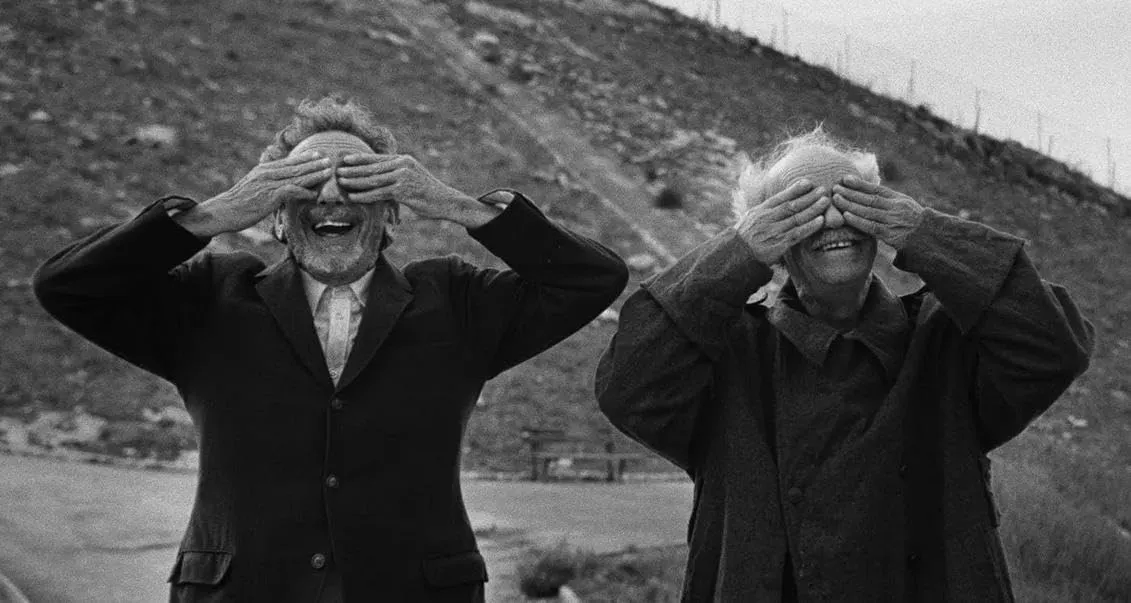
His directorial method is a meticulous form of psychological warfare. He populates his set with a stable of eccentric performers from the Sicilian margins, his “freaks,” whom he directs with a mixture of obsessive control and nihilistic apathy. His treatment of the critic Francesco Puma is a masterclass in calculated humiliation, a sequence where a man’s desperate need for a bathroom becomes a drawn-out spectacle of suffering, all for the camera’s cold gaze.
This cruelty is mirrored by his obsessive rituals and compulsions, which are pathologized by his own doctor on screen. His insistence on endless takes, burning through kilometers of expensive film, is not a quest for perfection. It is a methodical march toward financial and artistic ruin. Maresco’s accusation of “filmicide” against his producers rings hollow; every frame suggests he was the one holding the knife, performing a ritual sacrifice of his own creation.
A Joke Told to an Empty Room
The film’s humor is a bitter medicine, a deadpan satire steeped in a uniquely Sicilian despair. Maresco’s world is populated by the grotesque and the absurd, a parade of characters whose faces tell stories of a forgotten Italy. The comedic sensibility is bleak, finding its punchlines in failure, blasphemy, and bodily fluids. Yet this dark comedy is spoken in a private dialect.
Its power is almost entirely dependent on a deep, intrinsic knowledge of Italian cultural history, from the legacy of Carmelo Bene’s anti-theatre to the specific vanities of local television personalities. For an outsider, watching the film is like listening to a profoundly personal joke whose setup is missing. This insularity feels intentional, a defiant act against the demand for universal accessibility.
Is the film, then, a profound statement on the impossibility of making radical art in a world that demands conformity? Or is it the ultimate solipsistic gesture, a film made for an audience of one? Bravo Bene! refuses to provide a clear answer, leaving us with the unsettling feeling that its truest subject is the void itself, and its greatest achievement is to make us stare into it for two hours.
Full Credits
Director: Franco Maresco
Writers: Franco Maresco, Umberto Cantone, Claudia Uzzo, Francesco Guttuso
Producers: Andrea Occhipinti, Marco Alessi
Cast: Umberto Cantone, Franco Maresco, Francesco Conticelli, Marco Alessi, Bernardo Greco, Francesco Puma, Giuseppe Lo Piccolo, Gino Carista, Melino Imparato, Antonio Rezza
Director of Photography: Alessandro Abate
Editors: Paola Freddi, Francesco Guttuso
Composer: Salvatore Bonafede
The Review
Bravo Bene!
Bravo Bene! is less a film and more a cinematic autopsy, a fascinating and frustrating examination of artistic self-destruction. Franco Maresco crafts a deeply personal, formally inventive labyrinth that intentionally keeps its audience at a distance. While its insular humor and nihilistic worldview make it an opaque experience, it remains a singular and compelling portrait of creation as an act of ruin. It’s a challenging work for the intellectually adventurous but one that will leave many viewers cold.
PROS
- Formally inventive and structurally daring meta-narrative.
- An unflinching and complex portrait of artistic struggle and self-sabotage.
- Surreal and memorable black-and-white cinematography.
- A unique, albeit challenging, satirical and nihilistic tone.
CONS
- Deeply insular humor and cultural references make it inaccessible to non-Italian viewers.
- Can feel self-indulgent and deliberately alienating.
- The narrative is intentionally frustrating and lacks conventional resolution.
- Its bleak worldview and abrasive characters can be wearying. Export to Sheets