












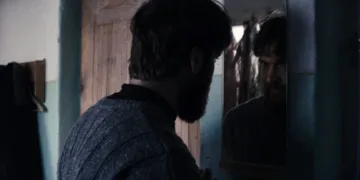

















A keycard is stolen. A man in a lab coat moves with practiced urgency down a sterile hallway, his goal unclear until he reaches a stairwell door. This is not a daring escape with a patient in tow; this is the escape of the patient. The man is Dr. Oliver Wolf, and the hands that subdue him belong to hospital orderlies, not a rival physician.
A sedative plunges him into unconsciousness, and the camera pulls back to reveal the name of the institution: Hudson Oaks. With this cold open, Brilliant Minds returns for its second season not with a question, but with an answer that creates a thousand more. The series has laid its final card on the table in the first hand. We know the brilliant neurologist’s fate. The season ahead is no longer about his destination; it is about the six-month fall that gets him there.
The Six-Month Diagnosis
The decision to frame the season with a flash-forward is a significant structural gamble. It shifts the show’s engine from the weekly satisfaction of a solved medical puzzle to the serialized dread of a psychological collapse. This device, a favorite of high-concept network thrillers of the past decade, forces an active viewing experience. Every interaction, every new character, every seemingly minor conflict is now filtered through the lens of “Is this what breaks him?”
The narrative tension comes from the dramatic irony of knowing more than the characters, watching them walk toward a precipice they cannot see. The show leans into this tonal shift with its aesthetic choices. The direction in the opening Hudson Oaks sequence is claustrophobic, using tight shots and a desaturated, blue-tinted color palette that contrasts sharply with the familiar, brighter lighting of Bronx General. It visually separates the endpoint from the present, making Wolf’s eventual confinement feel like a descent into another world.
This world is populated with new, potentially dangerous figures. Dr. Charlie Porter, the second-year resident handpicked by Wolf’s mother, is an immediate and obvious threat. Brian Altemus plays him with a pitch-perfect smarminess, his ambition practically leaking from his pores. His professional compliments to Wolf are coated in a thin veneer of sincerity that cracks the moment he speaks to his fellow residents, whom he dismissively labels Wolf’s “fan club.”
The writing gives him lines that expertly expose his character, like when he admonishes Dr. Kinney to treat him as her senior or risk losing her job. It’s a naked power play. The episode’s final image, a sly smirk on Charlie’s face after a seemingly heartfelt apology to Wolf, confirms his role as the serpent in the garden. Less clear is the role of Dr. Amelia Fredericks.
In her brief appearance, Bellamy Young projects an unnerving calm. Her authority is absolute as she directs the staff subduing Wolf. She is presented not as a cartoon villain but as a competent professional, which makes her all the more formidable. Her presence raises the stakes of Wolf’s future, suggesting his antagonist will be a system, not just a single person.
The Tell-Tale Hand
Even with a season-long mystery to unravel, the show must still deliver a compelling case of the week. The premiere succeeds with the strange condition of Tommy Grudko, an MMA fighter whose right hand has developed a violent mind of its own. Alien Hand Syndrome is a gift to any medical drama, providing a visual and behavioral mystery that is both baffling and dangerous.

The episode traces the diagnostic journey with methodical clarity. Wolf observes Tommy’s punches, noting they lack the agitation of a psychological outburst, leading him to a neurological cause. The key discovery—that Tommy is a southpaw, yet only his right hand is rebelling—is a classic piece of medical detective work. The final diagnosis of Parkinson’s Disease, hidden by the fighter’s own father, provides the story’s emotional core.
This is where the episode’s writing moves from clever to insightful. The case is a direct thematic echo of Wolf’s own trauma. Tommy is a son betrayed by a father who made a life-altering medical decision for him, supposedly out of love and a desire to protect his career. The confrontation between them is raw and painful, as Tommy grapples with a truth that redefines his entire life.
For Wolf, observing this is like looking into a distorted mirror. He, too, is the son of a man whose deceptions have reshaped his reality. The show uses this parallel to explore the complex, murky justifications of paternal protection. It forces Wolf to confront the damage of secrets, even as he remains unable to process his own.
His approach to treatment is a testament to his enduring empathy. He uses mirror therapy, a genuine neurological technique, to help Tommy retrain his brain. It’s a quiet, patient process that shows Wolf’s genius lies not in sudden epiphanies but in a deep, compassionate understanding of the brain’s ability to heal itself. He can fix his patient’s connection to his body while his own connection to his life frays.
The Complications of Care
The most significant choice in the premiere is the one to make Mandy Patinkin’s Noah Wolf a ghost. After the dramatic cliffhanger of his return, his physical absence here is a bold narrative stroke. It denies Wolf, and the audience, any easy resolution. Instead of tense conversations, we get the aftermath: Wolf sleeping on his office couch, avoiding a home that is no longer a sanctuary.

When he finally returns, the apartment is a portrait of abandonment, with coffee mugs scattered like clues to a hasty departure. The note Noah leaves behind is a quiet twist of the knife, repeating the pattern of disappearance that has defined Wolf’s life. This emotional void radiates outward, affecting all his relationships.
His connection with Dr. Josh Nichols is the most prominent casualty. Their scenes together are a masterclass in restraint, showcasing a relationship paused by trauma. There are no shouting matches or dramatic ultimatums. Josh’s frustration is palpable when he says he cannot wait around forever, but his words are delivered with an undercurrent of understanding.
He sees that Wolf is drowning in his family history. This mature approach to romantic conflict continues to be one of the show’s greatest assets, setting it apart from the genre’s tendency toward melodrama. The supporting cast feels the ripples as well. Dr. Erika Kinney returns from her leave with a smile that doesn’t quite reach her eyes and a hidden bottle of Lorazepam, signaling a private struggle with the trauma of her building’s collapse.
Dr. Carol Pierce, exiled to a private practice catering to the ridiculously wealthy, provides a necessary link to Wolf’s professional conscience. Her demand to face the hospital board shows she is not content to sit on the sidelines, establishing her as a key ally in the fights to come.
Prognosis
Brilliant Minds has returned with a renewed sense of purpose, injecting its proven formula with a potent dose of psychological suspense. The central mystery provides a powerful engine for the season, turning every case and every conversation into a potential step toward its protagonist’s institutionalization.
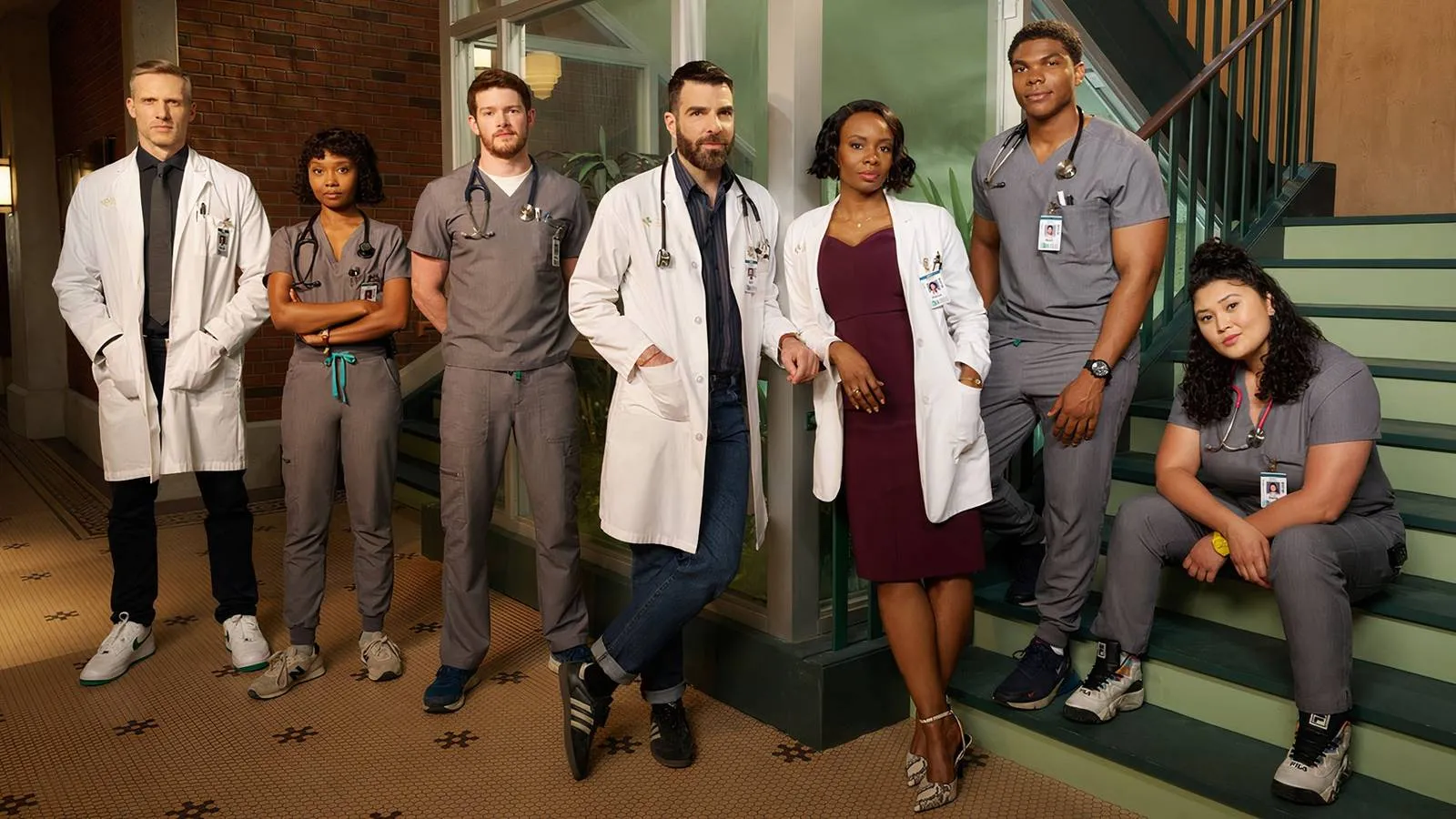
With its confident direction and intelligent handling of complex emotional arcs, the premiere sets a course for a darker, more compelling chapter. The show has presented its own intricate diagnosis. Now we just have to watch as all the symptoms unfold.
The television series “Brilliant Minds” returned for its second season on Monday, September 22. New episodes air on NBC and can be streamed the next day on Peacock. The show is a medical drama that follows a brilliant neurologist and his team as they solve complex neurological cases. The new season continues to explore the mysteries of the human mind while also delving into the personal lives and relationships of the characters.
Full Credits
Director: Lee Toland Krieger, David Katzenberg, Dawn Wilkinson, Harry Jierjian, Jordan Canning, Maggie Kiley, Sudz Sutherland, Charles Randolph-Wright, Deborah Kampmeier
Writers: Michael Grassi, Alex Berger, Aisha Bhoori, Davia Carter, Stasia Demick, Will Ewing, Sara Saedi, Ryan Knighton, Daniela Lamas, William Yu, David Carter, Shannon Looney
Producers and Executive Producers: Michael Grassi, Greg Berlanti, Sarah Schechter, Leigh London Redman, Lee Toland Krieger, DeMane Davis, Jasmine Russ, Henrik Bastin, Jonathan Cavendish, Andy Serkis, Shefali Malhoutra, Zachary Quinto, Michael Wray, Mohan Mandali, Carl Ogawa
Cast: Zachary Quinto, Tamberla Perry, Ashleigh LaThrop, Alex MacNicoll, Aury Krebs, Spence Moore II, Teddy Sears, Donna Murphy, Brian Altemus, John Clarence Stewart, Al Calderon, Bellamy Young
Composer: Joseph Trapanese
The Review
Brilliant Minds Season 2
The Season 2 premiere reinvents the show, trading procedural comfort for the serialized tension of a psychological thriller. By revealing its tragic endpoint upfront, it creates a gripping, season-long mystery focused on its hero's undoing. Supported by mature emotional arcs and clever thematic mirroring in its medical cases, the show returns with a darker, more confident, and altogether more ambitious direction.
PROS
- An intelligent narrative structure using a flash-forward to create season-long suspense.
- A successful tonal shift to a darker, more psychological story.
- Mature handling of interpersonal relationships, avoiding typical TV melodrama.
- The case-of-the-week effectively mirrors the protagonist's personal turmoil.
- Introduction of intriguing new antagonists who raise the stakes.
CONS
- The absence of a key character from the Season 1 finale may feel abrupt.
- The thematic parallels between the patient and the doctor can be quite direct.
- The new antagonist, Dr. Porter, verges on a familiar archetype of the arrogant rival.