















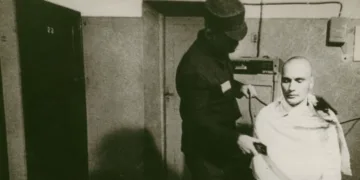











The cinematic landscape often finds itself returning to the primal tension between rehabilitation and relapse, but few films situate that struggle so literally within the hands of a villainous authority figure. Paul Pompa III’s Just Breathe enters this space as a tense, plot-driven crime thriller. It centers on Nick Bianco, a man whose violent temper serves as his central conflict.
An explosive, impulsive assault earns him a prison sentence, abruptly putting his life on hold. His release is framed by a single objective: proving his transformation to Mel, his girlfriend, and reclaiming the life he shattered. This goal is complicated by a cruel twist of fate: Nick’s manipulative parole officer, Chester, is also Mel’s landlord. The film establishes a tight, high-stakes game of personal and legal peril, one powered almost entirely by the intense performances of its leads.
The Duel of Personas: Character and Performance
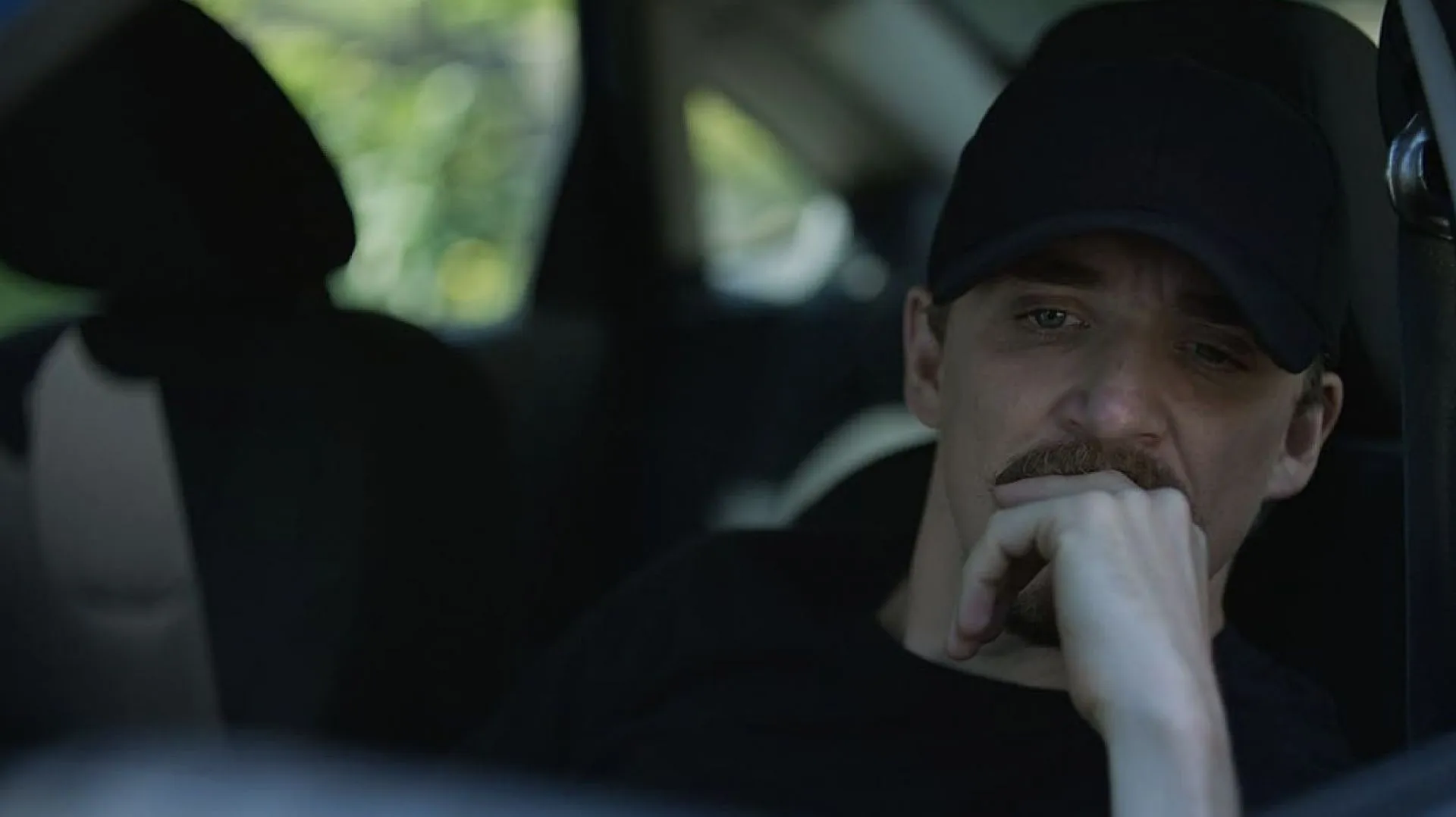
The film’s central narrative conflict is driven by the immediate, electric tension between its two main characters, a dynamic that elevates the otherwise conventional material. Kyle Gallner delivers a portrayal of Nick Bianco that is a complex study of a man consumed by his internal battle. Nick is trying to adhere to therapeutic advice and overcome his “red-hot anger issues.”
His genuine desire for self-improvement constantly clashes with his volatile past. Gallner’s performance is marked by intense, telling physicality: the constant tightening of his jaw, the restless shifts in his posture, and a wide-eyed intensity that suggests a person perpetually on guard. He manages to layer sincere vulnerability beneath his tough exterior, ensuring Nick is viewed as a man fighting for peace, not merely a brutish lunkhead prone to violence. Gallner achieves a difficult balance, conveying both explosive anger and a deep, world-weary sorrow.
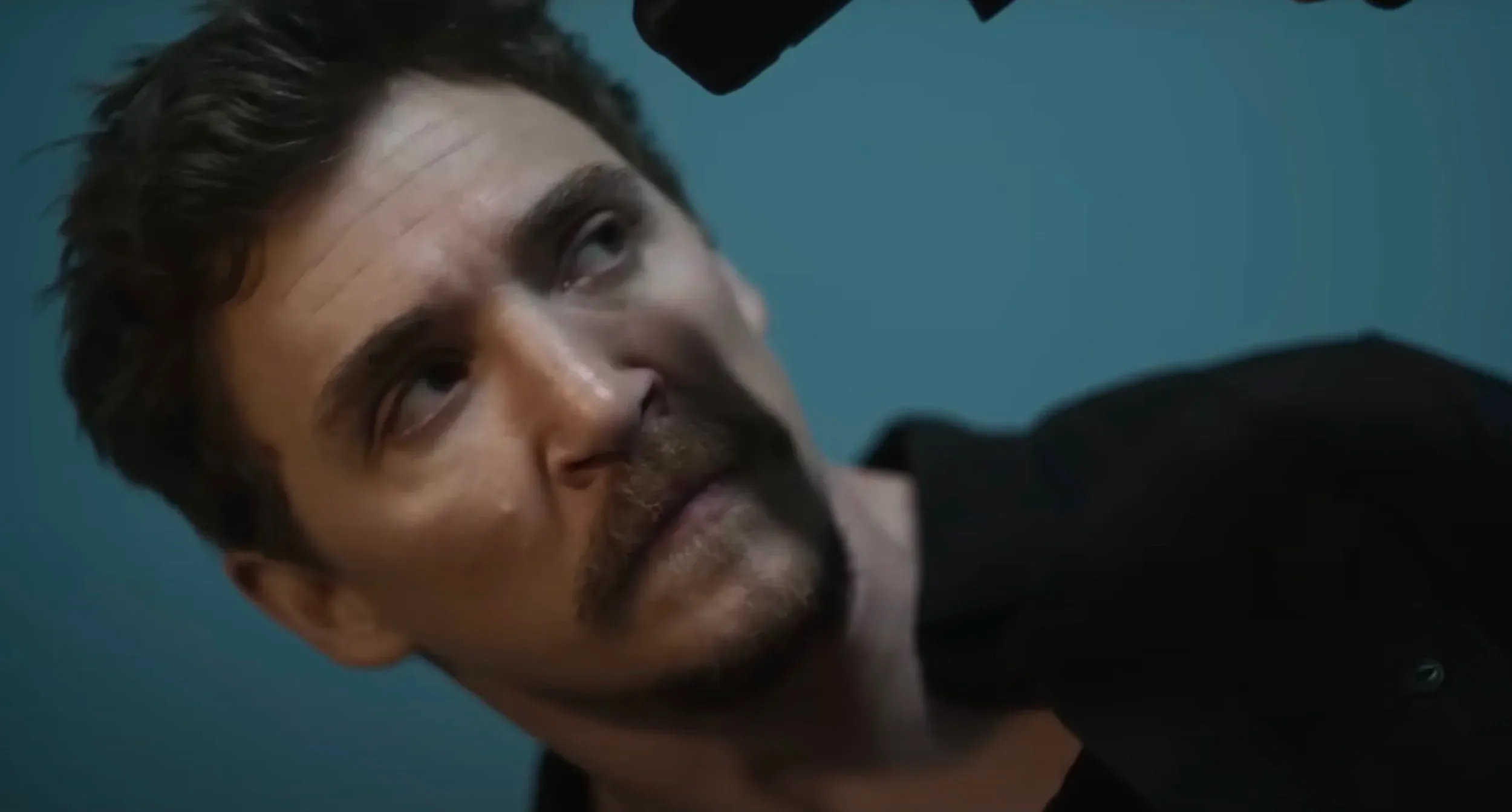
Opposite him, Shawn Ashmore as Chester gives a memorable performance as a brilliantly detestable villain. Chester operates with a striking two-sided persona. He presents himself to Mel as the friendly, harmless landlord, projecting the image of a “gee-whiz” suburban father. Simultaneously, he is the corrupt, calculating parole officer to Nick, one who systematically uses his legal authority as a weapon.
Chester designs situations specifically to test Nick’s resolve, actively working to trigger the temper he is supposed to be helping Nick manage. His schemes are aggressively diabolical, though occasionally bordering on the cartoonish. Ashmore maintains a chillingly pleasant facade, delivering veiled threats with an unnerving smile, which ensures his cruelty feels jarring and his villainy is deeply felt. This palpable intensity between Gallner and Ashmore is the engine that drives the film’s momentum.
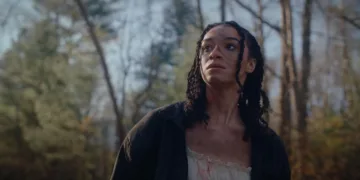
The stakes of the conflict rest on Emyri Crutchfield’s performance as Mel. She is caught between her love for Nick and her need to rebuild her life, understandably wary of his re-entry. Mel’s character is structurally vital, yet the screenplay saddles her with questionable decision-making. She exhibits an inexplicable inability to recognize Chester’s overt infatuation and his glaring manipulative intentions.
Crutchfield’s performance is noted for its quiet strength, but the character’s susceptibility weakens the central tension. In the periphery, William Forsythe appears as Nick’s father, Tony, a cold, unsupportive figure. Forsythe’s presence is utilized poorly, as the screenplay gives the veteran actor insufficient material to develop this strained paternal relationship. The film’s strength relies heavily on its two leads, suggesting a narrative construction that prioritizes the conflict between the men above the emotional grounding of the romance.
The Mechanics of a Conventional Narrative
Pompa III’s screenplay starts with a punchy, effective setup. The inciting incident is Nick’s violent outburst—his vicious beating of a waiter who insulted Mel—a choice that costs him his freedom and derails his plan to propose. The story’s main twist is intriguing: Chester, the man manipulating Mel’s living situation, is also the officer controlling Nick’s freedom. This complication promises a compelling narrative of intimidation and survival.
The film is consciously styled after an early 1990s thriller, a structural choice that brings well-defined conflicts and clear stakes. However, this adherence to formula is also the film’s undoing. The narrative follows too many predictable beats, arriving at a mostly by-the-book finish. The story is so intently plot-driven that it neglects moments for character reflection, leaving the central psychological struggle feeling underdeveloped.
The plot itself proves thin, unable to fully sustain the runtime without the constant, heavy lifting by the lead actors. This structural strain is particularly apparent in the rapid escalation during the final act, which rushes toward an obvious climactic resolution.
The narrative attempts to engage with themes of rehabilitation versus relapse. It astutely observes that successful change is rarely simple, showing how external forces, particularly Chester’s corrupt machinations, can easily sabotage a parolee’s progress.
The film explores the profound abuse of power inherent in Chester’s position, detailing his exploitation of vulnerable individuals under his control. Although the film contains elements of the stalker subgenre, it fails to deliver the sustained intensity or creative imagination needed for a truly sinister viewing experience. The film leans into routine antagonism rather than a genuinely frightening descent into obsession.
Visual Language and Creative Missteps
As a directorial effort, Paul Pompa III’s execution is hampered by several uninspired technical elements. The cinematography relies heavily on flat, conventional lighting and standard shot-reverse-shot coverage.
While this captures the action adequately, it does not succeed in building suspense or visually reflecting Nick’s high-pressure, fractured mental state. For a story so centered on internal rage and paranoia, the visual style’s safe, conventional approach is a significant drawback. It strips the story of the visual texture dynamic tension demands.
The musical score follows suit. It is generally generic, providing the necessary emotional swells during dramatic moments but failing to add any atmospheric texture or genuine intensity. The score simply follows the action instead of driving the feeling.
Despite the R-rated subject matter, the production sensibility often makes the film feel more like a “T.V. movie.” The screenplay attempts to heighten the tension by introducing moments of sleaze, most notably by placing a child in the middle of scenes of emotional abuse and violence.
This decision adds an unnecessary ugliness that detracts from the central conflict. The film ultimately struggles to develop the kind of sustained intensity a story with these stakes requires. It settles for a routine examination of intimidation rather than achieving a genuinely suspenseful atmosphere.
Final Assessment of the Narrative
Just Breathe finds its definitive success in the quality of its performances. The intense acting from Kyle Gallner and Shawn Ashmore makes the film an engaging, entertaining watch during its runtime. Their central conflict provides the necessary energy to propel the plot.
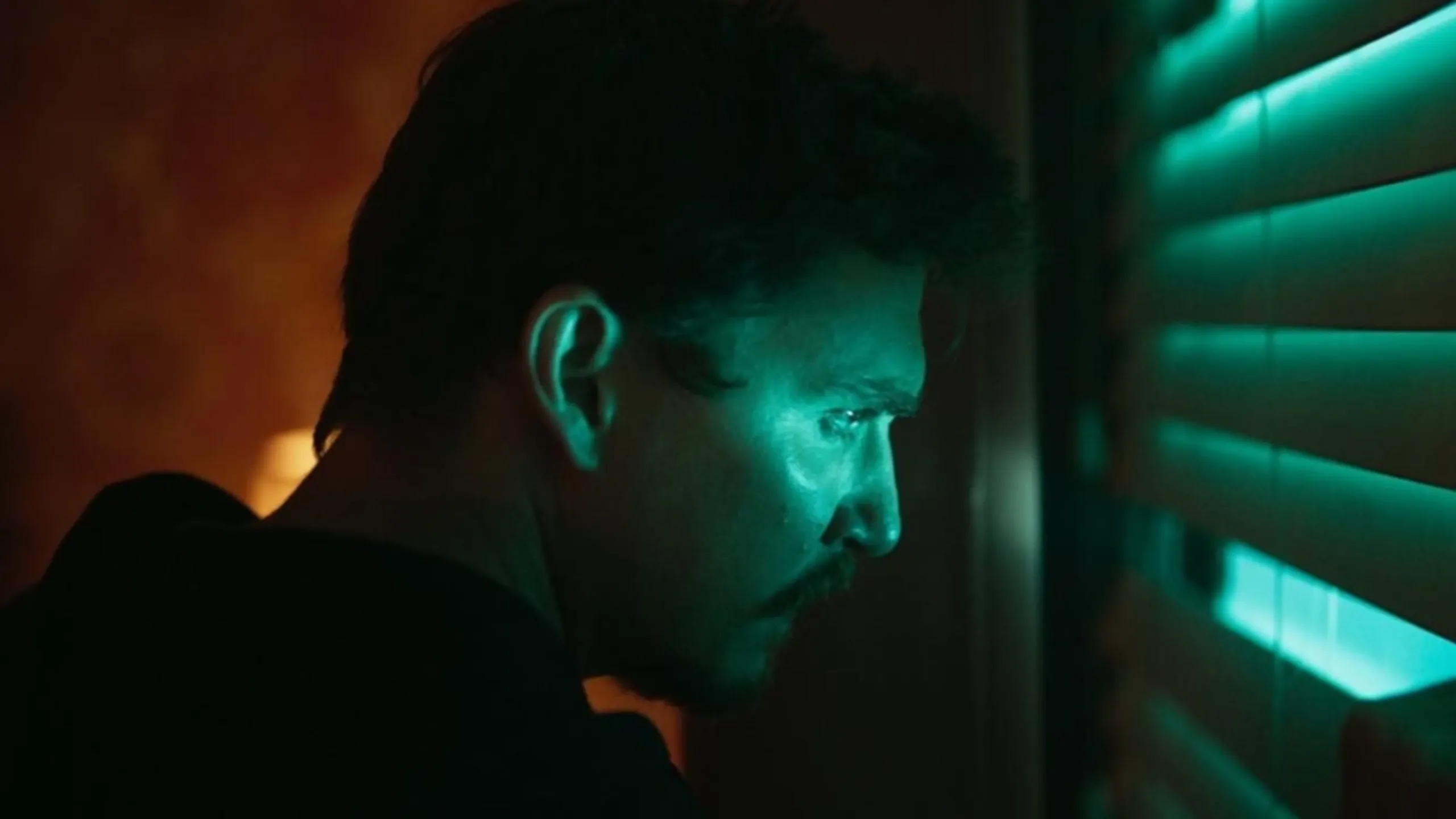
However, the film is consistently undermined by its fundamental weaknesses: a simple and predictable script, a failure to fully develop crucial supporting characters, and uninspired technical execution. The material does not live up to the talents of its lead actors. While it functions as a solid thriller, offering a hundred minutes of “intense entertainment,” the film’s reliance on formula and its lack of visual innovation mean it serves its purpose as a compelling, yet ultimately disposable, piece of work. It is quickly forgotten once the lights come up.
The movie Just Breathe is a tense crime thriller that follows Nick Bianco, who attempts to rebuild his life and win back his girlfriend after serving a year in prison for assault. Upon his release, Nick discovers his ex-girlfriend has a new admirer, Chester, who also happens to be Nick’s strict parole officer, leading to a gripping rivalry. Written and directed by Paul P. Pompa III and starring Kyle Gallner and Shawn Ashmore, the film is scheduled for release on September 16, 2025, and will be available to watch on VOD and Digital platforms, distributed by Shout! Studios.
Full Credits
Director: Paul P. Pompa III
Writers: Paul P. Pompa III
Producers and Executive Producers: Paul P. Pompa III, James Agnew, Cam Cannon, Rick Dugdale, David Hillary, Aaron Collins, Wendy Benge, Ryan Bury, James Andrew Felts
Cast: Kyle Gallner, Shawn Ashmore, E’myri Crutchfield, William Forsythe, Phuong Kubacki, Sarah Pribis
Director of Photography (Cinematographer): Andy Chen
Editors: Phil Norden
Composer: Jose Cancela
The Review
Just Breathe
Just Breathe is a functional thriller, saved by the dedicated performances of Kyle Gallner and Shawn Ashmore. They generate a palpable, intense conflict that carries the entire film. However, the derivative screenplay, predictable structure, and flat technical execution prevent it from achieving genuine suspense or lasting impact. It's an entertaining, but ultimately disposable, piece of genre work that fails to elevate its familiar premise.
PROS
- Kyle Gallner's performance (A nuanced portrayal of anger and vulnerability)
- Shawn Ashmore's performance (Chillingly effective villainy)
- Intense Lead Dynamic (The central conflict is highly engaging)
- Clear, High Stakes (The personal and legal peril is immediate)
CONS
- Predictable Story Structure (Adherence to formulaic 90s thriller beats)
- Flat Technical Execution (Generic cinematography and scoring)
- Underdeveloped Supporting Characters (Mel's characterization is weak)
- Lack of Sustained Intensity (Fails to feel truly sinister or dangerous)