


















A server in the town bar, walls lined with hundreds of shotguns, recommends the pie with a beaming smile. When asked if the firearms are loaded, she replies, “It wouldn’t be much fun if they weren’t.” This small moment captures the spirit of Normal, a film set in a snowy Minnesota town where wholesome Americana curdles into something menacing.
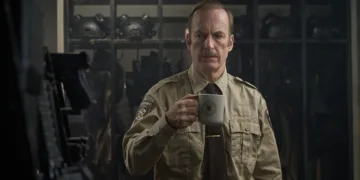
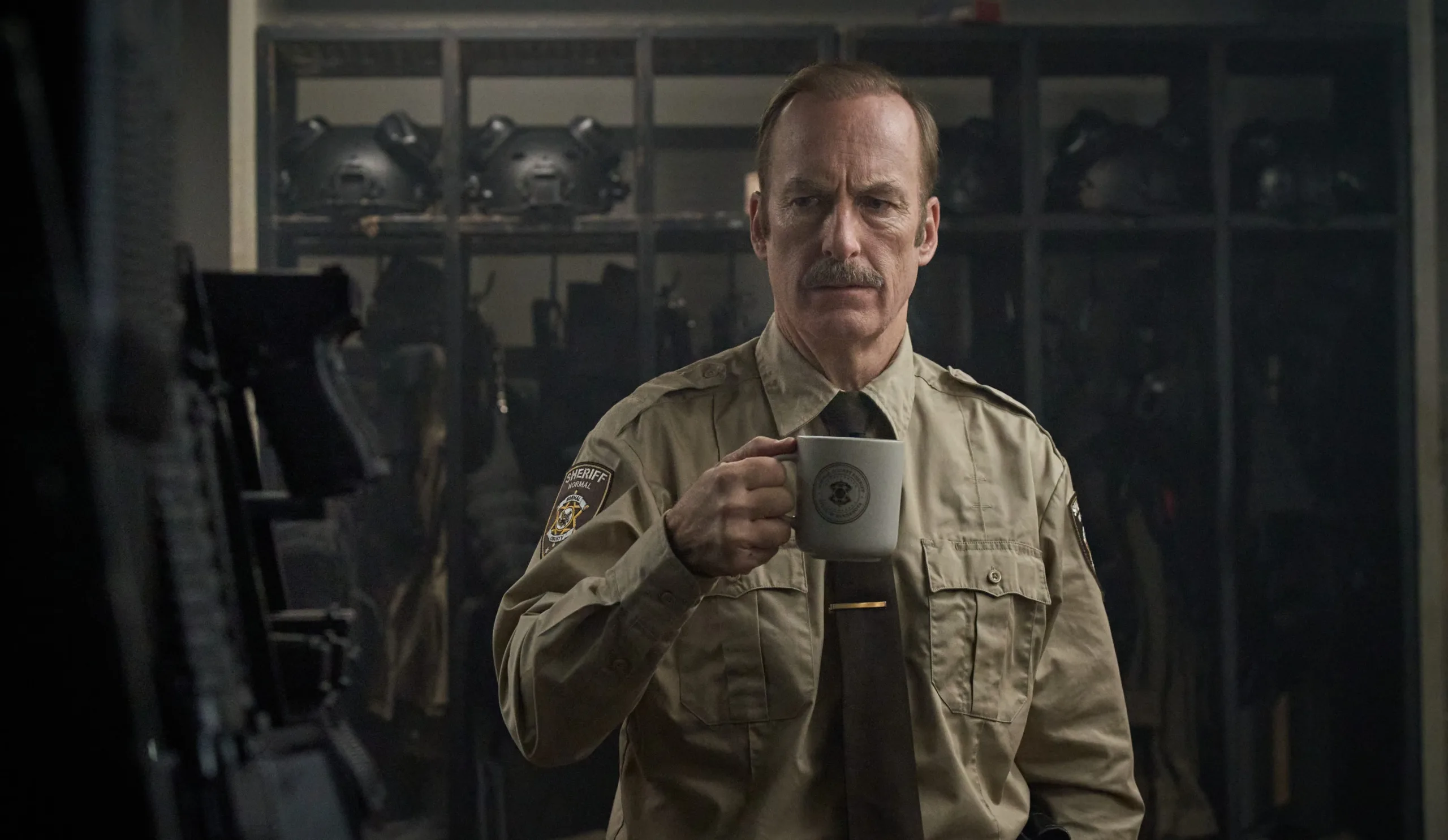
Bob Odenkirk is Ulysses, a temporary sheriff serving a short, quiet contract. He is a man who wants only to stamp papers and avoid complications. The town’s residents greet him with pleasantries and warm coffee, yet their smiles are a thin veneer over a deep, collective secret. The atmosphere is thick with an unspoken truth, suggesting that Ulysses’s hope for eight peaceful weeks is a fragile one, ready to be shattered by the slightest disturbance to the town’s peculiar equilibrium.
Beneath the Crust of Snow
The film commits to its slow-burn setup, letting the disquiet settle before the eruption. Director Ben Wheatley patiently builds a world steeped in contradiction. Ulysses’s initial patrols reveal a town that is both folksy and unnervingly prepared for war. The police station’s armory is stocked for a small invasion, a detail that clashes with the sleepy Main Street aesthetic.
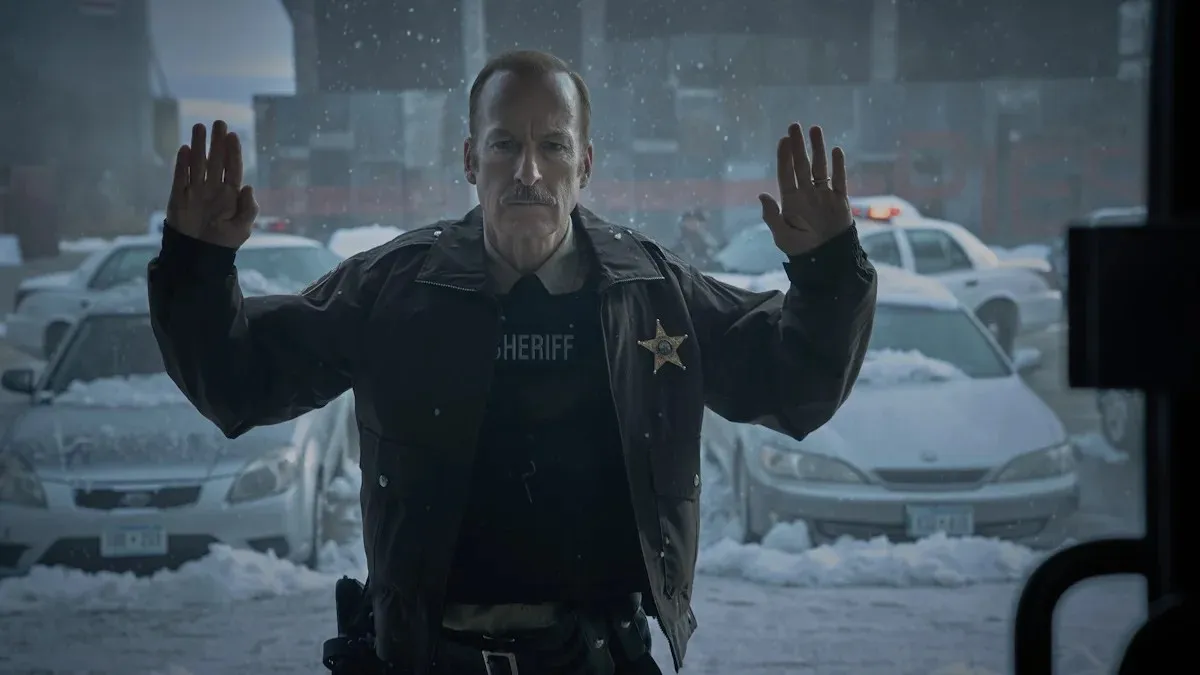
Henry Winkler’s mayor glides through scenes with the oily charm of a used-car salesman, his pronouncements on community spirit feeling hollow. These elements of foreshadowing are not subtle, yet they effectively cultivate a sense of dread. Ulysses, a man defined by a past trauma that has left him determined to remain uninvolved, sees these red flags but chooses to look away.
His weariness is palpable. The inciting incident, an amateurish bank robbery by two desperate outsiders, Keith and Lori, acts as a lit match in a munitions depot. Their small-time crime inadvertently threatens to expose the town’s foundational secret: its entire economy and existence are built on laundering money for the Yakuza. The community’s reaction is instantaneous and absolute.
The friendly smiles vanish, replaced by a chillingly unified murderous intent directed at anyone who threatens their corrupt stability. The snow-choked setting, rendered by cinematographer Armando Salas, transforms from a picturesque backdrop into a claustrophobic trap.
A Brutal Main Street Ballet
When the violence arrives, it consumes everything. The action in Normal rejects the slickness of modern action cinema for something far more chaotic and impactful. This is not a ballet of bullets; it is a clumsy, brutal mosh pit of gunfire where bodies are thrown across rooms and bits of scenery explode. The sound design is punishing, with every gunshot and explosion registering with concussive force.
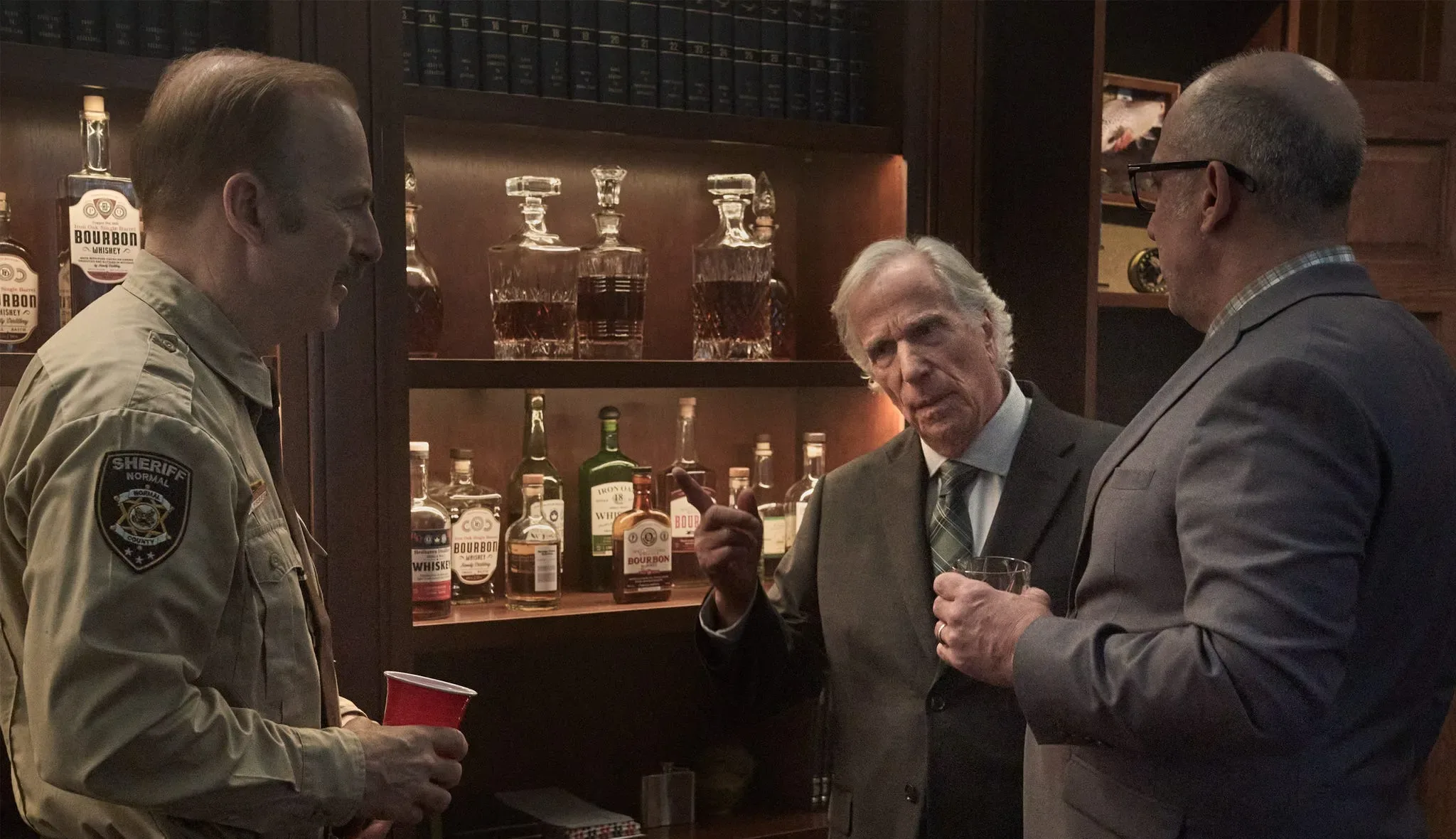
Faced with the homicidal rage of his new neighbors, Ulysses forms a pragmatic alliance with the bank robbers, the only two people not actively trying to kill him. This trio becomes the film’s desperate, defiant heart. Director Ben Wheatley orchestrates the lengthy siege with a sense of sustained, breathless intensity. Every location established in the film’s quiet first act, from the yarn shop to the soda fountain, is repurposed as a deadly battlefield.
A simple meat tenderizer becomes a gruesome instrument of defense. The violence is often laced with a shocking, slapstick humor, as carefully laid plans dissolve into panicked improvisation and accidental deaths. The film effectively uses its entire environment, paying off every setup with a literal or figurative bang, creating a relentless spectacle of carnage that feels both horrifying and absurdly entertaining.
The Banality of Badassery
The film’s success rests on the specific screen persona of Bob Odenkirk. He is not a conventional action star; his strength lies in portraying the sputtering exasperation of an everyman caught in an impossible situation. His Ulysses is a reluctant hero whose competency is born from desperation, not from a hidden set of skills. This grounding presence allows the film’s satirical edge to cut deeply.
The script by Derek Kolstad presents a darkly comedic vision of American life where gun fetishism, tribalism, and economic anxiety have festered into a corrupt, violent end point. The supporting cast enhances this tone perfectly. Ryan Allen’s ambitious deputy provides moments of pure comedic selfishness, while Lena Headey’s jaded bartender hints at a deeper understanding of the town’s rot.
The inclusion of Alex, the late sheriff’s non-binary child played by Jess McLeod, offers a modern counterpoint to the town’s twisted traditionalism and gives Ulysses a vital, clear-eyed ally. Normal distinguishes itself by wedding its over-the-top action to a character-driven story. It is a potent and clever action-comedy, one that recognizes its greatest power is watching a profoundly ordinary man navigate an utterly insane reality.
Normal is a crime thriller film that had its premiere at the Toronto International Film Festival on September 7, 2025. The movie was produced by OPE Partners, QWGmire, Bonus Productions, Tradecraft Productions, and Le Foole Inc, and distributed in Canada by Amazon MGM Studios.
Full Credits
Director: Ben Wheatley
Writers: Derek Kolstad, Bob Odenkirk
Producers: Marc Provissiero, Derek Kolstad, Bob Odenkirk
Cast: Bob Odenkirk, Henry Winkler, Lena Headey, Ryan Allen, Billy MacLellan, Brendan Fletcher, Peter Shinkoda, Jess McLeod
Director of Photography: Armando Salas
Editors: Jonathan Amos
Composer: Harry Gregson-Williams, Ryder McNair
The Review
Normal
Normal is a brutal and hilarious siege film that excels because of its commitment to chaos and the grounding presence of Bob Odenkirk. It transforms a familiar premise into a wildly entertaining spectacle of violence and dark satire. This is a sharp, ferocious, and expertly crafted action-comedy.
PROS
- A perfectly cast Bob Odenkirk as the reluctant everyman hero.
- An effective fusion of intense, chaotic action with dark, satirical humor.
- Well-orchestrated, inventive, and relentless action sequences.
- A clever script that uses its setting and characters to full effect.
CONS
- The plot might feel familiar to fans of the genre.
- Its extreme and sustained violence could be numbing for some viewers.
- Character development is secondary to action and comedic tone.
- The deliberate pacing of the first act may feel slow before the action starts.