





























In the global catalog of streaming content, certain narrative frameworks persist. A family business on the brink of collapse is one such story. The Turkish series Platonic: Blue Moon Hotel opens on this familiar ground. At the center is a charming, financially drained hotel run by Nezahat, a matriarch who clings to the property as a memorial to her late husband.
Her two daughters, Gülten and Nedret, share the space but exist in different worlds. Both seek marriage, yet their methods reveal a generational split in female aspiration. Gülten, deeply worried about her diminishing prospects, invests in her physical appearance.
Nedret looks inward, searching for a soulmate through spiritual quests. Their delicate, stagnant ecosystem is disrupted by the arrival of Kaan. He is the handsome, charismatic stranger, the first new guest in ages, whose presence immediately ignites a simmering tension and sets a well-worn romantic plot into motion.
Sisterhood in the Age of Anxiety
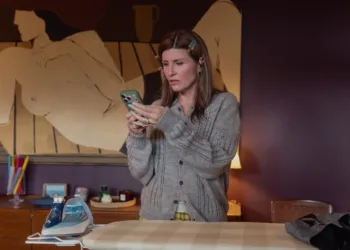
The series finds its most potent energy in the dynamic between Gülten and Nedret, and it is here that the show offers its sharpest social commentary. Their conflict is a thoughtful depiction of modern female anxieties filtered through a comedic lens. Gülten’s path is one of pragmatic desperation; she pursues cosmetic procedures and fumbles through overt attempts at seduction, a character shaped by the intense societal pressures on women to maintain youthful desirability.
That the show’s creator, Gupse Özay, also plays this role adds a significant layer of authorship; she presents Gülten’s vulnerability without judgment, crafting a complex portrait of a woman grappling with her perceived obsolescence. In contrast, Nedret represents a different cultural response, one that retreats into an ethereal world of cosmic connections and dimensional portals. Her journey satirizes a wellness culture that promises deep fulfillment but often delivers superficial aphorisms.
Their rivalry for Kaan’s attention is less about the man himself and more a clash of their survival strategies. He is merely the catalyst that exposes their deepest insecurities. Öykü Karayel, as Nedret, embodies this spiritual certainty with a quiet, observant humor that grounds her most abstract beliefs. The performances from both leads elevate the material, making the friction between them feel authentic.
The Streaming Stew of Storytelling
Platonic: Blue Moon Hotel is a quintessential product of the streaming era’s creative ethos, for better and for worse. The show begins as a standard romantic comedy, but it quickly reveals its ambition to be several other things at once. It adopts a semi-mockumentary format, with characters giving confessional interviews to an unseen inquisitor.
This technique, a popular trend in contemporary television, functions as a narrative shortcut, a promise of a future dramatic payoff that the main story struggles to build toward organically. The series then complicates its DNA further by sprinkling in supernatural and science-fiction ideas. Vague references to witchcraft, alien conspiracies, and Kaan’s potential connection to a mystical portal are introduced without conviction.
These elements are not integrated into the plot; they feel like disparate concepts from a different script, perhaps included to satisfy an algorithmic demand for genre diversity. This chaotic blend produces a jarring tonal experience. The humor swings wildly from light character-based comedy to bizarre gags that land uncomfortably.
The show attempts to invert some gender dynamics in its romantic pursuit scenes, but the execution can feel more unsettling than funny, leaving the viewer unsure of how to react to its over-the-top scenarios.
Designed for the Binge, Lost in the Execution
The show’s eight-episode structure is a case study in the pacing challenges that affect many streaming series. It launches with an efficient and energetic pilot, a design intended to hook a viewer quickly before they can scroll to the next option. This initial momentum, however, dissolves into a repetitive middle section.

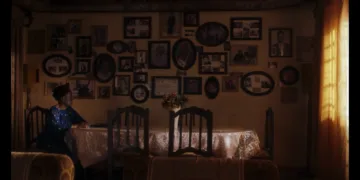
Here, the central love-triangle plot is stretched far beyond its capacity, forcing the characters into cyclical situations that do little to advance the story. This sagging middle is a common symptom of productions that prioritize episode counts over narrative necessity. The story then accelerates dramatically in its final act, delivering a rapid-fire sequence of twists to reward anyone who remained. Visually, the series is quite pleasant, employing a bright, clean aesthetic that makes its Turkish setting feel accessible to a global audience.
The boutique hotel is picturesque, and the vibrant costumes create an inviting atmosphere. Ultimately, Platonic: Blue Moon Hotel is a flawed but fascinating cultural object. It showcases how a talented female creator balances a personal, character-driven story against the demands of a platform that favors high-concept genre hooks and binge-ready formulas.
Platonic: Blue Moon Hotel is a Turkish comedy series that premiered on Netflix on September 18, 2025. The story follows a suave businessman who checks into a modest boutique hotel run by a mother and her two daughters. His presence causes chaos and a love triangle as the two sisters become interested in him. The series was written and created by Gupse Özay.
Full Credits
Director: Onur Bilgetay
Writers: Gupse Özay, Onur Bilgetay
Executive Producers: Muzaffer Yıldırım
Cast: Gupse Özay, Kerem Bürsin, Öykü Karayel, Mehmet Özgür, Uğur Demirpehlivan, Ali İpin, Feri Güler, Yener Özer, Eda Akalın, Leyla Kader İlhan, Pınar Çağlar Gençtürk
The Review
Platonic: Blue Moon Hotel
Gupse Özay and Öykü Karayel deliver standout performances, grounding the series with a genuinely funny and compelling sisterly dynamic. Their efforts, however, are contained within a structurally flawed show. The attempt to blend romantic comedy with mockumentary and underdeveloped supernatural threads results in a chaotic and tonally inconsistent experience. While intermittently charming due to its leads and pleasant aesthetics, the messy execution and repetitive pacing prevent it from realizing its potential, making it a frustrating watch.
PROS
- Excellent lead performances from Gupse Özay and Öykü Karayel.
- A compelling and humorous central dynamic between the two sisters.
- Sharp commentary on contemporary female anxieties.
- Pleasant visuals with a vibrant and charming setting.
CONS
- A chaotic mix of genres that do not cohere.
- Inconsistent tone, with humor that can be unsettling.
- Underdeveloped supernatural and sci-fi plot elements.
- Repetitive narrative and poor pacing, especially in the middle episodes.