


























![Kingdom Hearts Collection [I-III] Review](https://gazettely.com/wp-content/uploads/2026/10/Kingdom-Hearts-Collection-I-III-1-360x180.webp "Kingdom Hearts Collection [I-III] Review: KHII Holds Steady as Newer Entries Fluctuate 40")
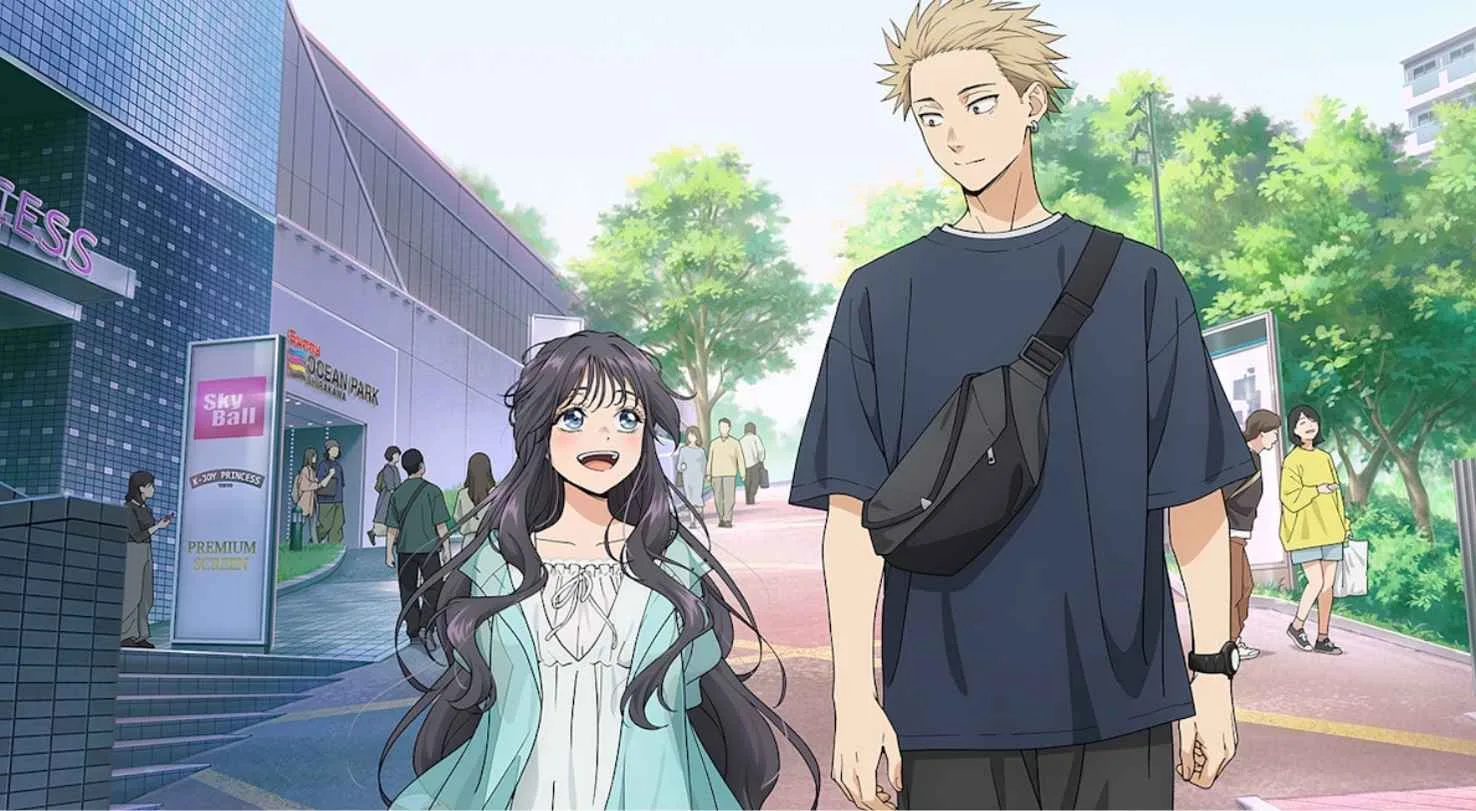

Two high schools stand side-by-side, separated by a wall yet worlds apart. One is Chidori Public High, a rundown institution for boys with a reputation for producing delinquents. The other is Kikyo Private Academy, a pristine, exclusive school for girls. This physical proximity yet vast social distance provides the foundational conflict for The Fragrant Flower Blooms with Dignity.
The story centers on Rintaro Tsumugi, a Chidori student whose intimidating appearance masks a gentle spirit, and Kaoruko Waguri, a bright, cheerful student from Kikyo. Their disparate worlds intersect at the one neutral ground they share: a small, family-owned cake shop where Rintaro works.
This warm, fragrant space becomes the setting where societal labels are shed and a fragile connection can form. The series then poses its central question: can a relationship built on quiet kindness survive the immense weight of ingrained prejudice and peer pressure?
Character Construction in Counterpoint
The story’s effectiveness rests almost entirely on the careful construction of its two lead characters, who are designed to be elegant counterpoints to one another. Rintaro Tsumugi is a familiar archetype, the “delinquent with a heart of gold,” but the execution here is grounded in a believable psychology. His external markers—tall stature, dyed blonde hair, piercings—have typecast him so thoroughly that he has accepted the role, a judgment he has long since stopped fighting.
This public persona is not a rebellion but a resignation, fostering a profound social anxiety and a deep-seated belief that he is fundamentally misunderstood. The story illustrates this through his clipped speech, his tendency to hide his face, and his constant internal monologues filled with self-deprecation. He has erected emotional walls as a defense mechanism.
The narrative cleverly gives him a sanctuary that reflects his true self: Patisserie Plain, his family’s bakery. This charming shop is more than a secret; it is the only place where he possesses confidence and competence. Surrounded by the warmth and sweetness of his family’s creations, he is capable and calm, a stark contrast to the awkward, hulking figure he presents at school. He is a boy defined by the chasm between his environment and his nature.
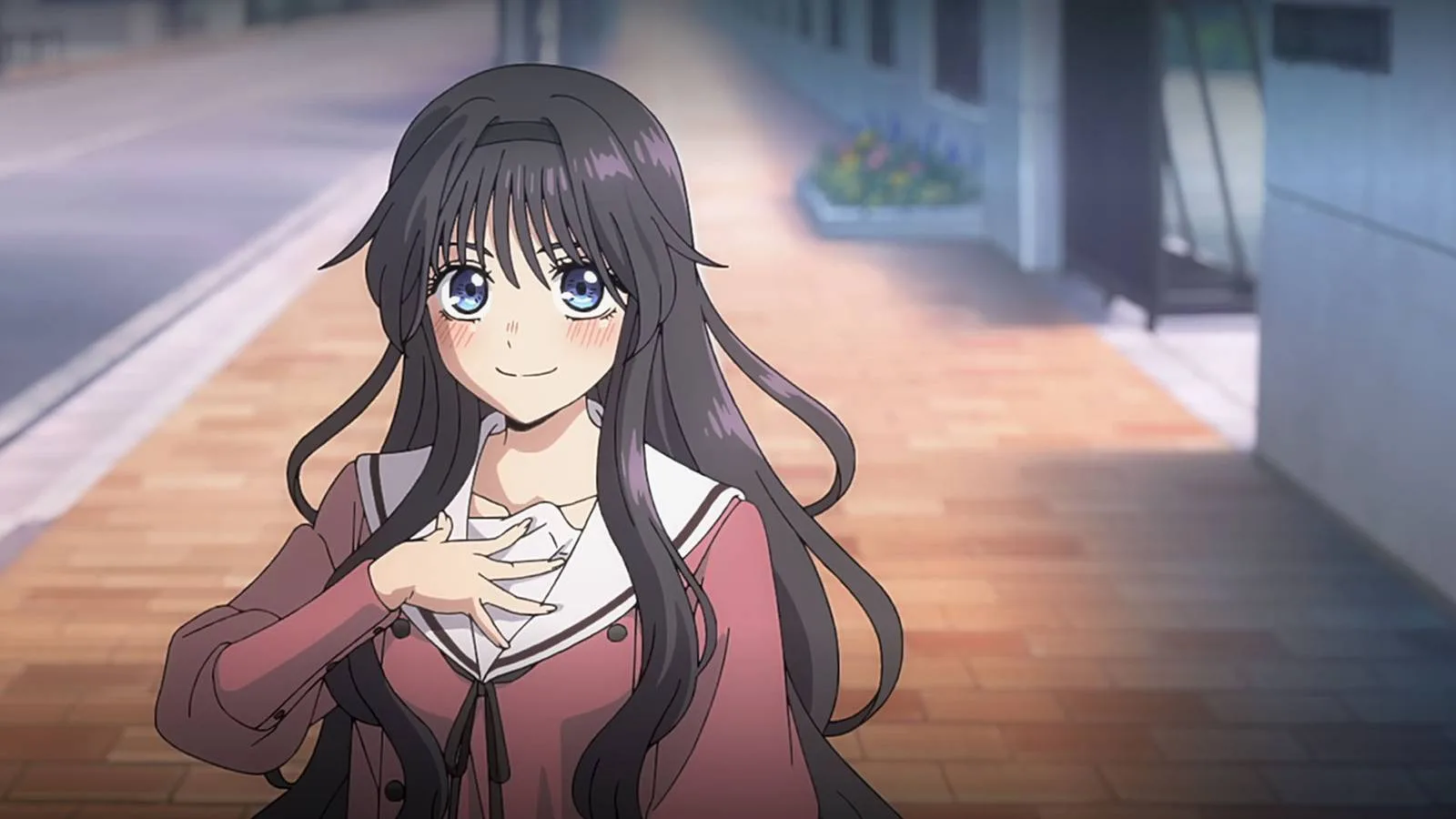
Into this carefully managed world steps Kaoruko Waguri, the story’s primary catalyst. She is presented as sweet and honest, but her most important quality is her directness. Her small frame is humorously contrasted with a huge appetite for cake, a trait matched by her capacity for empathy. Kaoruko’s defining narrative function is her ability to immediately see Rintaro’s inherent goodness. It is not presented as a magical insight but as a simple act of observation, of looking at the person instead of the reputation.
This acceptance becomes the key that starts to dismantle his defenses. The writing gives her considerable agency, saving her from being a mere plot device for Rintaro’s growth. She is a top student, holds a part-time job to pay for her pastry habit, and possesses the emotional intelligence to speak her mind. Their dynamic works because their personalities are complementary. Her forthright nature bypasses the genre’s typical reliance on protracted misunderstandings, gently pushing against his insecurity.
His quiet steadiness, in turn, offers a calming presence. Their bond is built through an accumulation of small, meaningful moments—hesitant conversations over the bakery counter, shared smiles across the schoolyard fence, acts of quiet support. The relationship feels earned because it develops from a place of mutual respect, a slow and steady process of earning trust.
The Social Architecture of Prejudice
The fierce animosity between Chidori and Kikyo serves as a microcosm for the story’s exploration of social bias. It is a classic star-crossed lovers framework, scaled down to the politics of a high school campus. Chidori is dismissed by outsiders as a holding pen for troublemakers and “idiots.” Kikyo is perceived as an untouchable institution for elitist girls who look down on their neighbors.
This rivalry is made tangible through the hostile whispers of side characters and the stark visual separation of the school buildings, creating a constant, low-level source of external pressure. This environmental conflict forces the internal growth of the protagonists. The narrative methodically uses this setup to challenge snap judgments, showing repeatedly how surface-level assumptions are wrong.
The story does not simply state that prejudice is bad; it demonstrates its mechanics through minor interactions. When Kaoruko’s friends first encounter Rintaro, their immediate assumption is that he is harassing her, a belief based solely on his school uniform. The resulting standoff is defused not by a dramatic fight but by awkward clarification, a resolution that reflects the show’s preference for quiet realism over heightened drama.
A particularly strong piece of character writing occurs when Rintaro learns Kaoruko attends Kikyo. For a moment, he falls into the same judgmental mindset he resents, his first thought being that a Kikyo girl would never want to associate with him. His immediate self-recrimination is a potent moment of self-awareness. This sequence is a compact representation of the show’s thesis on personal growth.
It suggests that overcoming bias is an active, internal process of questioning one’s own reactions. The story presents sincere communication as the primary tool for resolving these tensions. Kaoruko’s straightforwardness is often the catalyst, encouraging Rintaro to articulate his feelings instead of retreating into his negative assumptions.
Atmosphere as Narrative
The show’s gentle tone is meticulously reinforced by its production. The visual language is a direct extension of its thematic concerns. Studio CloverWorks employs a soft, pastel-heavy color palette that creates a warm, almost nostalgic atmosphere. This aesthetic is not just for decoration; it is a narrative tool. The soft focus and warm lighting generate a sense of safety and comfort for the viewer, creating a receptive state for a story about kindness.
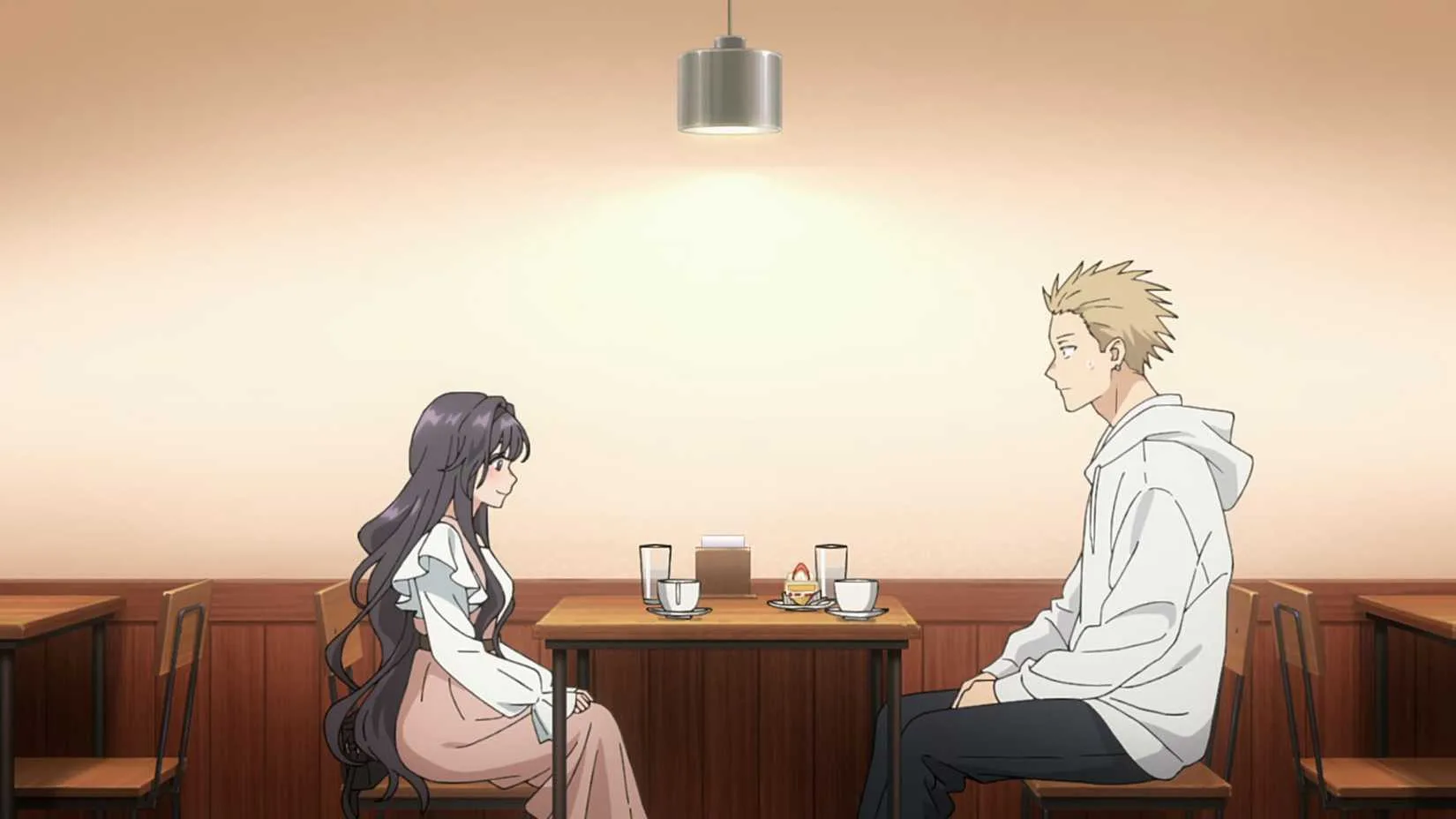
This approach stands in contrast to the sharp lines and high-contrast visuals of more action-oriented anime, highlighting the deliberateness of the artistic choice. The background art is lush and detailed, making the world feel inviting and lived-in, from the cozy clutter of the bakery to the sun-dappled school grounds. Character designs are expressive, with small details like the animated bounce and life in Kaoruko’s hair adding a touch of distinct personality.
The sound design follows a similar principle of thematic reinforcement. The ambient noise of the bakery or the quiet hush of a library contributes to the show’s grounded, slice-of-life feeling. The opening song, “Manazashi wa Hikari,” is performed by a male artist and centers on Rintaro’s perspective of a world that fears him. The ending theme, “Hare no Hi ni,” is sung by a female artist and reflects Kaoruko’s hopeful, open viewpoint.
This parallel structure is a smart narrative choice, underscoring the dual-protagonist nature of the story from both an audio and visual standpoint. The voice work is also carefully calibrated. Yoshinori Nakayama captures Rintaro’s quiet, layered personality through subtle shifts in tone that convey his internal state. Honoka Inoue’s performance as Kaoruko is distinctly high-pitched and girlish, a stylistic choice that perfectly aligns with the character’s overt sweetness and innocence.
The Quiet Accumulation of Feeling
The story’s pacing is unhurried and introspective, a structural choice that is central to its identity. This slow-burn approach prioritizes emotional development and character reflection over plot velocity or manufactured drama. Many romance stories rely on high-stakes contrivances to sustain interest, but this series rejects that model.

It finds its drama in smaller, more relatable emotional shifts: a moment of unexpected courage, a shared vulnerability, a misunderstanding clarified through honesty. This patient storytelling asks the audience to invest in the characters as people, not just as players in a plot. It is an approach that allows the central relationship to mature organically, making the emotional payoffs feel authentic.
The supporting cast exists to give this process social context. Rintaro’s loyal friends are his anchor to the “normal” Chidori world, representing what he stands to risk by associating with a Kikyo student. Kaoruko’s protective friend, Subaru, acts as a physical embodiment of the guarded barrier around Kikyo.
They are not just background decoration; they are manifestations of the social forces the main pair must contend with. Ultimately, The Fragrant Flower Blooms with Dignity is a sincere and emotionally mature story. Its strength is found not in dramatic declarations but in its unwavering focus on the power of kindness. It makes a quiet but firm argument that empathy is the most potent force for change, a message that feels both timeless and particularly welcome.
The Fragrant Flower Blooms with Dignity is a romantic comedy anime series based on the manga by Saka Mikami. The anime premiered on July 6, 2025, and is available to stream on Netflix. It is produced by CloverWorks and tells the story of a boy from a low-ranking high school and a girl from a prestigious all-girls school, who fall in love despite the rivalry between their schools.
Full Credits
Director: Miyuki Kuroki, Haruka Tsuzuki
Writers: Rino Yamazaki
Cast: Yoshinori Nakayama, Honoka Inoue, Kikunosuke Toya, Koki Uchiyama, Hiiro Ishibashi, Aya Yamane
Director of Photography: Yukiko Nagase
Editors: Kazuhiro Nii
Composer: Moeki Harada
The Review
The Fragrant Flower Blooms with Dignity
The Fragrant Flower Blooms with Dignity is a refreshingly sincere and gentle romance. It prioritizes nuanced character development over dramatic plot twists, allowing its central relationship to develop with an emotional honesty that feels earned. While its deliberate, unhurried pacing may not appeal to all, the series stands as a testament to the quiet power of kindness and empathy. It is a heartfelt, beautifully animated story that finds its strength in small moments and sincere connection, making it a standout in a genre often reliant on melodrama.
PROS
- Deeply developed and psychologically grounded main characters.
- Beautiful, gentle animation and a warm, inviting art style.
- A mature and sincere approach to communication in relationships.
- Thoughtful exploration of themes like prejudice, empathy, and personal growth.
- An authentic and emotionally resonant slow-burn romance.
CONS
- The deliberate, slow pacing may feel uneventful to viewers seeking more action.
- A notable lack of high-stakes conflict or significant plot twists.
- The high-pitched voice acting for the female lead may be jarring for some.
- Relies on some familiar romance tropes, even if they are well-executed.