

























![Kingdom Hearts Collection [I-III] Review](https://gazettely.com/wp-content/uploads/2026/10/Kingdom-Hearts-Collection-I-III-1-360x180.webp "Kingdom Hearts Collection [I-III] Review: KHII Holds Steady as Newer Entries Fluctuate 37")



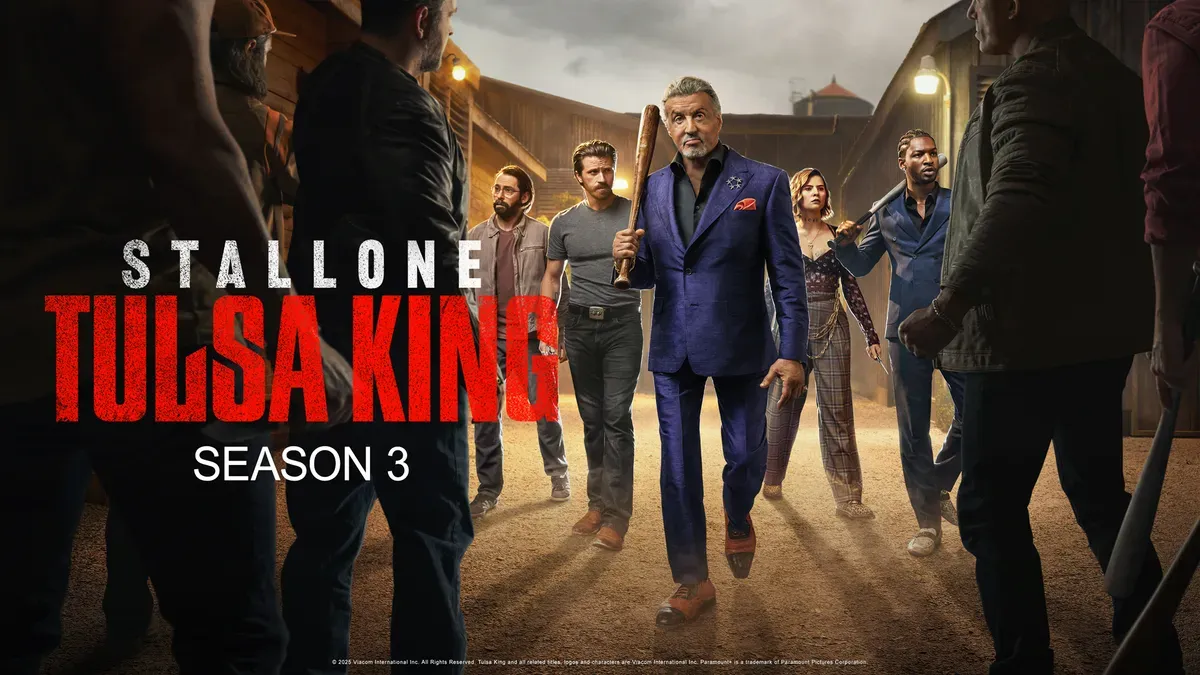

Dwight Manfredi’s unlikely Oklahoman empire has always felt like a construction built on unstable ground. The third season of Tulsa King begins to test that foundation with relentless force. Having established a tentative peace and a profitable, if precarious, enterprise, Dwight now finds his position challenged by local power structures that were entrenched long before he arrived.
The season’s narrative engine is Dwight’s ambition to move into a new market: bourbon. His crew targets a local distillery, a move intended to secure a legitimate legacy. This decision, however, places them directly in the path of a formidable family with a deep, violent claim to the territory.
Dwight finds himself besieged. He must contend with his new rivals, the shifting allegiances of his Kansas City partners, the distant commands of his New York superiors, and the unresolved federal entanglement from last season’s finale. The question is no longer if Dwight’s kingdom will expand, but if it can survive the siege.
New Blood and Old Grudges
The season’s central conflict materializes through the attempted acquisition of a whiskey distillery, an enterprise rich with the metaphorical weight of American legacy. This is not another front for illicit activity; it is presented as a genuine piece of Americana, a place of copper stills and aging oak barrels that stands in stark opposition to the sterile environments of Dwight’s usual criminal ventures.
The opportunity arrives via Mitch Keller, whose past relationship with Cleo Montague connects him to her family’s struggling business. This personal tie provides the entry point for Dwight’s crew, transforming what could have been a simple hostile takeover into a complicated web of old affections and new alliances. The Montagues are portrayed not as corporate pawns but as a family caught in a vise, desperate to save their heritage from a predator they have long feared.
Their primary obstacle, and Dwight’s, is the Dunmire family, the self-proclaimed tyrants of Tulsa. Led by the calculating Jeremiah, played with a chilling stillness by Robert Patrick, and his brutish son Cole, the Dunmires represent a different kind of threat. They are a homegrown menace with deep tendrils in the Dixie Mafia, their power baked into the very soil Dwight now stands on.
Their control is almost feudal, enforced through intimidation and violence that the local populace has learned to accept. The show wisely demonstrates their brutality in the opening episodes, using a public and savage act of retribution to signal that their methods are far from subtle. This establishes the Dunmires as an immediate, physical danger whose regional power makes Dwight’s East Coast credentials irrelevant.
This local war is complicated by Dwight’s existing commitments. His tense partnership with Frank Grillo’s Bill Bevilaqua in Kansas City becomes increasingly strained. The Dunmire conflict diverts resources and attention, causing friction that tests the fragile trust between the two bosses. Orders from New York’s Renzetti family add another layer of external pressure, a constant reminder that Dwight’s autonomy is conditional.
The most curious narrative thread is the one dangling from the Season 2 cliffhanger. The setup involving federal agent Musso promised a season-long battle of wits, a strategic game of cat and mouse. Instead, the threat slowly dissipates, handled in a few terse scenes that lack the season’s primary urgency. It becomes a background concern that feels more like a contractual obligation than a driving plot point.
The King and His Court
Sylvester Stallone settles deeper into Dwight’s persona this season, shifting him from a conquering force to a leader on the defensive. He spends much of his time reacting to multiplying threats, and Stallone effectively uses his weary physicality to portray the exhaustion of a man whose wits are his primary weapon against a tide of violence.
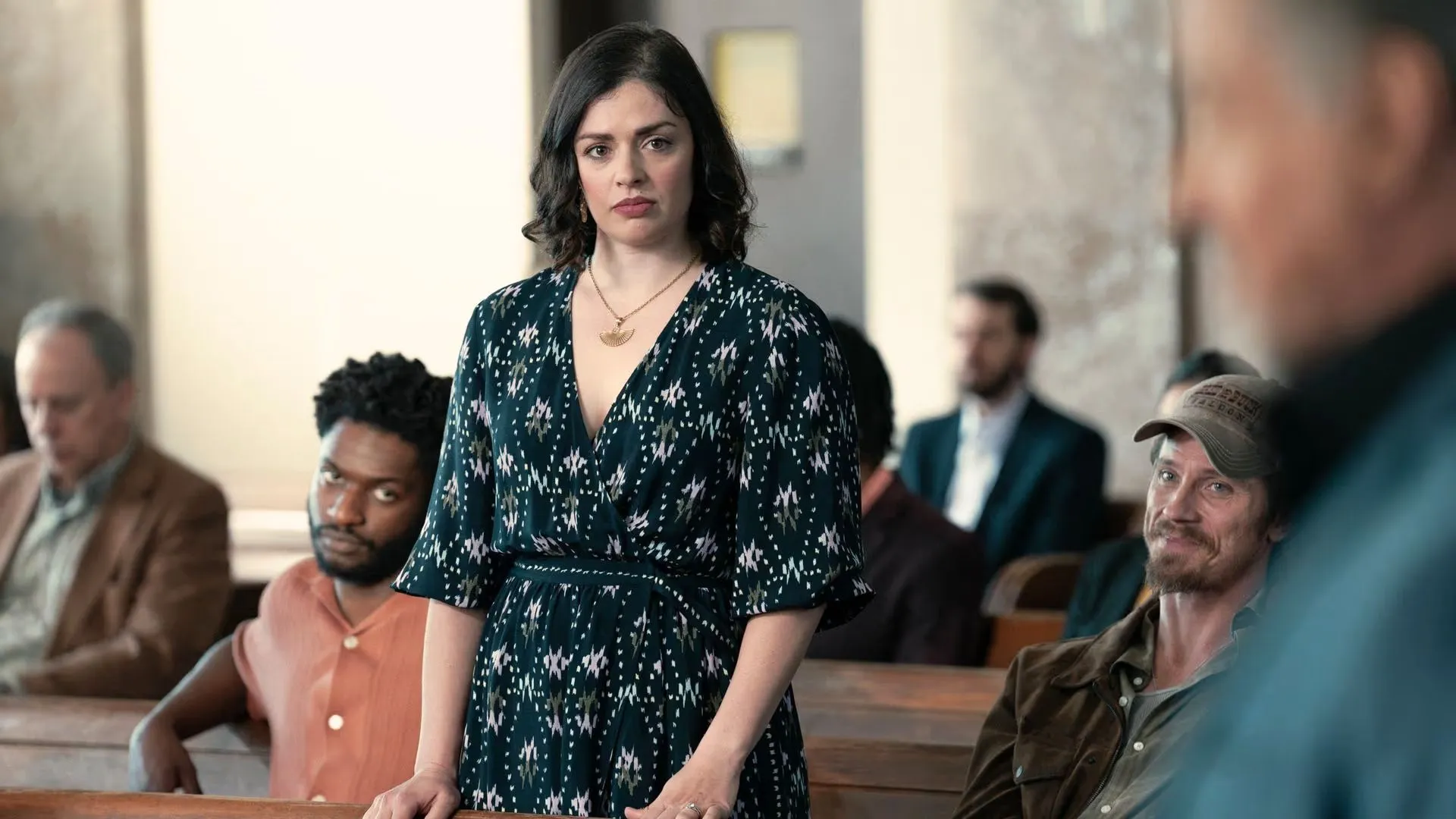
We see Dwight’s internal conflict play out in moments of quiet contemplation; the desire to protect his new family wars with the ruthless instincts that have kept him alive for decades. This season tests his capacity for restraint, forcing him to decide if he is building a legacy or just another graveyard.
The series wisely gives more narrative space to its supporting cast. Garrett Hedlund’s Mitch Keller is a particular standout, receiving a storyline that explores his past with Cleo Montague and complicates his straightforward loyalty to Dwight. It introduces a potential conflict of interest that gives the character a welcome depth.
Jay Will continues to explore Tyson’s dual nature as both a loyal asset and a youthful liability. In one instance, his quick thinking on the street provides a crucial piece of intel, while in another, his eagerness to prove his toughness nearly brings disaster upon the crew.
This push-and-pull illustrates his ongoing struggle for Dwight’s approval. At the same time, the narrative focus on new characters comes at the expense of others. Martin Starr’s Bodhi, once a key figure in the operation, has his role diminished, and trusted muscle like Goodie and Bigfoot are often relegated to the background.
The new additions make a strong impression. Robert Patrick’s Jeremiah is a superb villain, a strategist whose cold demeanor contrasts sharply with the hot-headed antagonists of past seasons. Beau Knapp’s Cole serves as the family’s raw, unpredictable muscle, a powder keg of resentment and ambition. Yet it is Frank Grillo who often steals the show as Bill Bevilaqua.
The scenes between Stallone and Grillo crackle with an authentic, cantankerous energy born from a clash of similar personalities. Their arguments are less about plot and more about the simple joy of watching two veteran actors trade perfectly timed barbs. This season, the entire cast seems more comfortable in their roles. The interactions feel lived-in, and the chemistry of Dwight’s core group has solidified, making their fight for survival a more engaging prospect.
A Blend of Mayhem and Mirth
Tulsa King continues to operate in its own distinct generic space, mixing the conventions of a gangster saga with the iconography of a modern Western. The show’s tone remains its most interesting feature, demonstrating a willingness to embrace a certain playfulness that undercuts its own violent stakes.
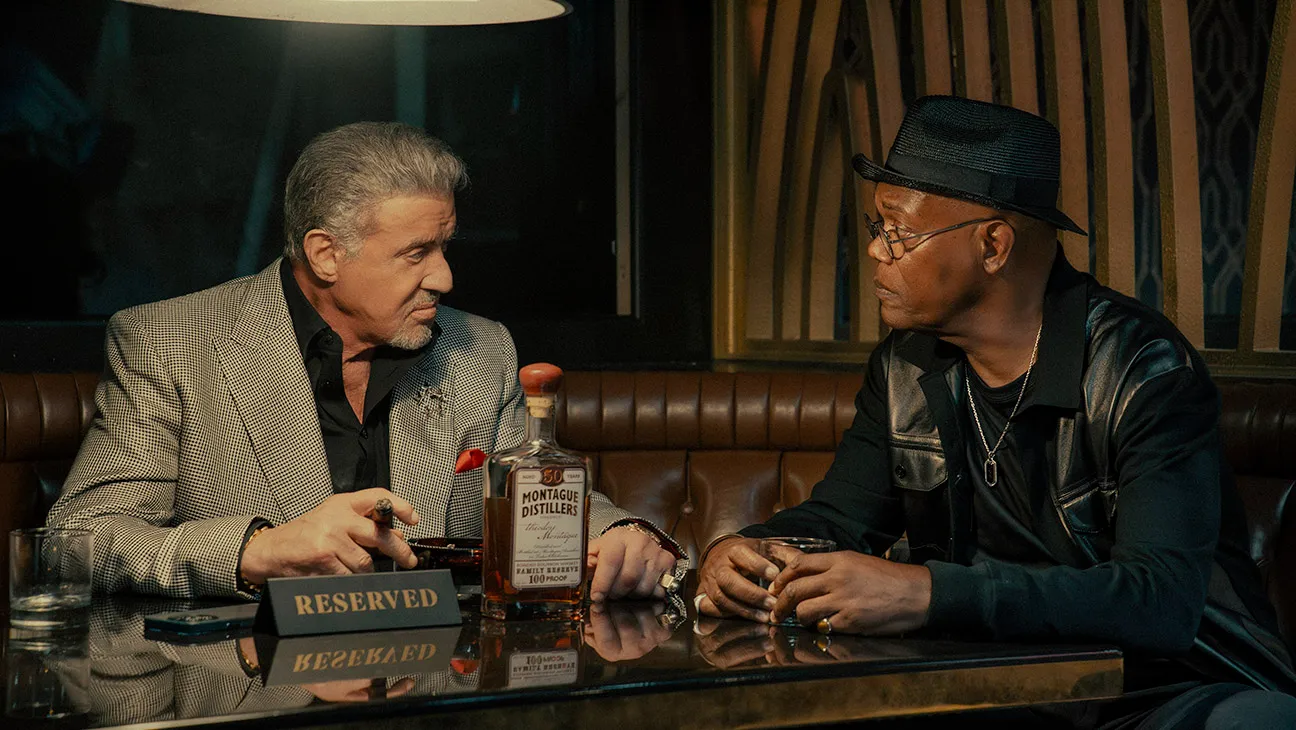
The dark humor functions as a necessary release valve for the audience, preventing the narrative from becoming oppressively bleak. The dialogue exchanges between Dwight and Bill Bevilaqua are prime examples, functioning as short comedic sketches about bullish male egos who see too much of themselves in each other. Their friction is a source of consistent entertainment.
The central plot device, the whiskey distillery, serves as an effective metaphor for the show’s thematic interests. Whiskey represents legacy, history, and a uniquely American form of craftsmanship. For Dwight, a man nearing the end of his life, acquiring the distillery is an attempt to build something permanent, something that is not just a criminal record.
For the Dunmires, protecting it is about preserving a legacy of fear and control. This thematic focus on a “found family” fighting for its future gives the show an emotional anchor. The external threat of the Dunmires forces Dwight’s crew to solidify their bonds and reaffirm their loyalties, not just to him but to one another. The show’s refusal to descend into unrelenting grit is what separates it from many of its contemporaries in the crime genre. It remains accessible and entertaining without sacrificing high-stakes conflict, a balance many series fail to achieve.
Narrative Triumphs and Lingering Flaws
The season benefits immensely from a swift narrative launch. Unlike the second season’s slower start, this installment introduces its central conflict and primary antagonists with an efficiency that creates immediate momentum. The pressure on Dwight is constant, resulting in a series of high-octane confrontations that keep the story moving at a brisk pace.

This briskness, however, sometimes comes at a cost. A persistent flaw is the show’s tendency to abandon compelling character arcs, creating a pattern of unfulfilled narrative promises. The ghost of Stacy Beale, the ATF agent whose complex relationship with Dwight defined much of the first two seasons, looms large. Her complete absence creates a vacuum, making Dwight’s prior character development feel less consequential. This season repeats the pattern with the federal agent plot, which begins with the promise of a season-long chess match and is resolved with little fanfare.
This inconsistency affects the story’s emotional depth. A significant tragedy strikes a new character connected to the crew, an event clearly designed to be a turning point. The initial shock is palpable, leading to vows of vengeance and a surge of righteous anger. A few episodes later, the character is barely mentioned, their death reduced to a mere plot device that justified the ensuing violence.
The profound sense of loss fails to linger, brushed aside for the next strategic meeting. This handling prevents the stakes from feeling truly personal. The storytelling also resorts to contrived situations. A visit to a strip club, for example, results in a key henchman drunkenly boasting about the Dunmires’ entire plan within earshot of Tyson. It is a moment of narrative convenience that undermines the villains’ supposed cunning. While some characters receive welcome attention, others are left behind, highlighting a structural flaw in a show that introduces more players than it can meaningfully service.
Tulsa King is a crime drama series created by Taylor Sheridan. The series follows New York mafia capo Dwight “The General” Manfredi, who is released from prison after 25 years and exiled by his boss to set up a new criminal empire in Tulsa, Oklahoma. Realizing his mob family may not have his best interests in mind, Dwight slowly builds a new crew. The show premiered on Paramount+ on November 13, 2022. A third season is slated to premiere on September 21, 2025.
Full Credits
Director: Allen Coulter, Ben Richardson, Kevin Dowling, Stephen Kay
Writers: Taylor Sheridan, Terence Winter, Joseph Riccobene, David C. Glasser, Dave Erickson
Producers and Executive Producers: Taylor Sheridan, Terence Winter, Sylvester Stallone, David C. Glasser, Ronald Burkle, Bob Yari, David Hutkin, Allen Coulter, Braden Aftergood, Craig Zisk
Cast: Sylvester Stallone, Andrea Savage, Martin Starr, Jay Will, Max Casella, Domenick Lombardozzi, Vincent Piazza, A. C. Peterson, Garrett Hedlund, Dana Delany, Chris Caldovino, McKenna Quigley Harrington, Mike Walden, Annabella Sciorra, Neal McDonough, Frank Grillo
Director of Photography (Cinematographer): Ben Richardson, Andrew Mitchell
Editors: Chad Galster, Greg O’Bryant, Christopher Gay, A.J. Caton
Composer: Danny Bensi, Saunder Jurriaans
The Review
Tulsa King Season 3
Tulsa King’s third season is its most confident and entertaining outing. Buoyed by menacing new villains and the superb chemistry between Sylvester Stallone and Frank Grillo, the season moves with a relentless, engaging pace. Its narrative ambition is undercut by a persistent habit of abandoning storylines and shying away from the deeper emotional consequences of its own plot. The result is a season that is fun and flashy, yet feels less substantial than the sum of its excellent parts.
PROS
- Sylvester Stallone’s compelling lead performance.
- Excellent comedic and dramatic chemistry between Stallone and Frank Grillo.
- A strong, intimidating new set of antagonists in the Dunmire family.
- A fast-paced plot that establishes its stakes quickly.
- An entertaining blend of crime-drama, western, and comedy tones.
CONS
- Abandons significant plot threads and character arcs from previous seasons.
- Fails to explore the emotional weight of major tragic events.
- Relies on narrative conveniences to resolve plot points.
- Underutilizes several interesting supporting characters.
- The overarching story lacks a sense of lasting consequence.







