




























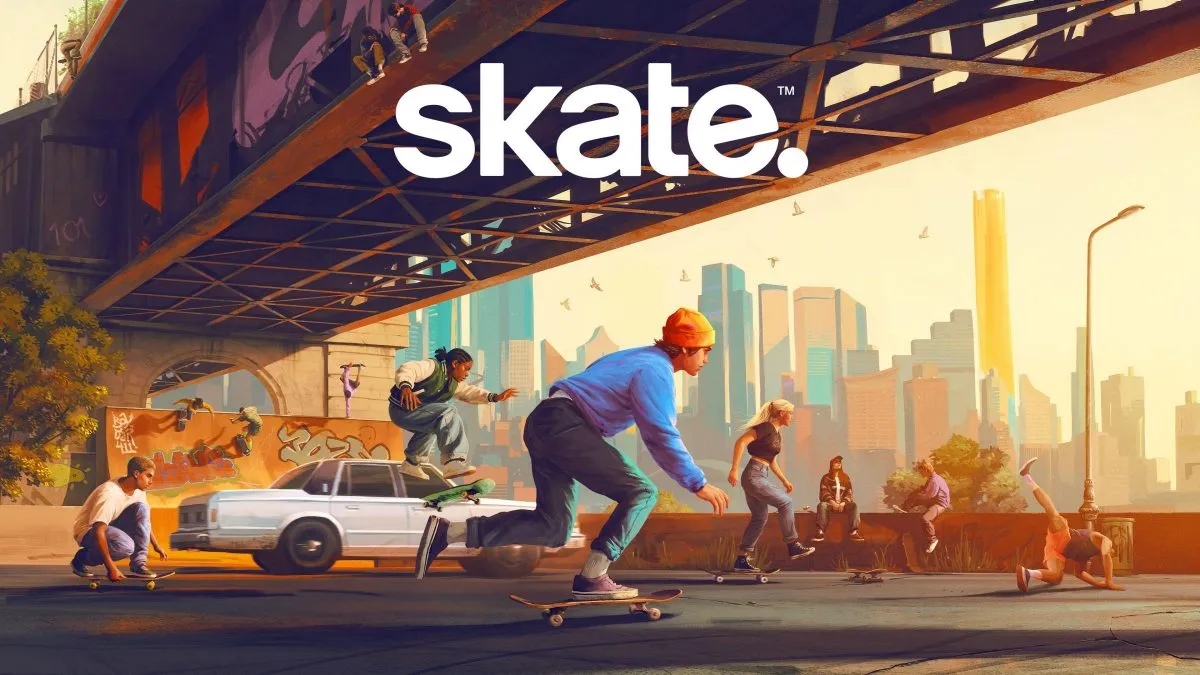

After fifteen years of silence, EA’s skateboarding franchise returns through Full Circle, a studio born from the ashes of the original Black Box development team. Skate. arrives as a free-to-play early access title, trading the series’ traditional single-player structure for an always-online experience centered around San Vansterdam, a sprawling urban playground designed for digital skateboarding culture.
This revival maintains the DNA that made the original trilogy special while adapting to modern gaming expectations. The signature “Flick-It” control system returns alongside physics-driven gameplay that rewards creativity over score chasing. However, the shift toward live service elements and community-driven content creation represents a fundamental reimagining of what a Skate game can be in 2025.
The question isn’t whether Skate. recaptures the magic of its predecessors, but whether it can evolve the formula meaningfully while preserving the meditative flow that made the series a cultural touchstone for skateboarding enthusiasts and casual players alike.
The Poetry of Digital Skateboarding
Skate.’s mechanical foundation rests on the same analog stick-based control scheme that revolutionized skateboarding games in 2007. The right stick becomes an extension of the skateboard itself, with flicks and rotations translating directly into ollies, kickflips, and complex trick combinations. This tactile relationship between controller and character creates an intimate connection that feels both intuitive and demanding.
The physics system underlying these controls has received significant refinement. Weight distribution affects landing stability, momentum carries through trick sequences naturally, and surface variations create subtle but meaningful changes in board behavior. Grinding concrete sounds different from metal rails, and these audio cues become part of the mechanical language players internalize over time.
Full Circle has addressed one of the series’ historical pain points by improving animation blending between tricks. Transitions flow more smoothly, making complex line combinations feel achievable rather than frustrating. The system still demands patience and practice, particularly for newcomers accustomed to more forgiving arcade-style skateboarding games, but the learning curve feels rewarding rather than punitive.
Character progression operates through an experience point system that rewards exploration, creativity, and skill development equally. This democratic approach means players can advance by discovering hidden spots, completing community challenges, or simply perfecting their favorite trick combinations. The unlock system provides new abilities and customization options without creating artificial barriers that interrupt the flow of experimentation.
The building tools represent perhaps the most significant mechanical addition. Players can place ramps, rails, and obstacles throughout San Vansterdam, transforming static environments into dynamic playgrounds. This feature integrates seamlessly with the social aspects of the game, allowing communities to iterate on shared spaces and create increasingly complex challenge scenarios.
However, online connectivity issues occasionally disrupt the precision timing that makes the control system satisfying. Input lag during server-heavy moments can turn a perfectly executed line into an unexpected crash, creating frustration that breaks the meditative state the game cultivates so effectively during solo exploration.
San Vansterdam as Digital Skateboarding Canvas
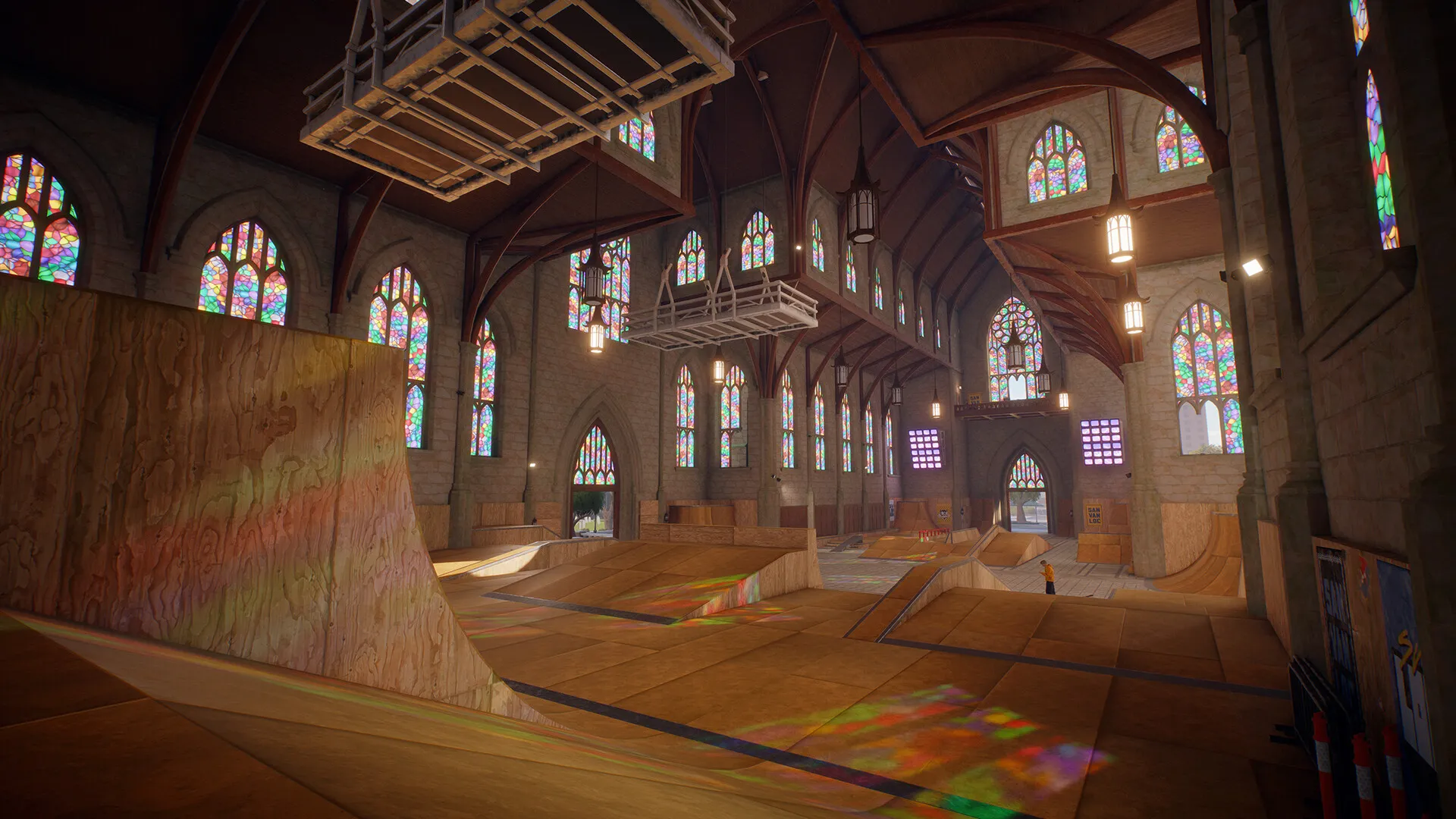
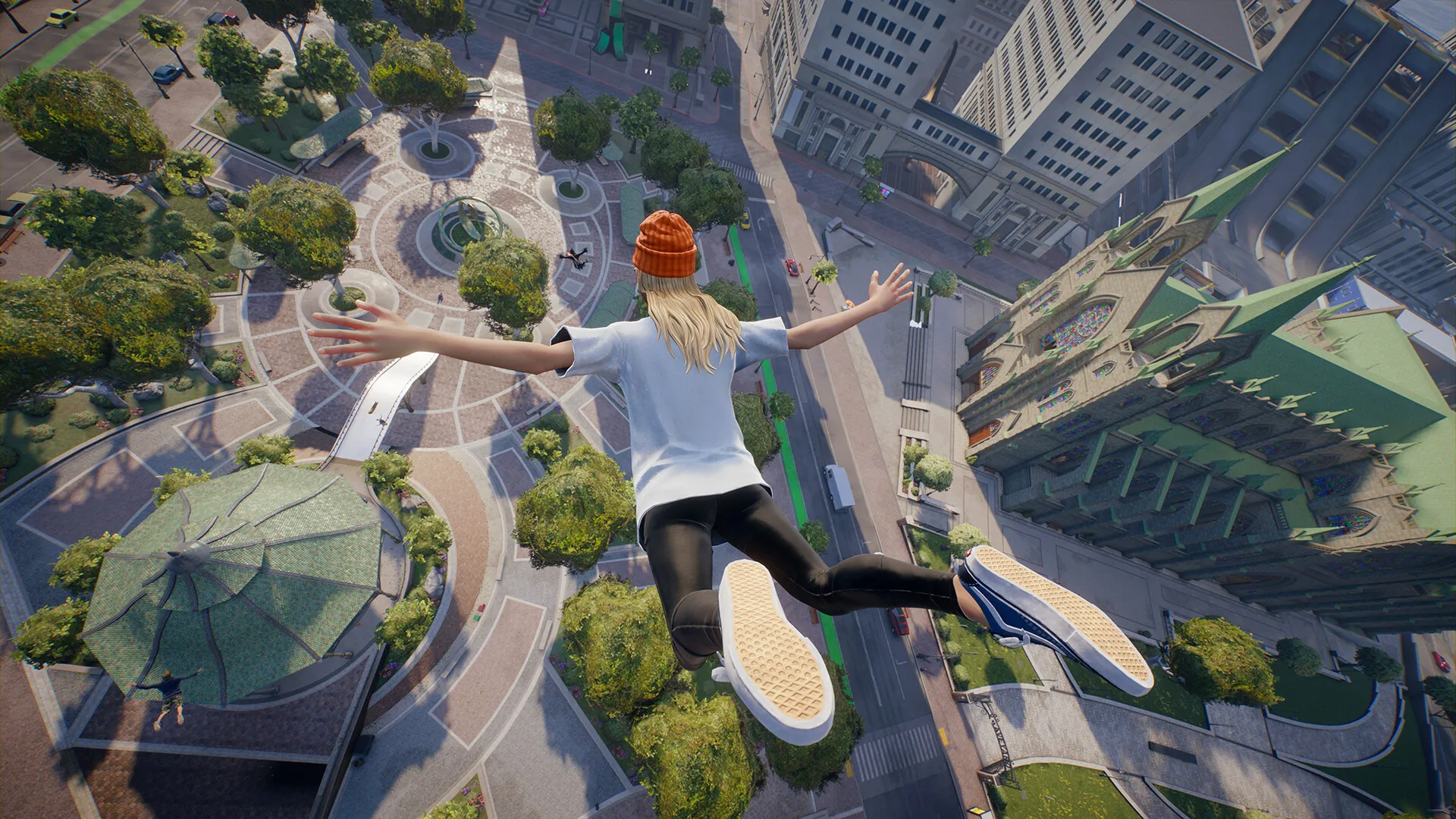
San Vansterdam functions less as a traditional video game city and more as a curated collection of skateboarding opportunities. The urban environment balances realistic architectural details with gameplay-focused design, creating spaces that feel authentic while serving the mechanical needs of skateboarding simulation.
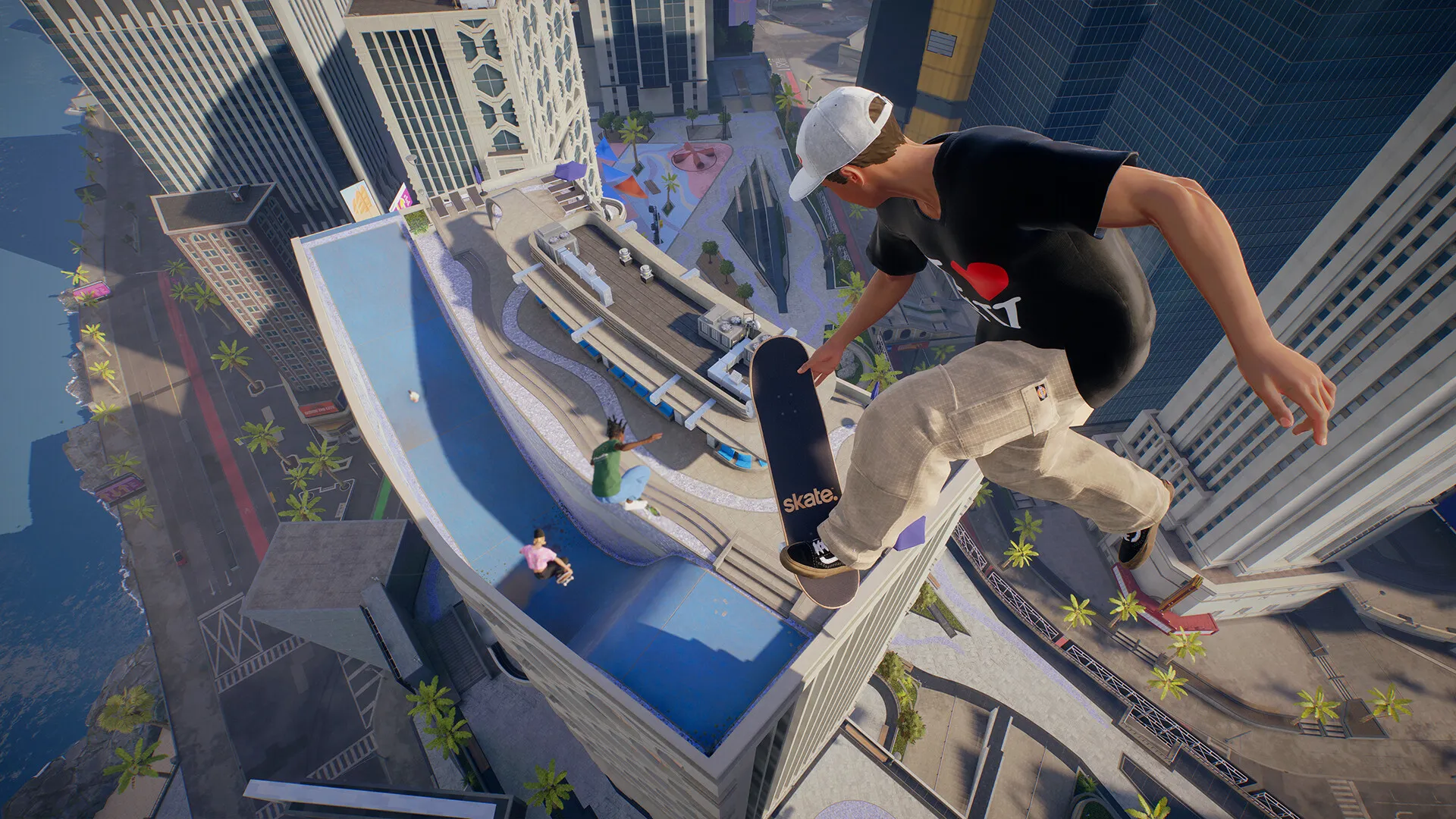
The city’s layout encourages organic discovery through visual storytelling. Graffiti tags hint at hidden spots, architectural details suggest possible lines, and environmental wear patterns indicate where other players have focused their attention. This subtle guidance system respects player agency while providing enough direction to prevent aimless wandering.
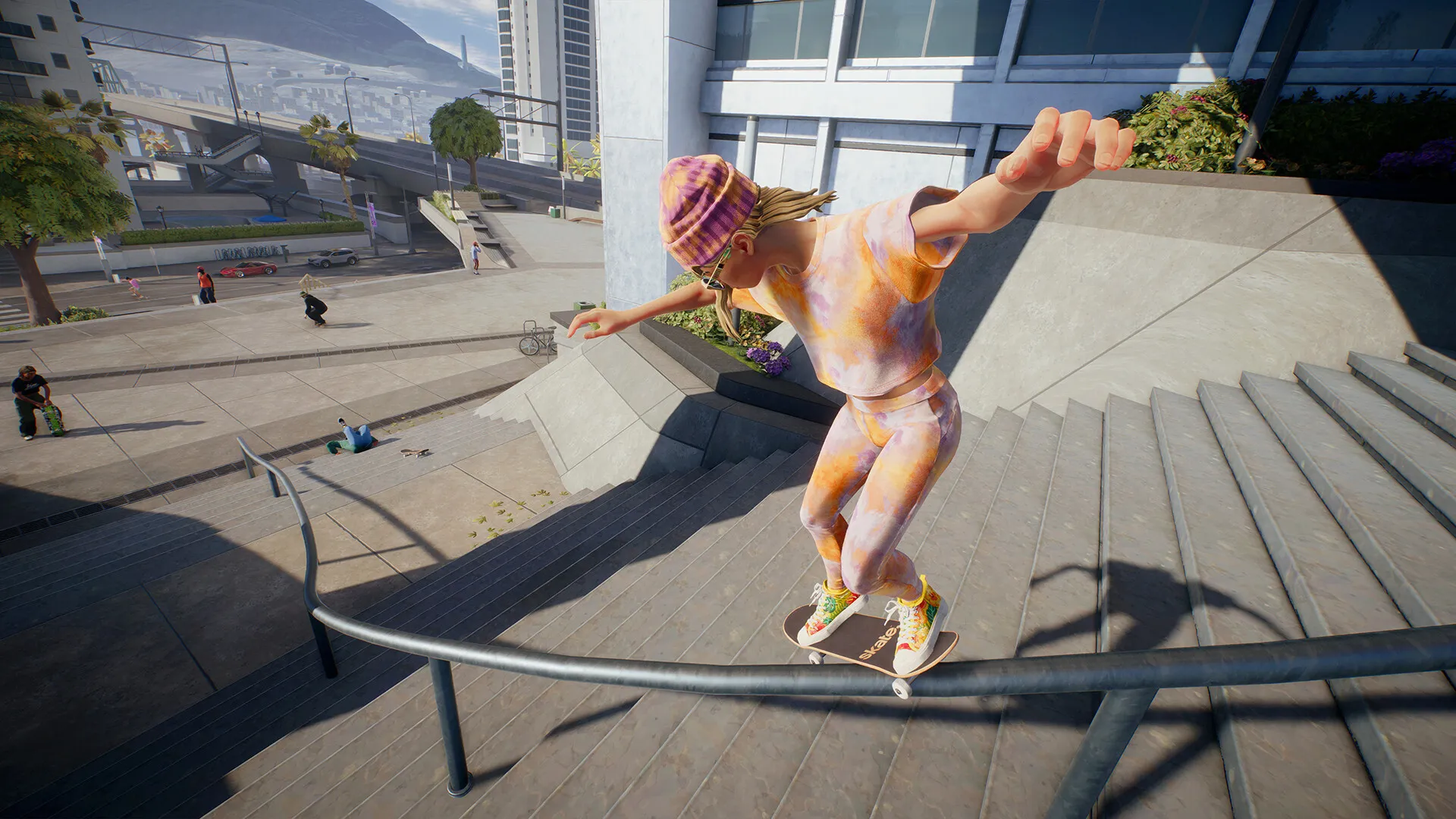
Street skating opportunities dominate the landscape, with stair sets, handrails, and ledges integrated naturally into the urban fabric. Dedicated skate parks provide more structured challenges, though these feel less memorable than the improvised spots discovered through exploration. The absence of iconic locations from previous games creates space for new discoveries while potentially disappointing series veterans seeking familiar landmarks.
Technical performance varies across different areas of the city. Dense urban sections occasionally suffer from frame rate inconsistencies, while more open areas maintain smooth performance that supports the precise timing required for complex trick sequences. Server stability affects the shared world experience, with connection issues sometimes causing other players to appear and disappear unpredictably.
The day/night cycle and weather variations add atmospheric depth without dramatically altering gameplay mechanics. These systems serve primarily aesthetic functions, creating visual variety that keeps long exploration sessions feeling fresh. The scale feels appropriate for the core gameplay loop, though players expecting the sprawling scope of modern open-world games may find San Vansterdam more intimate than anticipated.
Visual Identity Between Realism and Style
Full Circle has chosen a middle path between photorealistic simulation and stylized artistry, creating a visual language that supports gameplay clarity while maintaining atmospheric authenticity. The character models benefit from improved animation systems that capture the weight and momentum of skateboarding movement more convincingly than previous entries.
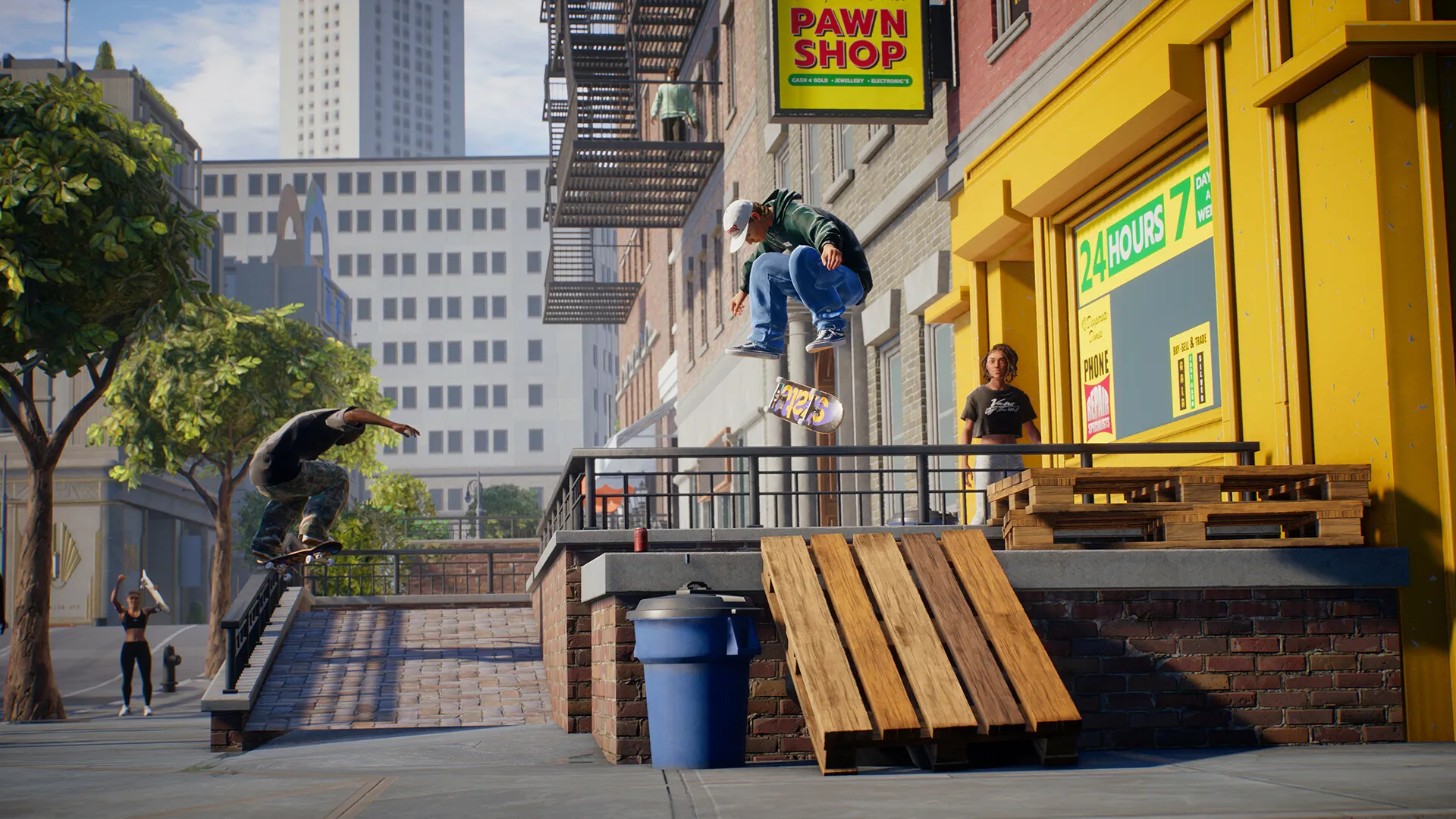
Environmental textures strike a balance between detail and performance optimization. Urban surfaces show appropriate wear and character without overwhelming less powerful hardware configurations. The lighting system creates convincing time-of-day variations while maintaining the visual clarity necessary for identifying skateable surfaces and potential line opportunities.
The shift away from gritty realism toward cleaner, more colorful presentation serves multiple purposes. The aesthetic choice supports the community-focused nature of the game by creating spaces that feel welcoming rather than intimidating. It also helps distinguish interactive elements from purely decorative environmental details, reducing visual noise that might interfere with line planning and execution.
Clothing physics and character customization options provide meaningful visual feedback for trick execution and personal expression. Board graphics, outfit combinations, and skating style variations allow players to develop distinct visual identities within the shared world space. These cosmetic systems integrate naturally with the progression mechanics without creating pay-to-win scenarios that would compromise competitive balance.
Animation quality varies between core skateboarding movements and supplementary systems. Trick execution and crash sequences display impressive attention to detail, while menu interactions and social features sometimes feel less polished. This disparity reflects the development priorities appropriately, ensuring the core experience receives the technical attention it deserves.
Audio Landscape of Urban Skating Culture
The sound design in Skate. creates an immersive audio environment that supports both the mechanical precision and cultural authenticity the series demands. Board sounds vary meaningfully across different surface types, providing audio cues that help players time tricks and understand environmental interactions without relying purely on visual feedback.
Environmental audio layers contribute to the sense of inhabiting a living city. Traffic patterns, crowd noise, and urban atmosphere create a backdrop that feels authentic without overwhelming the focused audio elements that support gameplay. The balance between ambient sound and gameplay-critical audio remains consistent across different areas of San Vansterdam.
The soundtrack curation reflects contemporary skateboarding culture while avoiding the corporate playlist feel that often plagues licensed music in sports games. The selection spans underground punk, hip-hop, and indie tracks that complement rather than compete with the meditative aspects of free skating. Music integration responds dynamically to gameplay moments, becoming more prominent during trick sequences and fading during quiet exploration.
Voice acting implementation varies in quality, with some dialogue feeling artificially generated rather than naturally performed. However, these systems serve primarily functional roles in tutorial and social interactions, minimizing their impact on the core skateboarding experience. The audio design succeeds most completely when supporting the tactile relationship between player, controller, and virtual skateboard through precise sound feedback that enhances the mechanical connection.
Community and Connection in Digital Space
Skate.’s transformation into a live service title represents both its greatest innovation and most significant risk. The always-online requirement enables seamless integration between solo exploration and community interaction, allowing players to encounter each other organically while pursuing individual goals within the shared San Vansterdam space.
The daily challenge system provides structured goals that refresh regularly, though the current variety feels limited for sustained engagement. These rotating objectives serve as gentle guidance for players who prefer directed activities over pure exploration, but they lack the depth and personality that made classic game modes memorable parts of the Skate identity.
Microtransaction implementation focuses primarily on cosmetic customization options, avoiding pay-to-win mechanics that would undermine the skill-based progression system. However, the grinding requirements for premium appearance options create a two-tiered experience that may discourage casual players from fully engaging with the customization systems that support personal expression within the community.
The absence of beloved franchise features feels particularly acute in the community context. Classic competitive modes provided structured ways for players to demonstrate mastery and engage in friendly competition. Without these established frameworks, social interaction relies heavily on informal challenge creation and shared exploration, which may not satisfy players seeking more traditional competitive experiences.
Server stability issues occasionally disrupt the seamless community integration that the live service model promises. Connection problems can isolate players from the shared world experience or cause progress to be lost, creating frustration that undermines the social benefits the always-online approach is designed to provide.
Balancing Legacy and Innovation
Skate. succeeds most completely as a foundation for the franchise’s future rather than a comprehensive revival of its past glory. The core skateboarding simulation remains as compelling as ever, with mechanical refinements that improve accessibility without sacrificing the depth that made the series special. The free-to-play model removes barriers to entry, allowing both returning fans and curious newcomers to experience the unique pleasures of the Flick-It control system.
However, the transition to live service architecture comes with meaningful trade-offs. The loss of single-player campaign structure, classic competitive modes, and offline accessibility represents a significant departure from the franchise formula. These changes may alienate longtime fans while the limited launch content struggles to justify the always-online requirements for players with unreliable internet connections.
The game’s early access status provides context for its current limitations while creating uncertainty about its long-term development trajectory. Full Circle has demonstrated technical competence in preserving and refining the core gameplay systems, but their ability to expand content variety and address community feedback remains unproven.
For skateboarding game enthusiasts, Skate. offers the most authentic digital skateboarding experience currently available, with mechanical depth that rewards patience and creativity. The free-to-play model makes experimentation risk-free, though players should approach it as an evolving platform rather than a complete product. The foundation is solid, but the structure built upon it will determine whether this revival becomes a lasting success or a promising experiment that fails to reach its potential.
The Review
Skate.
Skate. delivers the authentic skateboarding simulation fans have craved for 15 years, with refined mechanics that capture the meditative flow and technical precision that defined the franchise. However, the shift to live service architecture sacrifices beloved single-player elements and classic modes for community features that feel underdeveloped at launch. While the free-to-play model removes entry barriers and the core gameplay remains exceptional, limited content variety and always-online requirements prevent this from being the complete revival longtime fans envisioned.
PROS
- Exceptional Flick-It control system with improved fluidity and responsiveness
- Authentic skateboarding physics and realistic weight distribution mechanics
- Free-to-play accessibility removes financial barriers for new and returning players
- Creative building tools allow community-driven content creation
- Refined audio design with surface-specific feedback and cultural soundtrack curation
- Balanced visual style that prioritizes gameplay clarity over photorealism
- Seamless integration between solo exploration and community interaction
CONS
- Limited content variety at launch with repetitive daily challenges
- Absence of beloved franchise modes (S.K.A.T.E. competitions, death races)
- Always-online requirement excludes players with connectivity issues
- Missing iconic locations and professional skaters from previous entries
- Server stability problems disrupt precision timing during online sessions
- Grinding requirements for cosmetic customization may discourage casual players
- Early access status creates uncertainty about long-term development trajectory