



























The language of the homemade video is one of raw intimacy. It is shaky, imperfect, and immediate. The documentary Saquon leverages this language to tell its story, placing the viewer directly inside the life of Saquon Barkley through five years of his own personal recordings. This is not a production polished to a high gloss by an external crew. Instead, its power comes from its unvarnished perspective, contrasting the raw footage of his private struggles with the crisp, mythic presentation of NFL game film.
The effect is disarmingly personal. We are not just told a story about a comeback; we are invited into the quiet rooms and lonely training sessions where that comeback was forged. This film chronicles a period of immense professional turmoil, from a career-altering injury to a bitter contract dispute. It is a story of resilience, told not by commentators, but by the man who lived it, turning his camera into a tool for reclaiming his own narrative.
The Anatomy of a Comeback
The film opens on a note of deep vulnerability, documenting Barkley’s recovery from a devastating ACL tear. The self-shot footage from this period is the documentary’s foundation, showing the unglamorous and repetitive work of rehabilitation. We see the grimaces of pain during physical therapy and the mental exhaustion that settles in during solitary workouts.

These images stand in stark opposition to the explosive athlete the public knows. The documentary skillfully juxtaposes the silence of an empty gym with the remembered roar of a stadium, highlighting the deep isolation of a professional athlete whose body has failed them. This is not just a physical recovery.
It is a chronicle of his mental fortitude, showing an undercurrent of optimism that persists even as media voices question his future. Unlike the Kelce documentary, which captures a celebrated figure reflecting at the end of a long career, Saquon puts us alongside a star in his prime, fighting through his lowest point. This initial section does an excellent job of establishing the stakes, demonstrating exactly how much he stands to lose.
The Business of the Game
Once Barkley’s body is healed, the film transitions from a physical battle to a professional one. The narrative sharpens its focus on the tense and souring negotiations with the New York Giants. Barkley’s personal recordings offer a rare, unfiltered look into the cold mechanics of the NFL. We see his frustration mount as he feels his loyalty is not being reciprocated by the front office.
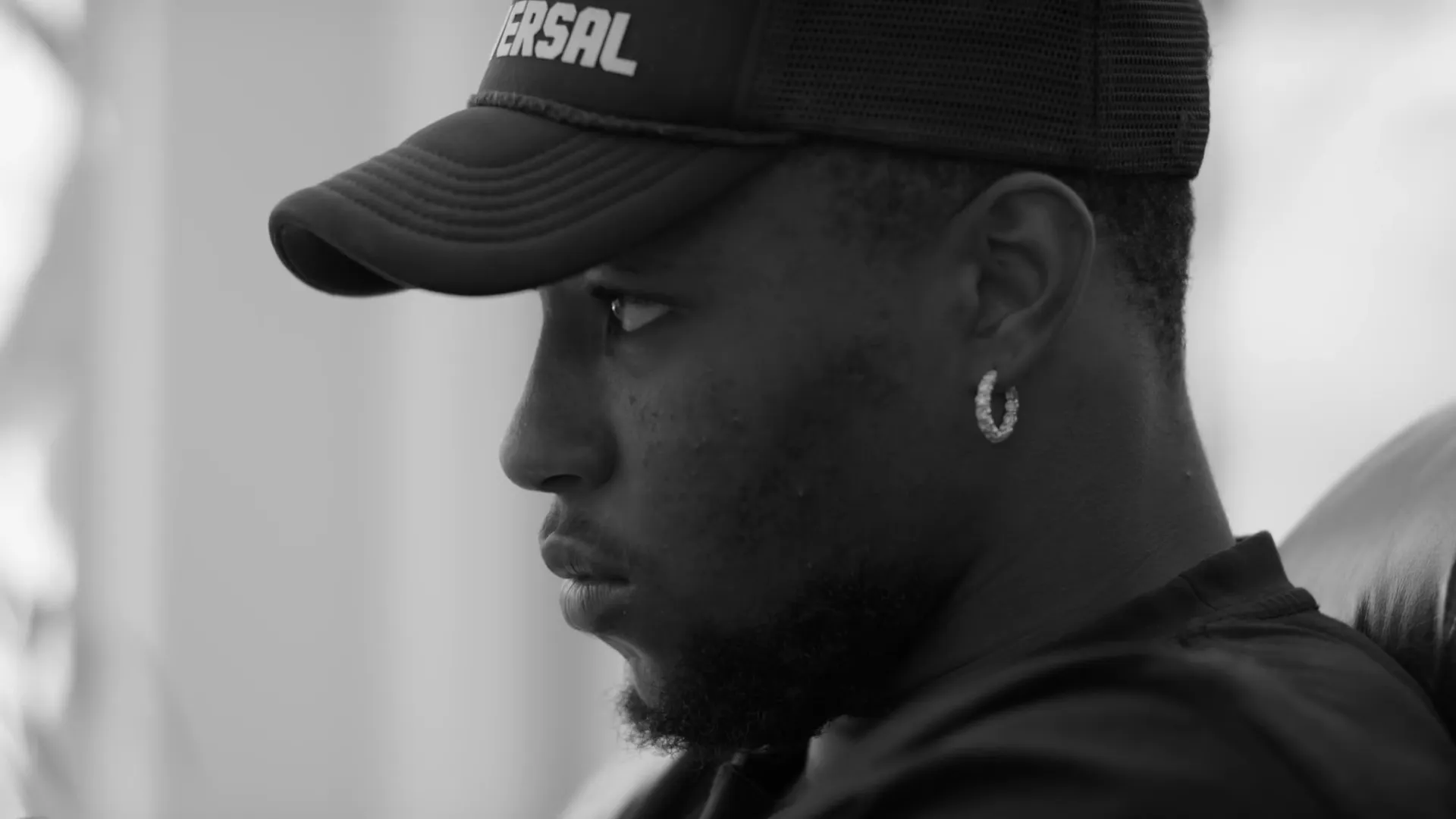
The film gives context to his struggle, touching upon the depreciating value of the running back position across the league. This makes his fight feel significant. The perspective is intensely personal, almost uncomfortably so.
One moment finds him playing Madden in his living room while on the phone with his agent, the mundane act of playing a video game layered with the stress of a multi-million dollar career decision. In a way, the film becomes Barkley’s platform to offer his side of a very public breakup, using his own footage to correct a narrative he felt was distorted. It is his truth, powerfully and persuasively argued.
The Man Behind the Helmet
The documentary’s emotional core is found in the moments far from the football field. Barkley’s identity as a family man provides the true anchor for his story. The film is filled with heartwarming and unguarded interactions with his daughter, whose charming presence often steals the show. His son is born during the filming period, and we watch the small, meaningful moments of his first years.

The film gives these quiet scenes space to breathe, understanding that they provide the essential motivation for his public battles. A particularly poignant sequence follows him buying a house for his mother, the act representing a dream fulfilled. These personal threads show what he is fighting for. It is for them, for their security, and for the life he promised them.
This foundation makes the film’s triumphant conclusion feel deeply earned. His Super Bowl victory with the rival Philadelphia Eagles, happening poetically on his birthday, serves as the perfect cinematic climax. The confetti falls on a man who has not only recovered his career but has shown us the person he was fighting to be all along.
The documentary film Saquon premiered on Prime Video on Thursday, October 9, 2025. This feature-length documentary, executive produced by Martin Scorsese, chronicles the five-year journey of NFL running back Saquon Barkley. The film showcases his resilience as he recovered from major injuries, dealt with contract disputes, and ultimately achieved Super Bowl glory with the Philadelphia Eagles, providing an intimate look at his life both on and off the field as a professional athlete and a devoted family man.
Full Credits
The Review
Saquon
Saquon is a deeply personal and moving sports documentary. By handing the camera to its subject, the film achieves a rare intimacy, transforming a familiar comeback story into a raw, first-person account of resilience. It successfully grounds the myth of a professional athlete in the relatable reality of a devoted father and son. While its perspective is necessarily one-sided, the film’s emotional honesty and unfiltered look at the intersection of family, injury, and the harsh business of football make it a powerful and compelling watch, even for those outside the sport’s immediate fanbase.
PROS
- The use of Saquon Barkley's personal video diaries creates a deeply intimate and authentic perspective.
- Strong emotional weight is derived from the focus on his family life, which provides crucial motivation and context.
- Offers a candid and compelling look at the often-unseen business side of professional sports.
- The narrative structure, following his journey from injury to triumph, is engaging and well-paced.
CONS
- The story is presented entirely from Barkley's point of view, lacking perspective from the New York Giants organization.
- While the approach is fresh, the overall arc follows some familiar beats of the sports documentary genre.