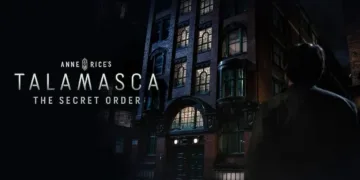
























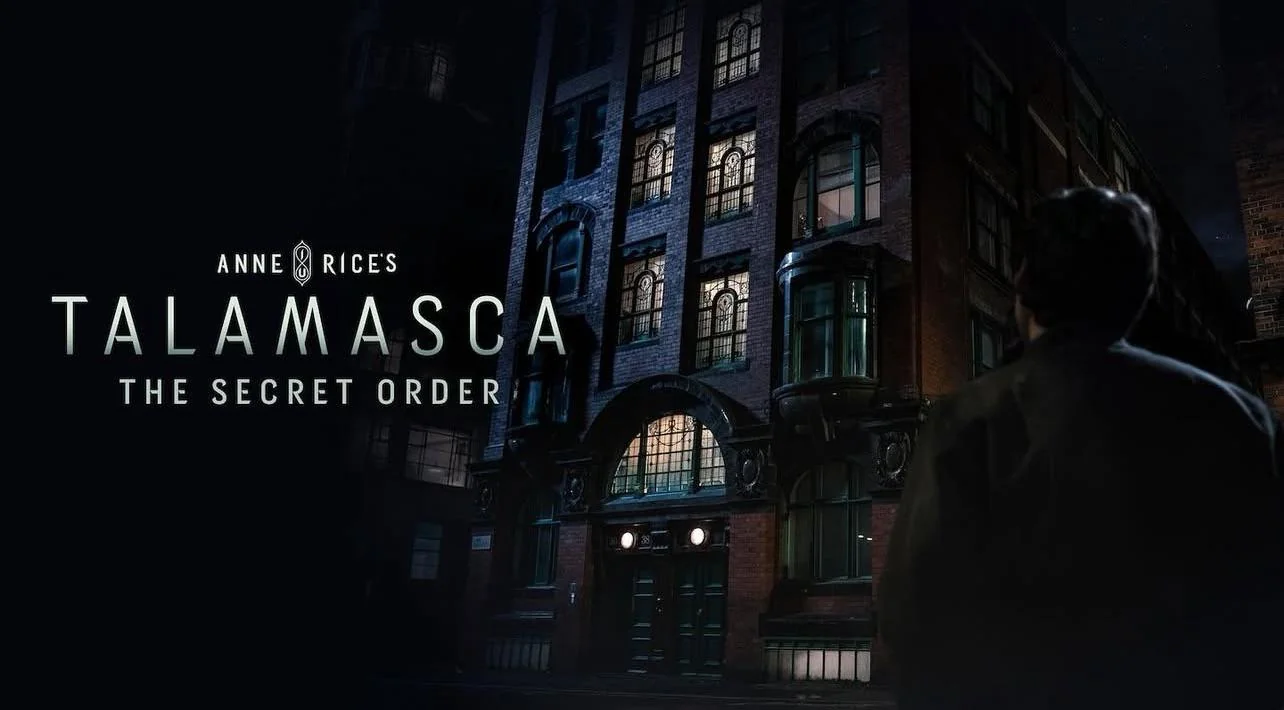

It’s an open secret that the Anne Rice Immortal Universe sprawls in multiple directions and resists easy containment. Interview with the Vampire found its tone by leaning into dark, sumptuous character trauma. Its cousin series, Mayfair Witches, has wrestled to match that footing. The newest addition, Talamasca: The Secret Order, tries to join those dots. The show’s answer is simple: trade brocade curtains for a burn bag.
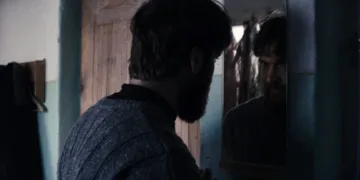
Talamasca arrives as a centuries-old, shadowy organization that monitors the supernatural, framed here as a supernatural spy thriller. We meet Guy Anatole, played by Nicholas Denton, a troubled mind-reader recruited by the mysterious Helen, played by Elizabeth McGovern, to run a covert operation from the London Motherhouse. The series abandons gothic operatics in favor of the low, suspicious hum of bureaucratic conspiracy. Think office politics where colleagues might literally incinerate you.
The Weight of the Seven Five Two File
Talamasca: The Secret Order builds its plot around internal decay. The Talamasca, intended as a detached force, is falling apart from inside. In London, control tilts toward the ancient vampire Jasper, played by William Fichtner. Jasper seeks the fabled Seven Five Two file, a set of confidential records said to have been destroyed at the Amsterdam Motherhouse. That file is the season’s MacGuffin and it has the power to reorder influence across the Immortal Universe.
Guy’s role moves rapidly beyond recruitment. He uses his new job and the Talamasca’s resources to investigate his mother’s death, tying his personal history into the wider conspiracy. The plot borrows freely from classic espionage templates. The relationship between Helen, the seasoned operator, and Guy, the psychic rookie, sets up a clear handler-and-recruit dynamic that gives viewers a readable entry point into a dense, lore-heavy world.
Tension in the scripts grows from betrayal and shifting loyalties, and the show forces Guy to acquire spycraft under pressure. The writing finds its best rhythm when it balances cloak-and-dagger missions with monster encounters. A mid-season entry titled “Wet Work” functions as a standout, accelerating Guy’s evolution while leaving a trail of corpses. The series earns real momentum in these beats.
The season’s most damaging constraint is its brevity. At six episodes the plotting hurtles forward. That pace supplies energy in the closing installments but it sacrifices depth of character. Agents with strong openings, like Olive, arrive memorably and then fade into sporadic appearances. By the finale Guy has trained, the principal players are in place, and stakes are obvious, and still the curtain falls before the narrative can reach a natural balance. The last scenes feel like the set-up for a second season rather than the end of a self-contained arc.
McGovern’s Composure and Fichtner’s Menace
The series lives and dies by its human core, and casting proves a smart play. Nicholas Denton anchors the show as Guy Anatole. Denton blends fish-out-of-water confusion with street-smart instincts. Guy is not a passive guide; he demonstrates self-preservation and adaptability that turn a nervous paralegal into an effective, if reluctant, operator. His clairvoyance begins as a crippling disorder and slowly reshapes into a useful tool, letting Denton move the character from reaction to scrutiny of the institution he now serves.
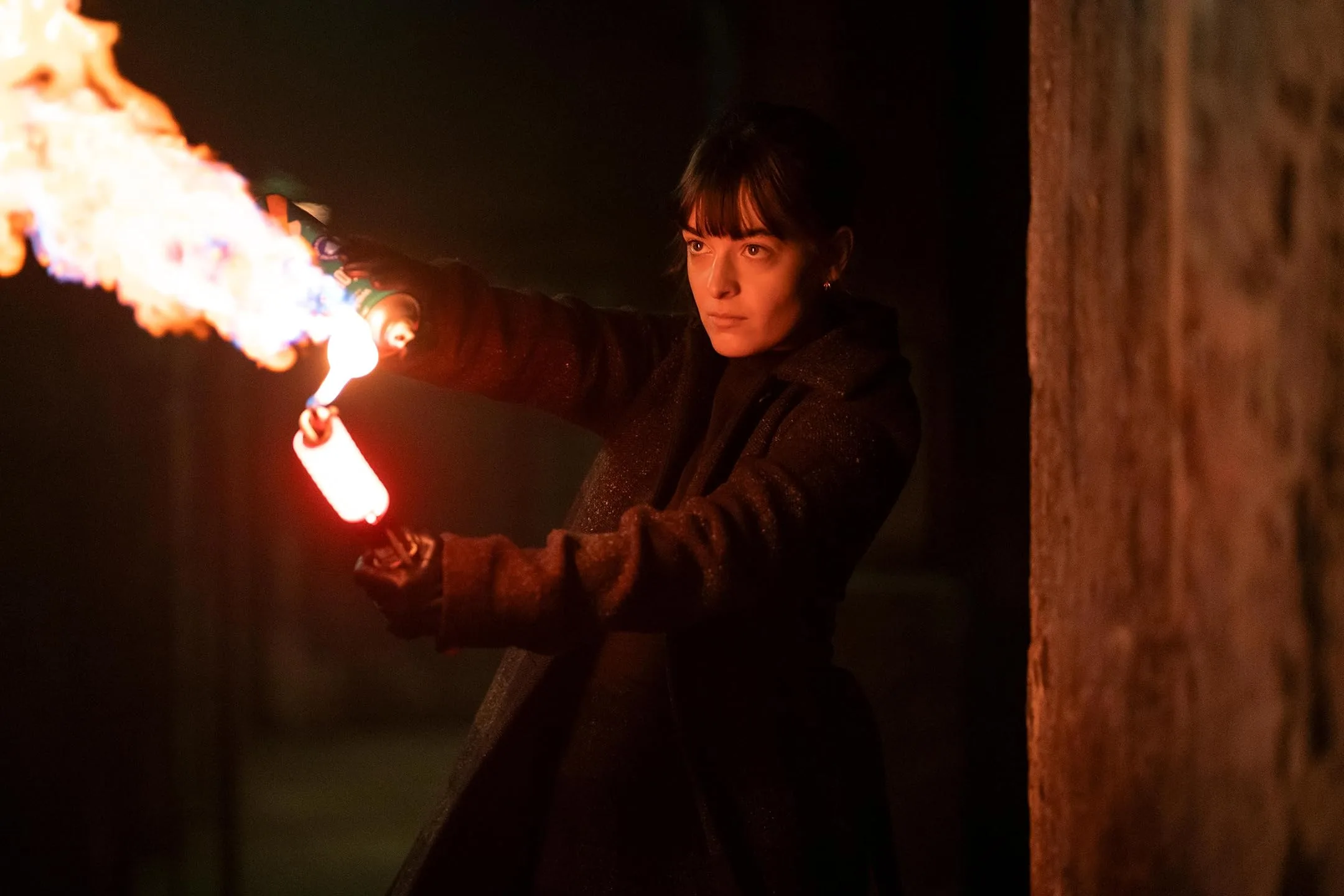
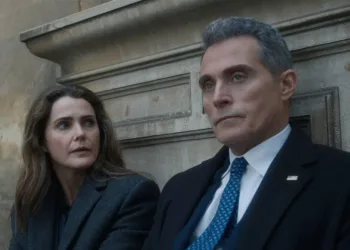
Elizabeth McGovern inhabits Helen with precise control. After her period-drama work, she gets to play a woman who hides secrets beneath expressive eyes. McGovern brings warmth to exposition scenes while keeping the character impenetrable enough to keep the audience guessing. The script, though, cages her to an extent. Helen spends a lot of time looking pensive and issuing cryptic directives, which limits opportunities to see the character’s inner life. She comes across as compelling and necessary, and she hints at greater power than the show allows her to display.
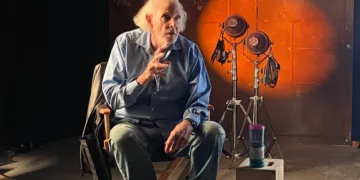
William Fichtner delivers the season’s most arresting turn as Jasper. He almost steals every scene. Jasper reads as an unforgettable immortal, sensually terrifying and at times disarmingly genial. Fichtner toggles between polite control and ancient menace with surgical timing. His chemistry with Guy in the latter half of the season creates a magnetism that lifts the material. The show’s strongest moments rely on this caliber of acting, which proves the Immortal Universe can still attract performers who add real dimension to high-concept setups.
The supporting cast suffers from limited screen time. Maisie Richardson-Sellers, playing Olive, makes a forceful first impression and then slips into intermittent roles that feel like missed chances to develop her. Céline Buckens as the London witch Doris provides a moody foil for Guy and leaves a lasting mark despite a small footprint. Jason Schwartzman turns up early as the vampire Burton in a training scene that supplies comic relief while moving Guy’s psychic abilities forward.
Building a World with a Light Touch
A spin-off must broaden a universe without alienating viewers, and Talamasca does that cleanly. The show establishes the Talamasca’s long history of observation while centering on its present as an agency split by power struggles and covert operations. The world-building arrives in manageable doses, so the series reads as accessible even to those who have not watched prior entries.

Integration of Immortal Universe lore occurs with restraint. The series sidesteps obvious fan service and instead uses familiar characters to give weight to current events. Eric Bogosian appears as the cantankerous journalist Daniel Molloy in a brief but satisfying continuation of his Interview with the Vampire storyline. His cameo helps anchor Guy’s world.
Raglan James, played by Justin Kirk, makes a chaotic impression. His unpredictable behavior and disregard for allegiances force Guy to raise his espionage game. These crossovers function as plot drivers that also advance Guy’s arc, rather than mere reminders of a shared setting. Little touches, such as hearing Lestat’s music on a bar radio, reward long-time viewers.
The show carves out its own tone. It leans darker and more mysterious while emphasizing cerebral mechanics over lavish melodrama. That tonal shift confirms the mythology can support varied genre approaches.
Final Dispatch: The Question of Commitment
Adopting a spy thriller framework gives Talamasca: The Secret Order fresh energy. The season orbits a central mystery and benefits from standout performances, most notably McGovern and Fichtner, whose combined menace anchors the series. Guy Anatole functions as a sharp, intelligent conduit into this shadowed apparatus.

The main flaw remains the compressed six-episode structure. Compression forces rushed plotting and undercuts the development of supporting figures. The last moments satisfy and frustrate at once, teasing a larger potential the season does not fully realize.
The series will reward viewers already invested in the Immortal Universe and it also serves as an engaging mystery for newcomers. Talamasca demonstrates that the organization can carry a series. The remaining question asks whether the network will invest the time and resources needed to let this secret order expand into its full, dangerous scope?
Talamasca: The Secret Order is the third television series in the Anne Rice Immortal Universe, focusing on the secretive organization that monitors the supernatural world. The six-episode first season is set to premier on Sunday, October 26, 2025, on AMC and the streaming service AMC+. It is a supernatural spy thriller that follows Guy Anatole, a new recruit, as he is plunged into a high-stakes conspiracy. The series will be available on Netflix in the U.S. sometime in 2026 as part of an extended licensing agreement.
Full Credits
Director: John Lee Hancock
Writers: John Lee Hancock, Mark Lafferty, Vinnie Wilhelm, Donald Joh, Anna Fisher, Anne Rice
Producers and Executive Producers: Mark Johnson, John Lee Hancock, Mark Lafferty, Tom Williams, Christopher Rice, Anne Rice, Louise Lyons, Mark Murdoch, Brennan Parks
Cast: Nicholas Denton, William Fichtner, Elizabeth McGovern, Maisie Richardson-Sellers, Céline Buckens, Jason Schwartzman, Eric Bogosian, Justin Kirk, Matthew Steer
The Review
Talamasca: The Secret Order
Talamasca: The Secret Order successfully expands the Immortal Universe by adopting a sharp, supernatural spy thriller framework. The high-caliber acting, particularly from Elizabeth McGovern and William Fichtner, provides compelling drama and immediate engagement. The limited six-episode run, however, prevents certain character arcs from developing fully, leaving the central conspiracy feeling slightly rushed. It is a worthy, engaging diversion that proves the mythology can sustain diverse genres. The show needs a longer second season to fully capitalize on its potential.
PROS
- The strategic shift to a supernatural spy thriller genre is refreshing and focused.
- Nicholas Denton provides an effective, grounded protagonist for the audience.
- Exceptional, layered performances from Elizabeth McGovern and William Fichtner.
- The series integrates Immortal Universe lore with a light, non-intrusive touch.
CONS
- The short six-episode season compromises pacing and character depth.
- Key supporting characters, such as Olive, are underdeveloped and underutilized.
- The central MacGuffin mystery is needlessly convoluted at times.