
























![Kingdom Hearts Collection [I-III] Review](https://gazettely.com/wp-content/uploads/2026/10/Kingdom-Hearts-Collection-I-III-1-360x180.webp "Kingdom Hearts Collection [I-III] Review: KHII Holds Steady as Newer Entries Fluctuate 37")





Victorian London glitters and tightens like a corset in The Forsytes, a period drama fixated on rank, property, and keeping feelings under lock and key. The clan’s creed is simple: assets first, sentiment later. That philosophy drives the show’s central pull between rigid values and private longing, with love treated as contraband. Jolyon Forsyte sits at the fault line.
He prefers sketchbooks to contracts, which places him squarely against his cousin Soames and his uncle James, the family’s tireless architects of gain. Overseeing the brood is Grandmama Ann, a matriarch who treats reputation like a family heirloom. The house gleams, the rules bite, and the floorboards creak with scandal.
The Cast of Contradictions
Performances carry the series, and the camera favors splashy presence. As Jolyon, Danny Griffin must inhabit the tender heir who wants art over ledgers while sporting a “magnificent barnet” that could moonlight in an ’80s pop video. A quick shirtless boxing interlude telegraphs the show’s interest in the Poldark crowd. Jolyon’s conflict is the best idea on offer: a rich son who bristles at the family’s trading temperament. Griffin aims to play both privilege and recoil, and the push-pull gives him shape.
Soames and James, played by Joshua Orpin and Jack Davenport, arrive with broad strokes and sharper elbows. They talk profit, sniff out risk, and glide toward outcomes that look like silent-era scheming. Davenport leans into grand manner, savoring lines and carriage. The pair’s chill becomes icy during Soames’s move against a mining company, a choice that safeguards the family’s position while laying out his stance with absolute clarity.
The women reshape the field. Louisa, played by Eleanor Tomlinson, returns to Jolyon’s life through an improbable turn, now a celebrated dressmaker who once served in his household. Tomlinson supplies warmth and ingenuity that sit opposite the Forsyte machine.
Frances, Jolyon’s wife as played by Tuppence Middleton, gets a single, coolly devastating beat when the truth of Louisa’s children lands, and her frozen stare does the talking. Francesca Annis rules as Grandmama Ann, all poise and iron, though she carries a load of exposition that could sink a smaller vessel, right down to defining what a Forsyte is. A brief appearance by Susan Hampshire nods to the 1967 adaptation and adds a glint of lineage.
Scripted Simplicity and Pacing
The premiere opens with a wedding prologue and then jumps a decade to June’s coming-out ball. The early going leans into explanation. Dialogue works as family tree, and a syrupy voiceover from Annis keeps the relationships neat. The first half plays like tightly written revision notes: names, ties, and roles lined up in careful sequence.

Once the map is clear, the script relaxes into simple beats. Scenes move cleanly from setup to payoff. There is no risk of losing track of who wants what. The tone tilts toward soapy pleasure and occasional full-throttle melodrama. When Louisa and Jolyon cross paths, their shared past arrives in dialogue that could sit on a romance paperback shelf: station, duty, futures drawn by class. It signals exactly where the show stands on love against lineage.
Underneath the diagrams sits a tidy theme: commerce against art. The Forsytes treat culture as inventory. Value lives on a bill of sale, not in a studio. Jolyon’s sketchpad reads like a provocation to every ledger in the house. The writing tries to sand the period edges to a contemporary grain, with fathers voicing encouragements that feel modern enough to play in a living room today.
Polished Looks and Artificial Light
The production flaunts a premium sheen. Money shows up in rolling backdrops and costume detail. Faces glow, jawlines carve, rooms stretch into tasteful grandeur. The image sells high gloss.

That gloss creates another effect. Sets and skies often look built in a computer, interiors and exteriors alike, which leaves the world feeling hollow even as it sparkles. Lighting choices can flatten faces until they resemble digital mannequins. The show’s most pointed visual joke remains Jolyon’s hair, which feels tuned to George Michael and Barry Gibb rather than to gaslit London. The anachronism is intentional style, a wink that places this version of the past inside modern fantasy packaging.
Anne Dudley’s score steadies the frame. Broad orchestral writing avoids sticky sentiment and supplies sweep when the drama asks for lift. The music carries transitions, patches over talky sequences, and gives the show a stately signature. The main theme calls to mind Downton Abbey, a clear signal of pedigree and intended comfort.
Target Audience and Guilty Pleasures
The Forsytes plants a flag in the land of Sunday-night finery that serves Bridgerton and Downton viewers. The aim is pleasure over literary heft. The show welcomes big feelings, pretty frocks, and plot you can share with a parent over tea. That mood sits neatly beside a channel strategy that has already embraced the cozy pull of All Creatures Great and Small.
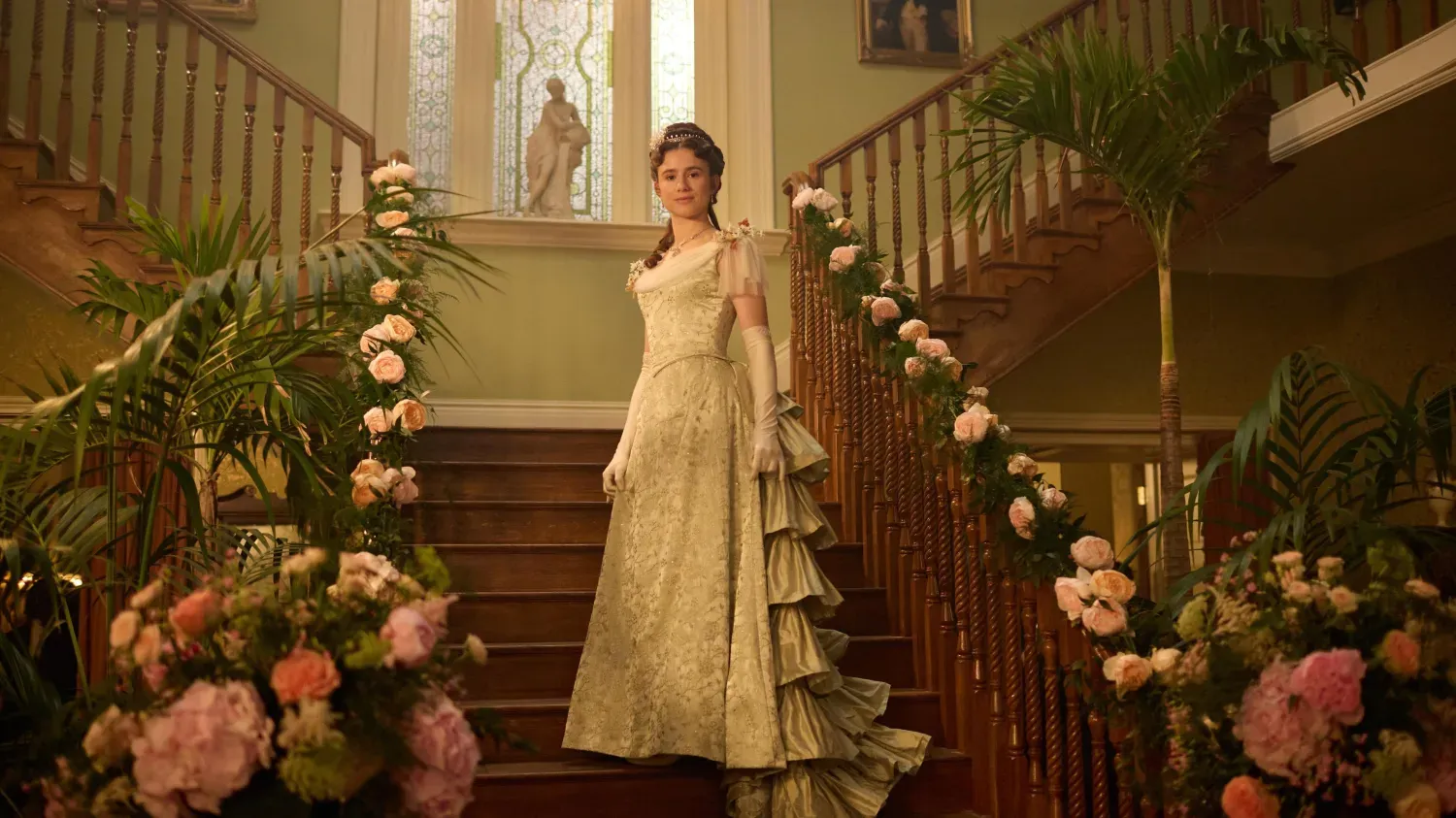
Clarity looks like a deliberate export plan. PBS Masterpiece viewers, for example, get an easy walk through English heritage with ornaments arranged in plain sight. Outside reactions split between limp and lively, which fits a series that thrives when expectations lower to “bring on the silk and scandal.”
The label that fits best is guilty pleasure: a drama designed for switching off the day and drinking in the spectacle. The timing even lines up with colder weather, the season tailor-made for velvet waistcoats, candlelight, and intrigue that never asks for homework.
The Forsytes keeps its ledger balanced: clean story beats, burnished surfaces, and a soundtrack that ushers every scene to its mark. The art-versus-commerce tug gives it spine, even as the digital seams show. So the lingering mystery may be less about estates and more about style. What will the next generation of Forsytes say about those haircuts?
The series is a new six-part television adaptation of John Galsworthy’s classic novels, The Forsyte Saga. It focuses on the lives, loves, and conflicts of the wealthy, late-Victorian Forsyte family, torn between tradition, property, and personal happiness. The series premiered in the United Kingdom on Channel 5 on October 20, 2025, and episodes are released weekly. It is also set to air in the United States on PBS Masterpiece in 2026. The episodes run for approximately 75 minutes.
Credits
Title: The Forsytes
Distributor: Channel 5, PBS Masterpiece, Mammoth Screen
Release date: October 20, 2025
Running time: Approximately 75 minutes per episode
Director: Meenu Gaur, Annetta Laufer
Writers: Debbie Horsfield
Producers and Executive Producers: Debbie Horsfield, Sheena Bucktowonsing, Meenu Gaur, Damien Timmer, Susanne Simpson, Sarah Lewis (Producer)
Cast: Millie Gibson, Joshua Orpin, Francesca Annis, Jack Davenport, Stephen Moyer, Tuppence Middleton, Eleanor Tomlinson, Danny Griffin, Jamie Flatters, Tom Durant Pritchard, Susan Hampshire, Justine Moore
The Review
The Forsytes
The series offers high production value, delivering lavish costumes and striking set pieces that appeal to the genre's demands. It opts for broad accessibility over narrative complexity, relying on a simple, soapy plot and heavy exposition in its opening hours. While the technical artistry and Anne Dudley's score are highlights, the visual style occasionally feels artificial. This drama provides easy, glossy entertainment for those who prefer spectacle to deep literary exploration.
PROS
- High-quality costumes and set pieces create a rich Victorian world.
- Anne Dudley's broad orchestral music significantly elevates the drama.
- Strong turns from key actors, including Francesca Annis and Eleanor Tomlinson.
- The plot is straightforward and requires minimal effort to follow.
- Highly effective as a "guilty pleasure" period piece.
CONS
- The opening is bogged down by heavy exposition and voiceover.
- Excessive use of CGI/green-screen gives the visuals an "oddly cheap" or hollow feel.
- Antagonists like Soames are painted with thin, archetypal strokes.
- Anachronistic elements, such as Jolyon’s modern hair and the gratuitous shirtless scene, undermine the period setting.







