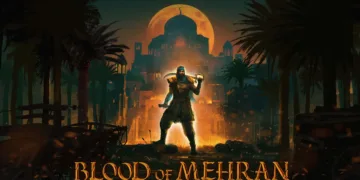























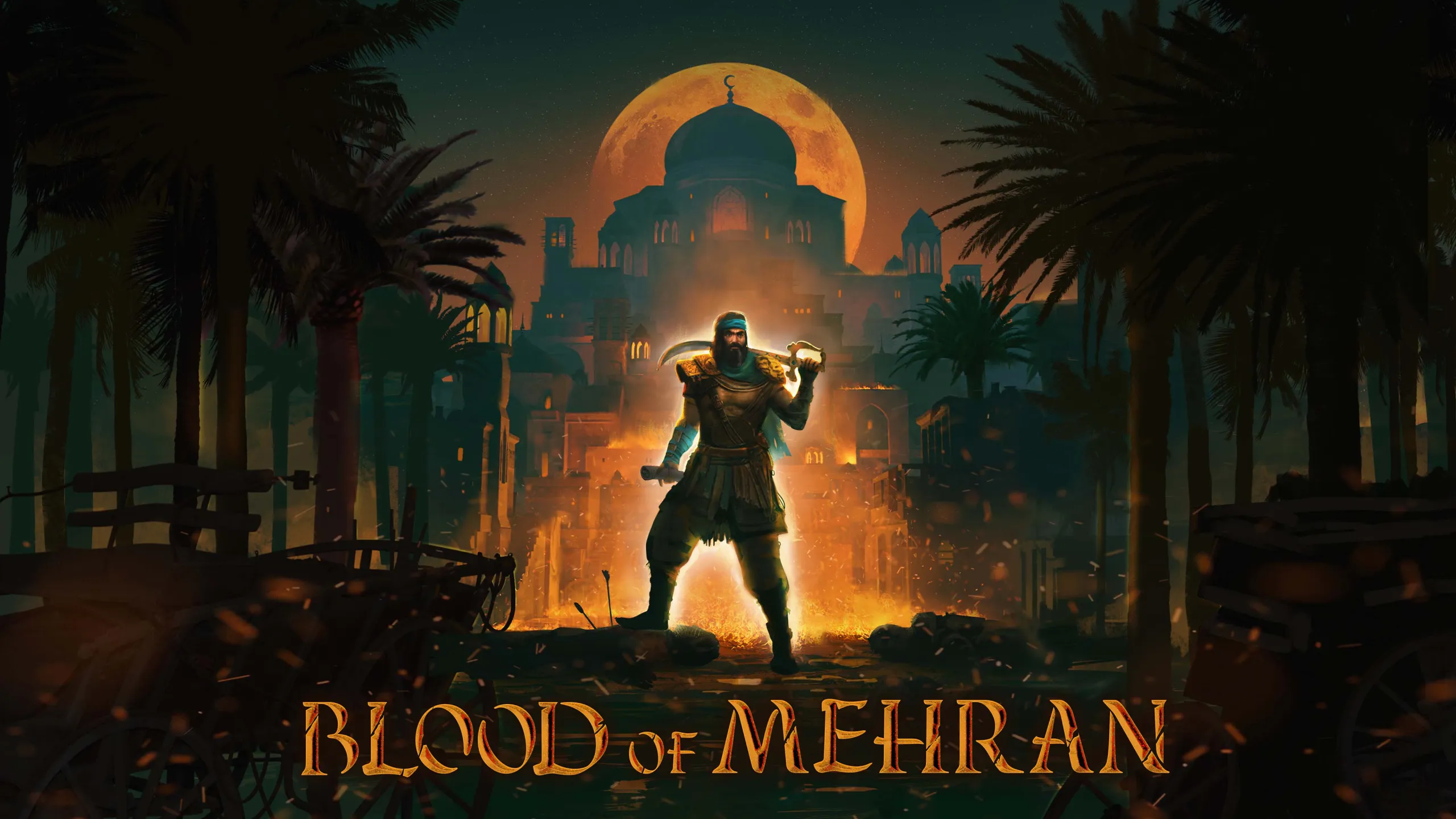

Indie action games often chase the ghosts of classics past, hoping to capture lightning in a bottle with limited resources and unlimited passion. Blood of Mehran, developed by Permanent Way Game Co. and published by Blowfish Studios, plants its flag firmly in this territory. Set against the backdrop of Ancient Mesopotamia, the game casts players as Mehran, a warrior who traded his blade for a plow until tragedy ripped through his life. When his family falls to a king’s cruelty, Mehran embarks on a revenge quest that structures itself around linear levels punctuated by boss encounters.
The game draws from Arabian Nights folklore and the DNA of action-adventure titles that defined earlier console generations. Players progress through combat-focused stages with stealth options woven throughout, upgrading weapons and abilities across an eight-hour campaign. Available on PlayStation 5, Xbox Series S|X, and PC, Blood of Mehran arrives with clear ambitions. It wants to evoke the feeling of those formative action games you remember fondly. The gap between what it reaches for and what it grasps, however, defines the entire experience. This is a budget title wearing its inspirations openly while struggling under the weight of its own aspirations.
Hollow Words in Empty Spaces
The revenge framework feels like scaffolding without walls. Blood of Mehran opens with Mehran confronting the king responsible for his family’s murder, then flashes back to his capture and prison break. This structure promises intrigue, but the narrative that follows reads like a checklist rather than a journey. Arabian Nights influences peek through occasionally, hinting at richer folklore that never fully materializes. The story needed these elements to flesh out its world and characters, yet they remain decorative rather than foundational.
What damages the narrative most severely are its tonal whiplashes. Mehran oscillates between vengeance-fueled declarations and inappropriate levity without any narrative justification. He’ll swear death upon his enemies one moment, then engage in flirty banter with a stranger he’s just met in prison the next scene. These shifts don’t suggest complexity or depth. They reveal a script uncertain about what story it wants to tell. The villains fare no better, leaning into caricature. One antagonist bites an apple before executing someone, a visual so hackneyed it undermines any menace the scene attempts to build.
The emotional beats the game swings for miss their marks entirely. No character develops beyond their initial archetype. Mehran remains a cipher throughout, his personality obscured by inconsistent writing. Voice acting compounds these problems rather than salvaging them. Performances lack energy and emotional resonance, turning dramatic moments into unintentional comedy. Mehran shouts at enemies from distances, calling them “punks” without conveying genuine anger or intensity. The delivery sounds like someone reading lines for the first time rather than inhabiting a character consumed by grief and rage. Secondary characters range from serviceable to grating, with at least one performance proving particularly irritating.
The disconnect between what happens on screen and how actors deliver their lines creates a surreal viewing experience. Characters wail and cry in the background of scenes, then speak with stone-faced calm when the camera focuses on them. This would work as deliberate absurdism, but here it’s an accident that generates laughs where the game clearly intends drama.
Also Read






Visually, Blood of Mehran splits into two realities. Environments show genuine craftsmanship in places. Water effects catch light convincingly, and certain locations possess impressive detail. Unreal Engine 5 provides the tools for striking screenshots, and the marketing materials clearly understood which angles to capture. Spend time actually playing, however, and the illusion crumbles. Constant pop-in breaks immersion as textures and objects materialize mid-exploration. Framerate drops to 15-25 FPS during standard gameplay, with brief freezes when enemy counts rise. The game crashed multiple times during testing, some failures occurring before reaching the main menu.
Character models expose the technical limitations most clearly. They appear smooth and oddly wide-eyed, with rubbery textures that suggest last-generation hardware pushed beyond its limits. Facial animations during cutscenes evoke amateur stage productions, stiff and unconvincing. Lip sync fails to match dialogue, another detail that pulls focus from the narrative.
Camera rotation introduces a disorienting shimmer effect around Mehran that persists regardless of motion blur settings. The option to disable motion blur exists but provides no relief from the nausea-inducing camera behavior. This resembles a PS3-era game disguised with modern rendering tricks, all surface shimmer concealing dated foundations.
The audio design splits similarly. Music succeeds where other elements falter, offering melancholic compositions that suit the intended emotional beats. The score understands the tone the game reaches for, even when the writing and performances miss it. But again, that tonal mismatch between competent music and flat voice work creates cognitive dissonance. You hear the sadness in the strings while watching expressionless faces deliver emotionless dialogue.
Systems That Fight Against Themselves
Combat carries the entire game on its shoulders, and those shoulders buckle under the load. Blood of Mehran equips players with four weapon types: a single sword, dual scimitars, sword and shield combination, and bow and arrow. Each serves different tactical situations. R1 delivers light attacks, R2 handles heavy strikes, and special moves activate by holding the block button once you’ve filled a gauge through regular combat. Weapons possess separate upgrade trees purchasable at shops scattered through levels, while experience points enhance Mehran’s core abilities. This framework suggests depth and player choice in how to approach encounters.
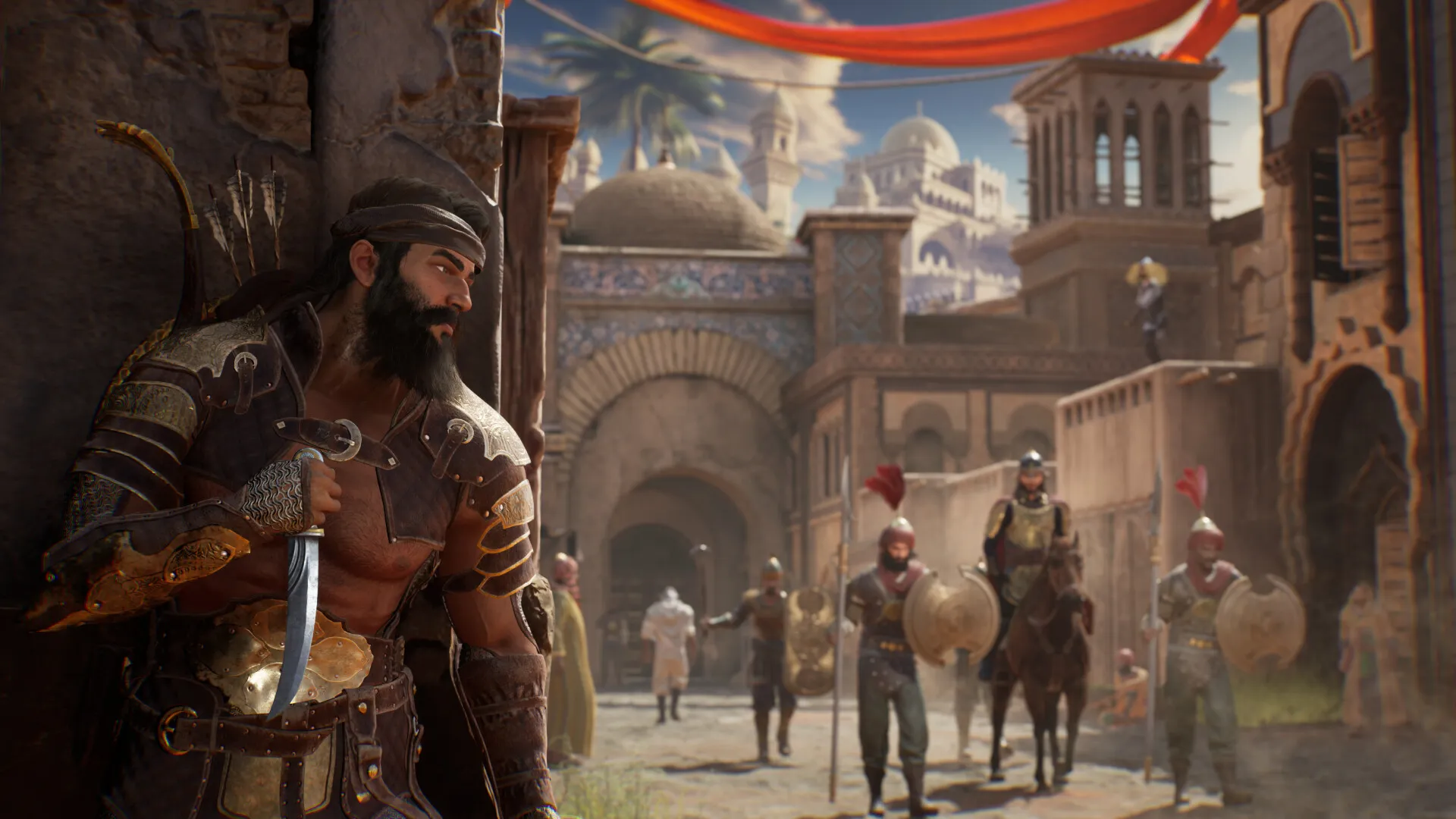
The execution betrays the design. Feedback during combat barely exists. Without health bars floating above enemies, you’d struggle to confirm whether your attacks connect at all. Hitboxes ignore actual weapon placement, creating confusion about what hits and what doesn’t. Swing your sword through an arbalester mid-flip animation and watch the blade pass through their body harmlessly. This isn’t an isolated quirk but a consistent problem that makes combat feel random rather than skill-based.
The parry system exemplifies these issues. When it works, parrying creates satisfying openings to capitalize on. But timing feels arbitrary. Parries that should register based on visual cues and enemy animations simply don’t acknowledge your input. You can’t learn the system through practice because the system itself provides inconsistent feedback. Block mechanics add another layer of confusion. Holding L1 with the shield equipped blocks projectiles from any direction without requiring aim. Face away from an archer, hold block, and arrows bounce off an invisible barrier. This removes any challenge from ranged enemies while highlighting the lack of coherent mechanical rules.
Unblockable attacks compound the responsiveness problems. Enemies telegraph these with a red glow, borrowing from the Arkham games’ combat language. But the warning appears during the animation’s startup rather than before it, leaving a reaction window measured in fractions of a second. The dodge input offers no invincibility frames immediately, meaning even successful timing still results in damage if you’re not already moving before the attack begins.
Enemies swarm you in tight spaces where dodging provides insufficient distance to escape their reach. Get surrounded and you’re essentially locked into taking hits until the checkpoint sends you back to try again. Those checkpoints space themselves with old-school cruelty, making each failure feel more punishing than challenging.
The Rage Meter offers brief respite. Fill it through combat and Mehran unleashes rapid heavy attacks that stagger most opponents. Enemies mostly stand still during this mode, turning it into a panic button for when numbers overwhelm you. The skill ceiling remains low once you master the forgiving parry timing, such as it is. Combat quickly becomes a war of attrition rather than a skillful dance. You learn to endure rather than excel.
Stealth provides an alternative that’s simultaneously more engaging and more broken than direct combat. Every level offers opportunities for sneaking and silent takedowns. This proves more enjoyable than fighting, possibly because the bar sits so low. Stealth kills share a button with light attacks, causing the game to misread your intent and trigger a regular swing instead of an assassination. When it works correctly, you can efficiently thin enemy numbers before engaging the survivors.
Enemy AI makes stealth almost trivial. Guards possess generous vision cones that let you approach within arm’s reach undetected. Kill someone inches from their companion and watch that companion fail to react at all. Running produces no audio cue, meaning you can sprint to someone’s back and execute them without alerting anyone.
The whistling mechanic draws guards to investigate, setting up easy kills. Multiple takedown animations exist, including aerial and sprinting variants that add visual variety. The system functions, mechanically simple and undemanding, but functions nonetheless. Given how frustrating direct combat becomes, stealth feels less like a choice and more like the path of least resistance the game accidentally encourages.
Enemy variety deserves acknowledgment. Archers harass from range, shield users require heavy attacks to break defenses, assassins chain together combo strings that demand attention, and arbalesters flip away after taking hits. Different enemy types force weapon switching, creating a rock-paper-scissors dynamic that works conceptually. Archers prompt bow use, shield enemies need heavy strikes, and arbalesters require closing distance quickly. The problem isn’t enemy design but how overwhelming numbers substitute for tactical challenge. The game throws bodies at you rather than creating encounters that test your mastery of the systems.
Boss fights amplify these problems into marathon endurance tests. Each boss functions as a spongier version of regular enemies, absorbing damage across three nearly identical phases. Health bars stretch to artificial lengths, turning battles into repetitive slogs. One exception stands out: a stealth-based boss encounter and the subsequent witch fight in a graveyard section. This sequence shows creativity and ambition, suggesting what the game could achieve with more varied encounter design. But one memorable fight across an eight-hour campaign isn’t enough to redeem the rest.
Level design strangles any potential for exploration or player-driven discovery. Yellow paint marks paths through aggressively linear corridors, treating players like they need constant guidance. Occasional open spaces break up the hallways, but these areas contain little worth finding. Chests offer cosmetic armor that increases health and trinkets for selling. That’s the extent of exploration rewards. No puzzles challenge you, platforming exists in name only, and you’re constantly pushed forward through spaces designed to pad runtime rather than enhance gameplay. A shopkeeper appears inexplicably in areas overrun by undead, a detail that would be funny if the game acknowledged its own absurdity.
The locations themselves show range: endless sand dunes, desolate city streets, sun-drenched bazaars, multi-story castle turrets. These settings could support interesting encounters or environmental storytelling. Instead, they serve as backdrops for the same combat scenarios repeated across eight hours. You move from point A to point B, fight waves of enemies, continue to the next arena, repeat. The game needed variety in structure to match its visual variety, but chose safety over innovation at every turn.
The Comfort of Low Expectations
Blood of Mehran set out to recreate the feeling of classic action-adventure games and fell short of its own ambitions. The foundation suggests effort and genuine intention from Permanent Way Game Co. Someone on this team cared about making something meaningful. But caring doesn’t overcome fundamental problems in execution, and this game stumbles at nearly every turn.
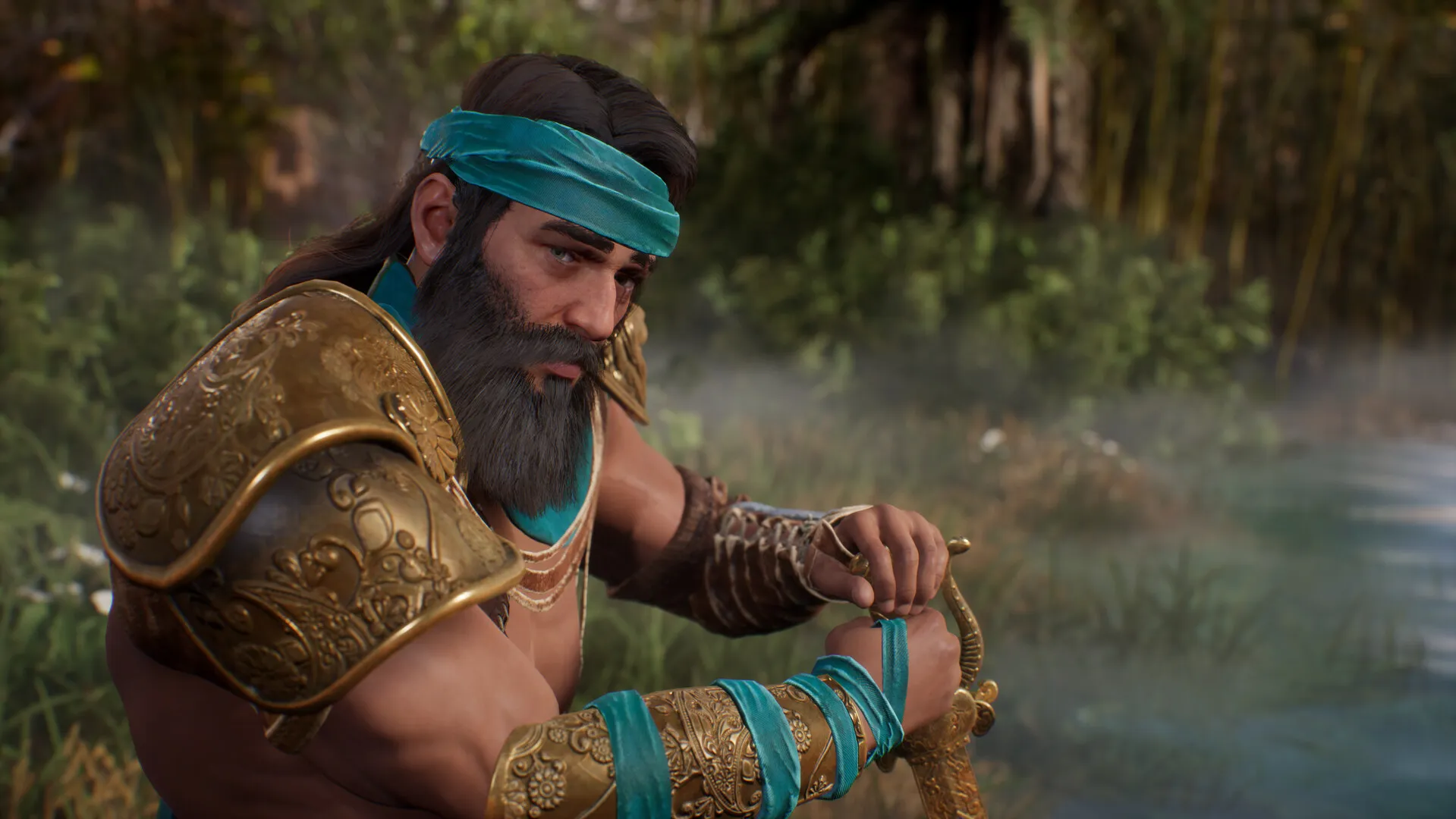
Technical issues alone warrant caution. The framerate drops, crashes, and pop-in need addressing through patches, though history suggests budget titles rarely receive extensive post-launch support. Even if every technical problem vanished tomorrow, you’d still face an average experience held back by poor combat feel, nonexistent narrative stakes, and level design that mistakes linearity for focus.
The game suffers from mismatched ambitions and capabilities. Reaching for photorealism with Unreal Engine 5 created expectations the team couldn’t meet. A more modest, stylized art direction would have played to their strengths while avoiding direct comparisons to AAA productions. The presentation undermines everything else. You can’t get lost in the combat when facial animations make you laugh during serious moments. You can’t invest in the story when voice acting strips away emotional weight. Every system fights against its neighbors rather than building toward a cohesive whole.
That said, specific elements show promise or provide unexpected value. Sun-drenched bazaars bustling with NPCs create atmosphere, even if you can’t interact meaningfully with those spaces. Castle settings with their multiple floors and architectural details suggest what stronger encounter design could leverage. The setting itself remains underexplored in gaming. Ancient Mesopotamia offers rich cultural and mythological foundations that few developers tap into. Blood of Mehran deserves credit for choosing this backdrop, even if it fails to capitalize on the opportunity.
The music succeeds consistently, providing melancholic compositions that understand the emotional tenor the game aims for. Some finisher animations show genuine craftsmanship, with flashy attacks that cap off encounters satisfyingly. These bright spots prove too scattered to save the whole, but they exist.
Here’s where the assessment gets complicated: Blood of Mehran remains oddly playable despite everything working against it. The simplicity and linear structure create a comfortable, undemanding experience. This functions as gaming comfort food, the equivalent of bad-for-you snacks you consume mindlessly while thinking about other things. It’s derivative, predictable, and uninspired, which somehow makes it accessible for low-investment play sessions. Turn your brain off, hack through enemies, progress to the next level, repeat. There’s a cozy familiarity to this loop that some players might find appealing between more demanding titles.
This represents PS2 or PS3-era design philosophy wrapped in modern rendering technology. If you approach it expecting that level of quality and sophistication, tempering expectations drastically, you might extract some enjoyment. The combat never reaches the potential its systems suggest. Performance problems persist throughout the runtime. Voice acting ranges from adequate to painful. The story lacks substance, emotional resonance, or any reason to care about Mehran’s journey beyond the basic revenge motivation established in the opening minutes.
Blood of Mehran might warrant consideration during a steep sale if you’re desperate for mindless action and have exhausted better options. It works as palette cleanser between major releases, something to occupy your hands while listening to podcasts or music. Full price represents poor value for time and money. This stands as one of the most predictable and uninspired action RPGs available, well-intentioned but choking under limitations the team couldn’t overcome. The developers tried. That effort shows in glimpses. But trying doesn’t earn recommendations when the result falls this far short of competent.
The Review
Blood Of Mehran
Blood of Mehran reaches for glory but grasps mediocrity. Technical problems plague every hour, from framedrops to crashes. Combat feels unresponsive, with broken hitboxes and inconsistent parrying undermining any tactical depth. The revenge narrative lacks emotional weight, delivered through flat voice acting that turns drama into unintentional comedy. Linear levels offer minimal exploration or variety. While certain environments impress and the Ancient Mesopotamian setting shows potential, these glimpses can't salvage a fundamentally flawed experience. Only consider this during deep sales if you're seeking mindless, undemanding action between better games.
PROS
- Atmospheric music suits the intended tone
- Some environments like bazaars and castles show visual appeal
- Underutilized Ancient Mesopotamian setting
- Decent enemy variety in design
- Functions as accessible, mindless entertainment
CONS
- Severe technical issues: crashes, framedrops, pop-in
- Unresponsive combat with broken hitboxes
- Flat voice acting creates unintentional comedy
- Paper-thin revenge narrative with tonal whiplash
- Aggressively linear level design
- Poor parry timing and dodge mechanics
- Boss fights are repetitive damage sponges