

























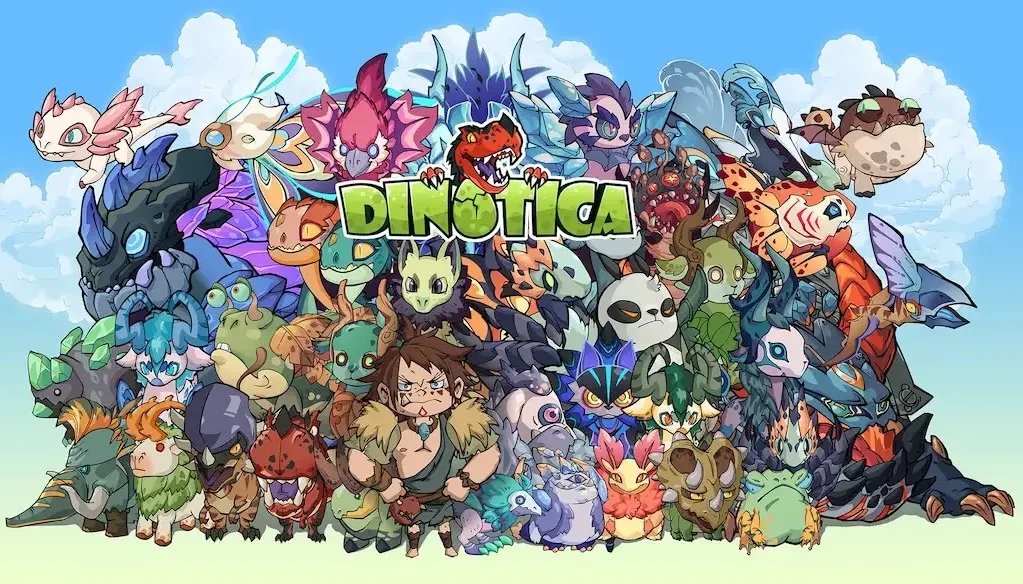

Dinotica drops you onto a mysterious continent where humans and dinosaurs have formed an unlikely society. The premise is simple: humans here possess an innate ability to understand dinosaur thoughts, allowing them to tame these prehistoric creatures and build thriving communities alongside them. This setup frames everything that follows, creating a world where your scaly companions aren’t just tools or pets but genuine partners in survival.
The game splits its time between two distinct spaces. Your home base serves as a hub for crafting, resource management, and preparing for expeditions. Then there’s the outer world of Dinotica itself, a dangerous expanse filled with hostile creatures, ancient ruins, and secrets waiting to be uncovered. This structure creates a rhythm of preparation and action, building and exploration, that forms the core of the experience.
Visually, Dinotica presents a cartoonish aesthetic that leans toward the whimsical without losing its edge. The tone walks a careful line between charming and dangerous, making the world feel inviting even as it reminds you of the risks lurking in every shadow. As an Early Access title, it’s still finding its footing, but the foundation shows real promise for players drawn to creature collection mixed with roguelite exploration.
Partners in Survival
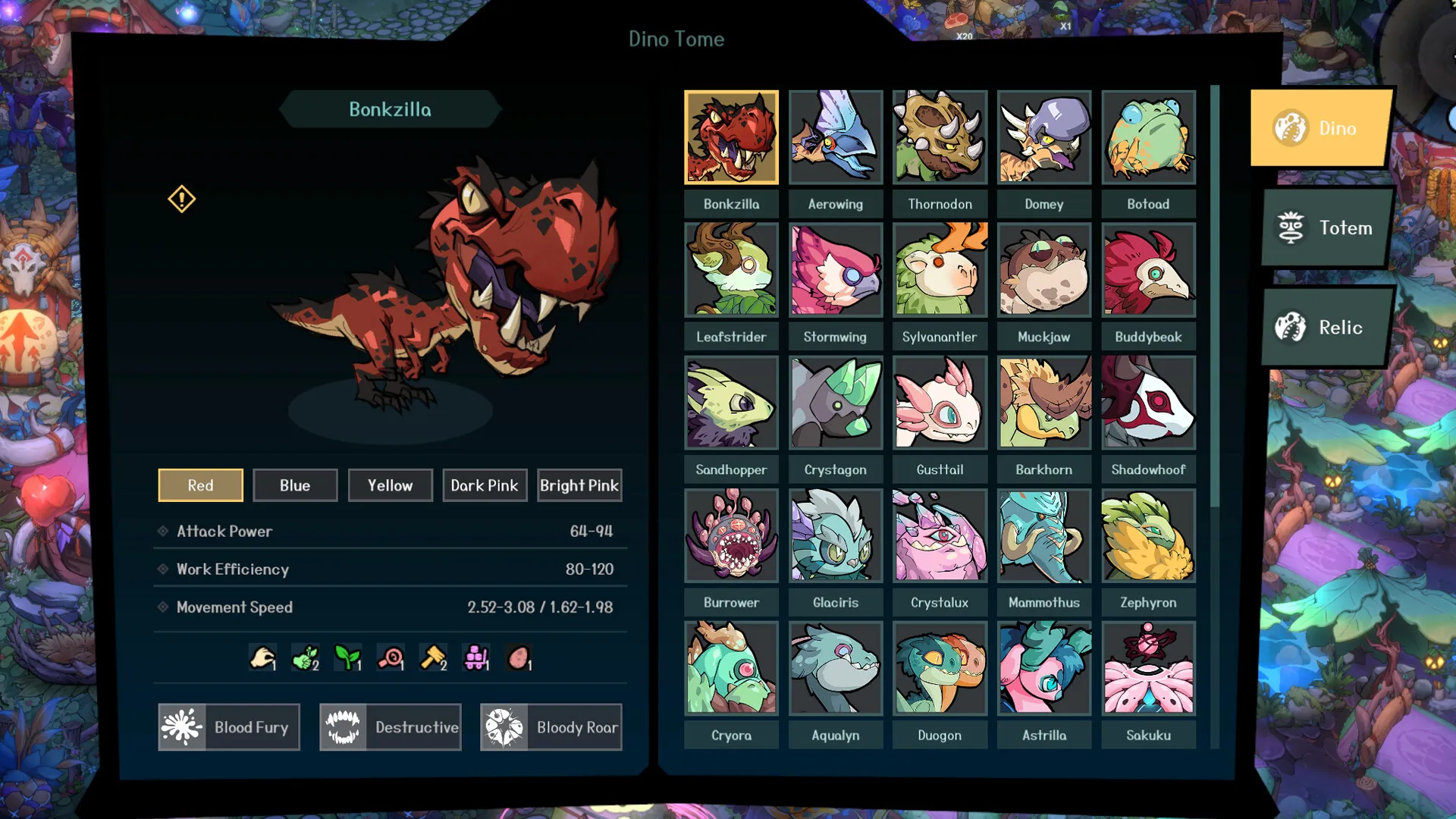
The dinosaur system in Dinotica operates differently from typical follower mechanics. These creatures aren’t background characters waiting for commands. They’re active participants in every aspect of gameplay, and the game recognizes this through how it structures their involvement. Each species comes with distinct abilities and characteristics that define their role, whether that’s combat support, resource gathering, or base management.
You can assign dinosaurs to accompany you during explorations, where they fight alongside you like prehistoric bodyguards. Others stay behind at your base, handling resource collection, tending crops, managing crafting stations, or cooking meals. The flexibility here matters because while technically any dinosaur can perform any task, matching their natural skills to specific roles produces noticeably better results.
What emerges from this system is a genuine partnership. These aren’t passive worshippers demanding constant attention. They work with you, not for you. While you’re clearing dungeons, they’re gathering materials, harvesting crops, and keeping your base operational. Return from an expedition and you’ll often find fresh harvests waiting, crafted goods ready for use, and resources stockpiled for your next upgrade.
The breeding mechanics add depth by allowing you to create stronger variants through selective pairing. You can level up your dinosaurs, customize their abilities, and tune them to complement your preferred playstyle. This investment of time and resources creates attachment. Watching your camp fill with these creatures, each serving a purpose you’ve carefully considered, provides a sense of progression that goes beyond numerical stat increases. The system works because it respects player time, making dinosaurs less demanding while simultaneously more useful.
The Push and Pull of Exploration
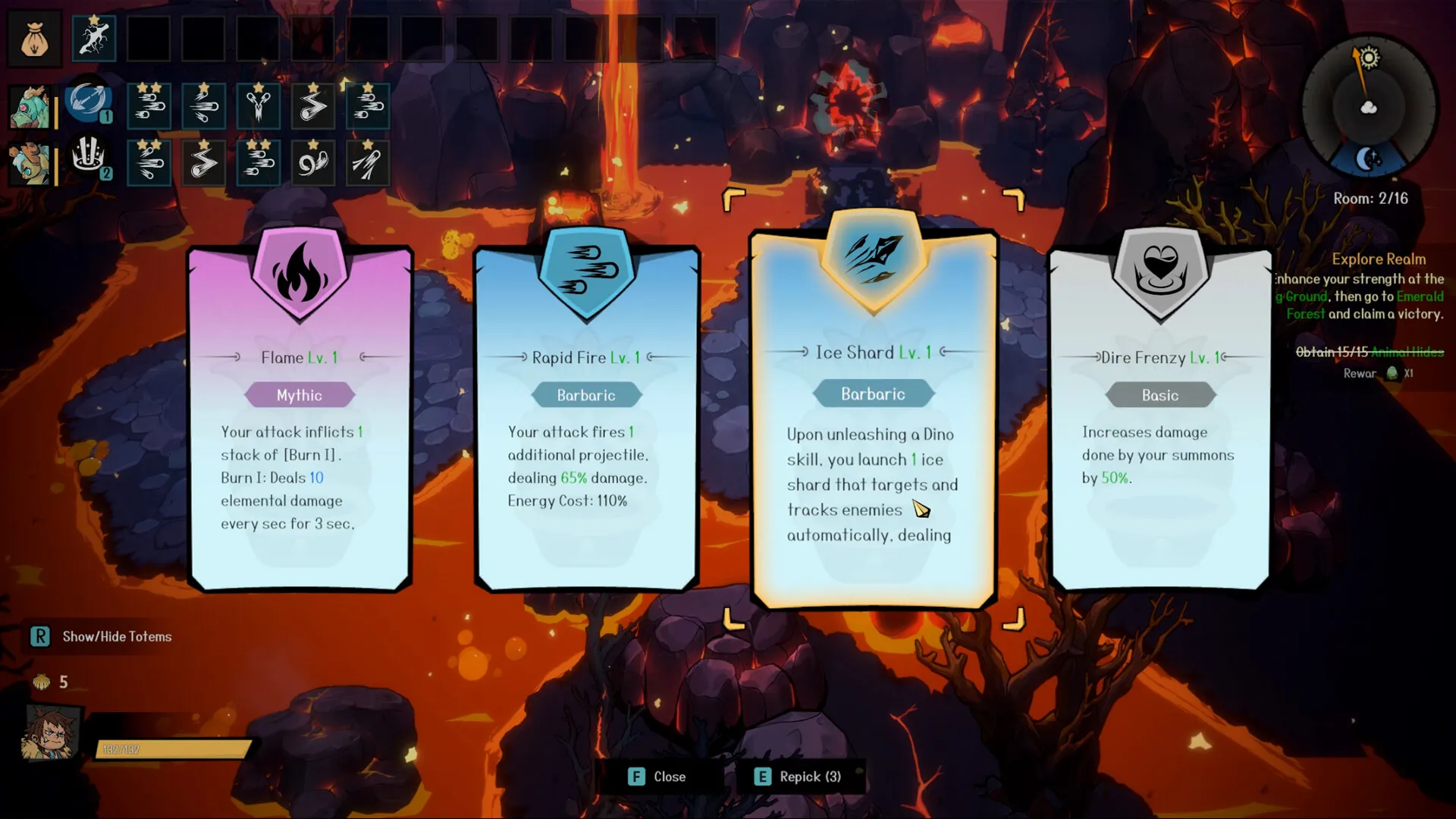
Combat in Dinotica unfolds through a room-based structure that divides the open world into discrete encounters. Clear a room of enemies and you can progress to the next, with branching pathways offering choices about which direction to take. Symbols mark entrances, indicating the difficulty and potential rewards ahead. This creates strategic moments where you weigh risk against benefit: take the easier path for guaranteed progress, or push into tougher territory hoping for better loot and more powerful totems.
The totem system drives much of the combat’s variety. Each cleared room rewards you with one or two totems that grant new abilities for yourself or your dinosaur companions. Combined with character buffs and companion abilities, there’s substantial room for experimentation. You might build around maximizing your dinosaurs’ offensive output, focus on sustaining yourself through defensive buffs, or create hybrid approaches. This layering prevents combat from feeling one-dimensional, encouraging you to think about synergies rather than just collecting the most powerful individual abilities.
Here’s where things stumble: the difficulty balance. Once you understand which buffs and totems work well together, the challenge evaporates. I’ve entered dungeons with warning messages explicitly stating I wasn’t ready, only to tear through enemies without significant resistance. The game becomes generous to a fault after you’ve mastered its systems, turning what should be tense encounters into straightforward beatdowns.
This imbalance undermines the roguelite formula, which typically relies on constant threat to maintain engagement. Difficulty modifiers exist to address this issue, and they do help restore some challenge. But the base difficulty should create tension on its own. The combat has room to shine with enough enemy variety and strategic depth, but without proper difficulty tuning, all that potential energy dissipates into repetitive victories that stop feeling rewarding.
Building Your Foundation
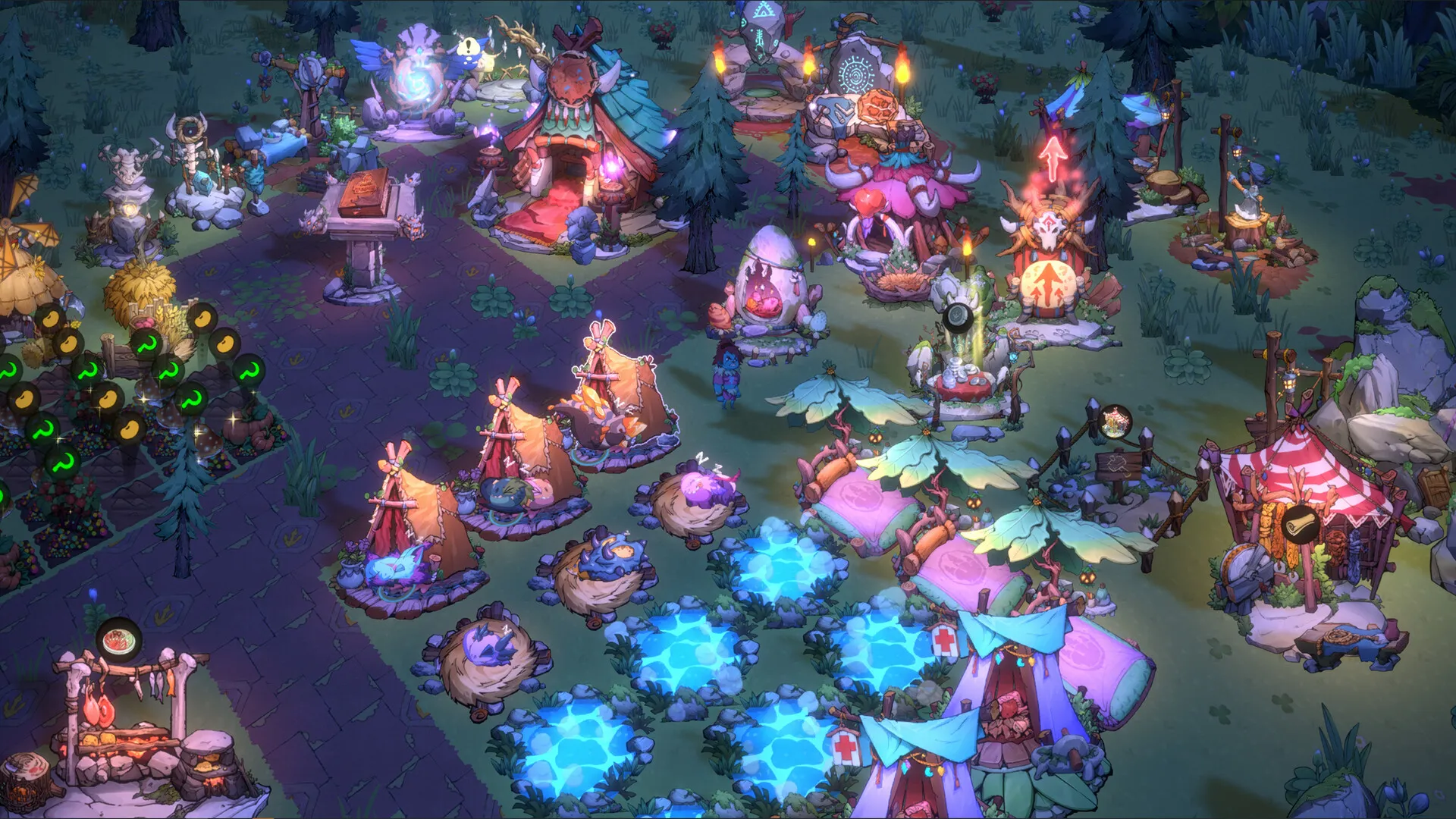
Settlement building in Dinotica serves as the backbone of the entire experience. Your base is where meaningful progress occurs, where you see the results of your expeditions manifested in tangible improvements, and where the game’s various systems converge into a cohesive whole.
The crafting trees unlock weapons and quality-of-life upgrades that directly impact your effectiveness. Research systems let you develop new buildings, each serving specific functions that expand your capabilities. Decoration options add personality to your settlement. Every play session should end with something new: an upgraded structure, a freshly built bed for your dinosaurs, a farm that now operates with greater efficiency.
The farming and production systems integrate seamlessly with the dinosaur companion mechanics. Rather than personally tilling soil and watering crops, you delegate these tasks to your dinosaur workforce. They handle the repetitive aspects of resource gathering and production while you focus on exploration and combat. Resources flow continuously without requiring constant player intervention. Return from a dungeon run and you’ll find harvests completed, materials stockpiled, and production queues advanced. This automation keeps the pacing brisk and prevents the experience from bogging down in micromanagement.
The crafting system functions adequately but lacks depth. Resource requirements are straightforward: need fiber? Collect the specified amount and you’re set. There’s no intermediate processing, no multi-stage production chains, no decisions about how to allocate scarce resources between competing priorities. The game could benefit from additional layers, requiring players to process materials into intermediate goods before using them in advanced recipes.
The rhythm of maintenance and expansion works well despite these limitations. Each session provides visible improvements, the integration with dinosaur systems creates satisfying efficiency gains, and you never feel like you’re wasting time on thankless grinding.
Presentation and Atmosphere
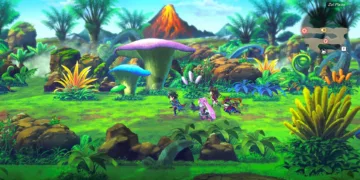
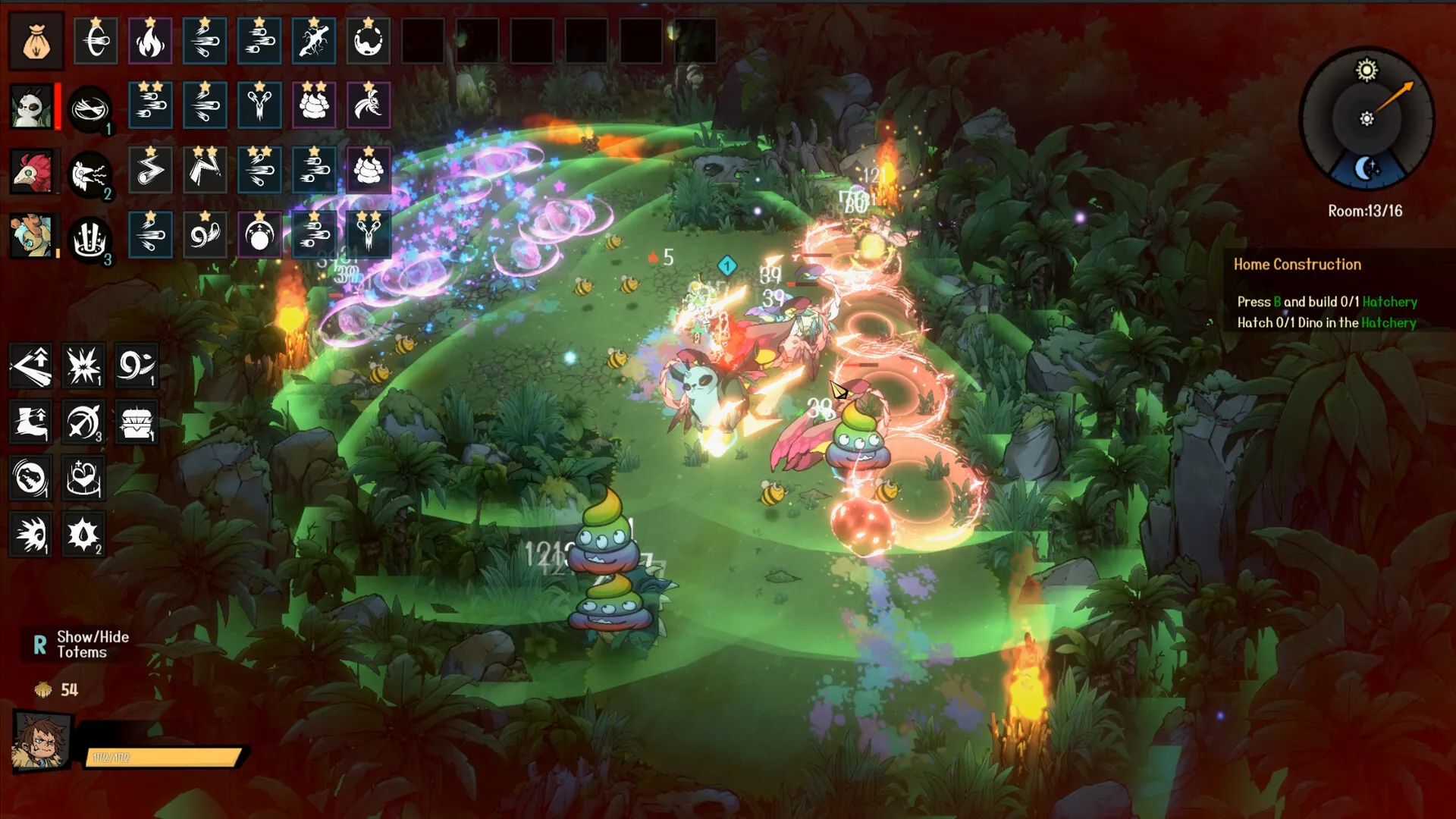
Dinotica’s art style establishes its identity immediately. The aesthetic leans cartoonish without committing fully, creating a playful visual language that suits the game’s tone. The color palette emphasizes emerald greens and lush jungle environments, with swampy areas and overgrown ruins adding variety. Environmental design bursts with personality, and the deliberately cartoonish presentation keeps things light-hearted even during intense combat sequences.
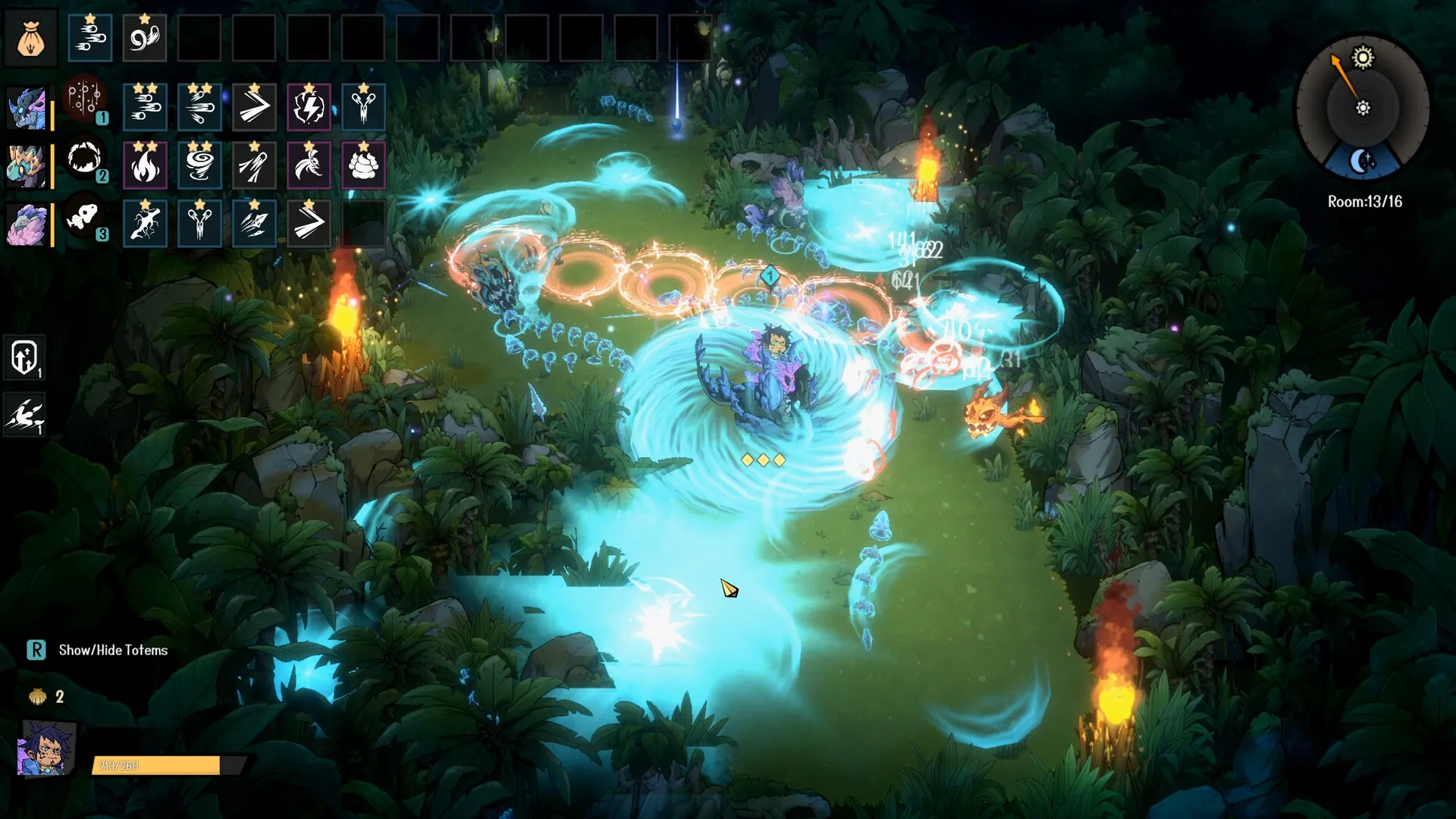
The animation work deserves specific mention. Dinosaurs move with distinct personality, wobbling and stomping and snapping in ways that give each species character. Attacks land with exaggerated flourish, making combat feel impactful. This stylization serves a practical purpose: it effectively conceals the rough edges you’d expect from an Early Access title.
The camera positioning creates frustrating limitations. The perspective pulls back too far, making important details feel small and distant. Text can be difficult to read without leaning closer to your screen, and the intricate environmental details become harder to appreciate. The art deserves closer inspection, but the camera setup actively prevents you from examining it properly.
The audio design is competent without being memorable. The soundtrack leans toward modern, upbeat compositions that feel oddly mismatched with the dinosaur and ancient beast setting. There’s nothing inherently wrong with the music itself, but it doesn’t seem to belong in this particular world. Compared to how effectively the visual design establishes tone and atmosphere, the audio feels like a missed opportunity to deepen immersion.
The Early Access Reality
Dinotica exists in that uncertain space where strong foundations meet incomplete execution. Performance remains stable for the most part, with occasional glitches and bugs that remind you this is an unfinished product. Dinosaur AI sometimes exhibits pathfinding oddities, getting stuck on terrain or failing to execute assigned tasks efficiently. Small visual hitches occur during transitions. None of these issues break the experience, but they accumulate into a sense that the game needs more time in the oven.
The déjà vu feeling is hard to shake. Dinotica leans heavily on familiar roguelite and survival-building conventions, pulling mechanics from established templates without always adding enough distinctive flavor. This raises questions about whether the game does enough to justify its existence beyond “it has dinosaurs.” The companion system adds personality and creates genuine gameplay differentiation, but many of the surrounding systems feel like competent implementations of existing ideas.
The developers have a roadmap ahead, which provides hope that some of these concerns will be addressed over time. There’s room to add unique mechanics, refine balance issues, and develop the systems that currently feel underdeveloped. Right now, the game is polished enough to provide enjoyable experiences. No play session feels wasted, and the combination of base-building and exploration creates satisfying rhythms.
Finding Your Rhythm
Dinotica’s structure creates a natural flow between base maintenance and exploration. You prepare at home, gathering resources and upgrading systems. You venture into the wilderness, fighting through rooms and collecting totems. You return with spoils, funnel them into new improvements, and start the cycle again. This rhythm becomes easy to settle into, where each activity feeds naturally into the next.
Several elements keep you coming back. Experimenting with different dinosaur combinations offers variety in how you approach both combat and base management. Discovering new species scratches the collection itch. Incremental base improvements provide constant short-term goals. The charm of the world and its inhabitants carries substantial weight, and the blend of laid-back crafting and thoughtful combat creates a satisfying middle ground.
Still, you can feel where additional complexity could have enhanced the experience. The training system exemplifies this: rather than offering meaningful progression through actual challenges, it reduces to spending coins for stat increases. It functions, but compared to the creativity shown in other systems, it feels like a placeholder waiting for better implementation.
Dinotica finds its audience among players who love dinosaurs and creature collection, those seeking relaxed base-building mixed with action elements, and anyone looking for a charming adventure with solid fundamentals. For players seeking deep crafting systems or innovative mechanics, Dinotica might feel too familiar and too easy. The game succeeds at being enjoyable without quite reaching special. It provides hours of entertainment, respects your time, and creates moments of genuine satisfaction. Whether that’s enough depends on what you’re looking for and how much the dinosaur companions can carry the experience for you personally.
The Review
Dinotica
Dinotica delivers a charming prehistoric adventure anchored by its excellent dinosaur companion system. The base-building feels rewarding, the visuals pop with personality, and the cooperative partnership with your dino workforce creates genuinely satisfying moments. However, combat difficulty collapses once you grasp the synergies, crafting lacks depth, and the heavy reliance on familiar genre conventions makes it feel derivative. For dinosaur enthusiasts seeking accessible roguelite fun, this scratches the right itch. For players wanting innovation or challenge, it falls short of greatness.
PROS
- Excellent dinosaur companion system that feels cooperative and meaningful
- Satisfying base-building with visible progression each session
- Charming visual style with personality-filled animations
- Automated resource gathering reduces tedious micromanagement
- Totem system encourages combat build experimentation
- Natural rhythm between exploration and base maintenance
CONS
- Combat becomes too easy once you understand synergies
- Crafting system lacks depth and complexity
- Heavily derivative of established genre conventions
- Training system feels like basic stat purchasing
- Camera pulls back too far, making details hard to see
- Audio design feels mismatched with the prehistoric setting
- AI pathfinding issues and minor technical glitches